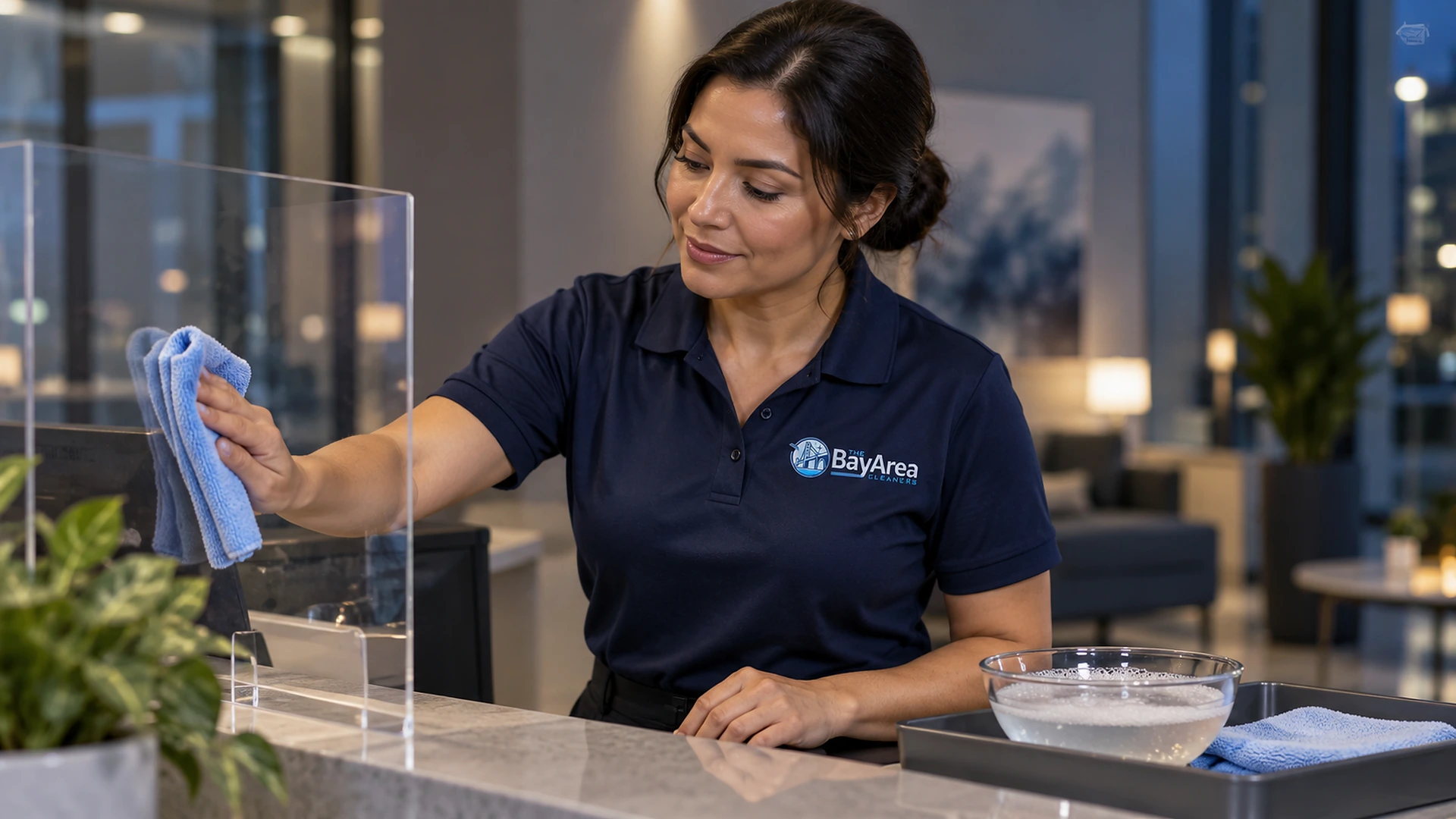
The clear shield at your front desk looks like glass, but it doesn’t behave like glass. It’s acrylic, a plastic that scratches under a gritty cloth and can craze when the wrong spray touches it. Much of that damage comes from the cleaning itself, not from the workday. Learning how to clean plexiglass starts with putting the ammonia glass cleaner away.
Acrylic in an office sits at the front desk, on desk dividers, in display cases, on sign faces and over framed art. Each piece takes the same soft routine, with a few changes by location.
The quick version: Plexiglass is plastic, so treat it gently. Lift loose dust with a cloth wet with lukewarm water, wash with mild soap on a soft cloth or microfiber using light pressure, rinse and blot dry. Don’t rub it dry, since that builds static and drags grit across the surface. Skip paper towels, squeegees, brushes, scrapers and razors. Keep ammonia glass cleaners, scouring powders and solvents such as acetone and lacquer thinner off acrylic. Film washes off, but crazing, yellowing and deep cloudiness sit inside the plastic. Keep a soft cloth and a light hand, and you’ve learned how to clean plexiglass without turning a daily wipe into a replacement order.
Plexiglass Is Plastic, Not Glass
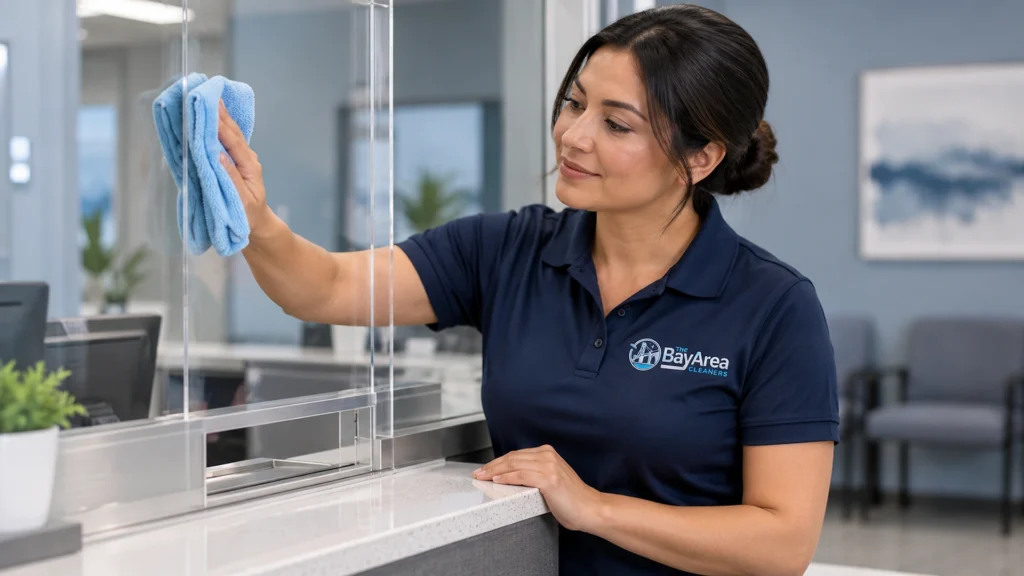
Plexiglass is the everyday name for acrylic sheet, sold under brand names such as PLEXIGLAS and ACRYLITE. Offices use it for front desk shields, transaction windows, desk dividers, display cases, sign faces and the glazing on framed art. It’s lighter and less likely to shatter than glass, so it shows up wherever people lean, reach or bump.
Its surface is softer. Acrylic glazing scratches more easily than glass, according to preservation guidance from the Library of Congress. The National Park Service says acrylic and polycarbonate glazing scratch easily, and yellow and cloud with time.
You may also like: Medical Office Cleaning: Where Routine Janitorial Work Needs More Control?
You can often tell acrylic from glass before you clean it. Look at a cut edge. Standard glass usually shows a green tint at the edge, and acrylic looks clear.
Some clear panels are polycarbonate instead of acrylic. Polycarbonate is tougher, but it still scratches, and its makers publish their own lists of safe cleaners. If you aren’t sure which plastic you have, ask the supplier or the installer before the first deep clean.
Takeaway: Treat every clear panel at the desk as plastic until you know otherwise. It scratches more easily than glass and can cloud with age.
How to Clean Plexiglass on a Nightly Visit?
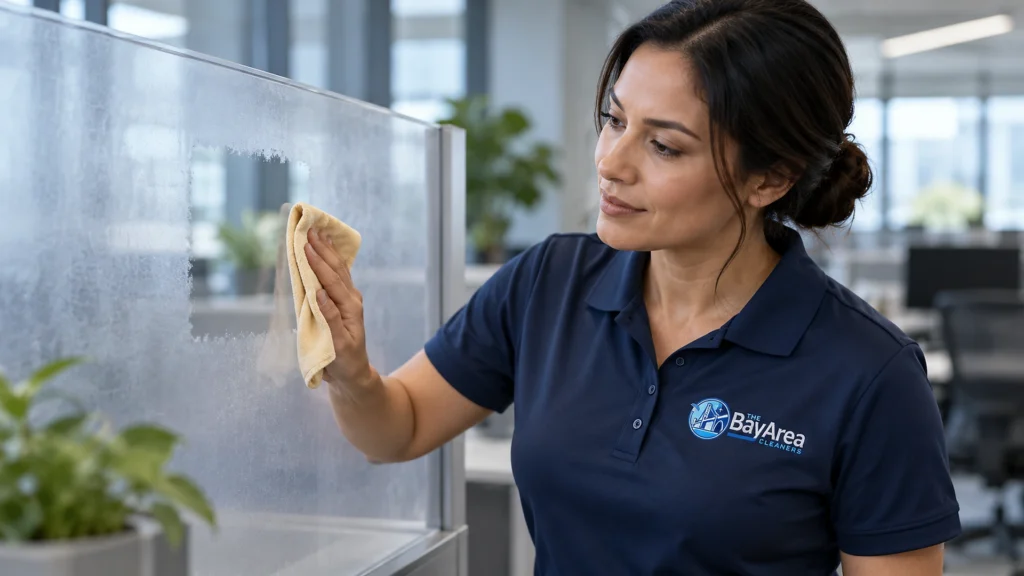
Röhm, the company behind ACRYLITE, and Spartech, another sheet maker, give nearly the same routine. Plain water handles light dust, and mild soap handles fingerprints and smudges.
Most nights, a damp microfiber wipe on the public side is enough. Once a week, or whenever the panel looks smeared, give it the full wash:
- Wipe the panel with a cloth wet with lukewarm water to lift loose dust.
- Wash with a few drops of mild dish soap in lukewarm water on a soft cloth or microfiber.
- Wipe with light pressure in up-and-down passes.
- Wipe again with a cloth rinsed in clean water to take the soap off.
- Blot the panel dry with a soft, well-wrung damp cloth or a chamois.
- Wipe both sides, then the edges and the base where it meets the desk.
Spartech’s guide adds two habits that matter on a busy night. Rinse the cloth often and change the water, so the grit you just lifted doesn’t go back on the next panel. Then wash any cleaner off right away instead of letting it sit on the surface.
Front desk acrylic sits next to counters that get a cleaner spray every night, and a crew working fast can mist it by habit. If entry glass and waiting areas are part of your office cleaning, list the shield as its own item so it gets the soft cloth and not the counter spray.
Takeaway: Water first, mild soap second, light pressure, a rinse and a blot. Rinse the cloth often so it doesn’t carry grit to the next panel.
How to Clean Plexiglass Without Scratching It?
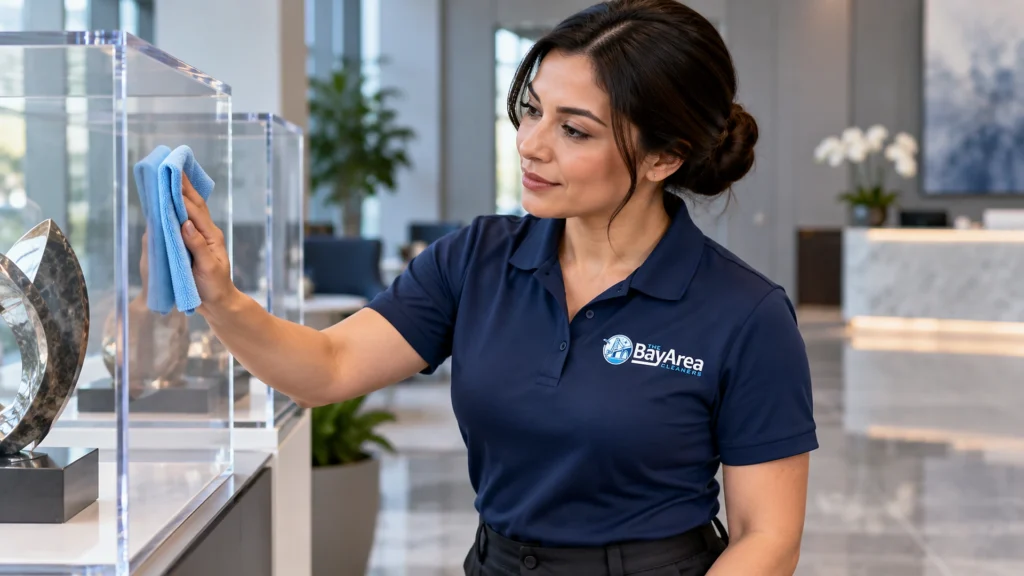
Cleaning tools cause many of the scratches on office acrylic. Spartech warns that scrapers, squeegees and razors may scratch acrylic for good, and it rules out paper towels and brushes. ACRYLITE warns that dry or gritty cloths can scratch the surface and build static.
Static is easy to miss in how to clean plexiglass without scratching it. A panel rubbed dry picks up a charge, and the charge pulls dust out of the air. The next wipe drags that dust across the plastic. ACRYLITE’s guide is firm on this point: don’t rub the sheet dry, and use an antistatic cleaner wiped on lightly with a soft cloth to keep dust from settling.
Keep pressure light from start to finish. Stuck-on spots such as dried coffee need soaking, not scrubbing. Hold a cloth soaked in soapy water against the spot for a minute, then wipe it off with no more pressure than the rest of the panel.
Watch what hangs from whoever cleans your reception area. Badge clips, badge reels and lanyard cards swing into the panel and leave the same marks a scraper would. Clip the badge to a pocket before the front desk stop.
Clean cloths carry much of the load in how to clean plexiglass without scratching it. Keep your acrylic cloths in their own bag. A cloth that touched a floor, a restroom or a dusty shelf carries grit, and grit is what scratches plastic.
Takeaway: No paper towels, squeegees, scrapers or dry rubbing. Soak stuck spots, keep pressure light and keep acrylic cloths separate and clean.
Products That Craze or Cloud Acrylic
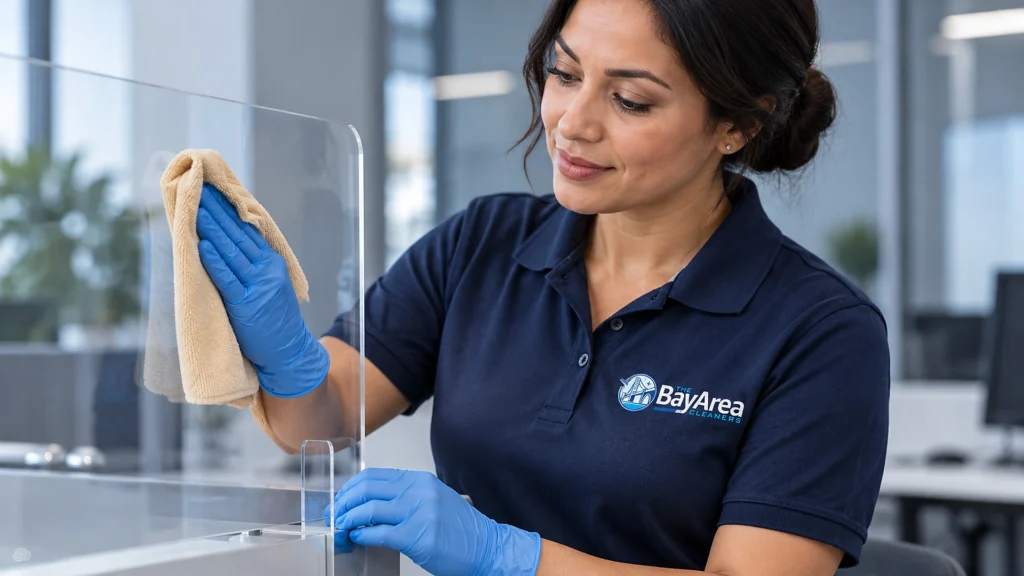
Ammonia glass cleaner is the most common mistake. ACRYLITE rules out window cleaning sprays and kitchen scouring compounds altogether, and Spartech accepts glass cleaners only if they’re ammonia-free. ACRYLITE’s list adds acetone, gasoline, benzene, alcohol, carbon tetrachloride and lacquer thinner, solvents that can scratch the surface or cause crazing, a web of fine cracks. Spartech warns against concentrated ammonia, highly alkaline cleaners, harsh solvents and abrasive cleansers.
Read the full ingredient line on any spray used near acrylic. Ammonia can appear as ammonium hydroxide. Overspray is the other trap, since a crew member spraying the counter can mist the shield without meaning to. Dampen the counter cloth at the cart instead of spraying next to the panel.
The two makers part ways on alcohol. ACRYLITE puts alcohol on its avoid list and allows isopropyl alcohol only when it’s diluted to 30% strength. Spartech allows cleaning wipes with at least 70% alcohol. That gap is a reason to check the care sheet from the maker of your panel before you pick a wipe for the front desk.
Disinfecting a shield that visitors breathe on all day takes the same care. ACRYLITE gives a diluted bleach solution of 5 tablespoons per gallon of water, applied with a clean soft cloth and light pressure. It names several common disinfecting wipes and cleaners that aren’t compatible with its sheet, so check the list before a product joins the supply closet.
When you’re unsure about a product, ask the panel supplier before it touches a shield. Spartech’s guide puts it plainly: when in doubt, seek guidance. A quick test on a back corner won’t settle the question, since chemical damage can build up over repeated contact.
Spartech’s guide says not to apply cleaners in direct sunlight or at high temperatures. That rarely touches a night crew, but a porter can leave a west-facing lobby display until the sun moves off it.
Takeaway: Keep ammonia glass cleaner, scouring powder and solvents off acrylic. Check your panel maker’s list before you choose an alcohol wipe or a disinfectant.
How to Clean Plexiglass That Is Foggy?
Before you decide how to clean plexiglass that is foggy, find out what the fog is. Wash a hand-sized patch with mild soap and lukewarm water, rinse and blot it, then compare it with the rest of the panel under a bright light. The result decides whether the panel needs cleaning or replacing.
A patch that now looks clearer than its surroundings means the fog was film. Old cleaner, skin oil and fine dust held by static all leave a dull layer. Wash the whole panel the same way and finish with a light antistatic wipe so the dust doesn’t come right back.
You may also like: Restaurant Commercial Cleaning: The Nightly, Weekly and Quarterly Split
If the patch looks no different, look closer. A web of fine cracks is crazing, often left by a solvent or the wrong spray, and no cleaner reverses it. A yellow or milky cast spread evenly across the panel usually points to age or sun exposure. The National Park Service notes that acrylic and polycarbonate yellow and cloud with time, and Spartech adds that heat, stress and repeated chemical contact can degrade the plastic.
Fine surface scratches can read as fog, too. ACRYLITE describes a plastic scratch remover rubbed on with a soft flannel pad for fine scratches, and sanding and buffing for deeper ones. That’s work for the panel’s supplier or a plastics shop, not a nightly crew. Knowing how to clean plexiglass that is foggy includes knowing when the answer is a new panel.
Takeaway: Fog that leaves with soap and water was film. Cracks, yellowing and deep scratches sit in the plastic and go to the supplier.
How to Clean Plexiglass Windows?
Acrylic windows show up at reception desks, pass-through counters and security booths, and in older buildings as interior storm panels. A National Park Service tech note on interior storm panels records an architect passing on acrylic, in part for its tendency to scratch when cleaned.
The steps for how to clean plexiglass windows match the full wash, with three changes. Clean both sides, since a sliding transaction window collects hand marks on the public side and dust on the staff side. Work by hand with a soft cloth, never the squeegee a crew uses on glass. Dry the track and the frame so water doesn’t sit in the channel.
Label acrylic windows so nobody mistakes them for glass. A small sticker on the frame reading “acrylic, soap and water only” saves the panel from a well-meaning crew member with a spray bottle. It helps most in buildings where interior glass cleaning on doors and conference walls runs on the same night as the acrylic.
Interior storm panels are often screwed in place and come out only for maintenance. When building staff take one down, have them lay it flat on a padded table, not lean it on a gritty floor. How to clean plexiglass windows in an older building depends as much on how the panels are handled as on the soap.
Takeaway: Wash acrylic windows by hand on both sides, keep squeegees off them, dry the track and label the frame so crews know it’s plastic.
Signs, Brochure Holders and Other Clear Plastic
Acrylic shows up in smaller pieces all over an office. Directory signs, nameplates, brochure holders, award blocks and menu stands all get handled more than they get cleaned. The same soap, water and soft cloth work on every one of them.
Printed and lettered signs need a lighter hand. Vinyl letters and printed graphics on the face of a sign can lift if a cloth catches an edge. Wipe along a letter’s edge, not into it, and don’t pick at a lifted corner. Engraved and back-printed signs have plain acrylic on the face, so they take the same soap and water as a shield.
Brochure holders and stands collect dust in their corners and fingerprints on the front lip. Empty them, wipe them with a damp microfiber cloth and let them air dry before the papers go back in.
New acrylic arrives with a protective film. Static builds when that masking comes off, ACRYLITE notes, and a charged panel pulls dust straight out of the air. Peel the film slowly and give the new panel a damp microfiber wipe before it goes into service.
Takeaway: Treat signs, nameplates and holders like the big panels. Wipe printed faces gently, air dry holders before refilling and damp-wipe new acrylic after the film comes off.
Shields, Dividers, Displays and Framed Art
Desk dividers and front desk shields usually sit on brackets or feet. Wipe the base and the brackets with the same soft cloth, and don’t slide or lift the panel to reach behind it unless it’s built to come off. A panel that’s been moved can end up loose, crooked or blocking a walkway.
Display cases and trophy cabinets collect the same fingerprints as a shield, with the added risk that cleaning fluid can run inside. Dampen the cloth, not the case, and keep liquid away from the seams. Clean the shelves inside on a separate visit, with the case opened by whoever has access.
You may also like: Commercial Cleaning Checklist: Sample, Score and Recheck Every Week
Framed art in the lobby often has acrylic glazing instead of glass. Library of Congress guidance calls for dusting acrylic glazing with a lint-free soft cloth and applying any cleaner to the cloth, not the glazing. The same guidance names anti-static acrylic as safe for framing powdery media.
During the day, a lobby touch-up keeps the reception shield clear before the evening visit. Porter lobby care that touches up entrances and glass can add the shield to its rounds with a damp microfiber cloth and nothing else.
Takeaway: Leave panels where they’re mounted, keep liquid out of display case seams and dust acrylic glazing on framed art with a soft, lint-free cloth.
Frequently Asked Questions
Where do you start with how to clean plexiglass at a front desk if the closet only has glass cleaner?
Leave the glass cleaner on the shelf. Start with mild dish soap, a spray bottle of lukewarm water, clean microfiber cloths kept apart from the others and a chamois for blotting. An antistatic plastic cleaner is a useful extra.
Can the glass crew’s squeegee handle how to clean plexiglass windows?
No. Spartech names squeegees among the tools that may scratch acrylic for good. Wash by hand with a soft cloth and blot the panel dry. If a window already shows fine lines running in one direction, that pattern often points to a squeegee, a scraper or a gritty cloth dragged the same way.
Does an old panel change how to clean plexiglass that is foggy?
Often, yes. An old panel may be clouded by age, crazing or years of fine scratches, and none of those wash off. Test a small area first, and plan a replacement if the test patch doesn’t clear.
Does an antistatic cleaner help with how to clean plexiglass without scratching it?
Yes, as a finishing step. ACRYLITE has it sprayed on only after the panel is washed and dry, then wiped lightly with a soft cloth and never rubbed dry. It keeps dust from settling. It won’t lift grit that’s already there, so the wash comes first.
Conclusion
Acrylic stays clear with mild soap, lukewarm water, soft cloths and light pressure. Rinse it, blot it and never rub it dry. Keep ammonia glass cleaner, scouring powder and solvents away from it, and check the maker’s list before any alcohol wipe or disinfectant goes near the front desk.
When you know how to clean plexiglass, the haze and scratches on a front desk shield come from age, not from the crew. Test any fog before you scrub it, and replace a panel when the haze is in the plastic and not on it. Keep the sheet maker’s care page with the supply list, so the next product question has an answer.
The Bay Area Cleaners details front desks, entry glass and waiting areas for offices between Vallejo and San Mateo, and cleans conference glass and dividers. Porter lobby care can touch up entrances and glass during the day. Point out every acrylic shield and display case when you call 707-656-9339 for a free estimate.