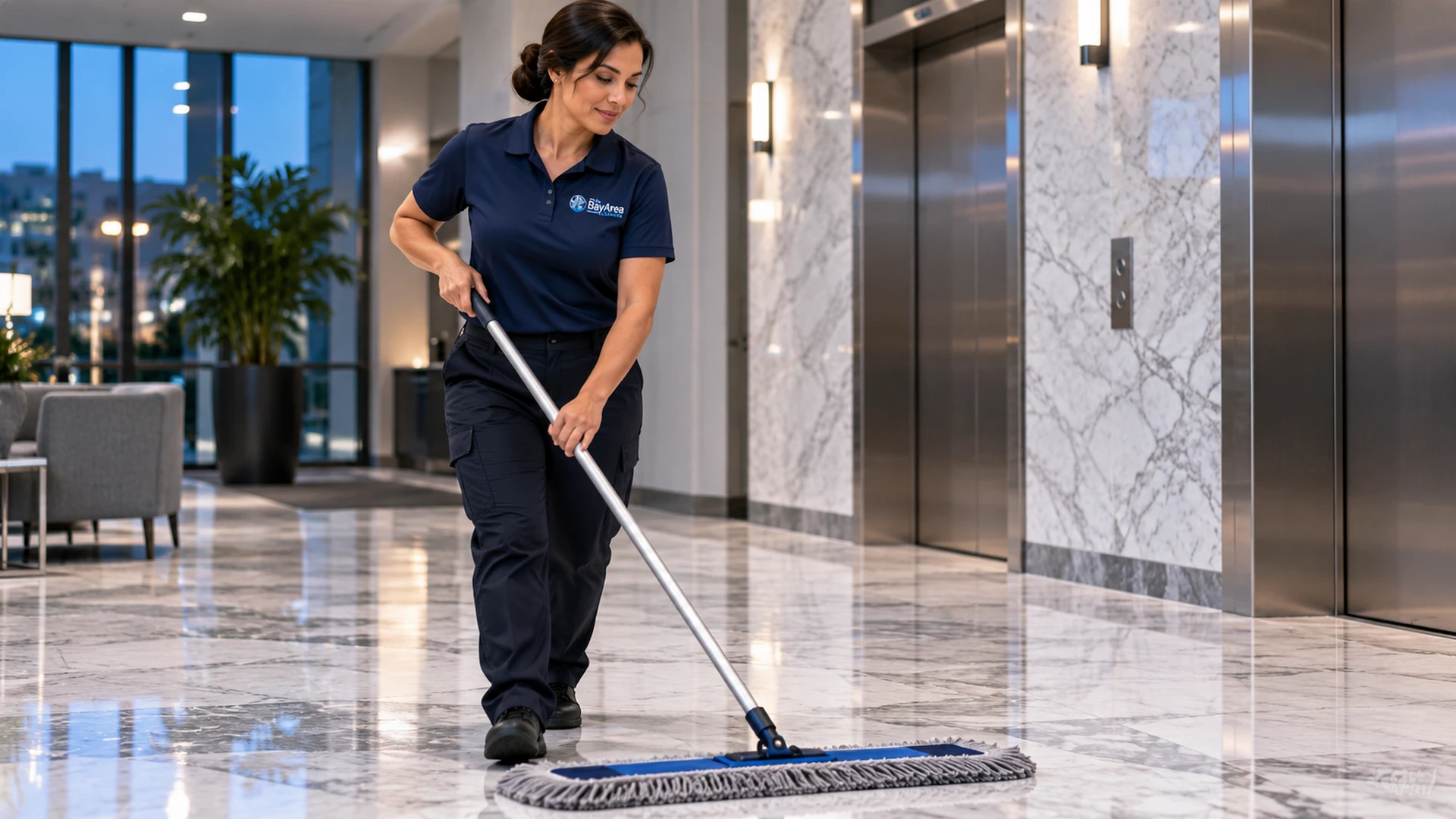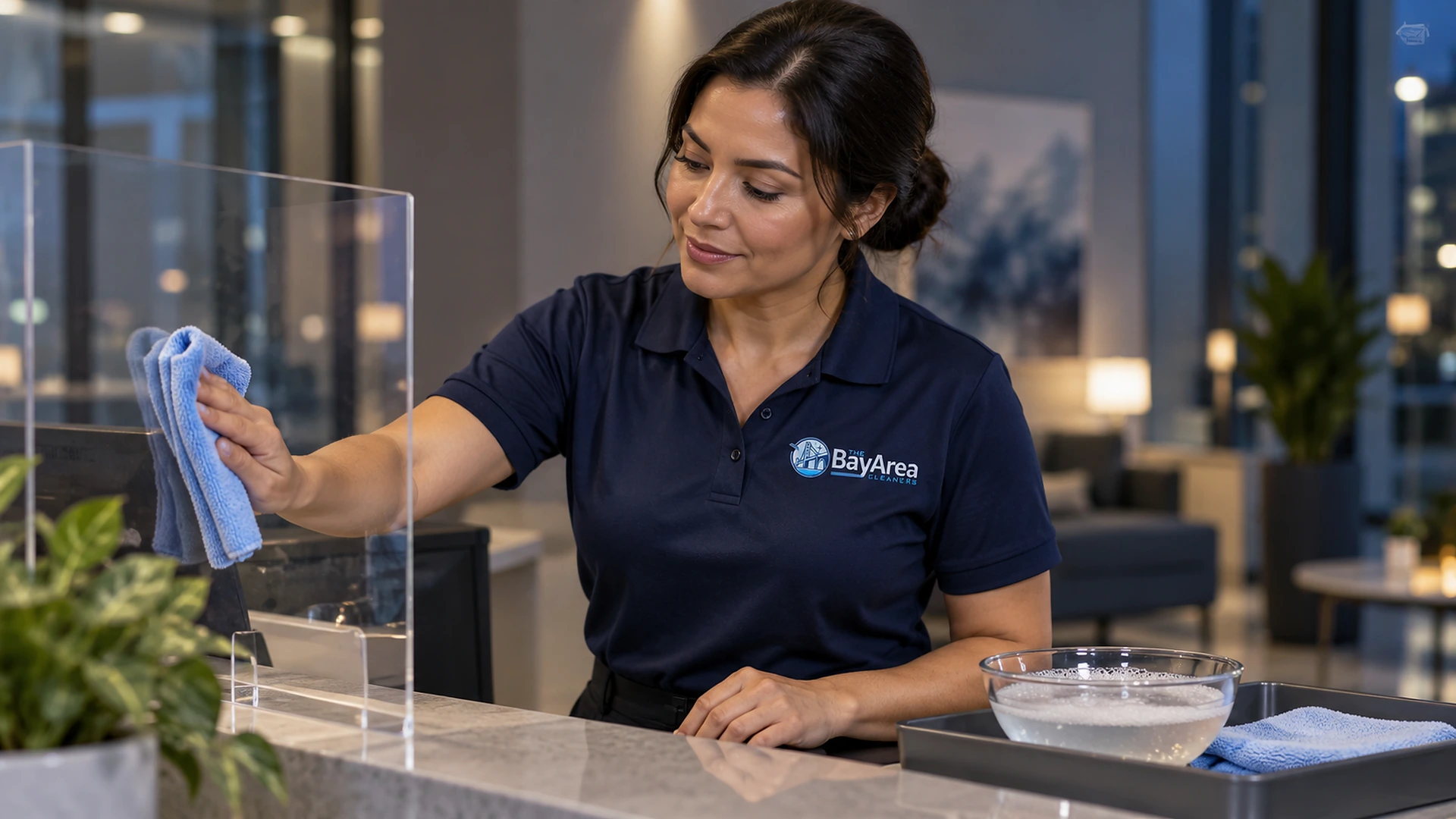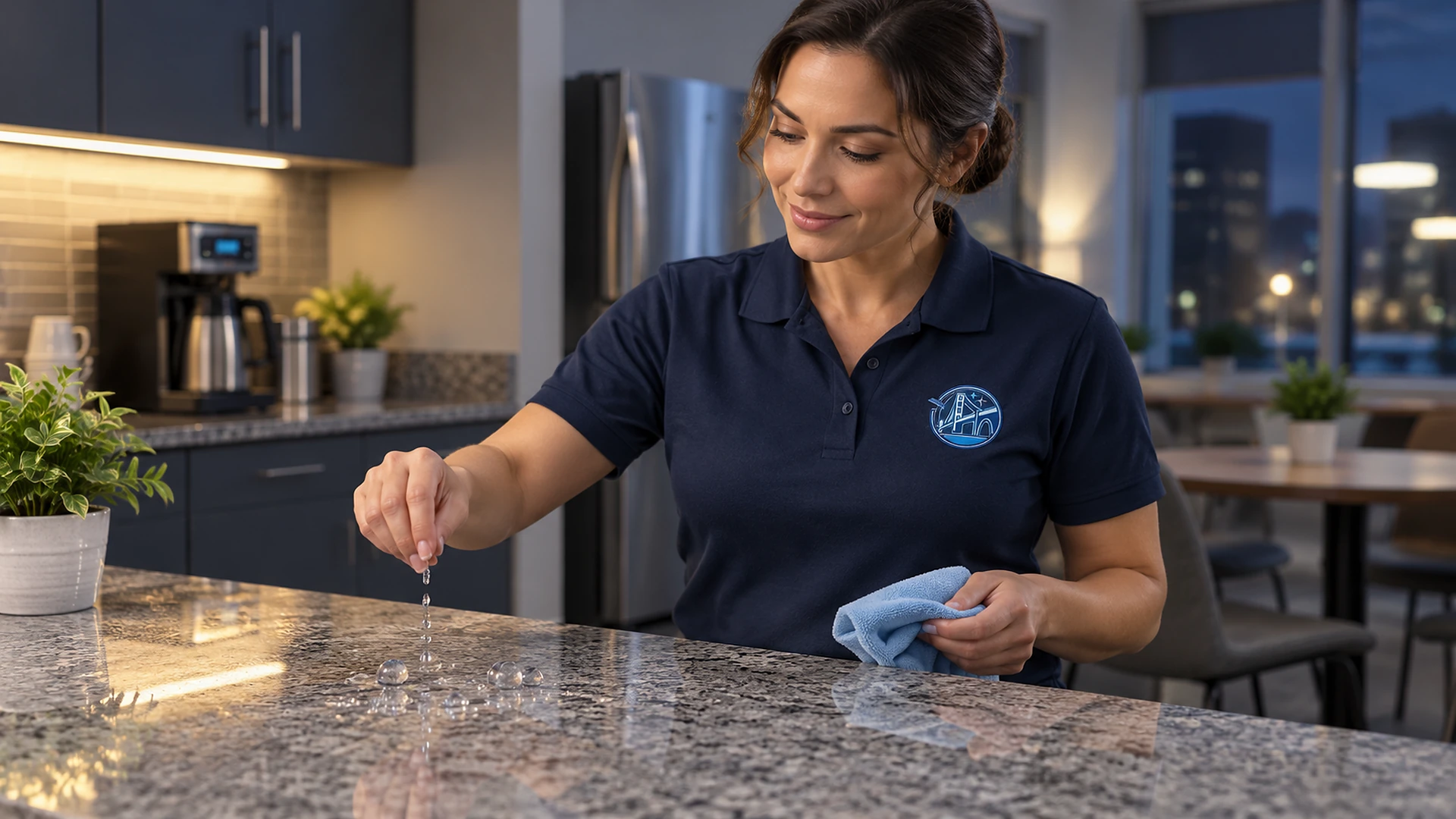

Most wood desks and conference tables in an office are a thin veneer under a factory clear coat. That clear coat is what people see, touch and clean, and it’s the layer a wrong cloth, too much water or a harsh spray wears away. Knowing how to clean wood furniture at work means protecting that layer every time a cloth goes across it.
Office furniture makers publish care sheets for their wood and veneer. They agree on more than you might expect, from the cloth to the cleaner to the products that never belong on wood, and they split on polish. Read them before your crew picks a spray bottle.
The quick version: Dust wood desks and tables with a soft, lint-free cloth that’s only slightly damp, then dry them with a second soft cloth along the grain. About once a month, use a cleaner made for wood furniture or a mild detergent diluted as directed, on a cloth that’s damp and never soaked. Wipe spills right away. Keep ammonia, abrasives, solvents, oils and wax off the finish. Check a disinfectant against the furniture maker’s list before it goes on a wood desk. Sticky tops usually mean too much polish or a film of hand oils, and nightly cleaning doesn’t call for polish. That’s how to clean wood furniture so the finish lasts as long as the table.
Office Wood Is Mostly Finish and Veneer
Steelcase, for one, finishes its wood in a water-borne UV clear coat it calls Clarity. Many tops are a thin layer of real wood veneer bonded to a stable base board. The finish takes the wear, and the veneer gives the look.
That shapes every step you take. Water that sits on a top can work into seams and edges, and the National Park Service’s guide for museum wood furniture advises using water very sparingly on veneered pieces. A cleaner strong enough to cut grease can cut the clear coat, too.
You may also like: How to Clean Hardwood Floors Without Ruining the Finish?
Some tops only look like wood. High-pressure laminate and printed melamine copy wood grain closely, and they tolerate more cleaners than veneer does. Check the furniture order or ask your facilities team before you treat a top as laminate, since a wrong guess costs more on real veneer.
A close look helps when the records are missing. Printed laminate often repeats the same knot or streak across a long top. Book-matched veneer can mirror its pattern too, so a repeat alone doesn’t settle it. When the look and the records disagree, clean the top as veneer.
Takeaway: Most office wood is a clear coat over veneer. Treat every top as real wood until the records or a close look say otherwise.
How to Clean Wood Furniture Night to Night and Month to Month?
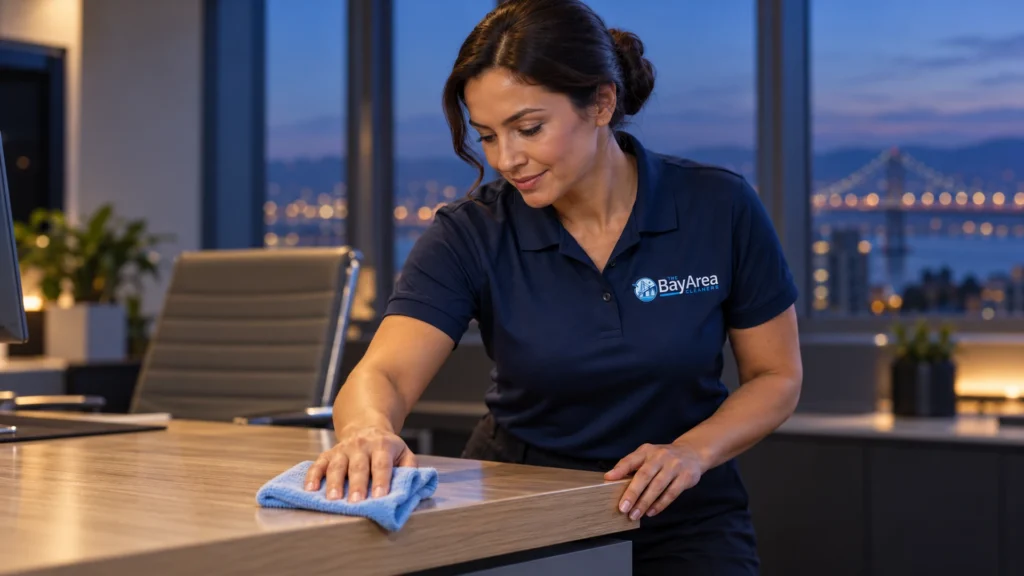
Herman Miller, Steelcase and Kinnarps start from the same place: a soft cloth, a damp wipe and a dry cloth to finish. Light dusting happens often, and Herman Miller and Steelcase set a fuller cleaning at about once a month.
For a wood desk, conference table or reception counter, the routine runs like this:
- Dust with a soft, lint-free cloth that’s only slightly damp.
- Dry right away with a second soft cloth, wiping in the direction of the grain.
- Once a month, dampen a soft cloth with a cleaner made for wood furniture or a mild detergent diluted as the label directs.
- Wipe the top along the grain without soaking it.
- Wipe again with a cloth dampened in plain water, as Kinnarps advises, to lift any soap left behind.
- Dry the surface with a clean, dry cloth.
Steelcase puts the rule on the cloth plainly: dampen it, but don’t saturate it. A cloth that drips leaves water standing at edges and seams, which is where veneer lifts first. If your crew color codes its cloths, give wood a color of its own so a breakroom cloth never reaches the conference table.
The National Park Service, writing for museum collections, goes further than the office makers. Its guide says to clean only as needed, not on a routine schedule, and to lift loose dust first. It skips detergents entirely, a stricter line than Steelcase and Kinnarps draw for office finishes. The part worth borrowing is restraint, so a table that only gets fingerprints needs a dry or barely damp wipe, not a full wash every night.
Takeaway: A slightly damp cloth, a dry cloth along the grain and a monthly wash with a wood cleaner or mild detergent cover most office wood.
How to Clean Wood Furniture Without Removing Finish?

The finish usually goes in one of three ways: a product that’s too strong, a cloth that’s too wet, or a scrub that’s too hard. Avoiding all three is most of how to clean wood furniture without removing finish.
Start with the products. Steelcase says oils, ammonias and wax should never be used on its wood furniture, and it warns against anything labeled abrasive or corrosive. Kinnarps lists aggressive cleaners, solvents and products containing abrasives as things to avoid. Many glass cleaners contain ammonia, and many kitchen degreasers are strong alkaline cleaners, so both stay off wood.
You may also like: What Does Proper Baseboard Cleaning Really Involve?
Disinfecting is the harder call, since shared desks get disinfected every night, wood tops included. Steelcase tested common disinfecting wipes and sprays on its wood finish, marked some as safe and others as not recommended, and noted that long-term repeated use hadn’t been tested. Ask your furniture dealer for a tested list before a disinfectant becomes part of how to clean wood furniture without removing finish. Nightly workstation cleaning can then follow it on every desk.
Then there’s pressure. Scouring pads and melamine sponges are both abrasive, and either can leave a dull patch on a clear coat, even with a mild product. A soft cloth and a second pass do the same job without the risk. Spills get the same gentle treatment: Steelcase and Herman Miller both say to wipe them up right away, and Steelcase adds not to let them dry.
Takeaway: Keep ammonia, oils, wax, abrasives and solvents off the finish and skip the scrubbing. Use only disinfectants the furniture maker has tested on its finish.
How to Clean Wood Furniture That Is Sticky?
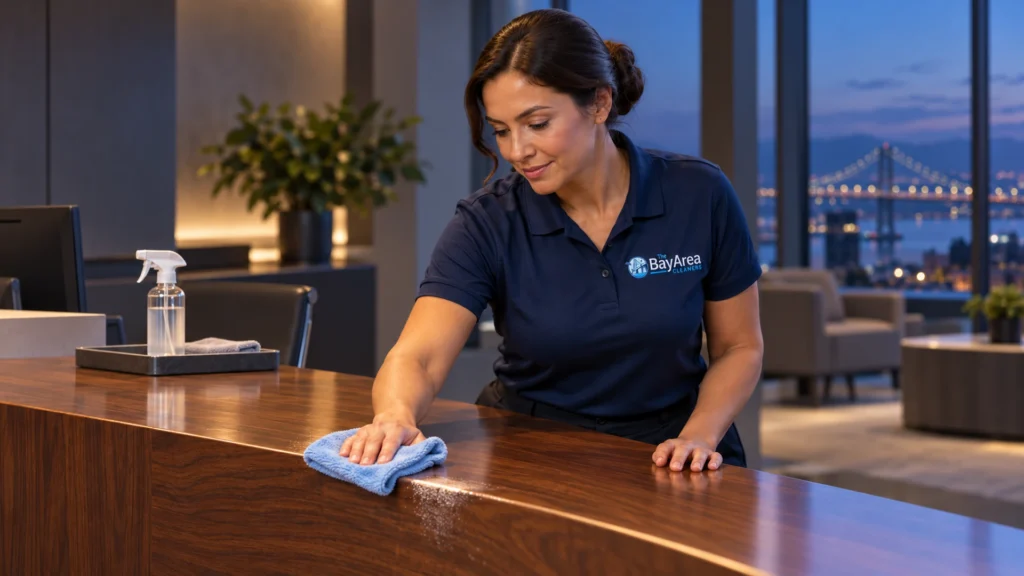
A wood top that feels tacky has something sitting on the finish. The National Park Service’s guide to waxing furniture warns that too much wax can leave a sticky surface that attracts dust and dirt. Hand oils, hand lotion, spilled soda and sugary coffee add their own layer on conference tables and reception counters.
Office supplies leave residue, too. Herman Miller’s care sheet warns not to let vinyl binders stay on a wood surface for long, and to use protective pads under equipment with rubber feet. Rubber and vinyl can soften against a finish and leave a tacky print behind.
Tape from event signs and name tags does the same. Peel it back slowly over itself. If adhesive stays, roll it off with a fingertip, and never scrape it with a razor or rub it with a solvent.
The steps for how to clean wood furniture that is sticky start gentle. Wipe the area with a cloth dampened in a cleaner made for wood furniture, working along the grain. Rinse with a cloth dampened in plain water and dry it. Repeat once or twice on heavy build-up, and if it’s still tacky after that, report it instead of switching to a stronger product.
If the stickiness comes back right after cleaning, or the finish itself feels soft, the problem may be the coating and not the dirt. Leave that top to a furniture refinisher. Knowing how to clean wood furniture that is sticky includes knowing when the finish has failed under the grime.
Takeaway: Sticky tops usually carry wax, polish, hand oils or vinyl residue. Clean with a wood cleaner along the grain, rinse and dry, and call a refinisher if the finish itself is soft.
How to Clean Wood Furniture Without Polish?
Nightly cleaning doesn’t call for polish. Steelcase rules out oils and wax on its wood furniture altogether. Herman Miller suggests a good quality furniture polish twice a year, but rules out aerosol cleaners and polishes, polishes that contain wax or abrasives, and polishes that are oil based. Between those two care sheets, the everyday answer is a damp cloth and a dry one.
You may also like: How to Clean Walls: The Paint Finish Decides Everything
The National Park Service explains why the type of polish matters. Its waxing guide notes that most liquid and aerosol polishes contain silicones. A separate guide warns that silicone wax can be hard to remove once it’s on. It can stay in the wood after the old finish is stripped, then show up as small craters, called fish eyes, when a new finish goes on.
That’s why a nightly crew should know how to clean wood furniture without polish. A spray polish in the supply closet can turn into build-up on the table and a problem for the refinisher years later. If your furniture maker recommends polish, use only the type it names, on its schedule.
Learning how to clean wood furniture without polish keeps your supplies simple. One cleaner made for wood, a stack of soft lint-free cloths and plain water handle nearly every office top.
Takeaway: Skip polish for routine cleaning. If the furniture maker calls for it, use only the type and schedule it names, and keep silicone and aerosol polishes away.
Glass Tops, Metal Bases and Mixed Materials
Your office furniture is rarely all wood. Conference tables sit on metal bases, credenzas have glass tops or metal pulls, and some desks have leather or fabric panels set into the wood. Each material wants its own cloth, and a product that’s fine on one can mark the next.
Glass tops on wood get their own rule from Herman Miller: the glass should rest on felt pads. Don’t lift the glass. If it rocks, slides or sits right on the wood, report it so facilities can check the pads. Clean the glass with its own cloth so glass cleaner doesn’t run onto the wood frame.
Metal legs and bases take a damp cloth and a dry one, the same as wood. Wipe them after the top, so anything that drips off the top lands on a base you haven’t cleaned yet. Keep metal polish and stainless cleaner away from the wood edge where the two meet.
Fabric and leather panels need the product their own maker names. Work around them with a nearly dry cloth so the wood cleaner doesn’t soak in at the seam.
Takeaway: Give glass, metal and fabric their own cloth, keep each product on its own material and report a glass top that rocks or sits right on the wood.
Water Rings, Sunlight and Humidity
Plenty of damage happens between cleanings, from what sits on the wood. Herman Miller’s care sheet asks for coasters under glasses and mugs and desk pads where a lot of paperwork happens. It warns against putting a potted plant on a wood or veneer surface unless it’s in a watertight container or drip tray.
For a light water ring, Herman Miller describes rubbing lightly in the direction of the grain with very fine steel wool. Deep scratches go to a professional refinisher. That’s a judgment call for whoever manages your furniture, not a step for a nightly crew, so report rings and scratches instead of working on them.
Sunlight changes wood over time. Direct sunlight causes permanent color differences, according to Kinnarps, which suggests giving the whole surface the same light. Ask desk owners to shift monitors and trays now and then, since the crew shouldn’t rearrange a desk.
Herman Miller calls extremely high or low humidity damaging and suggests 35 to 65 percent relative humidity. If veneer edges lift or tops crack, ask your building engineer for humidity readings before you blame the cleaning.
Takeaway: Use coasters, pads and drip trays and keep wood out of direct sun. Ask facilities to hold humidity at 35 to 65 percent, and report rings and scratches.
Conference Rooms, Reception Desks and Shared Desks
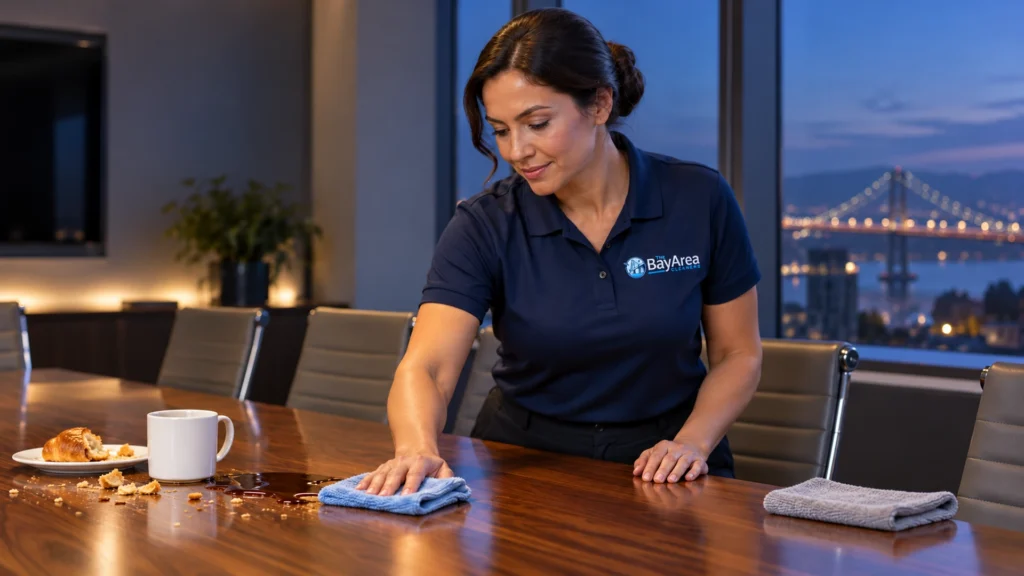
Your conference tables collect the most use. Coffee rings, pastry crumbs, marker smudges and laptop scuffs pile up between the first meeting and the last. Porter coverage that wipes conference tables between back-to-back meetings catches spills when they’re fresh, which leaves the evening visit with a dry dusting and a damp wipe.
Catered meetings are the hardest days on a wood table. Ask whoever sets up the food to lay a runner or cloth under trays and drink stations. Wipe spills as they happen, and clear the rest as soon as the meeting ends, before sugar dries into a sticky ring.
Your reception counter takes hands, bags and visitor elbows all day. Dust it with a slightly damp cloth each night and dry it along the grain. Hand lotion builds up fastest on the front edge, so give that edge the wood cleaner more often than the rest of the top.
Put wood tops in your written scope with the tested disinfectant and their own cloth. Underneath matters, too. Dust and lost items collect under desks and credenzas, and deep cleaning that reaches behind and under furniture handles what a nightly wipe can’t reach.
Takeaway: Wipe conference spills when they’re fresh and give reception edges extra attention.
Frequently Asked Questions
Does every visit need the full routine for how to clean wood furniture?
No. Dust and dry daily or as the furniture gets used, and save the wood cleaner for about once a month. Herman Miller lists monthly cleaning with a wood furniture cleaner, and the National Park Service, writing for museum pieces, says to clean only as needed. A top that only shows dust doesn’t need the monthly wash.
Why does the water wipe matter in how to clean wood furniture without removing finish?
Detergent left on a finish dries into a film, and soap can leave residue too. The National Park Service avoids detergents on museum pieces for that reason. Steelcase allows a mild detergent diluted as directed, and Kinnarps a mild soap solution with lukewarm water. Kinnarps follows the wash with a water wipe and a dry cloth, and that second pass keeps a monthly wash from turning into build-up.
What’s usually behind the tack when an office needs how to clean wood furniture that is sticky?
Polish or wax build-up, hand lotion, sugary drinks and residue from vinyl binders or rubber feet. Each leaves a tacky film on the finish. A wood cleaner on a damp cloth, followed by a plain water wipe and a dry cloth, clears most of them. If the film comes back within days, look for the source, such as a lotion dispenser on the counter or a binder that always sits in the same spot.
Will a table still shine if you follow how to clean wood furniture without polish?
Yes. A slightly damp cloth followed by a dry cloth along the grain keeps a factory clear coat at the sheen it was made with. Polish adds a layer that can turn sticky or leave silicone behind, so use it only when the furniture maker calls for it.
Conclusion
The furniture makers’ care sheets keep the routine short: a slightly damp cloth, a dry cloth along the grain and a mild wash once a month. They split on one product, polish, and the safe default is to leave it out of the supply closet.
The judgment calls are about what the crew leaves alone. Water rings, deep scratches and soft finishes go to whoever manages your furniture. Getting how to clean wood furniture right means handing those jobs off and using only disinfectants the maker has tested on its finish.
The Bay Area Cleaners wipes conference tables, private-office desks and reception counters as part of its office cleaning between Vallejo and San Mateo. If busy meeting days leave crumbs and coffee spills on the table by noon, ask about porter coverage. Call 707-656-9339 for a free estimate.