A restaurant gets graded twice a night. Once by the guest who looks down at the floor under the table, and once by the inspector who opens a hood access panel. Restaurant commercial cleaning has to answer both, and a scope copied from an office building answers neither.
The complication is that kitchens already clean constantly. Cooks wipe stations, the dish crew runs the pit, servers reset tables. So the real question is never what needs cleaning. It is which surfaces nobody on payroll has the time, tools or access to reach, and on what clock.
Grease, standing water and a close that runs out of clock sit underneath almost every kitchen, and each belongs on a different cycle. What follows is which task lands where, and why a restaurant cleaning service exists to take the ones the close cannot reach.
Where Restaurant Cleaning Actually Breaks Down?
Three failures show up in almost every operation, and none are on the closing checklist. Each explains a line item in a well-built restaurant commercial cleaning program.
Grease migrates. It leaves the cook line as vapor and cools on the first cold surface it finds. It settles on walls, ceiling tiles, light diffusers and the tops of reach-ins. A crew that wipes only what it sees at eye level leaves a film thickening above the line for months. By the time it is visible, it is a stripping job rather than a wiping job.
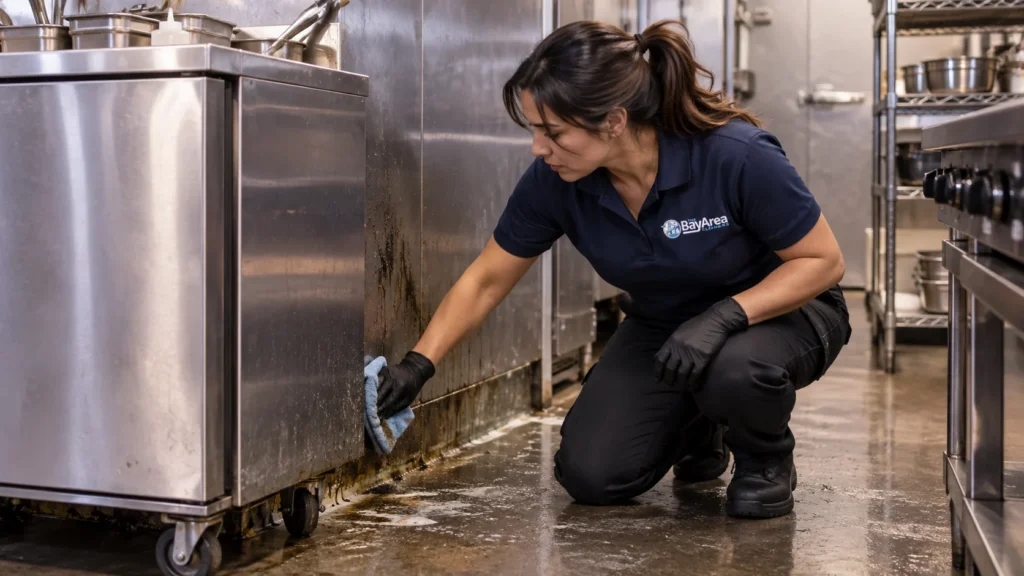
Water sits. Dish pits, ice wells, prep sinks and mop sinks all discharge, and the floor around them stays damp from open to close. Damp grout, damp wall bases and damp equipment feet are a slip problem first and a biological one second, and neither shows up in a nightly wipe-down.
The clock runs out. A nightly close has perhaps 45 to 90 minutes of real cleaning labor before cost stops the shift. Anything longer gets pushed to tomorrow, and the pushed work is what shows up on an inspection report six weeks later.
A restaurant cleaning service earns its budget by absorbing the third failure. It takes what does not fit inside a closing shift and puts it on a calendar with a name attached, which solves the first two by schedule rather than by asking a tired crew for more effort.
The Nightly Close: The Hour After Last Call
Nightly work is the part operators most often assume is already covered. It rarely is, at least not in full, and it is where restaurant commercial cleaning either earns the building back or falls behind it. Whether a restaurant commercial cleaning vendor takes the whole night or only part of it, the sequence below is what the written routine should describe.
Write it as a sequence rather than a list. Order decides the outcome, since anything that drops debris has to happen before the floor gets touched.
- Break down the cook line. Griddles, flat tops, fryer surrounds and the gaps between equipment. Pull anything on casters far enough to reach behind it.
- Pull and wash hood filters. Baffle filters go through the dish machine or a soak tank on the schedule the cooking volume calls for. In a high-volume fry operation that is nightly.
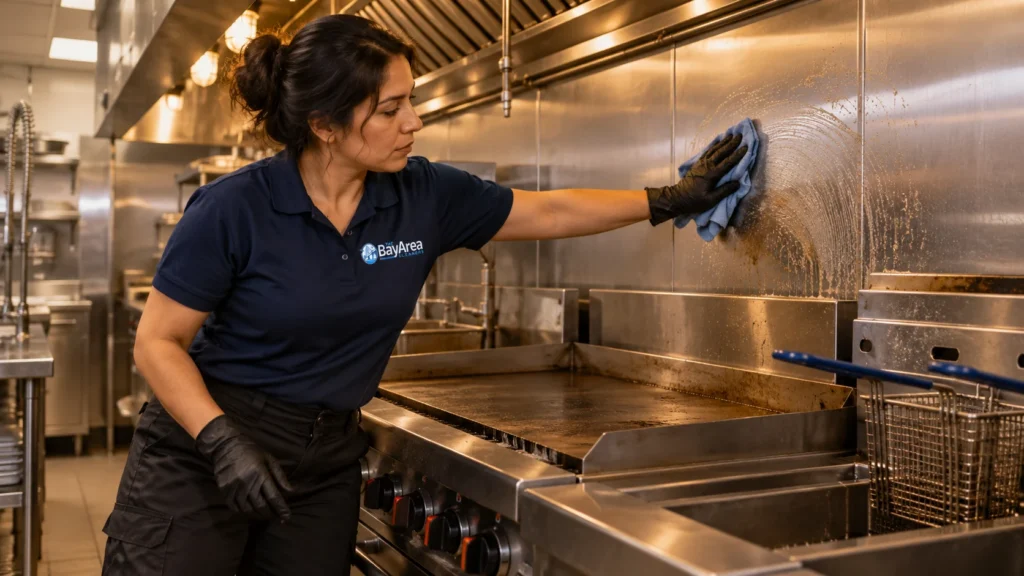
- Wipe vertical surfaces within reach of the line. Wall panels, equipment fronts and the backsplash behind every heat source.
- Run the dish area down. Machine interior, curtains, drain boards, the pit floor and the wall behind it.
- Pull waste and wash the cans. Receptacles for putrescible waste have to be built so they do not leak and can be conveniently and thoroughly cleaned. The can itself gets washed, not just relined.
- Clean restrooms. Fixtures, partitions, touch points, dispensers and floor.
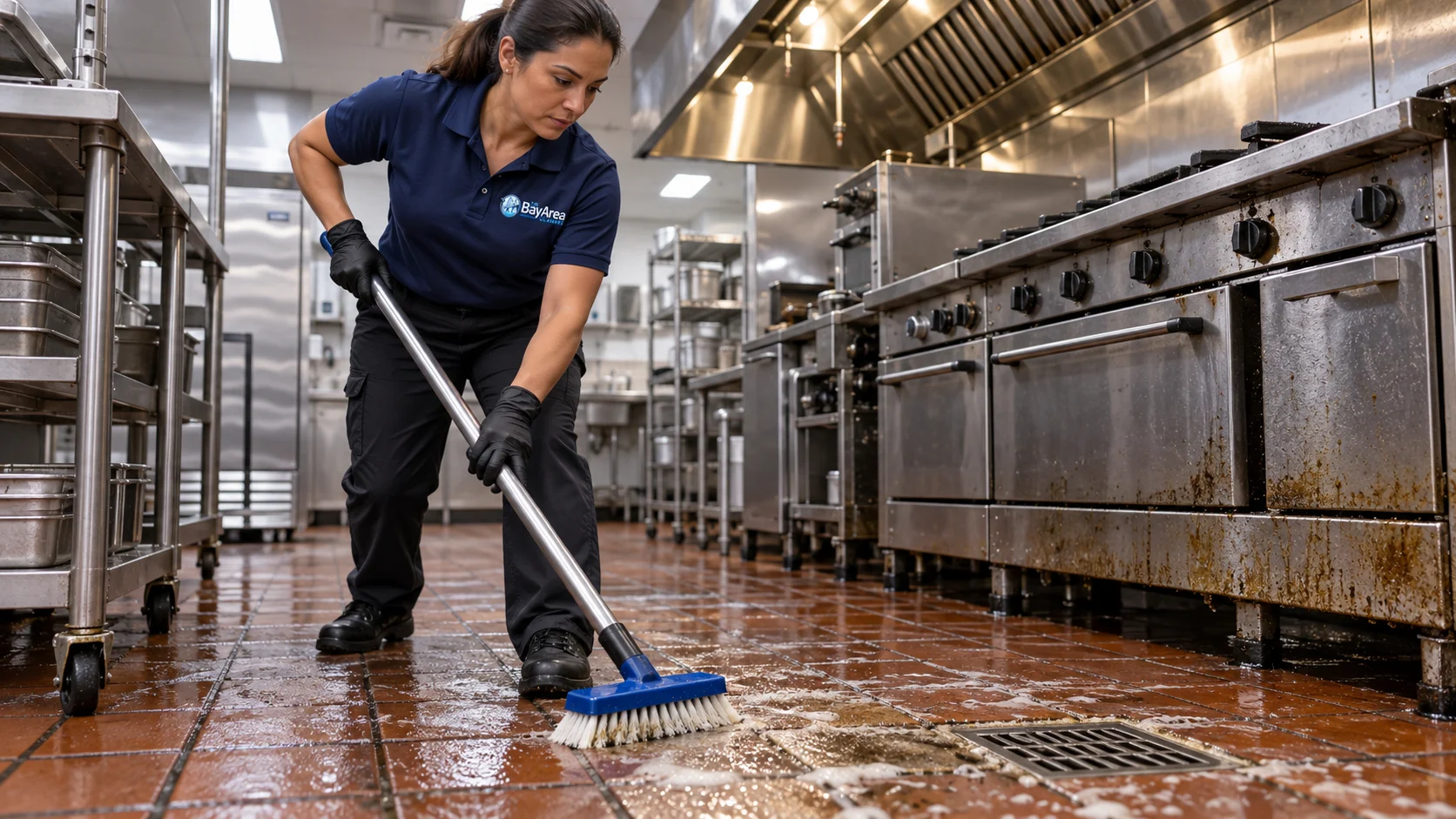
- Do floors last. Sweep or dust mop, then deck brush the kitchen with a degreaser, then squeegee to the drain.
Two habits in that sequence carry hazard weight. Federal restaurant safety guidance is direct on both. Broken glass gets picked up with a broom and dustpan rather than by hand, and cleaning chemicals never get combined at the sink. Mixing chlorine and ammonia solutions produces a chemical reaction that may release deadly chlorine gas.
Kitchen floors are where nightly effort disappears fastest. Quarry tile holds grease in the grout joints long after the tile face looks clean, and a mop moves that film around.
You may also like: How to Clean Grout on Commercial Tile Floors
Weekly Work That Keeps the Nightly Routine Honest
Weekly tasks exist to reset the surfaces that nightly cleaning touches lightly. Skip them for a month and the nightly routine starts failing even when the crew does everything on paper. This is the tier where a restaurant cleaning service earns or loses its renewal.
| Zone | Nightly | Weekly | Periodic |
| Cook line | Wipe-down, filter wash, floor degrease | Pull equipment, clean wall and floor behind | Deep degrease of walls and ceiling above the line |
| Dish area | Machine, drain boards, floor | Delime machine interior, scrub drain covers | Descale and inspect discharge lines |
| Walk-in and reach-in | Spills, handles, gaskets | Shelving, floor, fan guards | Coil and condensate pan service by refrigeration tech |
| Dry storage | Spills, floor sweep | Shelf wipe, rotate and clean under pallets | Full clear-out and wash-down |
| Restrooms | Full clean, restock | Descale fixtures, scrub floor grout | Partition detail and vent cleaning |
| Dining room | Tables, chairs, floor | Booth seams, table bases, baseboards | Carpet extraction or hard floor refinishing |
| Waste area | Pull and reline, wash cans | Wash enclosure floor, degrease pad | Pressure rinse and deodorize enclosure |
The weekly column is the one that gets quietly dropped during a busy stretch. Giving each weekly task a named night keeps it from becoming optional, and it gives the walkthrough something to check against.
Monthly and Quarterly Jobs That Need Their Own Calendar
These are the tasks that no closing crew will ever absorb, and the reason most operators contract a restaurant cleaning company in the first place. Each one has a physical trigger rather than a date, so watch the trigger and let it set the month. This tier is where restaurant commercial cleaning stops looking like janitorial work.
- Hood and duct cleaning. Exhaust cleaning above the filters is a certified specialty trade, and frequency depends on cooking volume, fuel type and what the local fire authority requires. Confirm who holds that contract rather than presuming it is handled.
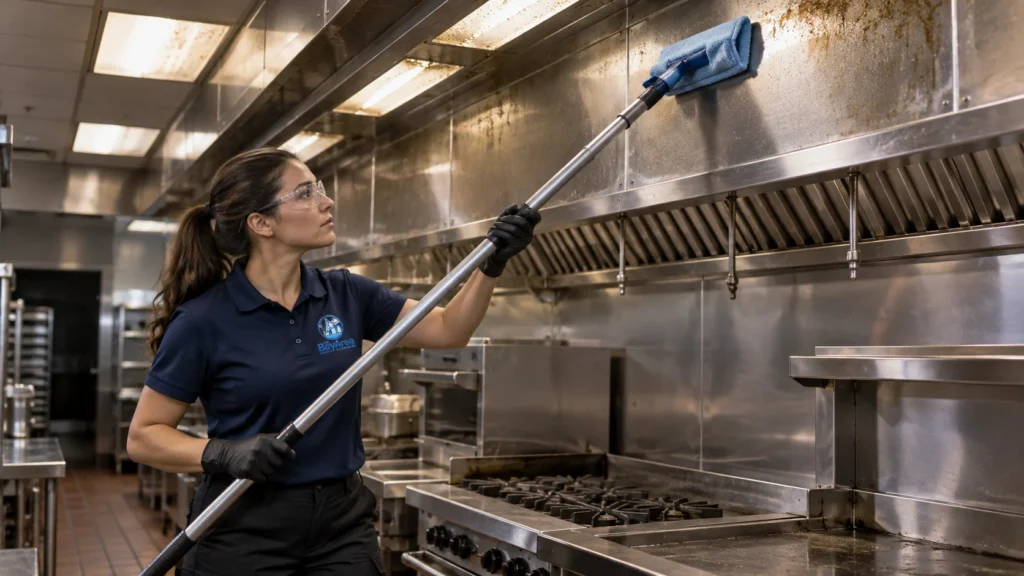
- Deep degreasing above the line. Ceiling tiles, light diffusers, wall panels above hand height and the tops of equipment. The film described earlier needs dwell time a nightly shift cannot spare, so a scheduled deep cleaning visit is where it belongs.
- Floor refinishing. Dining rooms on VCT need stripping and recoating on a cycle set by traffic. Quarry tile in the kitchen needs periodic deep scrubbing with the right pad and chemistry rather than a mop. Both fall under commercial floor care rather than nightly janitorial.
- Grease interceptor service. Pumping intervals are set by the local wastewater agency, not by a cleaning vendor. Ask your municipality what applies to your fixture size and keep the pumping records.
- Ice machine service. Interiors need cleaning and sanitizing per the manufacturer’s instructions, on the same calendar as everything else here.
- Vents and diffusers. Supply and return grilles in dining rooms pull grease-laden air and stain the ceiling around them long before anyone notices the grille itself.
Stainless is the surface where periodic neglect becomes visible first. Shelving legs, prep table undersides and equipment panels develop orange spotting that reads as rust and is usually something else entirely.
You may also like: How to Clean Stainless Steel Rust in Commercial Buildings
What Safety Rules Sit Behind Kitchen Cleaning?
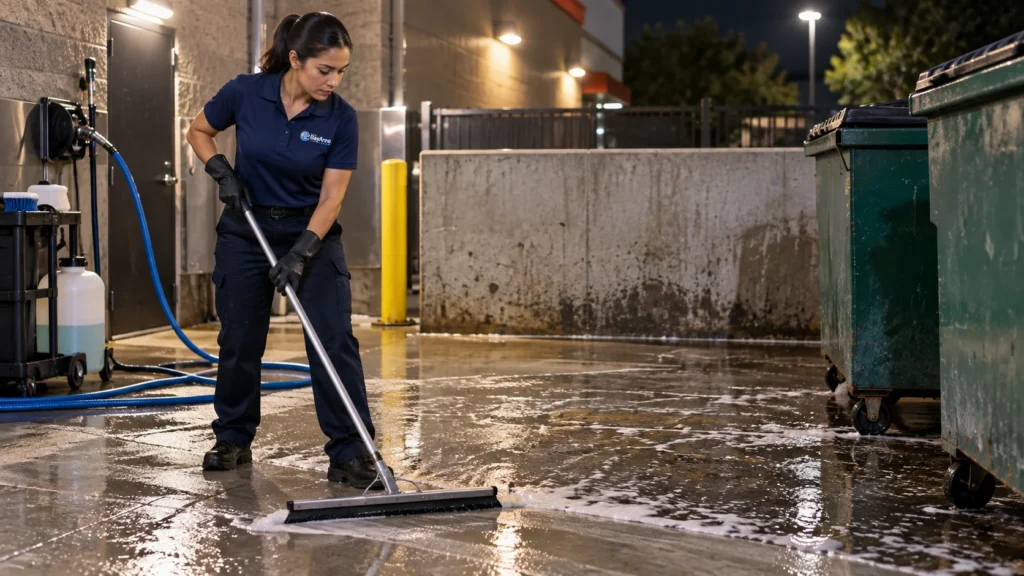
Restaurant cleaning is regulated from two directions at once, and the rules answer to different agencies. A restaurant commercial cleaning program that satisfies one and ignores the other is half a program.
Worker safety. Federal guidance built for kitchen environments covers the cleaning shift directly. Floors have to be kept clean and dry, with drainage and with false floors, platforms, mats or other dry standing places provided where practicable. Wet floor areas call for warning signs. Cleaning chemicals fall under the Hazard Communication Standard, which calls for a written program and safety data sheets available to the people using the products. Personal protective equipment applies to the chemicals in use. Where corrosive cleaners are handled, suitable facilities for quick drenching or flushing of the eyes and body have to be provided within the work area for immediate emergency use. Electrical work near wet floors brings ground-fault protection in, and restroom cleaning carries a sharps risk crews should be briefed on rather than discover.
Sanitation and pest control. California’s workplace sanitation rule maps onto restaurant commercial cleaning almost line for line. Cleaning and sweeping have to be done in a manner that minimizes contamination of the air. Sweepings, putrescible wastes, refuse and garbage have to be removed so as to avoid creating a nuisance. Workplaces have to be equipped and maintained to prevent the entrance or harborage of insects, rodents or other vermin. Water intrusion, leakage or accumulation has to be corrected given the potential to cause mold growth.
Food safety. The California Retail Food Code sits inside the state Health and Safety Code and is enforced locally, with 62 local environmental health agencies handling inspection and permitting. The food-facility side of your program answers to a county inspector whose reading carries weight in your jurisdiction. Ask them what they look at before you write the routine, not after the first visit.
None of these agencies publishes one frequency that fits every operation. A fryer-heavy kitchen and a cold-prep kitchen with the same seat count generate loads that are not comparable.
Front of House: The Half Guests Grade You On
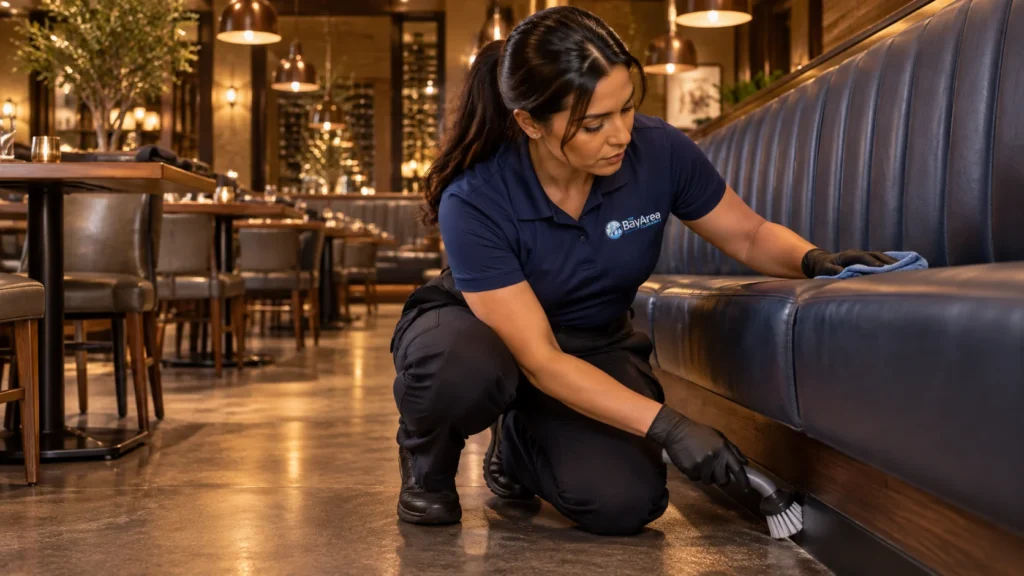
Kitchen work protects the operation. Front of house protects the review, and it gets a fraction of the attention in most restaurant commercial cleaning programs. Guests cannot see a clean walk-in. They can see a smeared entry door from the sidewalk, so restaurant commercial cleaning that stops at the kitchen door is doing half the job.
Guests notice a short list of things, in a predictable order:
- Entry glass and door hardware. The first surface anyone touches, and the one that shows every handprint under afternoon light.
- Table bases and booth seams. Residue collects where the cushion meets the back, and in the pedestal foot a wipe-down never reaches.
- The floor edge. Baseboards, the strip under the banquette and the perimeter where a mop swings short.
- Ceiling and light fixtures. Dust on a pendant over a two-top reads as neglect from every seat at the table.
- The restroom. The one room a guest inspects alone and reports on publicly.
Dining room floors split by surface. Carpet absorbs food soil and needs extraction on a cycle, not just vacuuming. Hard floors need the finish maintained rather than replaced, on a schedule set against traffic instead of the calendar alone. The restroom does more reputational work than any other single room, and a restaurant cleaning company that treats it as an afterthought will lose the account there.
You may also like: Day Porter Services: What They Are and When Your Building Needs One?
Splitting Restaurant Commercial Cleaning Between Staff and a Vendor
The split is the part of a restaurant commercial cleaning arrangement worth settling first. Every unassigned task becomes nobody’s task, and the gaps surface at the worst moment rather than at the negotiating table.
| Task | Usually staff | Usually contracted | Notes |
| Line wipe-down during service | Yes | No | Tied to food safety during operating hours |
| Nightly floor degrease | Sometimes | Often | Depends on close labor and kitchen size |
| Hood filter washing | Yes | Sometimes | Filters only, not the duct system |
| Hood and duct system cleaning | No | Specialty vendor | Separate certified trade |
| Restroom nightly clean | Sometimes | Often | Contracting it raises consistency |
| Walk-in deep clean | Sometimes | Often | Needs a scheduled closed window |
| Floor stripping and refinishing | No | Yes | Equipment and cure time required |
| Deep degrease above the line | No | Yes | Needs dwell time and access equipment |
| Grease interceptor pumping | No | Licensed hauler | Records kept for the wastewater agency |
| Daytime coverage in dining room | Sometimes | Often | Day porter model |
The pattern behind the table is worth naming. Anything that happens with food present stays with staff, since it belongs to food safety rather than to restaurant commercial cleaning. Anything needing an empty building, a machine or dwell time moves to the restaurant cleaning company. The Sometimes rows are where kitchen size and closing labor decide it.
One detail belongs in the split before anything else: who has the building at 2 a.m. A crew arriving after the last cook leaves needs alarm codes, an unlocked walk-in and chairs already up. Skip that handoff and you pay for visits where the crew cleaned what it could reach.
You may also like: How to Choose a Janitorial Service for Your Business: 7 Questions to Ask First
How Menu Type Changes What Gets Dirty?
Two kitchens with the same seat count can need schedules that barely resemble each other. What the menu produces decides where soil lands and what removes it.
| What the kitchen produces | Where it lands, and what changes |
| Fryer oil and deep-fry vapor | Travels furthest of anything on this list. Walls, ceiling tiles and fixtures well away from the fryer. Pushes degreasing above hand height onto a shorter cycle |
| Char-grill and wood-fired smoke | Carbon soot rather than grease film. Different chemistry, plus ash handling and a hotter filter load |
| Flour and dry goods | Behaves like dust, not grease. Settles into motor housings and gaskets, and turns to paste anywhere it meets water on the floor |
| Sugar, syrup and soda | Sticky floors, drain flies and dispenser lines. Concentrates at the bar and under counters rather than overhead |
| Raw protein and seafood | Odor control lives in drains, waste areas and floor joints rather than on visible surfaces |
Match the restaurant commercial cleaning schedule to what the kitchen actually produces, and reopen it whenever the menu changes. The item that added a fryer just changed what settles on the ceiling.
Frequently Asked Questions
How often does a restaurant need professional cleaning beyond the closing crew?
No single answer holds across operations. Frequency follows cooking volume, menu type, seat count, floor material and how much labor the close can carry. The workable method is to time your own close for a week and list what the crew never reaches. That list is the restaurant commercial cleaning schedule, and it writes itself once you watch the clock instead of the checklist.
Is a restaurant cleaning company the same as a hood cleaning contractor?
No. Exhaust hood and duct cleaning above the filter line is a separate certified trade with its own documentation. A restaurant cleaning company covers filters, surfaces, floors and the spaces around the equipment. Operators who assume one arrangement covers both often discover the gap during a fire inspection. The filters and the duct above them are two different jobs held by two different trades.
Can closing staff handle everything instead?
For some tasks, yes, and doing so is cheaper. What closing staff cannot do is anything needing dwell time, access equipment, floor machines or a closed building. Walk-in deep cleans, floor refinishing and degreasing above hand height all need a window the operating schedule does not provide. That window is what restaurant commercial cleaning is paid to occupy.
Does a fryer kitchen need a different schedule than a cafe?
Yes, and the gap is wider than most operators expect. Fried food puts airborne oil into the room every service hour, which lands on walls, ceilings and the tops of equipment far from the fryer itself. A cold-prep or espresso operation generates sugar residue and milk protein instead, which behaves differently and lives mostly at counter height. Same square footage, different restaurant commercial cleaning schedule.
When is the best time to schedule restaurant commercial cleaning services?
After close, before open, or on a scheduled dark day. Work needing floors clear and equipment cool lands on the slowest night of the week. Operations that never fully close run a rotating schedule so one zone gets deep-cleaned at a time rather than the whole building at once.
Conclusion
Restaurant commercial cleaning fails on planning before it fails on effort. The kitchen crew works hard every night and the building still degrades, since the work that matters most sits outside the hour the close allows.
Sort the tasks by clock rather than by room. Give every weekly and periodic task a named night and an owner, then read the schedule back against what your kitchen actually produces. A fryer changes it. A new dining room floor changes it. Local environmental health and fire requirements set the floor that any restaurant commercial cleaning services arrangement has to clear, so ask those two offices what they look at before the schedule goes final.