A polished marble lobby tells every visitor the building is cared for, right up until a dull patch shows up in front of the elevators. Marble reacts with acids, and the acid is often in a cleaner that looked harmless on the label. Learning how to clean marble floors in a commercial building starts with one fact about the stone itself.
Federal stone guides and stone care makers agree on the daily care, and none of it involves vinegar. The routine is short, and most of it happens at the door.
The quick version: Marble is calcite, and acids dissolve it. Put walk-off mats inside and outside every entrance, vacuum them daily and dust mop with a dry, untreated mop at least twice a day in busy lobbies. Damp mop with a neutral cleaner made for stone, diluted as directed, using a clean mop and cool to warm water, and don’t let the cleaner dry on the floor. Keep vinegar, lemon cleaners, acidic restroom products and alkaline degreasers or strippers off the stone. Blot spills right away. A dull spot that won’t wipe off is usually an etch mark, and repolishing belongs to a stone contractor. That’s how to clean marble floors without wearing away the shine.
The Mineral Under the Polish
The General Services Administration’s guide to marble describes it as a metamorphic stone made of calcite, the mineral form of calcium carbonate. Calcium carbonate is highly susceptible to acid. GSA notes that marble is readily dissolved by acids, even very dilute ones.
That’s why one drip of the wrong cleaner can leave a dull spot that won’t wash off. The acid dissolves a thin layer of the polished surface, and the spot looks flat next to the rest of the floor.
You may also like: How to Clean Grout on Commercial Tile Floors
Some marble holds up better than others. GSA explains that marble can be calcite or dolomite, and dolomitic marble is much more resistant to acid attack than calcite marble. You usually can’t tell which one your building has by looking, and even dolomitic marble isn’t immune, so treat every marble floor as acid-sensitive.
Terrazzo gets the same caution. Many terrazzo floors use marble chips, and GSA’s resurfacing procedure for historic terrazzo specifies crushed marble chips as the aggregate. If your lobby records name the stone and its quarry, keep that sheet with your cleaning scope, since it tells any contractor what they’re working on.
Takeaway: Marble is calcium carbonate, and even weak acids dissolve its surface. Treat every marble and terrazzo floor as acid-sensitive.
How to Clean Marble Floors in a Busy Lobby?
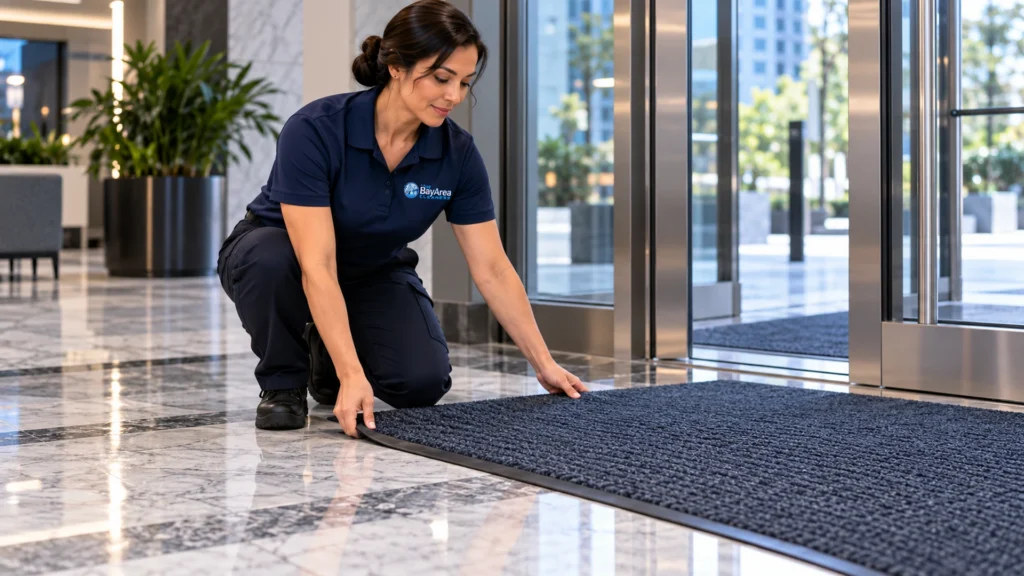
Grit does the slow damage. Sand and dirt tracked in from the sidewalk act like sandpaper under shoes, and a lobby can lose its shine in the walking path long before anyone spills anything. LATICRETE’s StoneTech care guide and Stuart Dean, a firm that restores and maintains building stone and metal, both recommend walk-off mats inside and outside the entrance.
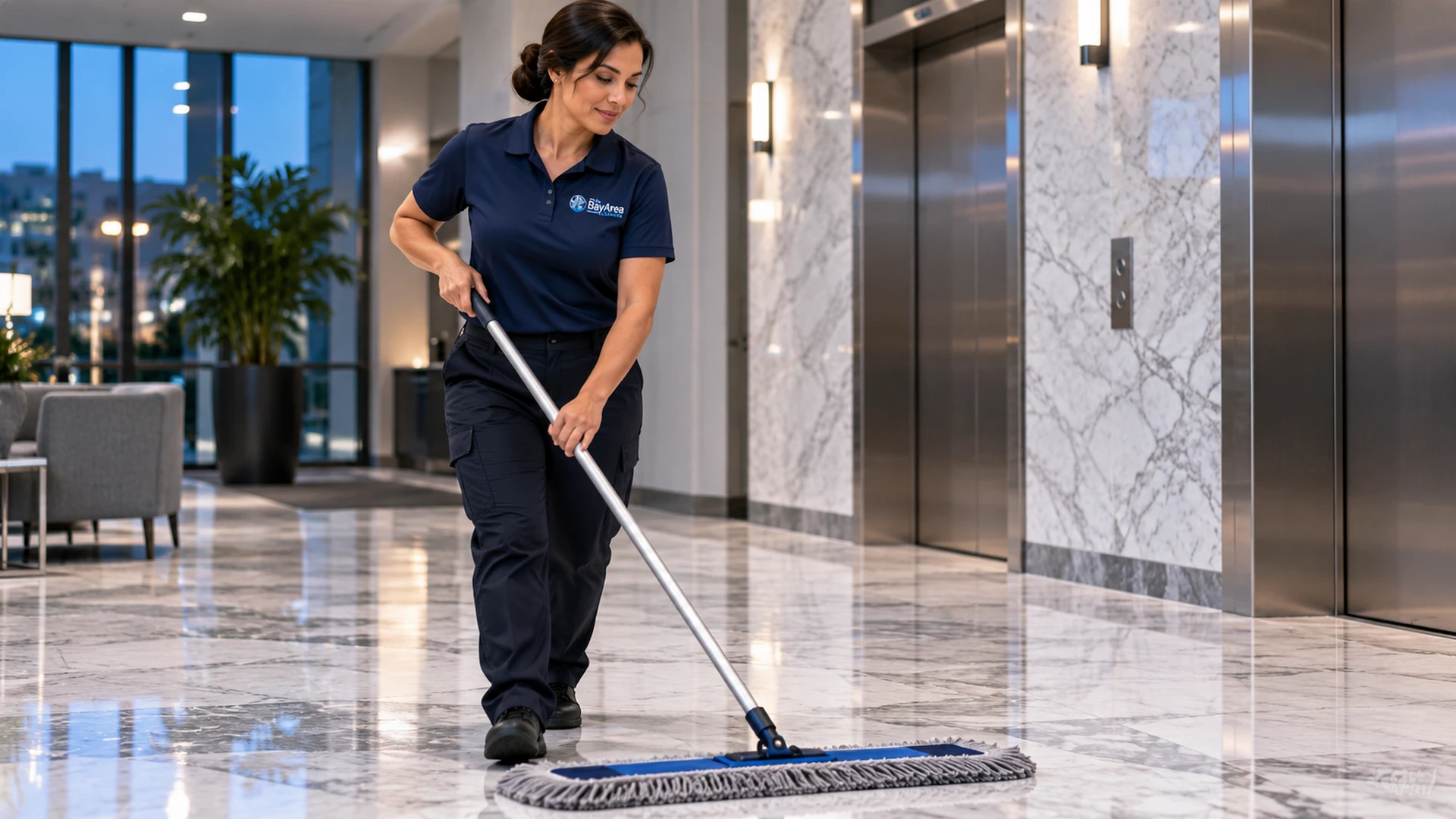
Here’s the daily routine for a polished marble lobby:
- Vacuum the walk-off mats, check that they’re flat and in place, and clear debris from under them now and then, as Stuart Dean advises.
- Dust mop with a clean, dry, untreated dust mop, at least twice a day in high-traffic areas, as Stuart Dean recommends.
- Damp mop with a clean mop head and cool to warm water mixed with a neutral stone cleaner at the label’s dilution.
- Keep foot traffic off the floor until it’s completely dry.
LATICRETE’s guide specifies a clean, non-treated, dry dust mop and points out that vacuum attachments or wheels can scratch the surface. The same goes for mail and catering carts, so ask vendors to use soft wheels in the lobby, and put felt pads under benches and chairs.
The drying step is a safety step, too. Wet stone floors can be slippery, so put out signs and keep people on a dry path until the floor dries. Schedule the damp mop for a time when the stone can dry before the lobby fills.
Takeaway: Stop grit with mats inside and outside, dust mop often with an untreated mop, damp mop with a neutral stone cleaner and keep traffic off until it’s dry.
How to Clean Marble Floors Without Streaks?
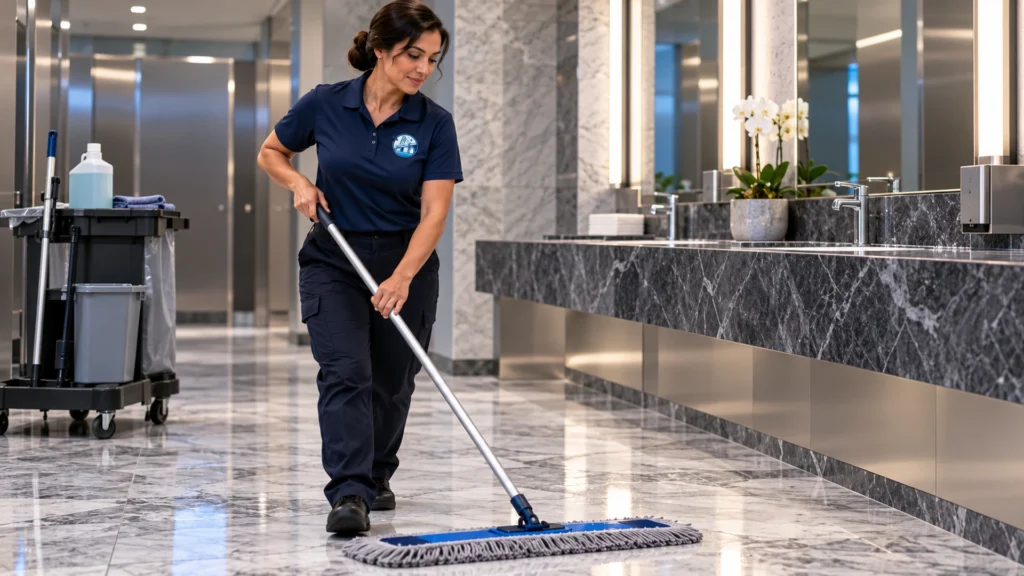
Streaks on marble usually come from what’s left on the surface. Too much cleaner, a dirty mop head or rinse water that’s gone gray all dry into a film on the polish. Polished stone reflects light evenly, so any film that breaks that reflection shows up as a streak.
GSA’s procedure for cleaning interior historic marble gives the rule plainly: don’t allow cleaning products to dry on stone surfaces. On a daily scale, that means mixing the stone cleaner at the label’s dilution, not stronger, and changing the water before it turns cloudy. A heavier dose leaves more behind. If your lobby gets a midday damp mop, keep it to spills and spots, and save the full pass for the evening when the stone has time to dry.
You may also like: How to Clean Laminate Floors Without Warping the Seams
The product matters as much as the amount. Stuart Dean warns that acidic and alkaline cleaners shouldn’t be used on polished marble, since they dull the polish. LATICRETE adds that general cleaners not made for natural stone aren’t recommended, so the all-purpose floor product and the degreaser stay off the marble.
Work in sections and keep each one damp, not puddled, until you move on. If you want to know how to clean marble floors without streaks, start with clean water and a fresh mop head. When streaks show up in the same place every night, that spot is probably getting a heavy dose of cleaner. For that spot, the answer to how to clean marble floors without streaks is less product, not more scrubbing.
Takeaway: Use the stone cleaner at the label dilution, change the water often and never let cleaner dry on the floor. Acidic and alkaline products dull the polish.
How to Clean Marble Floors in Bathrooms?
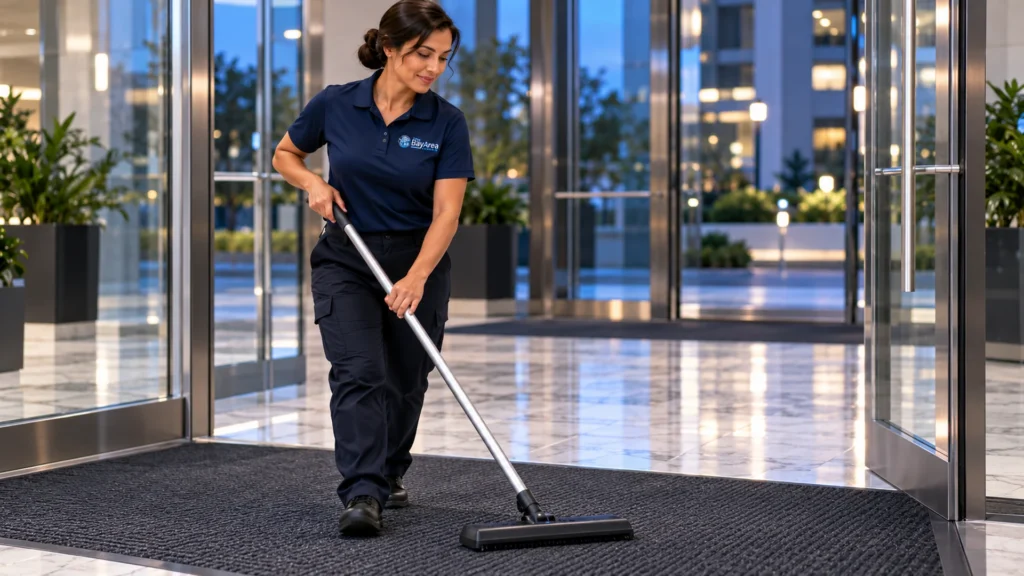
Restrooms are hard on marble for reasons that have nothing to do with foot traffic. LATICRETE points out that some common toiletries, such as perfume, toothpaste and mouthwash, contain acids that can damage stone or its sealer. In an executive restroom with marble around the vanity, those drips can land on the floor daily.
The cleaning products in a restroom closet are the bigger risk. Many toilet bowl and scale removers are acidic, and a drip off a brush or a splash from a bottle can etch the floor. Read the labels in the closet, keep acidic products on a tray when they’re used, and wipe any drip off the marble right away.
As for how to clean marble floors in bathrooms, LATICRETE recommends periodic use of a neutral stone cleaner for soap scum and hard water deposits. A squeegee after each use in showers and other wet areas keeps that build-up down. Use the same neutral stone cleaner on a marble vanity and the floor, so the crew never carries an acidic product from counter to floor.
If your contract includes restroom service with sweeping, mopping and spot treatment for slip-resistant floors, list which restroom floors are marble in the scope. Knowing how to clean marble floors in bathrooms is mostly about keeping the wrong bottle away from the stone.
Takeaway: Keep acidic bowl and scale cleaners off marble, wipe toiletry drips and use a neutral stone cleaner for soap scum and hard water.
What Vinegar Does to Polished Marble?
Search results for how to clean marble floors with vinegar promise a cheap, natural cleaner. The stone sources say the opposite. LATICRETE lists highly acidic substances such as orange juice, coffee, vinegar and wine as things that can etch most marble, limestone and travertine.
GSA’s procedure for cleaning historic marble rules out raw acids and alkalis for marble cleaning, and it calls water and soft-bristle brushes the gentlest method for stone. A diluted vinegar mop is still an acid on calcite.
Sealer doesn’t change the answer. LATICRETE notes that sealing gives you time to wipe up a spill, but it can’t stop the chemical reaction that leaves a dull mark. Sealed or not, the stone reacts the same way, so a sealer doesn’t make how to clean marble floors with vinegar any safer.
Lemon cleaners and many bathroom scale removers are acids too. Citrus degreasers are often alkaline instead, and Stuart Dean warns that alkaline cleaners dull polished marble just the same. The honest answer to how to clean marble floors with vinegar is that you shouldn’t, on any marble you want to keep polished.
Takeaway: Vinegar, lemon and descalers are acids, and acids etch marble, sealed or not. Use a neutral stone cleaner instead.
When a Spill Hits the Stone?
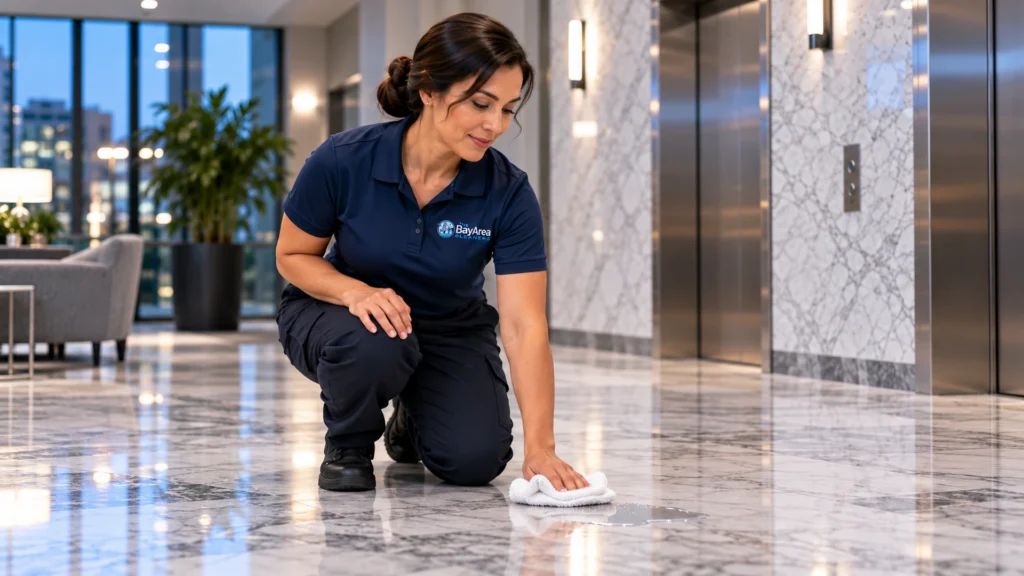
Speed matters with marble. LATICRETE advises scooping up food with a plastic spoon and blotting liquids with a clean, dry, white cloth, turning the cloth often. Then spray the spot with a neutral stone cleaner and wipe off the excess with a clean cloth, the last step in LATICRETE’s method.
A spill that leaves a dull spot hasn’t stained the stone. It has etched it. An etch mark looks dull or lighter than the polish around it, and a stain changes the stone’s color under a shine that’s still intact. A mop won’t fix an etch mark.
In a busy lobby, the fix is speed. Porter rapid spill response cuts the time an acidic drink sits on the stone, so have the front desk call in spills the moment they happen.
Oily stains that soak in are a separate problem, and they go to a stone specialist, not the nightly mop. Note what spilled and when, so the specialist knows what they’re treating and how long it sat.
Takeaway: Scoop food, blot liquids with a white cloth, then spray and wipe with a neutral stone cleaner. A dull spot that won’t wipe off is usually an etch mark, and a mop won’t fix it.
Bringing Back the Shine Takes a Stone Contractor
Once marble is etched or worn dull in the traffic path, only repolishing brings the shine back. GSA’s procedure treats that as specialist work. It starts by confirming the marble’s original finish, and it notes that the original finish on most historic floors is muted and non-reflective, not mirror bright.
The same procedure calls for a test area in a spot that isn’t highly visible before polishing begins. It warns against a polishing agent that abrades the stone so much it needs resurfacing. For historic buildings, GSA calls for contractors with at least five years of marble cleaning and restoration experience.
Those rules were written for historic federal buildings, but they make a sound checklist for any stone contractor. Ask for the planned finish, a test area and references from similar floors before the first machine goes down on your lobby. Keep repolishing on a separate contract from nightly cleaning.
If an earlier crew put floor finish on the marble, removing it is stone work too. GSA even keeps a procedure for stripping floor coatings that splashed onto the lower part of marble walls.
Takeaway: Repolishing starts with the original finish and a test area, and it belongs to an experienced stone contractor under a separate contract.
Where Marble Meets Other Floors?
Marble often meets carpet at a waiting area, vinyl tile in a back corridor or rubber flooring at a service door. Products made for those floors end up on the stone at the seams.
Most floor strippers are strongly alkaline, and alkaline products dull polished marble. Tape off the marble edge before anyone strips the floor next to it. Pick up any slurry that reaches the stone right away, then rinse the spot with clean water. Carpet spotters and general-purpose cleaners from the next floor over need the same care.
Mop water is the quieter problem. A mop that just finished a vinyl hallway carries that floor’s cleaner and grit onto the stone. Give the marble its own bucket and mop head so nothing from the other floors travels onto it. If your building strips its vinyl corridors on a set schedule, share those dates with your crew so the marble edge gets taped first.
Elevator landings and lobby thresholds take the same grit as the main door. Dust mop them on every pass, and check the threshold strip for trapped sand that shoes grind into the polish.
Takeaway: Keep stripper, spotters and other floors’ cleaners off the marble edge, and give the stone its own bucket and mop head.
Rainy Days and High-Traffic Entrances
Bay Area winters bring rain, and rain brings grit and water through the front door. Wet shoes carry grit farther into the lobby, and a wet stone floor is slippery. The entrance is where most lobbies lose their shine first.
Add mats on wet days and check them through the day. A soaked mat stops working, so swap it for a dry one. Keep a spare stack of dry mats near the entrance through the rainy months so the swap takes a minute, not a phone call. If your main entrance takes the brunt of the weather, add a second mat inside the vestibule so shoes get two chances to dry.
You may also like: Commercial Restroom Cleaning: The One Room That Grades the Whole Building
Entryway matting care keeps the mats themselves clean, so they hold dirt instead of spreading it. Dust mop the first few feet inside the door more often on rainy days, and keep warning signs out until the stone is dry. Check your mats at midday on a wet day, and if the walking path past them looks gray, they’re full and need a swap.
Takeaway: On rainy days, add and swap mats, dust mop the entrance more often and keep the floor dry and signed.
Frequently Asked Questions
What part of how to clean marble floors falls to the day porter?
The daytime half. Stuart Dean’s guideline is dust mopping at least twice a day in high-traffic areas, so a porter can take the midday pass, check the mats and blot spills. Leave the damp mop with a neutral stone cleaner for a time when the floor can dry before anyone walks on it.
Are toiletry drips a problem for how to clean marble floors in bathrooms?
Yes. LATICRETE notes that perfume, toothpaste and mouthwash can contain acids that damage stone. Wipe drips from the vanity area daily, and keep acidic bowl and scale cleaners off the floor. If your restroom has marble only around the vanity, mark that zone so the crew switches products there.
Is a string mop or a flat mop better for how to clean marble floors without streaks?
Stuart Dean names a clean rayon or cotton string mop for daily cleaning of polished marble. With a flat mop, the same habits hold: a clean head, stone cleaner at the label dilution and fresh water before it turns cloudy.
What dilution makes how to clean marble floors with vinegar safe?
None. GSA notes that marble dissolves in acids, even very dilute ones. A weaker vinegar mix still etches calcite, so use a neutral stone cleaner. If your floor already shows dull spots from past vinegar use, those are etch marks for a stone contractor.
Conclusion
Marble rewards a simple routine. Mats at the door, frequent dust mopping, a neutral stone cleaner at the right dilution and fast work on spills keep the polish intact. Acids, alkaline degreasers and dried cleaner do the damage.
Knowing how to clean marble floors includes knowing where cleaning stops. Etch marks and worn paths go to a stone contractor with a test area and a plan for the original finish. Your nightly crew keeps the stone clean, and your stone contractor keeps it polished.
The Bay Area Cleaners dust mops, damp mops with a stone-safe neutral cleaner and keeps entrance mats in shape for marble lobbies and restrooms between Vallejo and San Mateo. Call 707-656-9339 for a free estimate and a cleaning time that lets the stone dry before your lobby opens.