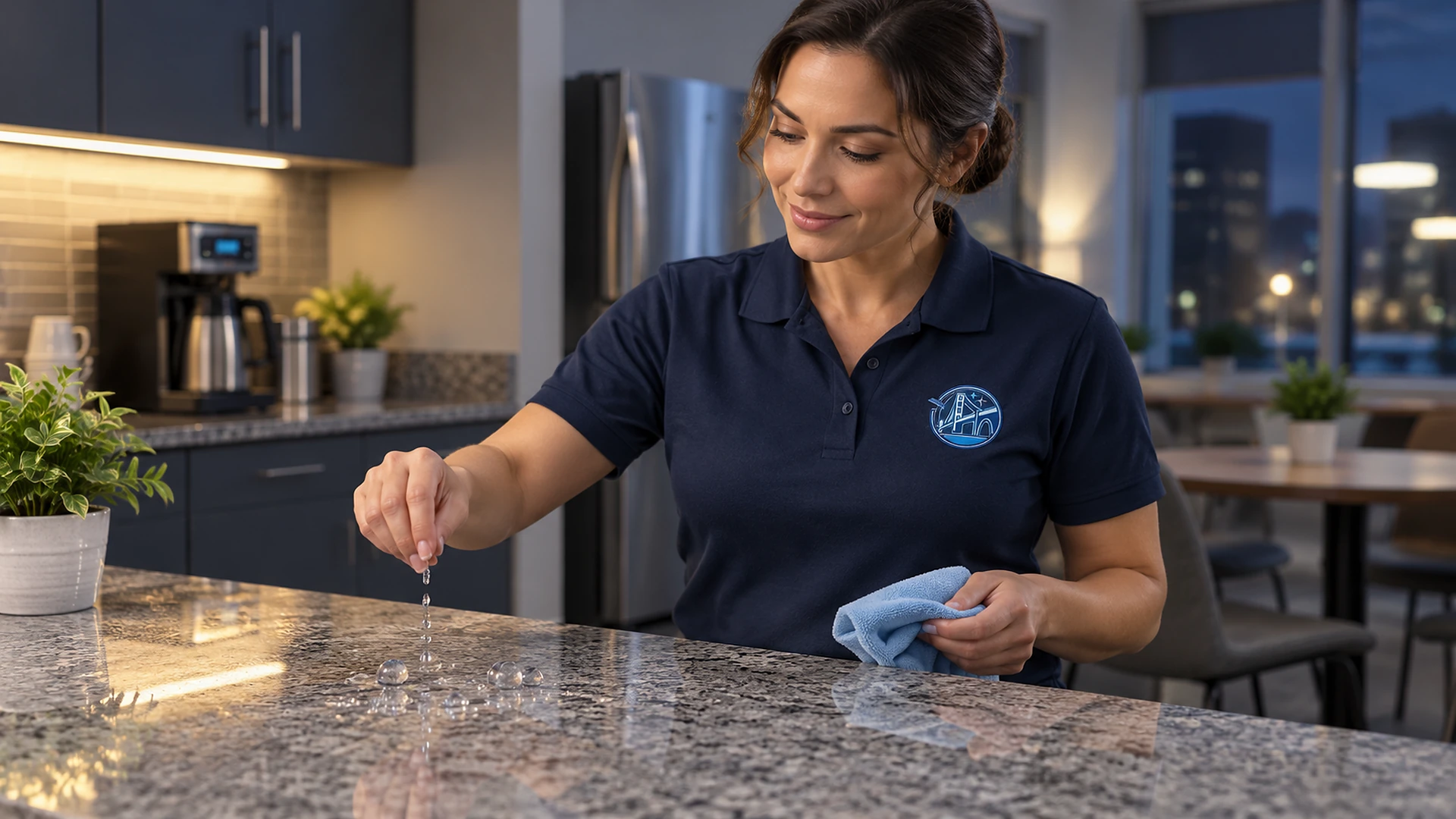
Sprinkle a little water on a granite counter and watch what it does. If it beads, the sealer is doing its job. If the stone drinks it and darkens, the sealer has worn thin, and every spill until the next sealing can soak in. That small test shapes how to clean granite countertops in a busy office more than any product on the shelf.
This guide shows how to clean granite countertops at reception, in the breakroom and on restroom vanities. It covers the seal, the daily wipe, dark spots, stains that soak in and the stones sold as “black granite.”
The quick version: Here’s how to clean granite countertops without losing the seal. Granite is natural stone, and a sealer keeps spills from soaking in. Test the seal by sprinkling water on a clean counter: if it beads, the seal is fine, and if the stone absorbs it, it’s time to reseal. Clean daily with a soft cloth and plain water or mild soap, and use a pH-neutral stone cleaner for heavier soil. Keep abrasive cleansers and harsh chemicals off the stone. A dark patch that fades as it dries was water. One that stays is usually oil, and a baking soda and dish soap paste left overnight can lift it. Send deep or old stains to a stone specialist.
Granite Is Natural Stone, So the Seal Does the Work
The General Services Administration describes granite as a visibly grainy igneous rock made mostly of quartz and feldspars, sometimes with mica or hornblende. Its notes on historic stone add that granite absorbs less water than marble, limestone or sandstone, and stands up better to acidic solutions and cleaning agents. That’s one reason granite holds up on busy counters.
Less absorbent doesn’t mean waterproof. MSI, which sells granite slabs for countertops, says granite is somewhat porous and can stain if it isn’t sealed properly. It says any natural stone used for countertops needs sealing. The sealer fills the pores near the surface so a spill sits on top long enough to be wiped.
That changes how to clean granite countertops compared with other surfaces in the building. The goal is a clean top with the sealer still in place, so the next coffee spill stays a spill and doesn’t become a stain.
Takeaway: Granite resists acids better than marble, but it’s still porous. Its sealer keeps spills on the surface, and the cleaning routine should protect that sealer.
Do You Need to Seal Granite Countertops? Run the Water Test
The surface tells you when it needs help. MSI’s water test is quick: wipe the counter clean, sprinkle some water on it and watch.
| What the water does | What it means | Next step |
| Beads up and stays on the surface | The sealer is holding | Clean as usual and test again later |
| Soaks in and darkens the stone | The sealer has worn thin | Schedule a reseal before the next big spill |
| Beads in some spots and soaks in near the sink or coffee station | The seal wears faster where water and use are heaviest | Reseal those areas and test them more often |
So, do you need to seal granite countertops every year? MSI’s care guide says at least once a year, and the water test shows which spots need it sooner. Its sealing article suggests testing white granite on an island or near the stove a couple of times a year. The coffee station is the office version of that spot.
Backsplashes are hard to test on a vertical surface, so MSI suggests sealing them a couple of times a year. In an office, how to clean granite countertops includes testing the coffee station, the breakroom sink and the restroom faucets more often than the rest.
Skip oil when you test. MSI warns against using it, since oil that soaks in leaves the stain you were trying to prevent.
The answer to “do you need to seal granite countertops” changes with the stone and the traffic. A busy breakroom counter can fail the water test long before a reception top that only sees paperwork.
Sealing is its own job
Sealing isn’t part of a nightly clean. The counter needs to be clean and dry, the sealer goes on in coats, and MSI says to keep food prep off the counter for 24 hours as it cures. In a breakroom, a Friday evening job lets the 24 hours run over the weekend. Ask your stone fabricator or a stone care contractor to do it.
Takeaway: Let the water test decide when to reseal. Test busy spots more often, keep oil out of the test, and book sealing as a separate job with time to cure.
How to Clean Granite Countertops Without Wearing Down the Seal?
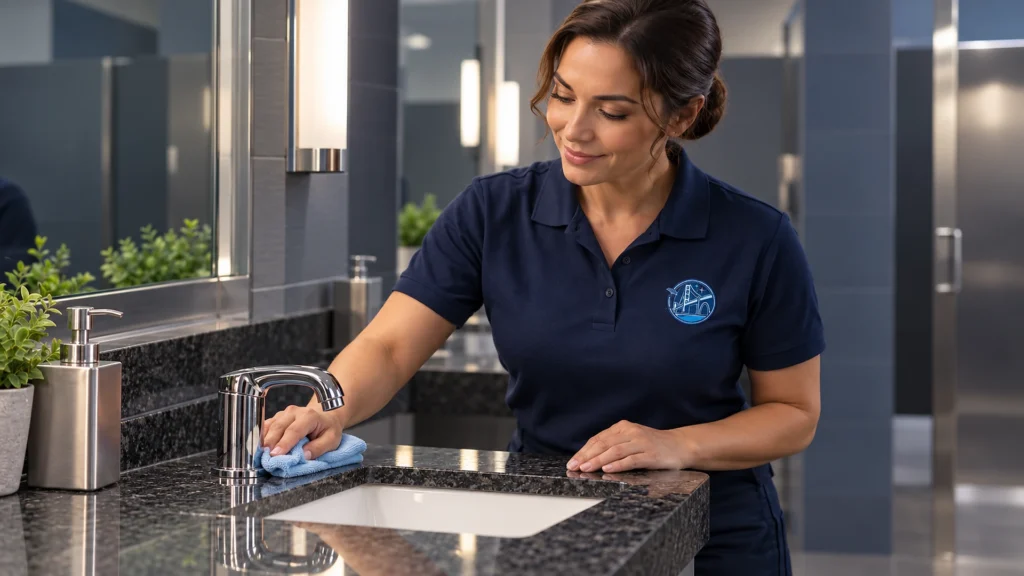
Daily care is gentle. For a whole building, how to clean granite countertops starts with the daily wipe. Dust the surface with a soft cloth, or wipe it with plain water or a mild soap, the routine MSI’s guide describes. For heavier soil, it suggests a stone cleaner with a neutral pH, and it rules out abrasive cleansers and harsh chemicals.
You may also like: Office Cleaning Scope of Work for Redwood City Offices
Neutral pH matters for the sealer as much as for the stone. Strong acids and strong alkalis can wear a sealer thin, so products made for other surfaces stay off granite. Use a cleaner made for natural stone.
Rinse after any soap. The GSA’s stone notes list cleaners that are too strong, or rinsing that’s too light, as one cause of white salt deposits on granite. Those notes were written for historic building stone, much of it outdoors, but the lesson carries indoors: a quick clean-water pass leaves nothing behind to build up on the surface.
At the reception desk, where granite is the first thing visitors touch, wipe it with a pH-neutral stone cleaner and rinse it with clean water. If your office cleaning details front desks and reception counters, give the crew the name of the stone cleaner you want used there. With one named product, the crew handles how to clean granite countertops the same way every night.
Takeaway: Dust or wipe with water or mild soap, use a pH-neutral stone cleaner for heavier soil and rinse. Keep strong acids, strong alkalis and abrasive cleansers off the stone.
Dark Spots on Granite Countertops: Water or Oil?
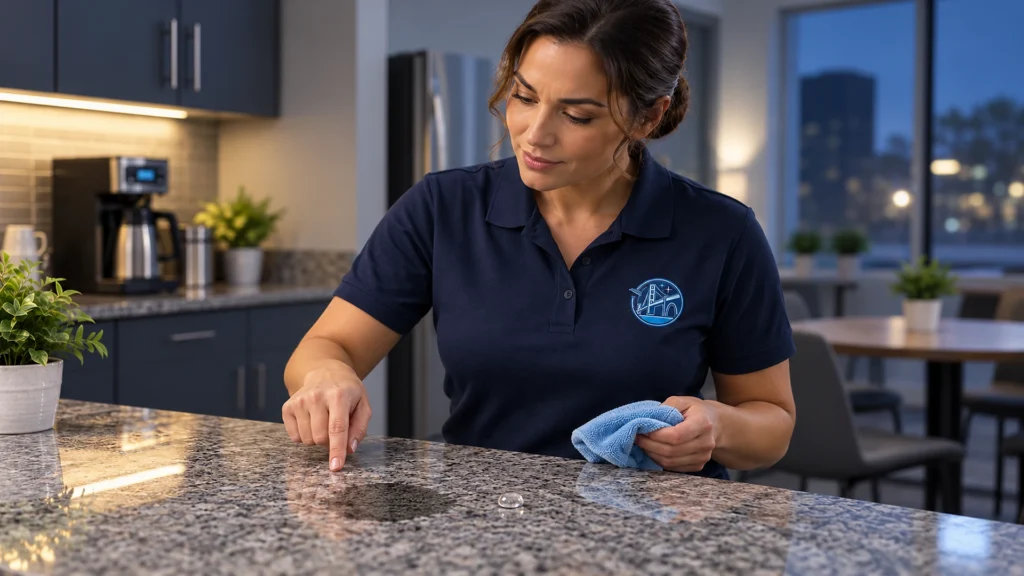
A dark patch on granite is either moisture that will leave by itself or something that soaked in and won’t. Before you decide how to clean granite countertops with a dark patch, find out which kind it is. Water needs time and, on polished stone, a water test. Oil needs a paste overnight.
Water darkens granite until it dries. A patch around the sink or under a water pitcher that fades by morning was water. On a polished counter, that fade still means water got in, so run the water test there. On honed and leathered finishes, MSI says wet marks can show even on properly sealed stone, especially black granite, and they’re usually harmless once the surface dries.
Oil is different. Butter, salad dressing, hand lotion and cooking oil soak into unsealed or worn spots and leave dark patches that stay. Dark spots on granite countertops that look the same after a full day of drying are usually oil, and they need the stain steps, not more wiping.
Dull patches that aren’t stains
Not every mark is dark. A dull, cloudy patch near the sink or the coffee maker is often leftover soap or cleaner, not damage. Rinse it with clean water, let it dry and check it the next morning.
If the shine comes back, the routine needed a better rinse. If the patch stays dull and the water test fails there, the sealer is worn, so book a reseal for that area.
When dark spots on granite countertops keep coming back in the same place, tell your stone contractor, since that’s where the next reseal should start.
Takeaway: Let a dark patch dry before you treat it. If it fades, it was water, so run the water test on polished stone. If it stays, treat it as an oil stain.
How to Remove Stains on Granite Countertops That Soaked In?
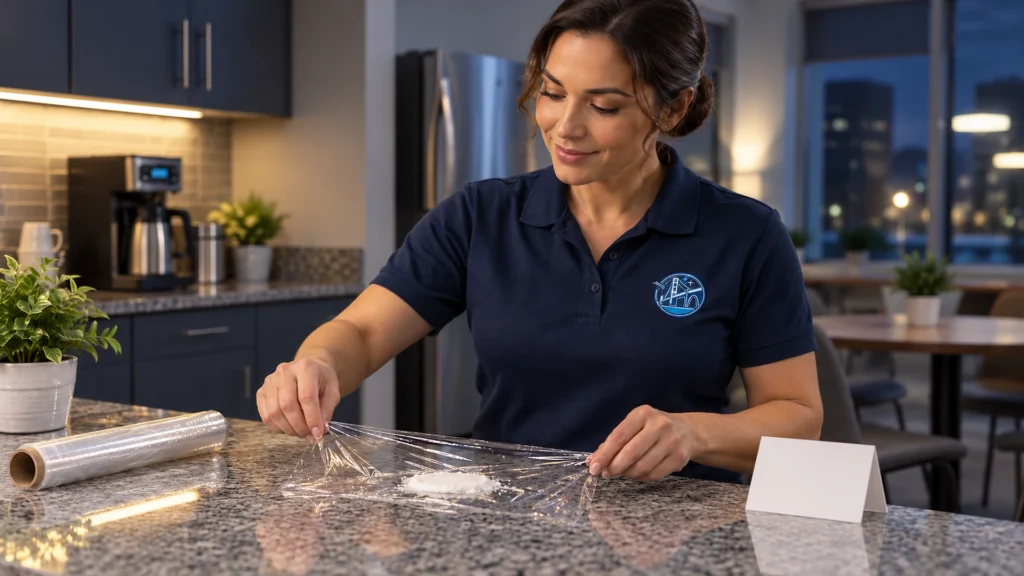
Of everything in how to clean granite countertops, stains take the most patience. Start with the mildest method and give it time. For oily stains that have soaked into the surface, MSI suggests a paste of baking soda and dish soap. Spread it over the stain, cover it with plastic wrap, leave it overnight and rinse it off in the morning.
Put a sign on the counter when the paste goes on, and pick a spot nobody needs for lunch. A breakroom counter with plastic wrap on it invites questions, and a note saves the paste from being wiped away before morning. If the stain lightens but doesn’t clear, a second night is worth a try before calling anyone.
You may also like: What Bay Area Businesses Gain by Outsourcing Office Cleaning?
Coffee, tea and juice spills show up in every office breakroom. Blot them with a dry cloth, wipe the spot with mild soap and water, then rinse and dry it. If a colored ring stays after it dries, ask a stone specialist how to remove stains on granite countertops like that one without risking the finish.
What a deep-stain poultice involves?
Some stains are too old or too deep for a paste. The GSA’s procedure for oil stains on historic granite shows what the next level looks like. It uses a solvent poultice spread no more than 1/4 inch thick, left to dry for about 48 hours and then lifted off with wooden scrapers or spatulas. The same procedure calls for excellent ventilation and respirators with solvent filters, and it warns that cleaning chemicals can run onto nearby stone, discolor it or push the stain deeper.
That’s not work for a night crew with a spray bottle. The same procedure warns against trying more than one treatment on an area unless the earlier one has been washed away, so piling on products rarely fixes a deep stain. When the paste doesn’t work, call a stone restoration specialist and describe what’s been tried. Note each product and the order it went on, so the specialist doesn’t stack a new treatment on top of an old one.
The best way to remove stains on granite countertops is to never let them settle. Blot spills with a dry cloth as soon as they happen, and wipe oily ones with a little mild soap. A porter service that cleans up spills before they stain helps in a busy breakroom or lobby. Any plan for how to remove stains on granite countertops starts with speed, not products.
Takeaway: Try a baking soda and dish soap paste overnight on oily stains. If it fails, stop and call a stone specialist instead of layering more products.
How to Clean Granite Countertops Around Sinks and Faucets?
Sinks and faucets are where granite works hardest. Water sits around the faucet base, hand soap drips from dispensers and wet cups land on the same spot all day. These are the places the water test fails first, so they deserve more care than the open counter.
Wipe the faucet base and the sink edge dry at every visit instead of leaving them to air dry. Standing water is what slowly works into a thin seal. Lift soap bottles and dispensers when you clean, and wipe the rings under them, since soap residue left in place builds up into a dull patch.
In a breakroom, set a small mat under the dish soap and the hand soap. It keeps drips off the stone and gives the crew one thing to lift and wipe. On restroom vanities, the faucet base and the open counter both belong in how to clean granite countertops, so ask your provider to dry both.
Undermount sinks need one more look. The seam between the sink and the stone collects residue that a quick wipe misses. Run a damp cloth along it and dry it, and don’t pry at the sealant line with a blade. If that line shows gaps or dark edges, report it to building maintenance, since water can reach the underside of the counter there.
Takeaway: Dry faucet bases and sink edges at every visit, lift dispensers to wipe under them and put mats under soap bottles in the breakroom.
Black Granite Isn’t Always Granite
Many lobbies and restrooms use a dark, polished stone sold as black granite. The GSA notes that several dark igneous rocks sold under that name, including basalt, gabbro, diorite and diabase, aren’t true granite. They contain little or no quartz, but they’re sold and used interchangeably with true granite, so don’t assume a granite product fits them.
You may also like: Types of Commercial Cleaning Services in Contra Costa County
Dark polished stone shows every residue mark. Soap film and water rings stand out on black far more than on speckled gray. On dark stone, how to clean granite countertops means leaving nothing behind: less soap and a full rinse.
Before a new product touches a black counter, test it on a small hidden spot, such as the back corner under a coffee maker. Ask the fabricator or the building owner for the stone’s real name. That name tells a stone care contractor which sealer and cleaner fit, and it saves a guess the first time something stains. Treat every unnamed dark stone in the building that way until someone confirms what it is.
If your restroom service covers the vanity countertops, give the crew the stone’s name. Dark vanities are where residue shows first.
Takeaway: Find out what your “black granite” really is, test products on a hidden spot and rinse and dry dark stone every time.
Frequently Asked Questions
Is dish soap safe for how to clean granite countertops every day?
Yes, a few drops of a mild dish soap. MSI’s guide lists plain water or a mild soap for routine wiping, with a pH-neutral stone cleaner for heavier soil. Plain water and mild soap cover most of how to clean granite countertops day to day. Rinse afterward so no film builds up.
What goes in the paste for how to remove stains on granite countertops?
Baking soda and dish soap. MSI’s method spreads the paste over an oily stain, covers it with plastic wrap overnight and rinses it off in the morning. For stains that don’t respond after a night or two, call a stone restoration specialist.
Do you need to seal granite countertops if they already look shiny?
Shine doesn’t tell you much. A polished counter can look perfect and still absorb water. Run the water test: if water beads, the seal is holding, and if it soaks in, it’s time to reseal.
Do dark spots on granite countertops mean the seal has failed?
Not always. Water can darken granite until it dries, and on honed and leathered finishes MSI says wet marks can appear even when the stone is properly sealed. If the spot stays after a full day, oil likely soaked in through a worn seal.
Conclusion
Granite rewards gentle cleaning. Water or mild soap, a pH-neutral stone cleaner for heavier soil, a rinse and a dry cloth keep the stone and its sealer in good shape. Harsh chemicals and abrasive cleansers wear both down.
The water test tells you when the seal needs help, and the dry-out test tells you whether a dark spot is water or oil. Make both tests part of how to clean granite countertops in your building, and most stains stay small enough for a paste and a night of patience. The rest of how to clean granite countertops is habit: blot spills fast, dry the wet zones and keep strong acids and alkalis away from the stone.
Granite reception desks, breakroom counters and restroom vanities are part of the routine when The Bay Area Cleaners cleans offices between Vallejo and San Mateo. Tell the crew which counters are natural stone at the first walkthrough, and call 707-656-9339 for a free estimate.