
A Hayward manager may receive two cleaning proposals that promise a greener workplace, yet neither explains which products will be used or how the results will be checked. Eco-friendly commercial cleaning should mean a defined cleaning scope supported by product information, suitable equipment, and documented procedures. A green-sounding label does not answer whether a product suits a floor finish, shared desk, or restroom fixture. The better starting point is to identify what the facility needs and ask a provider for evidence that its choices fit those tasks. This guide shows what to examine before choosing or revising a commercial cleaning program.
The quick version: Eco-friendly commercial cleaning combines ordinary cleaning quality with informed choices about product ingredients, packaging, equipment, and service procedures. A Hayward business should examine specific product labels, ask how cleaners protect different surfaces, and agree on a written inspection process. The EPA’s Safer Choice program offers one way to identify products that meet its criteria, but that label does not establish that every product is suitable for every task. Review the actual plan rather than accepting a broad environmental claim.
What Does Eco-Friendly Commercial Cleaning Mean for a Hayward Facility?
Eco-friendly commercial cleaning means selecting cleaning methods that fit the workplace while considering product hazards, material compatibility, unnecessary waste, and worker exposure. It is not a promise that every task can use the same cleaner or that every product described as natural has been independently evaluated. The right plan begins with each space and the result expected there.
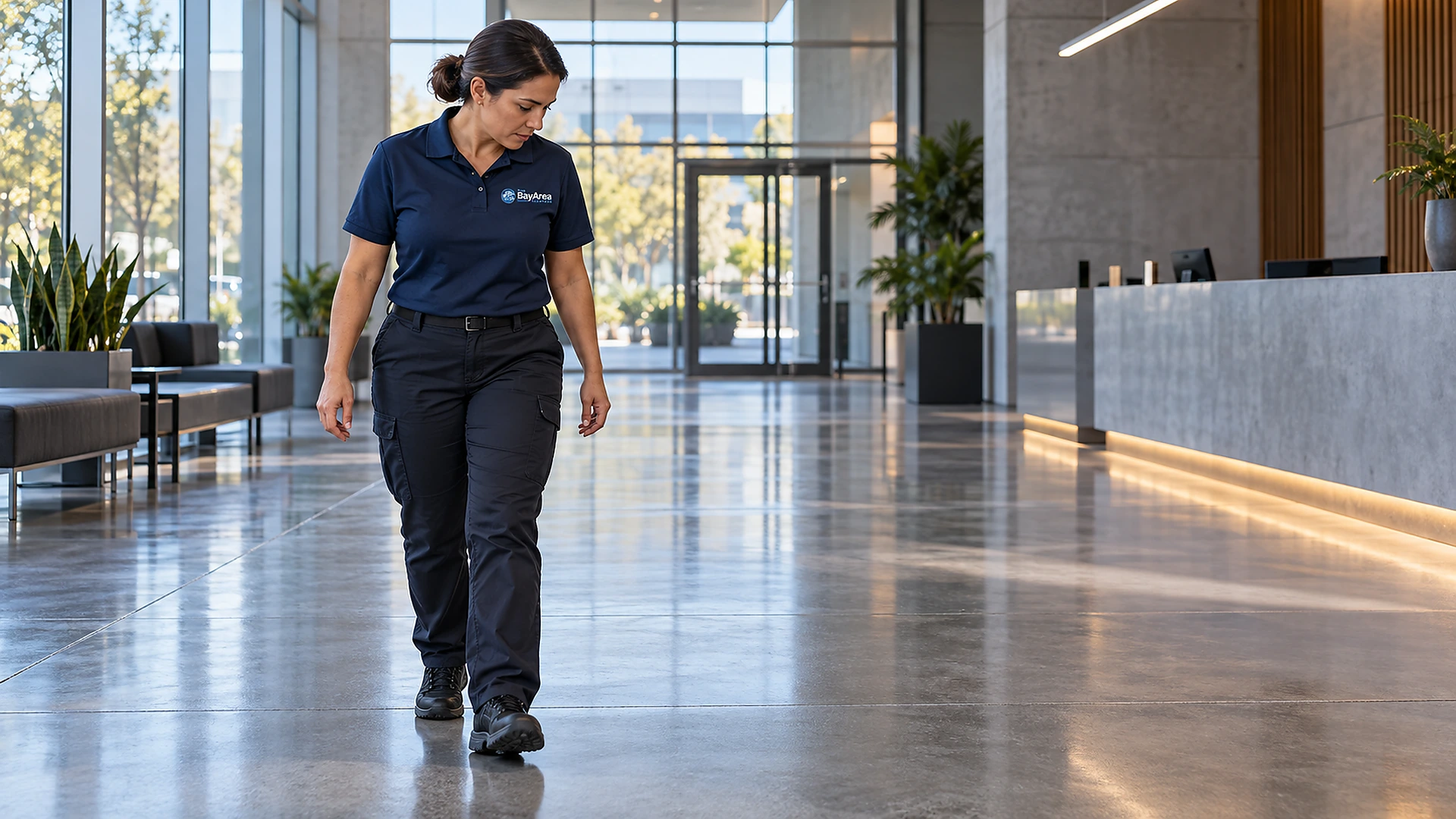
A Hayward office might have carpeted meeting rooms, a tiled reception area, desks with electronics, and a busy breakroom. A retail property may have frequent entry traffic and display glass. Each area presents a different cleaning problem. The facility manager should expect a proposal that identifies those problems separately rather than attaching one green claim to the entire building.
Look for the following details during a walkthrough:
- Identify surfaces, finishes, and sensitive equipment before the service provider selects products.
- Record which shared areas receive frequent contact and which spaces are mainly low traffic.
- Separate routine soil removal from tasks that may call for sanitizing or disinfecting.
- Request the products proposed for each task, including their actual names and relevant labels.
- Confirm who reports damaged finishes, recurring odors, spills, or persistent cleaning problems.
The US Environmental Protection Agency explains that product ingredients, packaging, and cleaning practices can influence environmental and human health considerations. Its guidance on identifying greener cleaning products recommends examining meaningful criteria rather than relying on vague marketing descriptions. That is a useful framework, not a guarantee that a specific supplier meets every criterion.
A facility can describe its objectives without claiming measurable benefits that have not been established. For example, a manager might want fewer disposable supplies, clearer product records, or more consistent cleaning of shared areas. Those are concrete matters to discuss in a written scope. Sustainable cleaning practices become easier to evaluate when managers attach them to observable work and purchasing decisions.
Takeaway: For eco-friendly commercial cleaning, ask for a task-by-task scope and product list before accepting an environmental claim. A defined facility need is more useful than an unspecified promise of green results.
Which Green Cleaning Products and Labels Should Buyers Examine?
Green cleaning products deserve review at the individual product level. An attractive package or broad claim such as environmentally friendly does not establish that a formula has passed an independent product evaluation. A facility manager needs a credible basis for comparing claims and deciding whether a product fits its intended use.
The EPA’s voluntary Safer Choice label identifies products reviewed against the program’s criteria for safer chemical ingredients and performance. Buyers can check a product through the agency’s Safer Choice product search. A product’s presence in that directory matters more than the appearance of its packaging. Certification applies to the listed product, not automatically to a cleaning company.
The first comparison is about what each claim tells a purchaser and what it leaves unresolved:
| Claim or evidence | What a facility manager can check | What it does not establish |
| EPA Safer Choice listing | Product name and matching listing in the EPA directory | Suitability for every surface or cleaning task |
| Product label and technical documentation | Stated intended use, surface restrictions, and safety information | That the whole service is environmentally certified |
| Refill or concentrated packaging | Supplier’s packaging and waste-handling arrangements | A measured reduction in waste without records |
| Generic green or natural wording | Whether the vendor can provide supporting details | Independent certification or complete absence of risk |
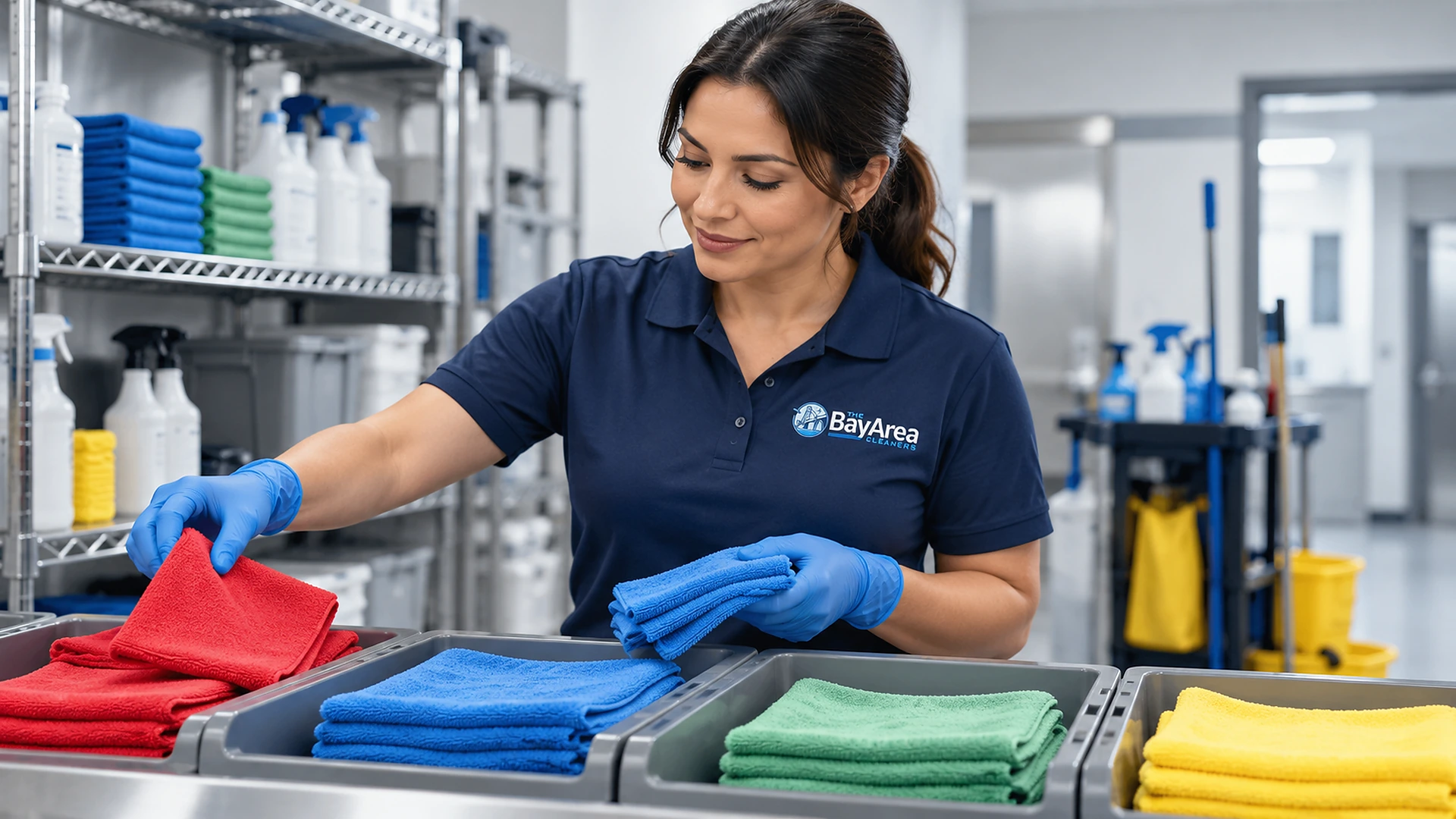
When comparing eco-friendly commercial cleaning proposals, ask for the exact product inventory and match each item to the cleaning schedule. Review labels for intended purpose rather than choosing a single preferred brand for every room. A supplier should explain why a cleaner is appropriate for a particular surface, not simply describe its ingredients as green.
Distinguish a routine cleaner from a disinfectant. The EPA explains that products making antimicrobial claims are subject to different rules and registration requirements. Its comparison of cleaning, sanitizing, and disinfecting makes clear that these terms describe different outcomes. Environmental purchasing goals should not lead a facility to substitute one category for another without a sound reason.
Eco-friendly office cleaning can incorporate green cleaning products where their stated use matches the task. Product information is still necessary for restrooms, frequently touched surfaces, and specialized floor care. Never treat a Safer Choice label as equivalent to an EPA-registered disinfectant label. A facility can ask its service provider to identify which category is proposed for which job.
Takeaway: Check product names against original labels or an authoritative directory. Separate verified product attributes from broader environmental claims about a vendor’s complete cleaning program.
How Should an Eco-Friendly Commercial Cleaning Plan Be Built?
An eco-friendly commercial cleaning plan should translate facility needs into tasks, responsibilities, quality checks, and product-selection criteria. The manager and provider should agree on the scope before deciding whether a routine should become more frequent, more specialized, or different in product choice.
A practical planning sequence keeps the discussion grounded:
- Walk through the workplace and record floor materials, shared surfaces, restrooms, and areas with repeated complaints.
- Classify tasks as routine cleaning, periodic detail work, or a separate treatment requiring specific justification.
- Ask the provider to identify relevant products, product documentation, equipment, and any site restrictions.
- Assign a cleaning schedule that reflects traffic patterns, facility access, and observable soil rather than an invented universal frequency.
- Define what completion looks like, including who inspects the work and how concerns reach the provider.
- Review the program after changes in occupancy, furniture, flooring, operating hours, or recurring cleaning issues.
These steps make eco-friendly commercial cleaning measurable through documents and visible conditions without suggesting that the provider has achieved a certified environmental result. The plan can also explain how the manager approves a new product before it is introduced into a workplace with sensitive finishes or equipment.
For example, a Hayward office reports recurring dust on shared desks, but a rarely used conference room stays clean. The manager can document which desks need attention, clarify responsibility, and inspect them after the next visit. This observation alone cannot establish improved air quality or workplace productivity.
Where staff handle food or specialized materials, building rules may apply that are outside an ordinary office cleaning contract. The CDC’s facility cleaning guidance addresses community settings and explicitly excludes healthcare facilities and certain regulated operations. A manager should identify those boundaries rather than use general office guidance as a substitute for sector-specific procedures.
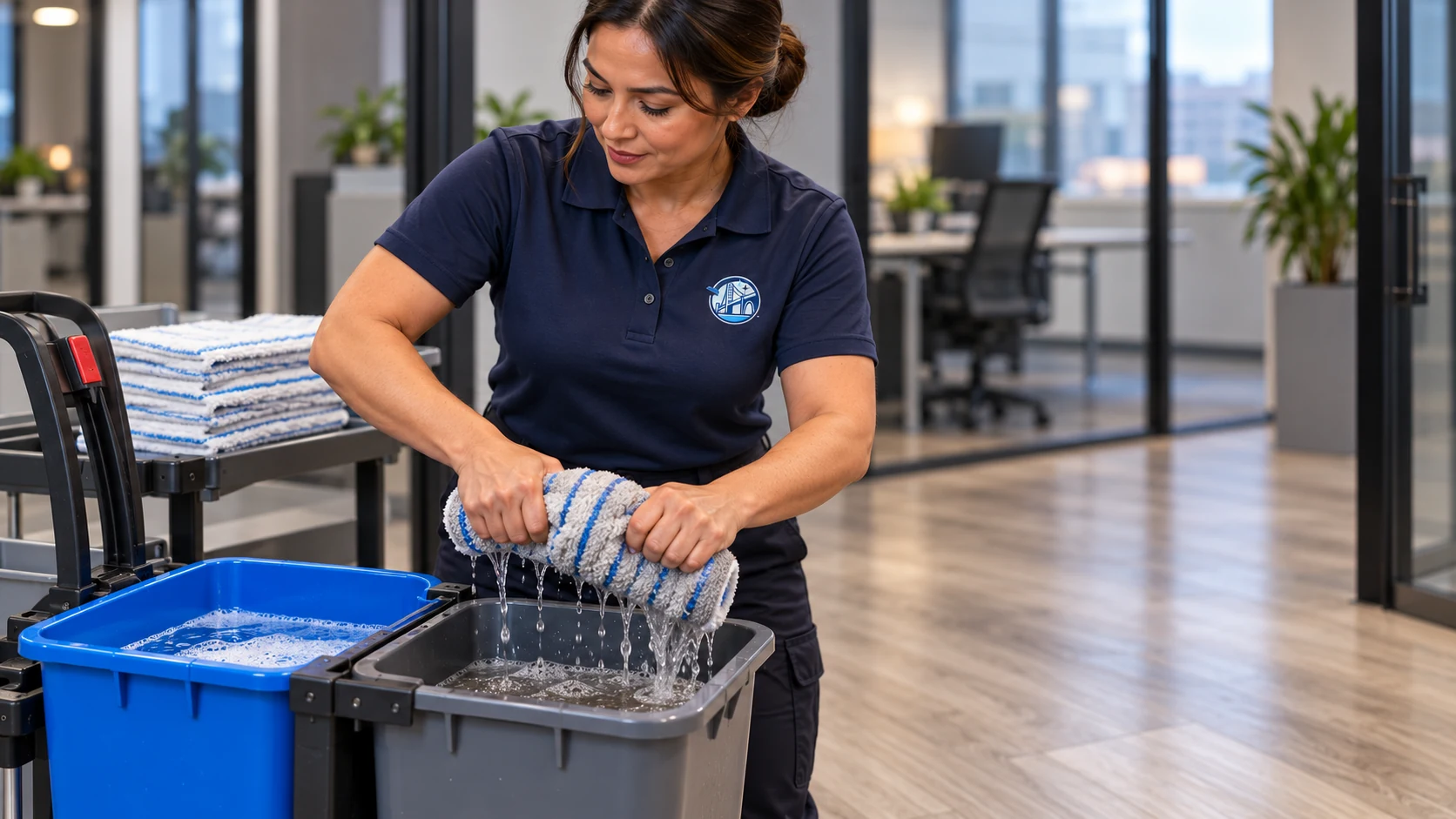
When reviewing an office cleaning proposal, separate the list of included tasks from claims about the products used. The Bay Area Cleaners describes workstation, meeting-room, breakroom, reception, and floor cleaning in its office cleaning services. Ask which products are proposed for your actual site; the service outline by itself does not verify environmental credentials.
You may also like: Hayward’s Trusted Commercial Cleaning Company: The Bay Area Cleaners.
Shared kitchens need a particularly clear division of responsibilities. Identify who handles countertops, sinks, appliance exteriors, food-related surfaces, and waste removal, and distinguish cleaning from restocking supplies. A manager can then compare the completed work with the written kitchen scope instead of treating a greener product choice as proof that every task was completed.
Takeaway: Write the schedule, product-selection rules, and inspection responsibilities into one plan. Revisit that plan when facility conditions change rather than making unsupported performance promises.
How Do Cleaning Priorities Change by Space and Surface?
Eco-friendly commercial cleaning varies with how occupants use a space and what materials are present. A method appropriate for entry flooring may not fit an electronic workstation, and a routine desk wipe does not resolve every restroom maintenance problem. The service scope needs those distinctions.
For a Hayward office, floors and entry areas can accumulate tracked-in soil, particularly around doors and shared circulation routes. Breakrooms combine frequent hand contact with food-related surfaces. Meeting rooms may have upholstered seats, tables, screens, and equipment. These differences affect the cleaning plan even before environmental product considerations enter the discussion.
The second comparison answers which operating conditions deserve separate attention:
| Workplace area | Primary cleaning concern | Purchasing or inspection question |
| Desks and meeting rooms | Shared touchpoints and electronic equipment | Are methods compatible with device and furniture guidance? |
| Breakrooms and kitchens | Food-adjacent surfaces, spills, waste, and fixtures | Does the scope identify suitable products and responsibilities? |
| Reception and hard floors | Tracked soil, finish appearance, and entry traffic | Is periodic floor maintenance separate from daily cleaning? |
| Restrooms | Fixtures, touchpoints, visible soil, and supply needs | Are cleaning and any disinfection tasks defined separately? |
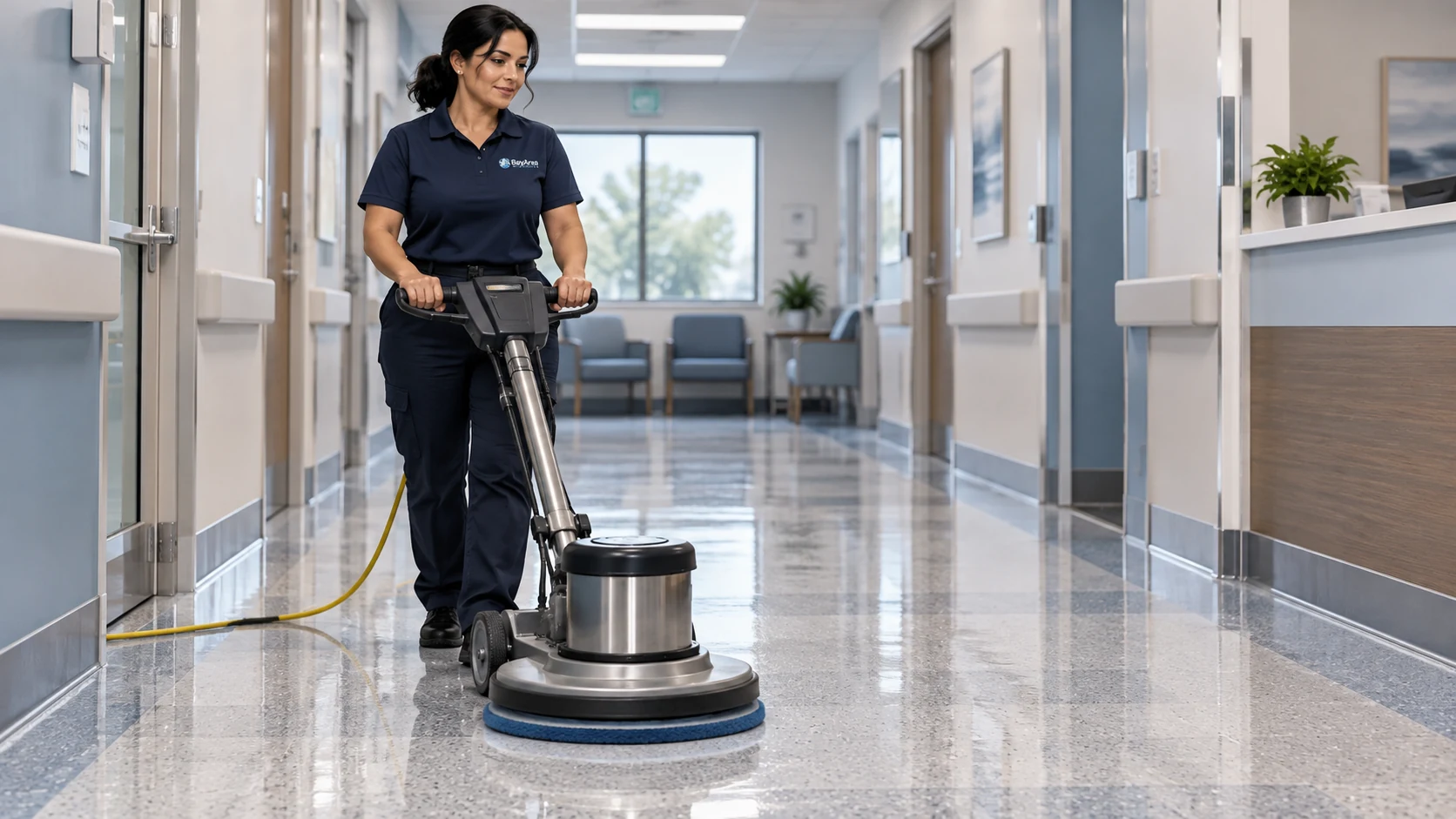
A floor care plan should distinguish routine removal of tracked-in soil from periodic work on worn finishes. For a workplace with mixed carpet and hard flooring, compare the tasks described under the floor care service with conditions recorded during a walkthrough. Ask separately about any specialist floor work; do not assume it is included in routine cleaning.
Restrooms deserve a separate scope because fixtures, touchpoints, supply checks, and visible soil differ from office desks. Compare the provider’s restroom cleaning services with the tasks listed for your facility. CDC guidance calls for regular cleaning of high-touch surfaces, with additional disinfection in relevant circumstances. Ask whether disinfecting is included and how the provider follows product labels.
Sustainable cleaning practices are most credible when decisions reflect actual operating needs. A manager may choose different inspection criteria for a low-traffic conference room and a frequently used reception area. This is a planning choice, not proof of a specified environmental saving. The same caution applies to claims of improved indoor air quality or reduced illness.
Takeaway: For eco-friendly commercial cleaning, group the workplace by use and material, then evaluate each task. A credible green plan preserves cleaning quality without treating every room as identical.
What Should an Office Manager Check After Each Cleaning Visit?
An office manager should evaluate eco-friendly commercial cleaning through visible results, agreed work records, and documented product changes. The review should check service quality separately from unsupported statements about environmental impact. A clean-looking surface alone does not prove that every purchasing or safety objective was met.
The manager can use this short review list after the first visits and at agreed checkpoints:
- Check whether the areas named in the scope were serviced without disturbing business operations.
- Record visible soil, recurring odors, overlooked touchpoints, or marks on sensitive finishes.
- Confirm that agreed product information remains current when the provider changes a product.
- Note supplies or packaging that need further discussion instead of assuming waste has decreased.
- Route observations to one contact and record the follow-up action and date.
This kind of checklist is useful for eco-friendly office cleaning even if a buyer does not have formal environmental reporting goals. It distinguishes work quality from product choices. A service may meet cleaning expectations but still need better documentation, or it may offer well-documented products while missing an agreed area.
When evaluating green cleaning products, retain original product information instead of relying on a sales description alone. If a listed product is replaced, request its name and relevant documentation. This provides a simple record of what the provider says it is using without representing the entire building as certified.
A helpful review note describes the location, observed condition, agreed action, and date of reassessment. Avoid claims such as a particular program cut waste or improved employee health unless the business has evidence appropriate to those outcomes. Observable service checks are enough to make day-to-day decisions.
Sustainable cleaning practices can be improved over time through discussion of tools, replacement products, and recurring waste streams. Treat those questions as separate from any promise of a quantified environmental impact. Clear records let the buyer distinguish a process change from an actual measured result.
Takeaway: Inspect completed work and product records separately. Document repeat problems and agreed corrections before attributing environmental or health benefits to a cleaning program.
When Should a Hayward Business Ask for Professional Support?
A Hayward business should request professional input when its cleaning scope spans multiple surface types, recurring service requirements, or product restrictions that staff cannot confidently evaluate. Choosing eco-friendly commercial cleaning still requires a clear explanation of what the vendor will do and which evidence supports its claims.
Before selecting a provider, ask for information that directly supports the buying decision:
- Request a walkthrough that identifies unusual finishes, sensitive equipment, and high-use areas.
- Ask for a written task list, proposed schedule, and inspection or reporting process.
- Request names and documentation for any products described as environmentally preferable.
- Clarify which specialized work is included, excluded, or priced separately.
- Ask how the provider will handle product substitutions or scope changes during the contract.
The Bay Area Cleaners has published material about commercial cleaning in Hayward and describes office services covering workstations, meeting rooms, breakrooms, restrooms, and floors. These examples offer a starting point for a walkthrough. Before approving an environmental claim, request names of the products proposed for your site and documentation supporting the specific attributes being advertised.
An eco-friendly office cleaning proposal request names the facility type, key rooms, operating hours, and any product preferences. It also asks for a walkthrough and a defined quality review. That gives each vendor the same information and makes differences in proposed scope easier to evaluate.
Takeaway: When buying eco-friendly commercial cleaning, ask the provider for a written scope and product evidence before purchasing. Keep certification claims separate from the service tasks the contract actually covers.
Frequently Asked Questions
What counts as eco-friendly commercial cleaning?
Eco-friendly commercial cleaning considers the products, tasks, packaging, and work procedures used to maintain a business facility. The term alone is not an independent certification. Ask which products are proposed, what their labels say, and how the provider checks the completed work. Compare those answers with your workplace materials and operational needs.
Is eco-friendly office cleaning appropriate for every office surface?
Eco-friendly office cleaning can cover many routine office tasks, but no single method suits every finish or device. Ask the provider to check surface guidance and identify any restrictions before assigning a product. Electronics, treated floors, and delicate materials may call for different methods. Product suitability matters more than a general green description.
How can buyers verify green cleaning products?
Green cleaning products can be evaluated by checking their exact names, labels, and any claimed independent certification. The EPA offers a searchable Safer Choice directory for qualifying products. A product listing does not certify an entire cleaning company, and it does not replace checking the product’s intended use for the specific surface being cleaned.
Do sustainable cleaning practices guarantee lower operating costs?
Sustainable cleaning practices do not guarantee a specific saving. Packaging decisions, equipment choices, service frequency, and the condition of the facility can affect expenses differently. Compare written proposals that describe the same work, then evaluate any claimed savings against actual records. Avoid accepting a percentage reduction that is not supported by a measurement method.
Should offices choose disinfection for every surface on every visit?
Not automatically. The CDC recommends regular cleaning of high-touch surfaces in community facilities and added disinfection in certain circumstances. A facility manager should identify the conditions that justify that extra service and ask the provider to use products appropriate for the setting. Ordinary cleaning and disinfecting are separate tasks with different purposes.
Conclusion
Eco-friendly commercial cleaning in Hayward is easier to evaluate when product claims, room-specific tasks, and inspection responsibilities are written down. Look for credible product information, clear limits, and a plan adapted to actual workplace conditions. A label or attractive slogan cannot substitute for a suitable cleaning scope. If you manage a commercial office and need help defining that scope, review The Bay Area Cleaners’ office cleaning services and call 707-656-9339 to discuss your facility. Ask which product details and service commitments can be documented before making a decision.