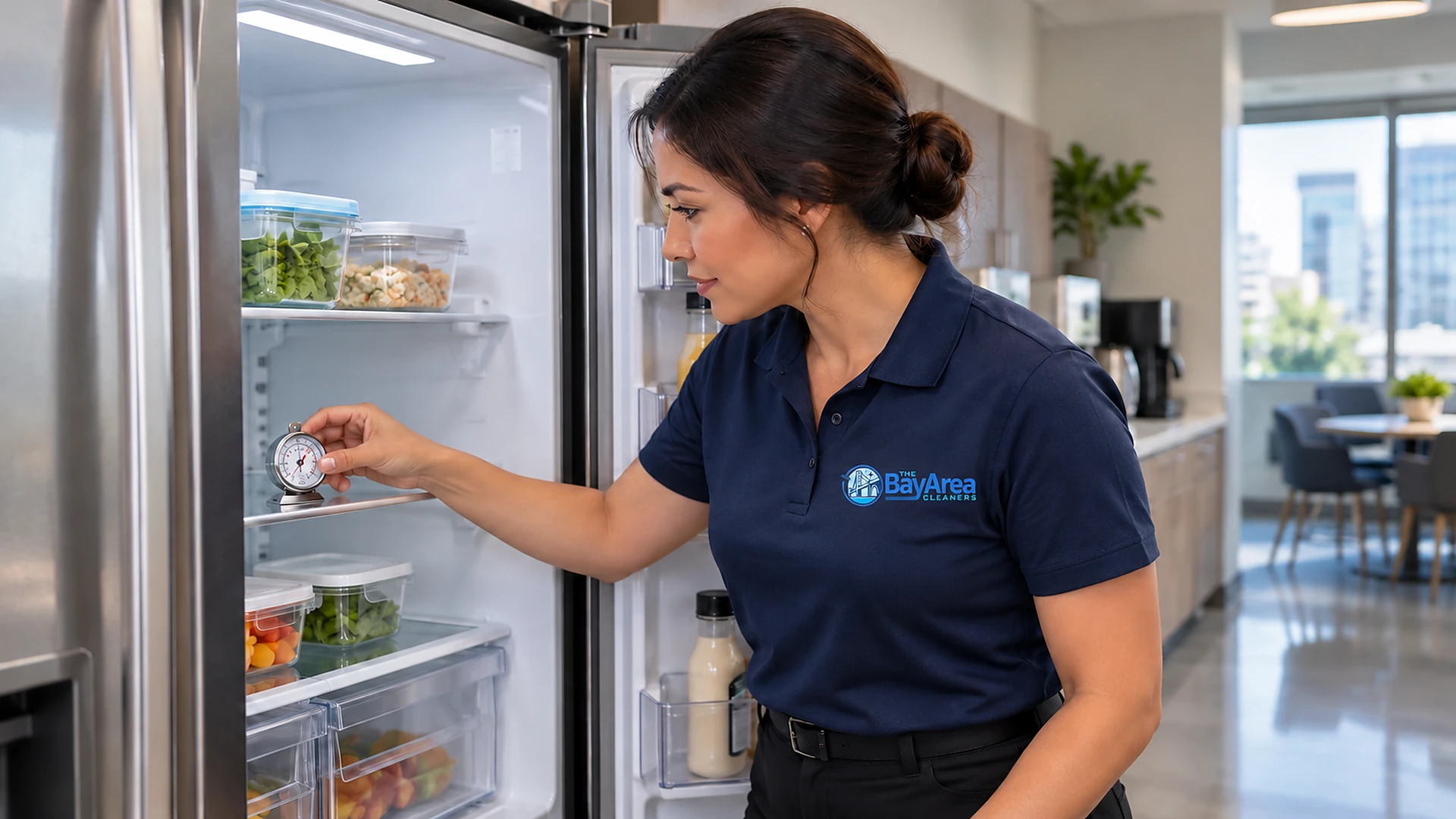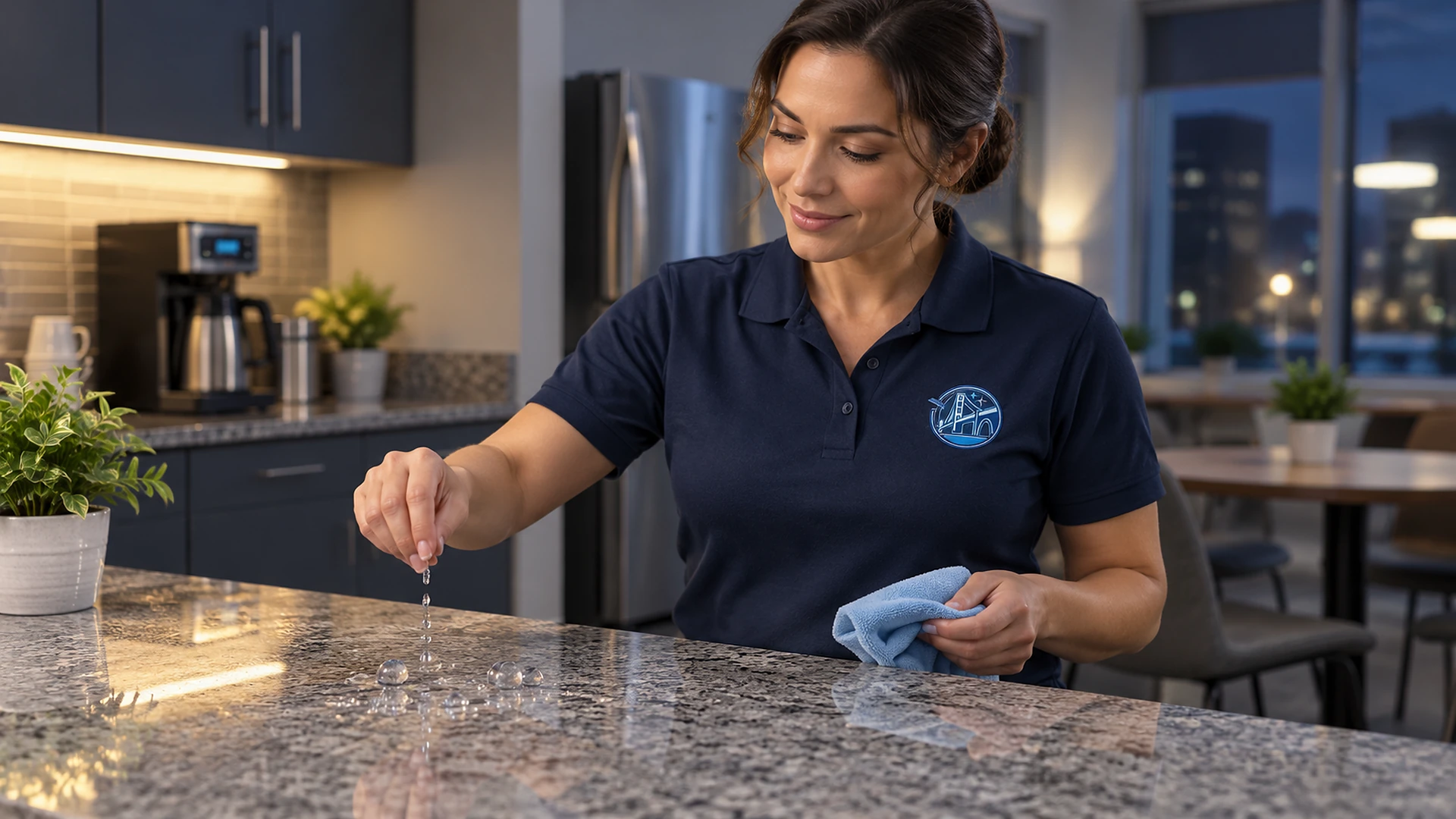

An office kitchen can look ready at opening and become difficult to use before lunch. Coffee spills, crowded counters, food left in a shared refrigerator, and full trash bins create different problems that one nightly wipe cannot solve. A breakroom cleaning checklist gives Hayward office managers a way to assign routine tasks, spot gaps during the workday, and check the result. Cleaning alone cannot promise illness prevention. This guide explains what to inspect, how to build a schedule, and when to ask a commercial cleaning provider for help.
The quick version: Start with counters, tables, sink fixtures, shared appliance touchpoints, floors, and waste stations. Assign immediate spill response to workplace users, scheduled cleaning to the responsible team, and periodic tasks to a named owner. Review traffic and observed conditions before choosing frequency. A breakroom cleaning checklist works when each line describes a visible result and someone confirms it. Treat food preparation equipment and regulated food-service kitchens as separate scopes.
Why do Hayward office breakrooms get dirty between visits?
A shared breakroom is used in bursts, so a clean room can change condition several times before the next service. Employees heat lunches, move dishes, refill beverages, and return to work without a single person overseeing every surface. The breakroom cleaning checklist should identify predictable trouble spots instead of treating the whole room as equally dirty.
For example, a hypothetical Hayward office with one kitchenette and a busy afternoon coffee period might have clean floors but sticky appliance handles. That observation suggests a touchpoint problem, not an automatic need for full floor cleaning. A manager should record the surface and the time of the complaint before increasing service frequency.
Check these conditions during normal occupancy:
- Look for dried splashes around the sink, faucet, soap dispenser, and coffee station.
- Look for sticky residue on microwave keypads, refrigerator pulls, and cabinet handles.
- Inspect tabletop edges, chair backs, and counters after the busiest meal period.
- Note trash overflow, dripping liners, food scraps, and containers left on the floor.
- Look for tracked debris, wet patches, or residue where people carry drinks.
These checks help separate a missed contracted task from a new mess after cleaning. A photograph with a timestamp and location can be more useful than a general complaint that the kitchen is dirty. Record conditions without photographing employees, food labels, or confidential workplace material.
The CDC guidance for cleaning facilities distinguishes regularly used touchpoints from surfaces that only need attention when visibly dirty. Its guidance applies to ordinary community settings such as offices, not specialized healthcare or food production. That distinction supports a risk-based inspection rather than identical treatment of every object.
A breakroom cleaning checklist should cover what cleaners can reasonably access. Dirty personal dishes, spoiled food inside private containers, and broken appliances need workplace policies or maintenance decisions. They should not become unspoken janitorial duties. Revisit the breakroom cleaning checklist when a new shift or appliance changes daily traffic patterns.
Takeaway: Record which area deteriorates, when it happens, and who can respond. Use those observations to adjust specific tasks before ordering more cleaning of the entire room.
Which office kitchen cleaning tasks belong on the checklist?
A useful cleaning plan separates surface care, waste handling, appliance exteriors, and employee responsibilities. The breakroom cleaning checklist must describe the item, its condition, and the assigned role.
The following table answers which tasks can be checked during routine visits and which need a separate decision. It is a planning example, not a description of every TBAC contract.
| Area | Routine visible check | Responsibility to confirm | Exception or limit |
| Counters and tables | No crumbs, spills, or sticky residue | Assigned cleaning team | Food and personal items moved by users |
| Sink and faucet | Basin clear, fixture wiped, no visible residue | Assigned cleaning team | Leaks reported to maintenance |
| Microwave and refrigerator exteriors | Handles and exposed touchpoints wiped | Assigned cleaning team | Interior cleaning separately agreed |
| Waste and recycling | Containers serviced, liners secure, surrounding floor clear | Cleaning team and office contact | Disposal rules set by the property |
| Floors | Visible debris and spills addressed using material-safe methods | Assigned cleaning team | Damaged finish referred for assessment |
The table leaves the office kitchen cleaning checklist focused on ordinary breakroom upkeep. It does not imply access to personal food, deep appliance disassembly, or technical repairs.
Cleaning is different from sanitizing
Basic cleaning removes soil from a surface. Sanitizing and disinfecting are distinct product claims with different instructions. The US Environmental Protection Agency explains those distinctions and directs users to follow product labels, including any contact time. A company should not describe every damp wipe as disinfection.
For counters that may contact food, ask which product is approved for that surface and whether its label calls for a rinse. Follow the actual directions rather than applying one procedure everywhere. A cleaning provider should be able to discuss product suitability without promising that a breakroom is sterile.
A practical breakroom cleaning checklist includes a separate line for unusual spills or suspected contamination so staff can escalate the issue. Avoid assigning employees an improvised chemical response. Site-specific policies and the relevant product instructions govern that work.
The Bay Area Cleaners identifies breakrooms and office kitchens in its published office cleaning service. The service page names counters, sinks, tables, appliance exteriors, and floors. Exact tasks and periodic extras still belong in the written agreement.
Takeaway: Define inspectable surfaces and written exclusions. Verify product suitability for food-contact areas and use the service agreement to distinguish routine wiping from extra appliance work.
How should a breakroom cleaning checklist be completed?
Complete a breakroom cleaning checklist in a consistent order that avoids returning debris to surfaces already addressed. The sequence should match access arrangements and the products approved by the facility, not a universal cleaning formula. Start by checking the room, then handle visible soil and finish with documentation.
Use this example workflow for a standard office kitchenette:
- Inspect the room before work. Record blocked counters, damaged fixtures, major spills, and anything outside the agreed task list.
- Remove waste assigned to the cleaning team and replace liners as specified. Report unapproved disposal items to the office contact.
- Clear accessible loose debris from work surfaces. Leave private dishes and food containers for their owners unless written policies say otherwise.
- Clean countertops, tables, exposed sink areas, and approved appliance exteriors with methods suitable for their materials.
- Address handles and other frequently touched points. Apply sanitizing or disinfecting products only when appropriate and according to their labels.
- Clean accessible floor areas after countertop work, keeping the area safe for people who may enter.
- Walk the room again, record unresolved exceptions, and sign off on tasks actually completed.
This order requires no particular equipment brand or fixed duration. Staff should have access to the relevant instructions and know when to stop work and report an unexpected condition.
What should happen during office hours?
Workday resets differ from a full cleaning visit. Employees should deal with their own spills and dishes under workplace policy, and a designated contact should respond to issues that cannot wait. A provider can supply agreed daytime coverage when occupancy creates repeated needs that nightly visits cannot handle.
TBAC describes day porter services for daytime spill response, trash monitoring, and touch-ups. That is a separate option, not proof a day porter is included in a standard cleaning visit.
Scheduled cleaning works more predictably when nobody assumes that an after-hours crew will remove food left inside a refrigerator or wash every employee mug. Post simple workplace rules and identify the office contact for exceptions. The cleaning checklist then measures assigned work rather than personal behavior.
If a spill reaches electrical equipment, a damaged outlet, or a leaking appliance, report it to the person responsible for the property. Routine cleaning workers should not troubleshoot energized equipment.
Takeaway: Use an ordered workflow, require a final check, and record work that cannot safely or contractually be completed. Assign daytime resets separately from scheduled cleaning.
How often should a breakroom cleaning schedule run?
A breakroom cleaning schedule should respond to use patterns and observed conditions, not to a fixed rule for every office. Compare mornings with lunch periods and late-day activity before assigning tasks. A small office may need fewer rounds than a busy multi-tenant building, even when the rooms have similar layouts.
The table below answers how the same task can change with traffic. These frequencies are illustrative planning options, not regulatory requirements or TBAC service promises.
| Task group | Lower traffic example | Higher traffic example | Trigger for extra attention |
| Counters and tables | Scheduled end-of-day check | Midday reset plus end-of-day check | Visible food or drink residue |
| Handles and switches | Check during planned visit | Check after busy shared-use periods | Sticky touchpoints or illness event |
| Waste stations | Empty at agreed service time | Monitor during operating hours | Overflow, odors, or leaking liner |
| Floors | Inspect during scheduled cleaning | Spot checks during active use | Spill or tracked debris |
| Refrigerator interior | Separate periodic owner review | More frequent owner review | Forgotten items, leaks, or odors |
The breakroom cleaning schedule should name the responsible person for each frequency. Employees may handle immediate spills, a site contact may manage food removal notices, and the contracted team may cover scheduled cleaning. Written duties prevent arguments over tasks that nobody accepted.
A useful review cycle follows these steps:
- Compare notes from different days rather than judging the room from one photograph.
- Identify hours when mess returns after a completed cleaning visit.
- Shift the timing of a task when the same surface repeatedly needs attention.
- Confirm whether the extra round is part of the contract or needs approval.
- Check the next period for the original problem before adding another task.
For breakroom care, the right frequency can change after an office event, a new shift, or a change in occupancy. An office kitchen cleaning checklist should be updated when the actual work changes, rather than leaving an old form to describe services no longer delivered.
The company’s recurring janitorial services page describes scheduled visits and a written scope of work. Office managers can use that service discussion to agree on a workable breakroom cleaning schedule, with responsibilities and exceptions recorded before visits begin.
Takeaway: Select timing from traffic and inspection findings. Write the responsible person beside each task and review whether the chosen frequency solves the observed problem.
How can managers inspect a breakroom cleaning checklist?
A completed office kitchen cleaning checklist should give an office manager evidence of the agreed result, not merely a row of ticks. A checkmark has limited value when nobody knows which surfaces were inspected. Build a short inspection method around visible conditions, contract scope, and a clear route for corrections.
Use this review list after an agreed cleaning visit:
- Inspect the exact counter, appliance handle, sink, and waste station named in the scope.
- Look for visible residue and missed edges instead of relying on fragrance or shine.
- Check that floors are clear of new cleaning equipment and obvious wet areas.
- Mark blocked surfaces or personal belongings as access exceptions, not automatic failures.
- Record the time, location, photograph when appropriate, and person assigned to close the issue.
- Recheck the affected area after a correction and close the issue once the agreed result is documented.
A breakroom cleaning checklist should produce a simple decision: task complete, correction needed, or task inaccessible. Record access exceptions before evaluating missed tasks.
What belongs in the inspection log?
Record the area, expected condition, observation, check time, responsible contact, and resolution. A visible spill that appeared three hours after service is different from residue left behind immediately after the cleaner departed. Timing matters for fair vendor reviews and for identifying whether daytime support would help.
The Commercial Cleaning Checklist: Sample, Score and Recheck Every Week explains sampling rooms across properties. This article stays focused on kitchen tasks, responsibility, and observations between visits. Use the broader inspection system for building-wide scoring, without repeating every check here.
For sensitive workplaces, set boundaries for photographic evidence. Do not capture employee names on lunch containers, badge numbers, schedules, or computer screens. A close image of the surface and a written location are usually sufficient for an ordinary follow-up.
If recurring food odors remain after visible surfaces and trash have been addressed, ask the office contact to inspect forgotten refrigerator contents, plumbing, waste storage, and appliance condition. A breakroom cleaning checklist cannot establish the cause of every odor or replace a maintenance assessment.
Takeaway: Inspect named surfaces soon after service, document access exceptions, and reopen only unresolved items. Use patterns across several checks before revising a contract.
When should an office hire professional breakroom cleaning?
Professional support makes sense when shared areas need scheduled work beyond what office users can consistently handle. The decision should come from tasks, access, occupancy, and review records, not from claims that every kitchen requires a specialist. A breakroom cleaning checklist helps specify what a vendor would actually be asked to do.
Begin by separating three kinds of responsibility: employees handling personal items, an office contact managing policies and access, and trained cleaning personnel carrying out contracted tasks. A service agreement can then name eligible surfaces, timing, supplies, quality checks, and exclusions without assigning personal kitchen duties to the provider.
Consider discussing professional support when:
- The same surfaces show residue after multiple scheduled opportunities for cleaning.
- Waste requires attention during occupied hours beyond the current staffing arrangement.
- The room includes floor materials or finishes that need specialist maintenance.
- The office needs documented recurring visits with a clear communication contact.
- A move, event, or unusual use period requires a separately scoped service.
Breakroom upkeep can sit within a wider office contract, supported by separate options for busy buildings. TBAC publicly describes office cleaning and recurring janitorial programs. It describes commercial floor care for material-specific needs, but a floor restoration service should not be assumed part of standard breakroom work.
When requesting a quote, share the existing breakroom cleaning checklist, photographs of routine trouble spots, the approximate activity pattern, access limits, and who handles personal dishes and refrigerator food. Ask for written tasks and exclusions.
Do not represent a general office kitchenette as a restaurant production kitchen. Commercial hood cleaning, grease-duct work, and regulated food preparation services have different scopes. The company pages reviewed here do not establish those specialist offerings.
Takeaway: Hire against a written scope and actual inspection gaps. Keep personal food, specialized kitchen systems, and repairs outside routine office cleaning unless separately documented.
Frequently Asked Questions
What belongs in a breakroom cleaning checklist?
A breakroom cleaning checklist should name accessible counters, tables, sinks, shared appliance exteriors, handles, waste stations, and floors. Add the expected result and the person responsible for each item. Keep refrigerator food removal, personal dishes, repairs, and unusual contamination in separate policies or approved work orders rather than assuming a janitorial team handles everything.
What does office kitchen cleaning usually cover?
Shared kitchen cleaning commonly addresses visible soil on counters, tables, sinks, accessible appliance exteriors, and floors, plus waste handling when agreed. The precise work depends on the provider’s written scope. Cleaning the inside of a microwave or refrigerator may require additional authorization, preparation, access, or a separate task in the agreement.
Is an office kitchen cleaning checklist enough for hygiene?
An office kitchen cleaning checklist supports consistent routine inspection, but it cannot substitute for product instructions or workplace policies. The CDC distinguishes everyday cleaning from disinfection when someone has been visibly ill. Food-contact surfaces require products and steps appropriate to their use. Record exceptions and consult the responsible office contact before ordering an unfamiliar treatment.
How do I set a breakroom cleaning schedule?
Build a breakroom cleaning schedule around actual employee traffic, meal periods, visible residue, and waste accumulation. Start with agreed checks, assign immediate spill response, and compare observations across several days. Increase attention to specific problem areas before automatically adding whole-room visits. Revisit timing when office occupancy, shift patterns, or service responsibilities change.
Should employees or cleaners empty the office refrigerator?
The office should establish who owns refrigerator notices, food identification, disposal permission, and interior cleaning. Employees normally control personal food, and a designated office contact can coordinate a planned clear-out under workplace policy. Do not assume that cleaners can discard labeled items. Put approved interior work and access conditions into the written service agreement.
Conclusion
A useful breakroom cleaning checklist tells Hayward office managers what needs attention, who is responsible, and how to check the outcome. Start with an accessible surface inventory, a traffic-based schedule, and a short inspection log. Keep the workplace’s personal food policies separate from the contracted cleaning scope. The Bay Area Cleaners publishes office cleaning options that include breakroom and kitchenette surfaces. If your office needs a written plan for recurring visits or workday support, review its office cleaning services and call 707-656-9339 to discuss the areas and timing that matter to your facility.