
A shared conference table can look clean after a busy day, yet nobody may know who wiped the controls, chair arms, or door handle. In a San Jose office, workplace sanitation works best when the facility manager can identify the surface, its use, the assigned task, and a way to check completion. The objective is a usable plan, not a promise that every desk requires disinfection.
The quick version: Workplace sanitation is a documented approach to keeping shared work areas appropriately clean. Start with routine cleaning, identify frequently touched surfaces, and agree on room-specific responsibilities. Use additional sanitation or disinfection only where the circumstances and applicable product guidance support it. Check results through visible conditions, task records, and reports from people using the office. A written plan matters more than a description of the service.
What Does Workplace Sanitation Mean in an Office?
Workplace sanitation refers here to the coordinated cleaning and hygiene practices that make shared office spaces suitable for ordinary use. It is not a promise that surfaces are sterile or that employees will never become ill. A practical office plan specifies what will be cleaned, who handles it, which surfaces need closer attention, and what happens when conditions change.
The CDC guidance for community facilities distinguishes three activities. Cleaning removes soil and reduces germs on surfaces. Sanitizing reduces remaining germs after cleaning. Disinfecting is a separate activity directed at killing specified germs when the situation calls for it. The document recommends regular cleaning of frequently touched surfaces and additional disinfection in certain circumstances, including when someone has obviously been ill. These recommendations concern ordinary community buildings, not specialized healthcare environments.
First map the office, then choose the task
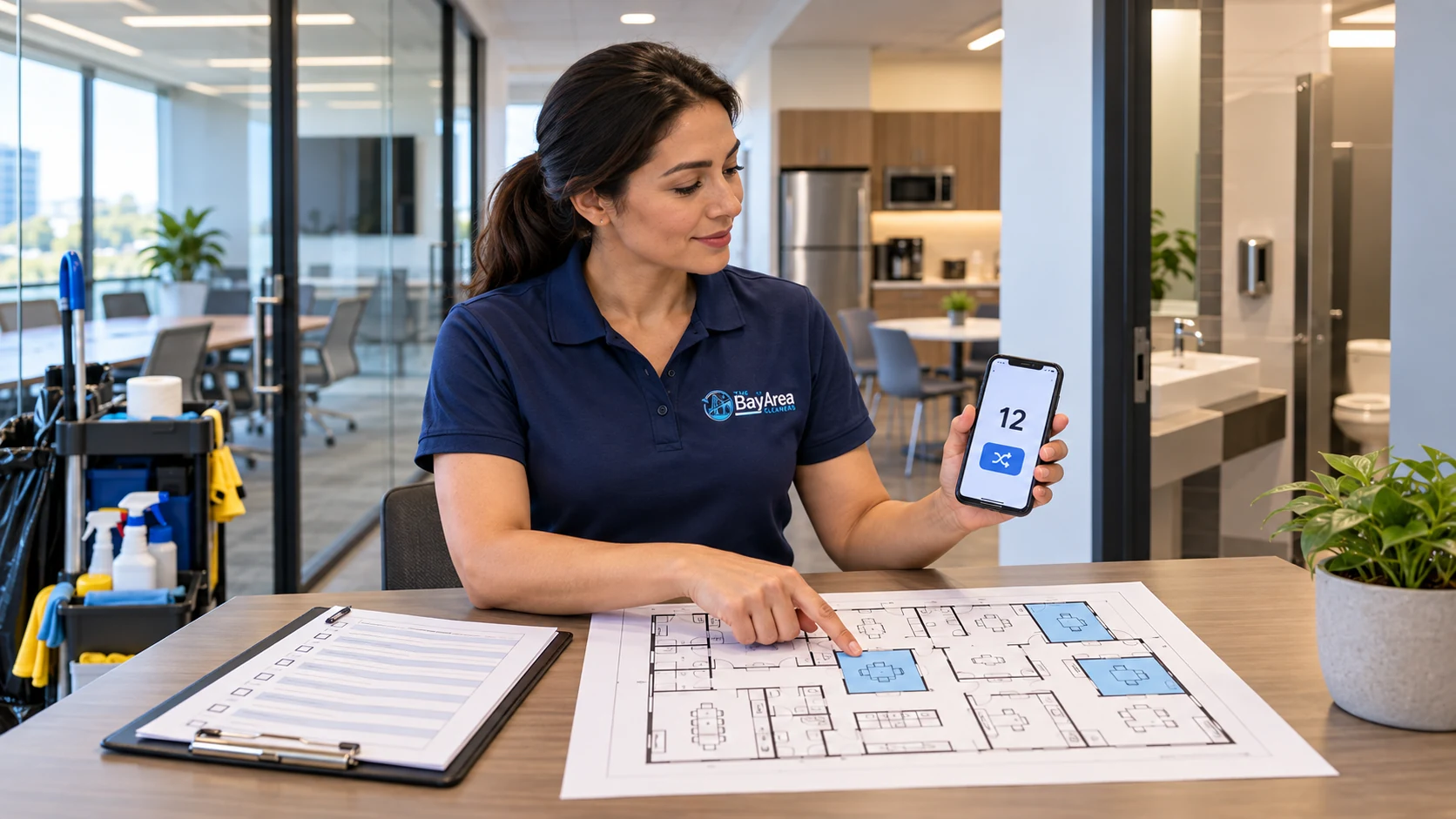
A useful plan begins with the way a room operates. One meeting room may host successive groups, another may stay unused most of the week, and a reception counter may receive visitors throughout the day. A manager can begin with a simple walkthrough:
- Identify surfaces that people share, such as meeting controls, counter edges, door hardware, and common touchscreens.
- Record which spaces are occupied throughout the day and which are used only for scheduled events.
- Separate ordinary cleaning duties from issues needing a manager, building engineer, or qualified specialist.
- Note sensitive equipment, finishes, and personal items that should not be handled without permission.
- Decide how occupants can report a missed task without interrupting their work.
This map makes workplace sanitation observable rather than abstract. A shared office printer illustrates the problem. Teams may refill paper, clear jams, and clean the counter. The facility plan should name each task owner so cleaning does not interfere with equipment support. In a shared office, even a reasonable task may be missed when two teams assume the other is responsible.
Takeaway: Describe each shared room by usage, surfaces, owner, and reporting route before selecting any additional treatment. The written map makes gaps visible early.
Which Shared Surfaces Need the Closest Attention?
Shared touchpoints deserve closer attention because many people use them between cleaning visits. This does not mean every surface needs the same intervention. Workplace sanitation begins by looking at use patterns and checking that the intended material can be serviced safely. Ordinary routine cleaning remains the baseline for most office surfaces.
For workplace sanitation planning, distinguish surfaces people touch frequently from those that mainly collect dust. A high shelf might get dusty but is rarely touched. The following comparison answers a practical question: which areas should a manager review first?
| Office area | Typical concern | Manager’s review question |
| Reception and shared entrances | Repeated handling of door hardware and counters | Are the frequent contact points in the written scope? |
| Conference rooms | Tables, chair arms, shared controls, and equipment | Who resets the room between scheduled uses? |
| Breakrooms | Shared handles, counters, sinks, and tables | Does the scope distinguish surfaces from appliances? |
| Shared restrooms | Fixtures, handles, supply levels, and floor condition | Is inspection assigned and restocking documented? |
A small office with little visitor traffic may need a different schedule from a busy suite with many meeting rooms. When a scope lists high touch surface cleaning, ask whether it means removing ordinary soil or a separately authorized disinfection task. The service record should not suggest that an unspecified treatment occurred. Workplace sanitation reviews should include spaces that change hands between departments. A meeting room managed by reception during the day may be serviced by a contractor after hours, and each group needs a clear handoff.
Protect devices and personal work
Screens, keyboards, desk phones, and shared presentation controls require special care. The CDC advises following the device manufacturer’s recommendations for electronics. Facility managers should identify who owns each device and whether the cleaning team may move it. Office sanitation should not damage surfaces or disrupt personal materials. A plan can cover common equipment without promising access to every individual workstation. Where staff clean their own devices, give them a reporting route for damaged covers or missing instructions rather than assuming building cleaners can resolve the issue.
Takeaway: Prioritize shared touchpoints according to actual use, then document device restrictions and handoffs. Avoid describing every touched surface as requiring identical treatment.
How Should a San Jose Office Build Its Cleaning Routine?
A workable routine connects workplace sanitation to rooms, responsibilities, and observable checks. The manager should be able to answer what happens before opening, during normal operations, and after a space has been used intensively. Start with a room-by-room review rather than adopting a fixed daily frequency from another property. Office cleaning frequency depends on the way each space is used, the condition observed after service, the agreement with the provider, and any special setting-specific requirements. The sequence below can guide planning without prescribing product use:
- Record each room’s business purpose, typical occupancy, materials, and restricted items.
- Identify routine tasks, including soil removal, waste handling, and visual checks of shared touchpoints.
- Assign responsibility for each task, including any required coordination with staff during office hours.
- Agree on how unusual incidents, damage, or visible contamination will be reported and escalated.
- Decide what evidence of completion matters, such as inspection notes, supply checks, and corrected complaints.
- Review results with the people who use the space and revise the schedule when patterns change.
An office cleaning checklist becomes valuable when it reflects this agreement. Office sanitation records should explain why a scheduled task was deferred. For example, a locked conference room cannot be inspected at the agreed time. Recording the restriction helps the manager resolve access instead of repeating an impossible instruction. The checklist should record exceptions openly rather than hiding them under a completed visit.
Separate routine work from incident response
A spilled drink, equipment failure, or a report that someone was ill can change the normal plan. The CDC distinguishes regular cleaning from circumstances when disinfection may be appropriate. Facility managers should escalate unusual incidents according to applicable workplace policy and product instructions rather than asking a general cleaner to improvise a specialized response.
A clear response plan helps managers document the incident, assess its implications, and assign follow-up to an appropriate person. Compare planned duties with recurring janitorial services available for commercial buildings, then request a property-specific written agreement listing responsibilities, exclusions, access rules, and incident reporting. The service page alone does not establish what a contract includes.
Takeaway: Build the schedule from observed room use and assigned duties, then document exceptions. A completed visit should be possible to verify without guesswork.
When Is Cleaning Enough, and When Is More Needed?
Routine cleaning is sufficient for many everyday conditions in community offices. Additional treatment depends on the circumstances and applicable guidance. Workplace sanitation does not require treating every surface with a disinfectant at every visit. The CDC distinguishes routine cleaning from higher-concern situations and notes that specialized facilities follow different rules.
| Situation | Planning response | Who should confirm the next step? |
| Ordinary visible dust or tracked-in soil | Include suitable routine cleaning in the normal scope | Facility manager and cleaning provider |
| Frequently handled shared surfaces | Give these items clear attention in the routine checklist | Office manager and responsible team |
| Report of illness affecting a shared area | Review current CDC guidance and applicable workplace procedures | Authorized manager or designated safety lead |
| Sensitive equipment or unusual material | Confirm manufacturer limitations before arranging work | Equipment owner or qualified specialist |
Specialized sanitation claims require separate review. When a disinfection task is proposed, the EPA guidance on registered disinfectants explains why the product label, approved use site, and directions matter. Facility managers should ask for the documented service scope and direct safety questions to the responsible workplace lead.
Treat “sanitized” as a term that needs a definition
Teams sometimes use “cleaned,” “sanitized,” and “disinfected” interchangeably in conversation. That language creates inconsistent expectations. A written office sanitation scope should distinguish the purchased activity and identify conditions needing review. The phrase high touch surface cleaning can describe a routine service, but it does not automatically mean the same thing as disinfection. Managers should request product documentation relevant to the scope and refer questions about unusual exposure conditions to the person responsible for workplace safety.
Workplace hygiene includes employee behavior and building operations beyond the cleaning contractor’s scope. Stocked washrooms, accessible waste stations, and clear reporting help keep shared spaces usable. A contractor can contribute to these conditions without being responsible for personal conduct, maintenance repairs, or occupational health decisions.
This guide is for general commercial offices. A tenant with specialized operations should use the standards that actually apply to that space rather than extending general office guidance beyond its intended scope.
Takeaway: Define the service term before approving a scope. Require a clear escalation route whenever conditions go beyond ordinary shared-office cleaning.
How Can Managers Check Whether the Plan Works?
Workplace sanitation should be evaluated through repeatable observations and documented follow-up, not through vague claims about air quality, productivity, or illness rates. A manager can ask whether agreed surfaces were addressed, whether users can report missed tasks, and whether recurring complaints lead to changes.
A documented walkthrough can show whether visible soil, missing supplies, access restrictions, or repeated service gaps are being addressed. Compare its findings with exception records. Where a provider reports completed work, the report should make it possible to identify the location and the task without requiring personal monitoring of every worker.
Review office cleaning frequency when occupancy changes or problems recur. A manager might inspect reception after a large visitor event or examine shared rooms following back-to-back meetings. The purpose is to establish a consistent method of evaluation, not to produce a numerical cleanliness score without a validated measurement system.
Use the following review questions during routine management meetings:
- Can occupants find a clear way to report missed cleaning or damaged surfaces?
- Are restrooms, breakrooms, and meeting spaces consistently within the agreed scope?
- Does the record explain inaccessible rooms or tasks postponed for operational reasons?
- Are repeated complaints leading to a schedule or scope review rather than identical replies?
- Is responsibility clear when building maintenance, tenant staff, and cleaners share an area?
For example, if a conference room is regularly reset by office staff between meetings, the document should acknowledge that responsibility rather than assigning the same action twice.
Use complaints as diagnostic information
A complaint can identify a real gap, but it is not a complete explanation of what happened. Ask which surface, when the condition was observed, and whether access was available. Then compare that record with the written scope. This supports constructive discussions with the provider and avoids accusing a team of failure before establishing the facts.
Persistent restroom complaints may justify evaluating restroom cleaning services separately. Compare what the normal office agreement covers with what the restroom actually needs, including supply checks, access, recurring issues, and the person responsible for follow-up.
You may also like: Commercial Restroom Cleaning: The One Room That Grades the Whole Building.
For an office building, the inspection plan should be simple enough to survive a manager’s vacation or staff turnover. Workplace sanitation improves accountability when shared room ownership changes.
Takeaway: Check agreed tasks, documented exceptions, and repeated complaints together. Revise a scope when evidence shows the same gap appearing after several visits.
When Should an Office Bring in Outside Cleaning Support?
Outside support may be useful when a San Jose office cannot consistently cover shared areas, coordination duties, or scheduled checks with existing staff. The decision should start with the work itself, not a claim that a particular company is automatically the best provider. Workplace sanitation is easier to manage when vendor responsibilities are written clearly.
A building might need help because the office has expanded, common rooms are used at different hours, or internal employees should not be expected to perform specialized facility tasks. Compare options using the same task list, access conditions, operating hours, and quality checks. Ask who documents unresolved issues after a visit and how the next shift learns about them. Workplace sanitation loses consistency when corrective actions remain in private messages rather than the shared service record.
Before requesting a proposal, prepare these details:
- Specify which rooms and shared touchpoints are within the contracted scope.
- Distinguish routine cleaning from services that need separate agreement or approval.
- Identify access windows, alarm procedures, equipment restrictions, and a contact person.
- Explain what supplies are provided by the tenant, building, or contractor.
- Request a written method for reporting exceptions and correcting missed tasks.
Include high touch surface cleaning in each documented shift handoff.
Compare any proposal with the relevant office cleaning services and request a scope for your specific building. Ask how scheduling, access limits, protected equipment, and repeat complaints will be managed rather than assuming the same package fits every office. Office cleaning frequency should reflect observed conditions rather than a standard promise on a sales page.
For maintenance outside ordinary room cleaning, review commercial floor care as a separate scope. Distinguishing periodic floor work from routine wiping or mopping helps identify tasks that need different equipment, access arrangements, or scheduling.
Before confirming a service in San Jose, ask the business directly whether the address is within its current service routes. Regional service coverage should be confirmed for the exact property, without assuming a local branch exists.
Takeaway: Request comparable scopes and confirm actual local availability. Choose a provider that can document responsibilities and exceptions, not one promising unspecified results.
Frequently Asked Questions
What does workplace sanitation include in a typical office?
Workplace sanitation usually covers planned cleaning of shared surfaces and rooms, clear responsibility for frequently handled touchpoints, waste management, restroom conditions, and a method for reporting missed tasks. Exact activities depend on the facility and its written scope. Additional sanitizing or disinfection should be defined separately and connected to appropriate conditions and guidance.
Is office sanitation the same as disinfecting every desk?
No. Office sanitation is a broader operational concept that may include regular cleaning, supply checks, and defined hygiene responsibilities. Disinfecting is a distinct activity with its own purpose and restrictions. Many ordinary office surfaces only need routine cleaning in normal circumstances. Facility managers should avoid promising that every desk receives the same treatment without confirming that scope.
How should high touch surface cleaning be prioritized?
High touch surface cleaning should reflect how frequently different people use a surface, whether routine service can reach it, and any instructions for sensitive materials. Door hardware and shared conference controls often deserve closer review than rarely handled shelves. The office manager should identify owners and access restrictions before writing a repeatable task into the service agreement.
What determines office cleaning frequency in shared rooms?
Office cleaning frequency should follow actual room use, visible conditions, agreed responsibilities, and changes in occupancy. A room used for repeated meetings may need review at different moments from a rarely occupied private office. Do not assume an identical schedule for every space. Record complaints and exceptions, then adjust the task schedule where evidence identifies a recurring gap.
How can a facility manager compare sanitation service proposals?
Compare providers against one room-by-room scope with the same tasks, access rules, reporting process, and distinction between routine cleaning and additional services. Ask each provider to explain exclusions and who resolves exceptions. Confirm whether the proposed service area includes your San Jose address. Avoid choosing from claims of guaranteed health or productivity outcomes that a cleaning contract cannot substantiate.
Conclusion
Workplace sanitation in San Jose offices starts with a clear map of shared spaces, an agreed cleaning routine, and a reliable way to review the result. Routine work and unusual incidents should have different responses. A service quote is useful only when the office manager can see what is included and who is accountable. If you are considering commercial cleaning support, ask The Bay Area Cleaners to confirm service availability for your address and discuss a written scope. Call 707-656-9339 to request that conversation.