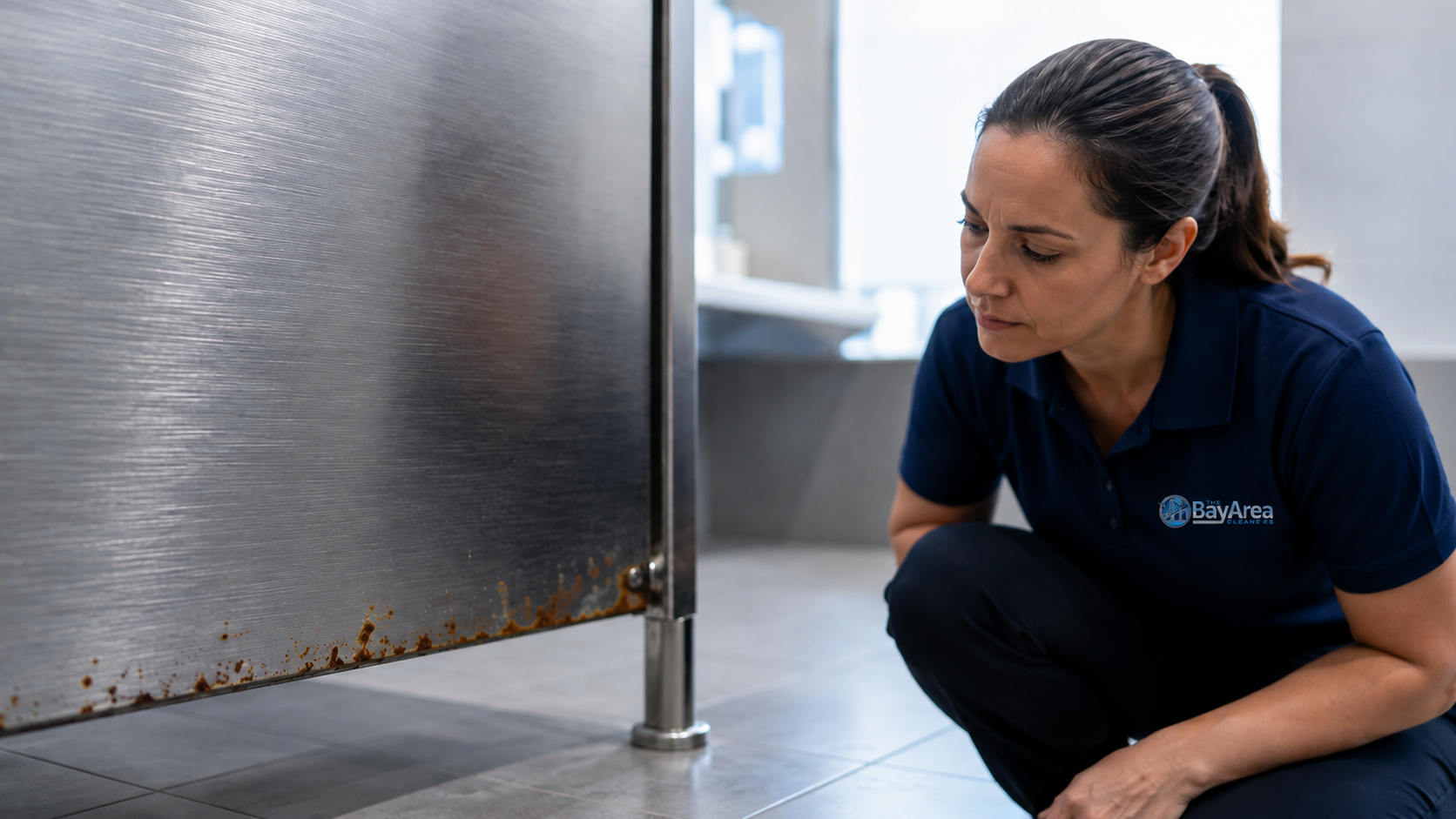
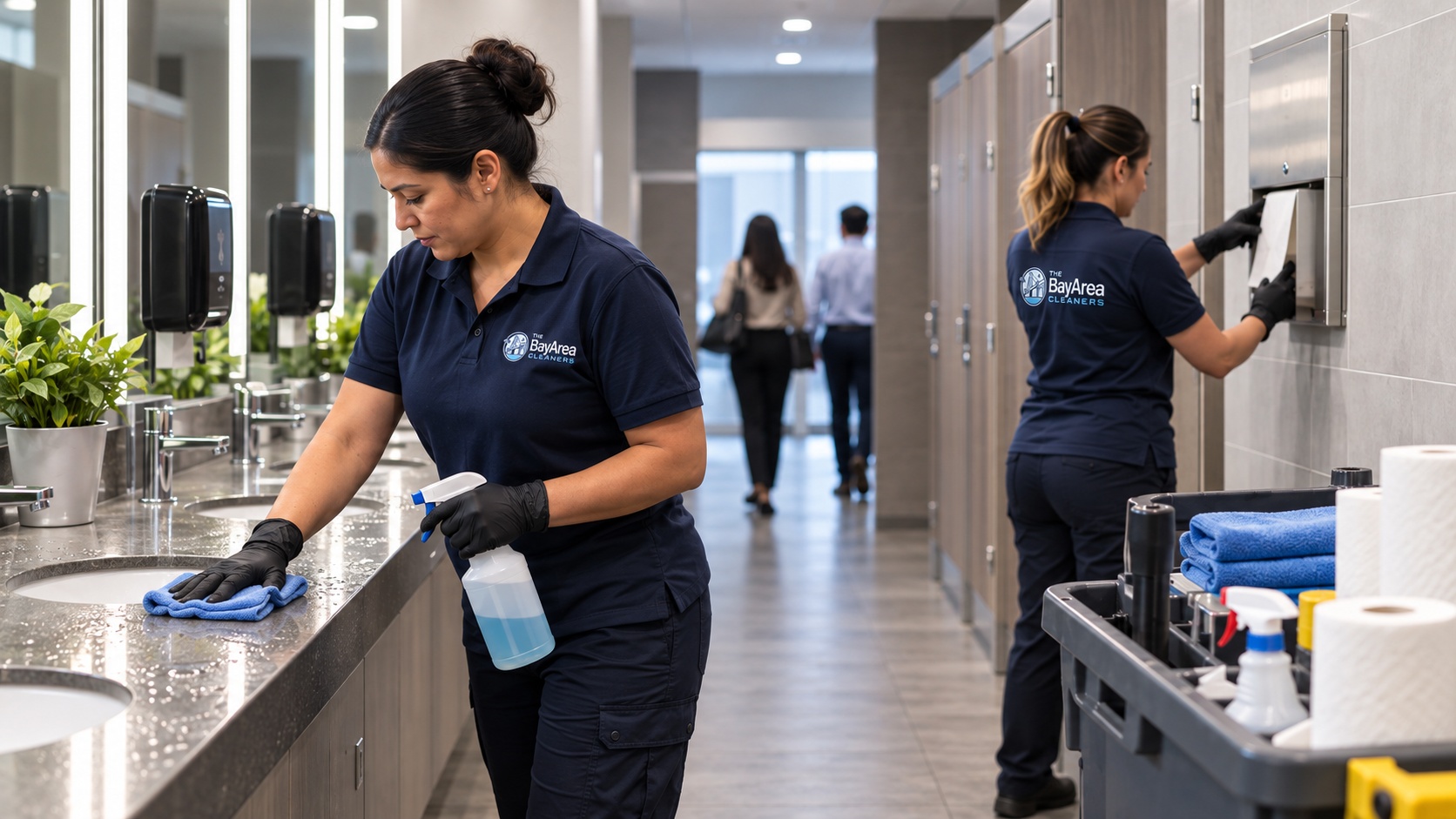
Nobody inspects a supply closet before signing a lease. Almost everyone checks the restroom. It is the one space where visitors form a verdict about everything they cannot see: the kitchen, the HVAC, the management behind the door marked Private. A spotless lobby gets forgotten in seconds. A dirty restroom gets remembered for months, and it colors every other judgment a visitor makes about the business.
The quick version: Commercial restroom cleaning fails less often on schedule and more often on scope. Two things a checklist skips are the drains and traps where odor actually lives, and the high-touch points, like door handles and faucet levers, that carry the most germs but take the least time to clean. Get both into the routine and the frequency question mostly answers itself.
The Smell That Survives a Clean Restroom
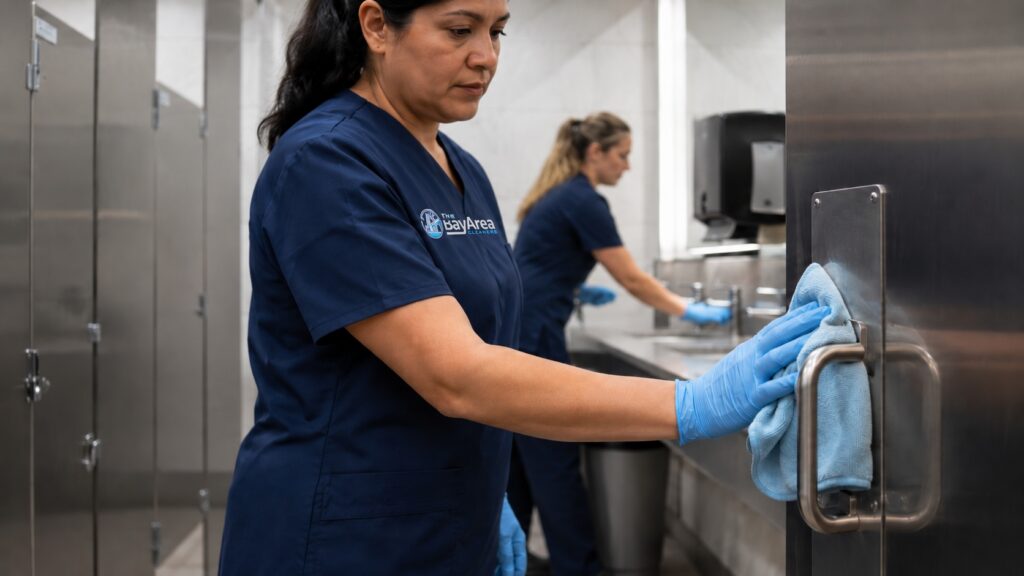
A restroom can look spotless and still smell wrong. That gap confuses more facility managers than any other part of the job, because the instinct is to clean harder, and harder cleaning of the wrong surface does nothing.
You may also like: How to Clean Grout on Commercial Tile Floors
Surface odor comes from what you can see: a splash on the floor, a stain on the bowl. Wiping it down solves it in seconds. Structural odor comes from what you cannot see, and it is the one that survives every round of commercial restroom cleaning no matter how many times the visible surfaces get wiped.
The usual source is the floor drain, or the P-trap under a rarely used sink. Both hold standing water by design. In a low-use restroom, that water evaporates fast.
Once the trap runs dry, it stops blocking sewer gas. The smell that follows has nothing to do with how clean the tile is.
Biofilm is the second cause, and it is the one routine mopping cannot touch. A thin bacterial layer builds up inside urinal drains and at the base of toilet bowls, just under the waterline. A mop or spray bottle never reaches it.
It keeps producing odor at a low level. A visitor notices within seconds of walking in, even though every visible surface passed inspection an hour ago.
Neither cause shows up on a checklist that only asks whether the floor and fixtures look clean, which is why the same complaint keeps resurfacing even when the log shows the visit happened on schedule.
Commercial restroom cleaning that only targets what is visible will always miss this. Pouring water down unused drains monthly keeps traps from running dry, and treating urinal drains with an enzymatic cleaner breaks down biofilm that scrubbing cannot reach. Biofilm that has built up for months rather than weeks sometimes needs more than a monthly treatment to clear, which is where a deep cleaning pass resets the baseline before routine maintenance can hold it.
One more habit worth building into the routine: run the exhaust fan check at the same time as the drain check. A fan that has stopped pulling air, whether from a failed motor or a duct blocked with dust, lets humidity and odor sit in the room instead of clearing it. Commercial restroom cleaning crews rarely test airflow because it is not a surface, but a dead fan undoes everything the rest of the visit accomplished.
Takeaway: If a restroom smells wrong right after a clean, stop scrubbing surfaces and check the drains. That is almost always where the odor is coming from, not the floor.
How Often Actually Depends on Traffic, Not the Clock
Most restroom schedules get set once and never revisited, which is exactly backward. Traffic changes with staffing, season, and even the day of the week, but the cleaning schedule almost never does.
You may also like: How to Clean Walls: The Paint Finish Decides Everything
OSHA’s sanitation standard, 29 CFR 1910.141, requires washing facilities, meaning the sinks where people wash their hands, to be maintained in a sanitary condition. Nowhere in the standard is that tied to a visit count; the requirement is the condition, not a number of times per day. That single detail is the reason two identical restrooms in two different buildings can need completely different schedules and both meet the requirement.
A restroom near a retail entrance or a school cafeteria needs multiple checks a day. Heavy traffic degrades supplies and surfaces fast. A restroom in a low-occupancy back office might genuinely hold up on one thorough clean per day. Matching the visit count to actual traffic, instead of copying a generic schedule, is what keeps a restroom from looking neglected between visits.
The same standard sets minimum fixture counts by headcount. That number matters here too. A restroom sized correctly for its floor spreads wear across more fixtures and holds up longer between cleanings.
One sized too small concentrates the same traffic onto fewer toilets and sinks. No cleaning frequency fully compensates for that.
Season shifts this too, in ways most schedules never account for. Cold and flu season pushes hand-washing frequency up, which means soap and towel consumption climbs even though headcount stays flat. Summer heat does the same to water usage in restrooms near a gym or a warehouse floor. A schedule locked in January and never revisited is already wrong by July.
A simple test cuts through most scheduling debates. Check supply levels and surface condition at the busiest hour of the day, not first thing in the morning. If soap, paper, and surfaces are already failing at 2pm, the schedule is too thin for that traffic, whatever the calendar says.
There is a staffing angle here too. A restroom serviced by whoever is available that shift, rather than a consistent crew, tends to drift toward whatever that person considers “clean enough.” Assigning the same crew to the same restrooms builds a baseline they notice deviations from, which catches problems faster than a rotating schedule ever will.
Takeaway: Set the schedule from traffic, not habit. A generic frequency copied from another building is a guess, not a plan.
The Five Points a Fast Clean Skips
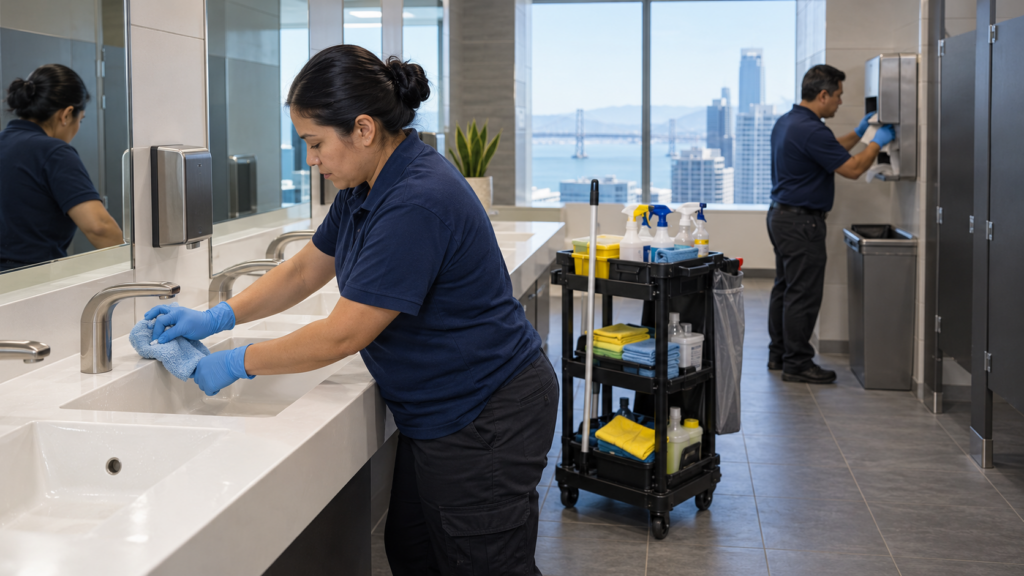
A restroom can look fully serviced and still be dirty where it counts most, because a fast pass tends to hit the same visible surfaces and skip the ones nobody looks at directly.
You may also like: What Does Proper Baseboard Cleaning Really Involve?
Door handles and push plates take the most contact and the least cleaning time. Everyone touches them entering and leaving. A wipe takes ten seconds, which makes skipping this step a habit rather than a decision.
Faucet handles are close behind, and the irony is pointed. They get touched by hands that have not been washed yet, right before the water meant to clean them turns on.
Soap and paper towel dispensers get restocked but rarely cleaned on the outside. Residue builds on a surface every user has to touch just to get product out. Stall locks and door edges collect the same layered buildup, invisible until someone looks closely. A partition door gets pushed and pulled far more than it gets wiped.
The fifth is the one most schedules never list at all: the trash receptacle’s touch points, the lid, the flap, or the foot pedal. It is handled constantly and cleaned almost never. Restocking the liner gets treated as the whole task.
Floor tile that stays slick after mopping, even once fully dry, is a sixth item worth adding to that list. It points to a worn sealant rather than a rinsing problem, and no amount of scrubbing restores the traction a fresh seal provides. Our floor care service handles that kind of resurfacing separately from routine restroom cleaning.
Cross-contamination risk compounds the problem. A cloth used to wipe a sink and then a toilet handle carries bacteria from one surface to the next, which means the order tasks happen in matters as much as whether they happen at all. Color-coded cloths or a strict wipe-then-discard rule for high-touch points closes that gap without adding a single minute to the visit.
None of these five takes real time. The problem is not effort. It is that a checklist built around “clean the floor, clean the toilet, restock supplies” has no line item for any of them, so they get skipped by omission rather than choice.
Takeaway: The five-second wipes are the ones that get skipped, and they are exactly the surfaces every visitor’s hand actually touches.
When It Stops Being a Cleaning Problem
Most restroom issues respond to cleaning. Some do not, and knowing the difference early keeps a small fix from turning into an emergency work order.
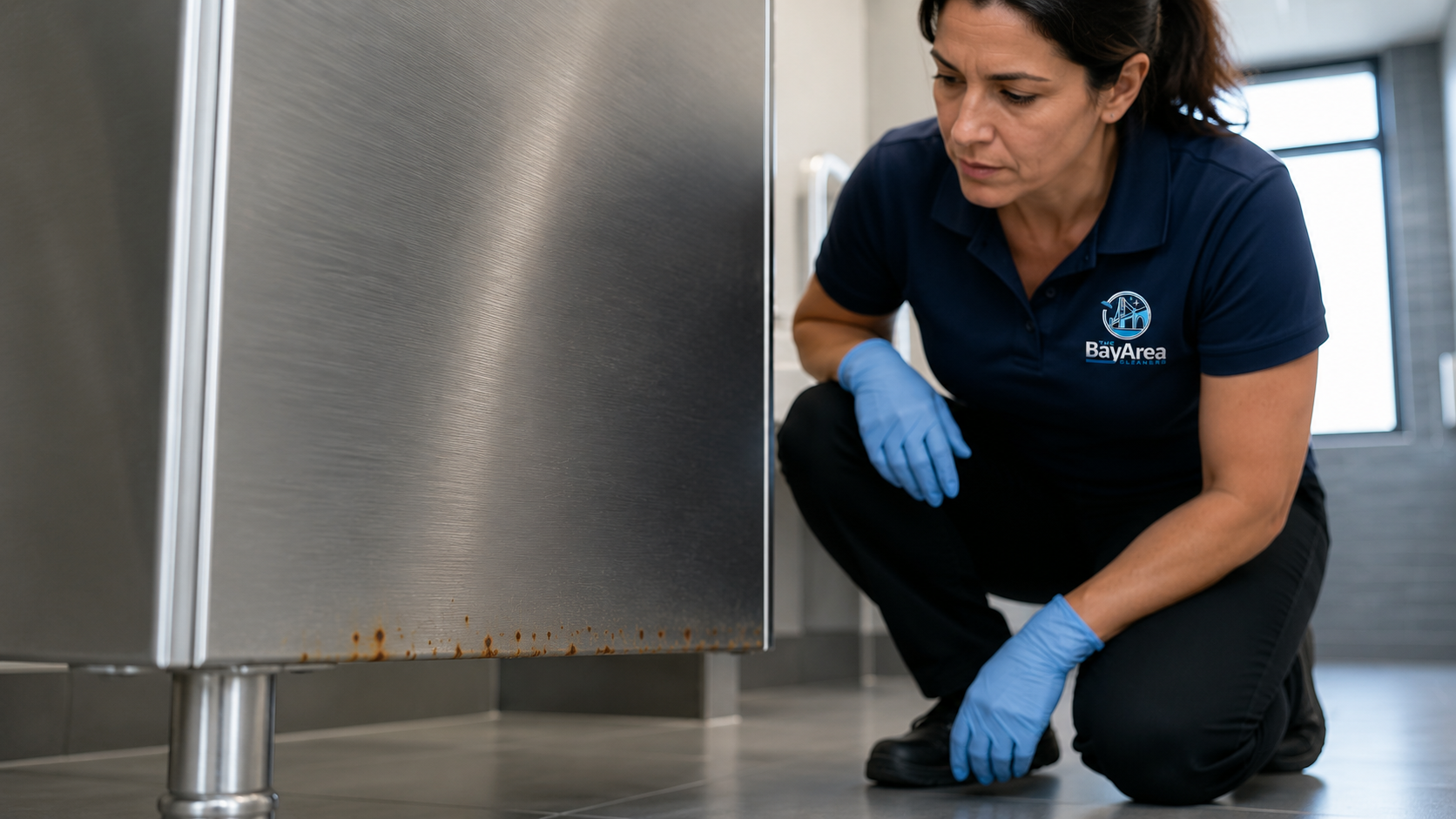
Grout and caulk that stay discolored after a proper clean have usually gone past staining. The surface itself, not what is on it, needs replacing. A toilet or urinal that needs repeated plunging despite normal use often points to a partial line blockage, not a one-time clog. Persistent moisture at the base of a fixture, even with no active leak visible, points to a seal that has already failed and just has not let go yet.
The tell that separates a cleaning issue from a maintenance one is repetition. A stain that reappears within days of a deep clean is not a cleaning failure. It is a symptom being re-treated instead of fixed.
Our restroom cleaning service flags these patterns during routine visits, so they reach a property manager before a fixture fails outright, instead of getting re-treated on every visit without anyone connecting the cause.
Documentation matters as much here as the fix itself. A dated note of when a stain was treated, and whether it returned, turns a vague sense that “the bathroom always smells a bit off” into evidence a property manager can act on. Without that record, the same issue gets rediscovered and re-treated every few weeks, with no one connecting the dots to the actual cause.
Takeaway: A problem that comes back within days of a real clean is not asking for more cleaning. It is asking for a repair.
Frequently Asked Questions
How often should commercial restroom cleaning happen in a busy building?
Base commercial restroom cleaning frequency on foot traffic, not a fixed number. High-traffic restrooms near entrances, cafeterias, or retail floors typically need multiple checks a day, while low-occupancy office restrooms may hold up on one thorough clean daily. Check condition at the busiest hour, not first thing in the morning, and if supplies or surfaces are already failing, the current schedule is too thin.
What commercial restroom cleaning equipment actually makes a difference?
An enzymatic drain treatment for urinals and floor drains matters more than most equipment lists suggest, since it addresses biofilm that scrubbing cannot reach. Beyond that, color-coded microfiber cloths prevent cross-contamination between fixtures and countertops, and a dedicated cart keeps supplies stocked so restocking does not get skipped when a shift runs long.
What should a commercial restroom cleaning checklist include beyond the basics?
Beyond floors, toilets, and supply levels, a complete checklist names door handles and push plates, faucet handles, the exterior of soap and towel dispensers, stall locks, and trash receptacle touch points. These five are the surfaces a fast pass skips most often, and they carry the most hand contact of anything in the room.
What commercial restroom cleaning procedures prevent odor from coming back?
Pour water down floor drains and any rarely used sink monthly to keep the trap seal from evaporating, and treat urinal drains with an enzymatic cleaner to break down biofilm buildup below the waterline. Surface cleaning alone will not resolve odor that is coming from either source, no matter how often it runs.
Conclusion
Commercial restroom cleaning holds an outsized share of how a building gets judged, and getting it right depends less on how often the schedule says to clean and more on what actually gets covered each time. Treat the drains as part of the job, not an afterthought. Match the frequency to real traffic instead of a generic default. And put the five overlooked touch points on the checklist where they belong.
If your commercial restroom cleaning schedule no longer matches your traffic, or supplies keep running out before the next visit, The Bay Area Cleaners can rebuild the plan around what your building actually needs. Call 707-656-9339 to talk through your space.