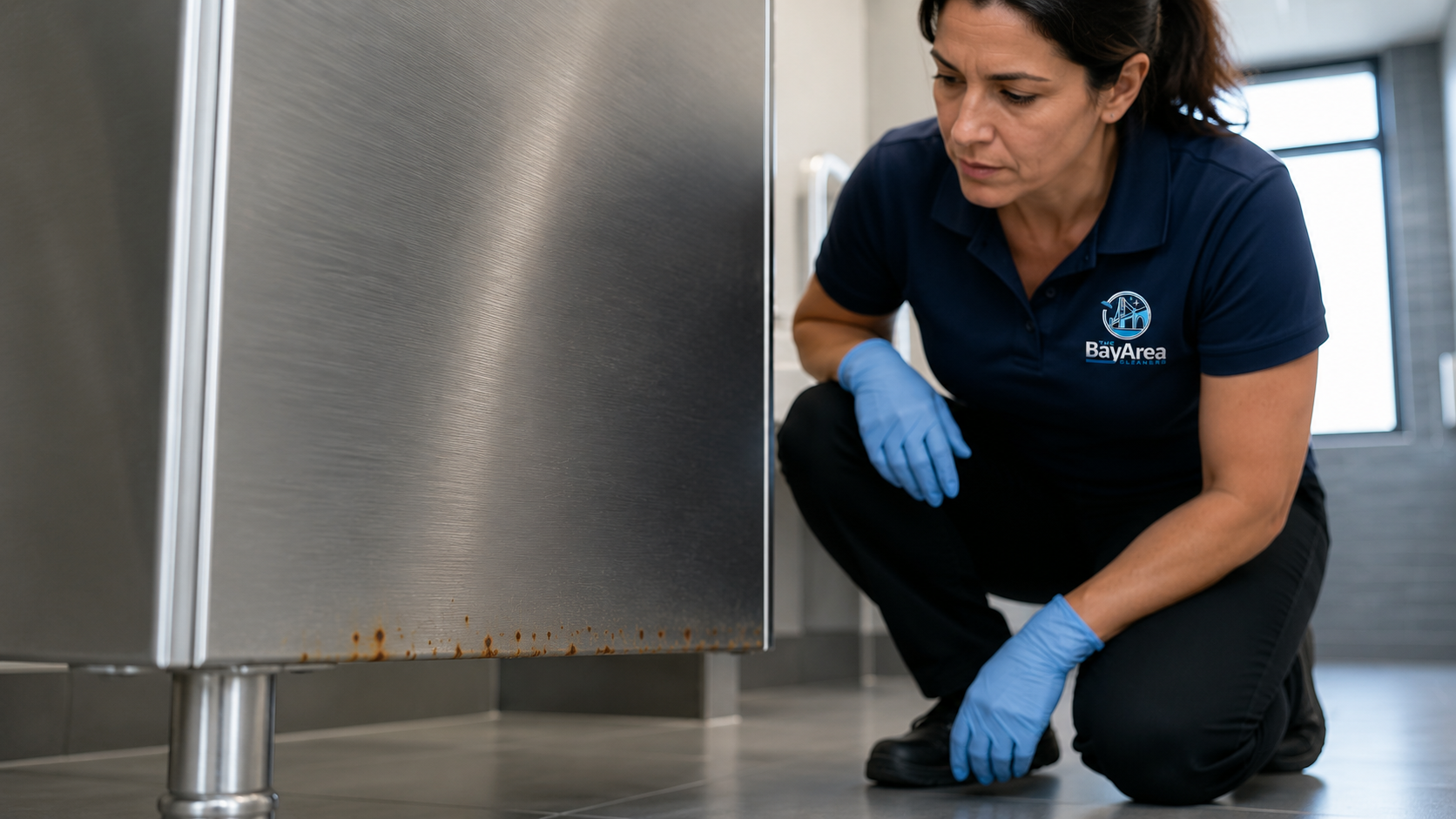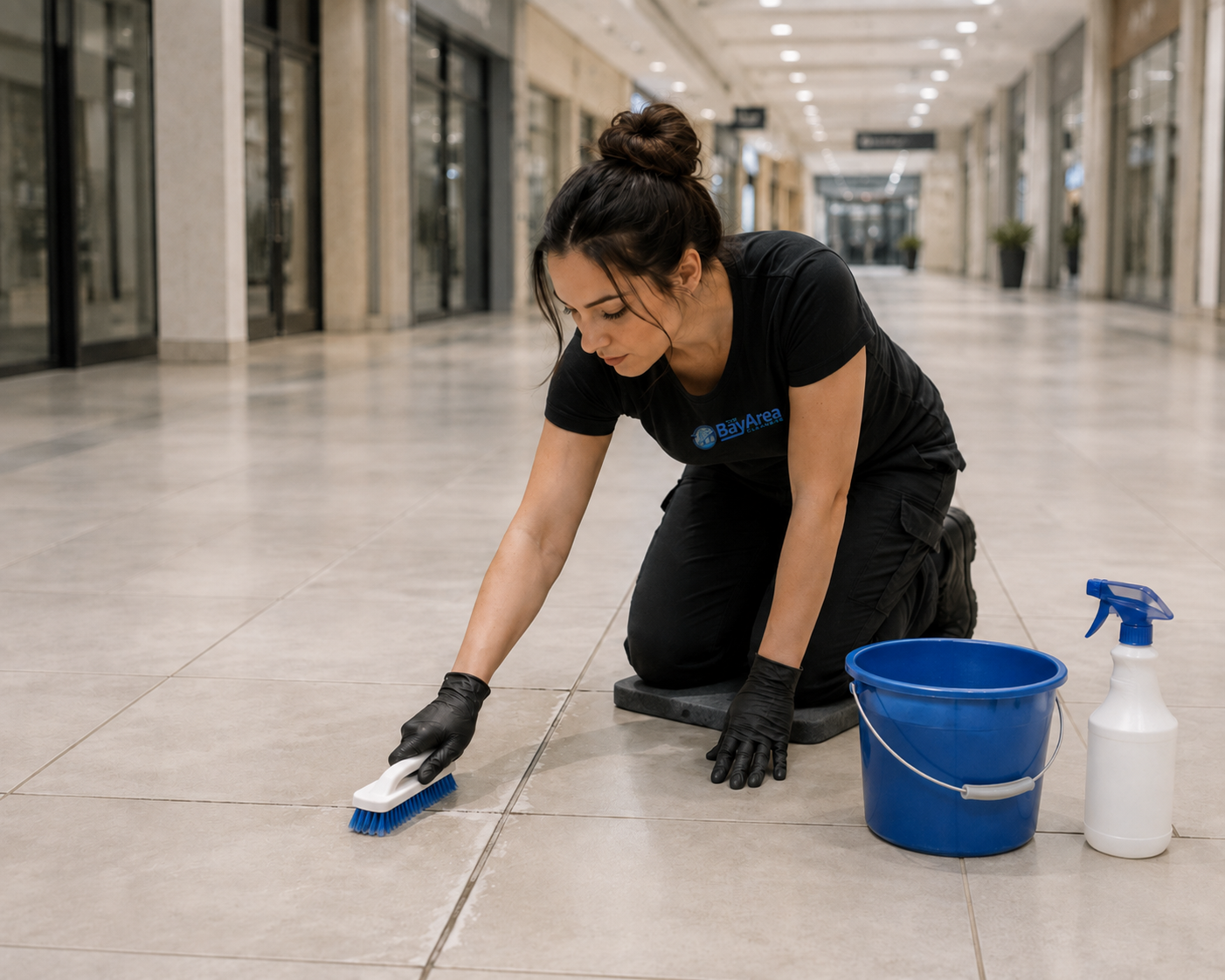
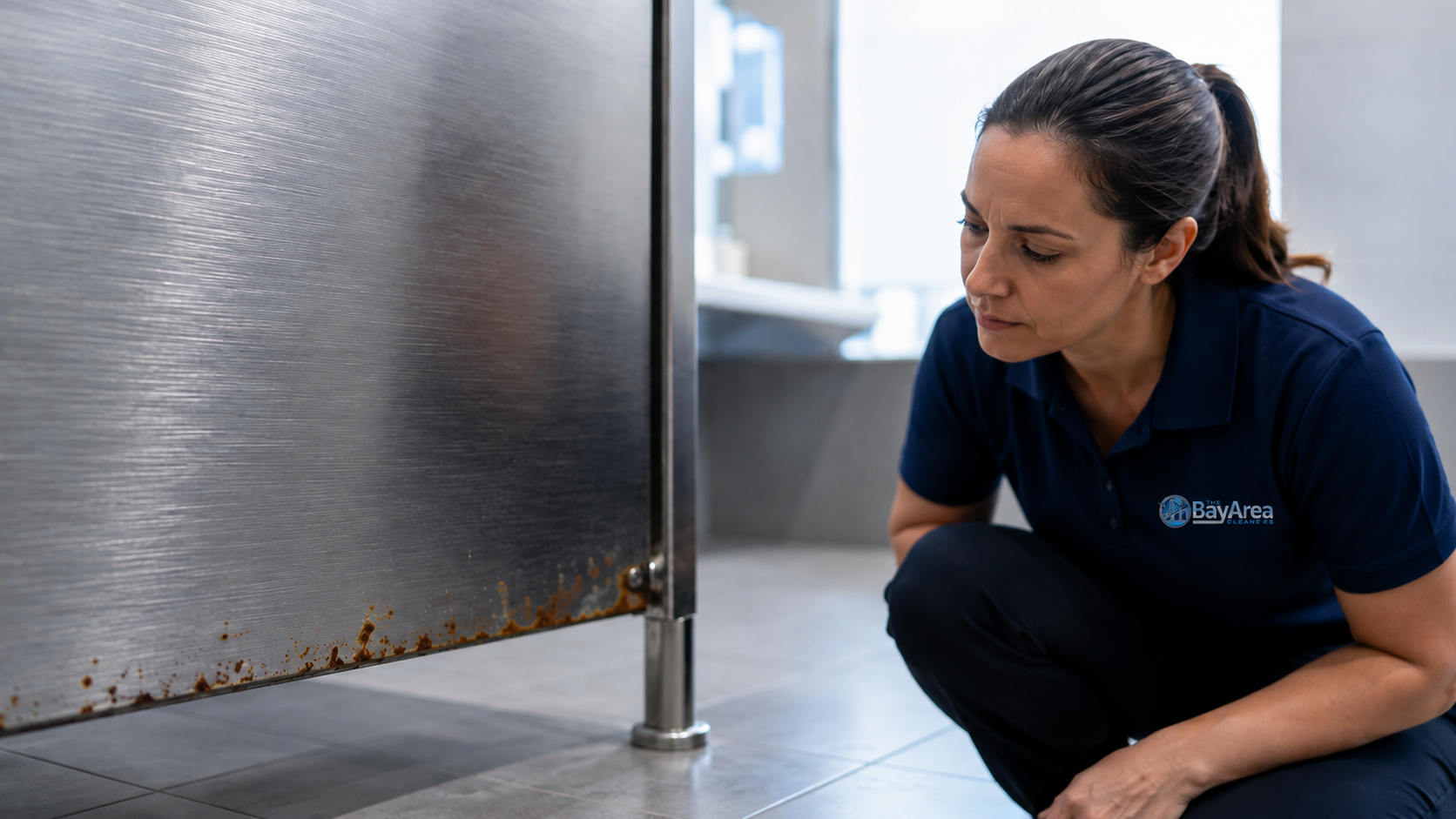
Stainless steel is not supposed to rust. That is the whole point of specifying it, and it is the first thing a facility manager says when maintenance reports orange streaks on a restroom partition.
The objection is correct, which is what makes this useful. In almost every commercial building, what looks like rusting stainless is not the alloy failing. It is something sitting on top of it, or something the cleaning cart did to it.
The quick version of how to clean stainless steel rust: wipe the spot with a damp white cloth and mild detergent before buying anything. What comes off on the cloth was never part of the metal. What stays needs an acid cleaner made for stainless. What you can feel with a fingernail will not respond to cleaning at all and needs a specialist, and that distinction is worth more than any product on the market.
This guide is organized around that test, because how to clean stainless steel rust has three different answers depending on the outcome, and they lead to three different jobs, budgets, and people.
Start With a White Cloth
Before diagnosing anything, understand what you are protecting. Stainless resists corrosion because of a microscopic chromium oxide film that forms the instant the metal meets air. That film is the passive layer, and it repairs itself continuously as long as the surface stays clean and dry.
Nothing about the alloy makes it rustproof. The film does the work, and the film can be blocked, broken, or scraped away. That is why how to clean stainless steel rust is really a question about the film, not about the stain.
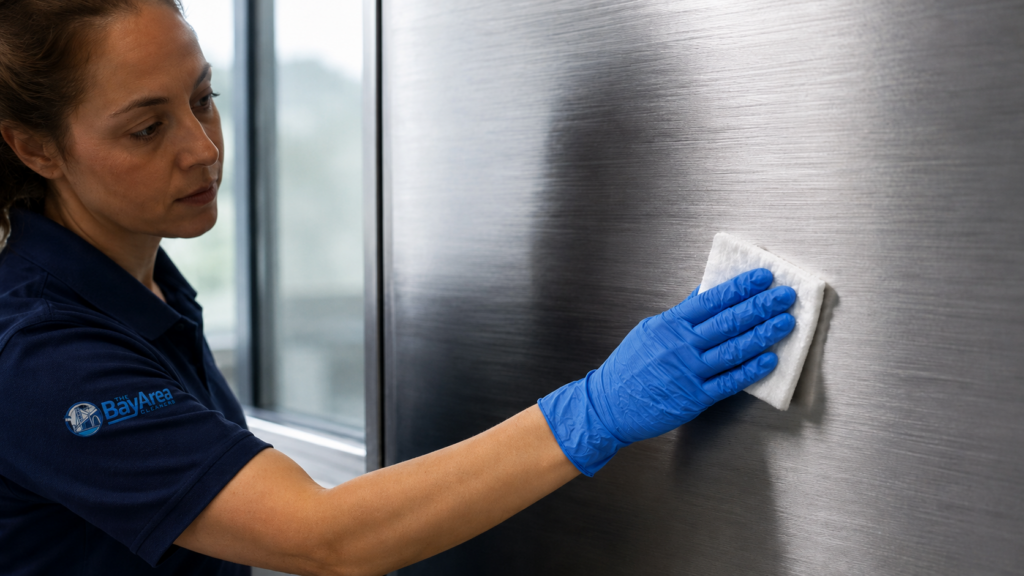
So run the test. Dampen a white cloth, add a drop of mild detergent, and wipe the affected area with moderate pressure. Then look at the cloth and feel the metal.
Orange on the cloth and clean metal underneath is Case 1. Discoloration that stays put is Case 2. Texture your fingernail catches is Case 3. Ninety seconds of testing decides everything that follows.
Takeaway: the alloy is almost never the problem. Find out whether you are removing something, dissolving something, or looking at damage.
Case 1: Orange Comes Off on the Cloth
This is the most common finding and the least serious. The orange transferred because it was never bonded to your panel. It is somebody else’s iron, oxidizing where it landed.
Airborne metal dust is the usual culprit, and renovation work is the usual source. Grinding, cutting, and drilling throw fine carbon steel particles that settle on every surface in range.
Each particle rusts on contact with humidity and leaves a rust-colored halo on metal that is perfectly healthy underneath. The industry calls this carbon steel contamination, and it is the most misdiagnosed finding in commercial buildings.
You may also like: Post Construction Cleaning Checklist
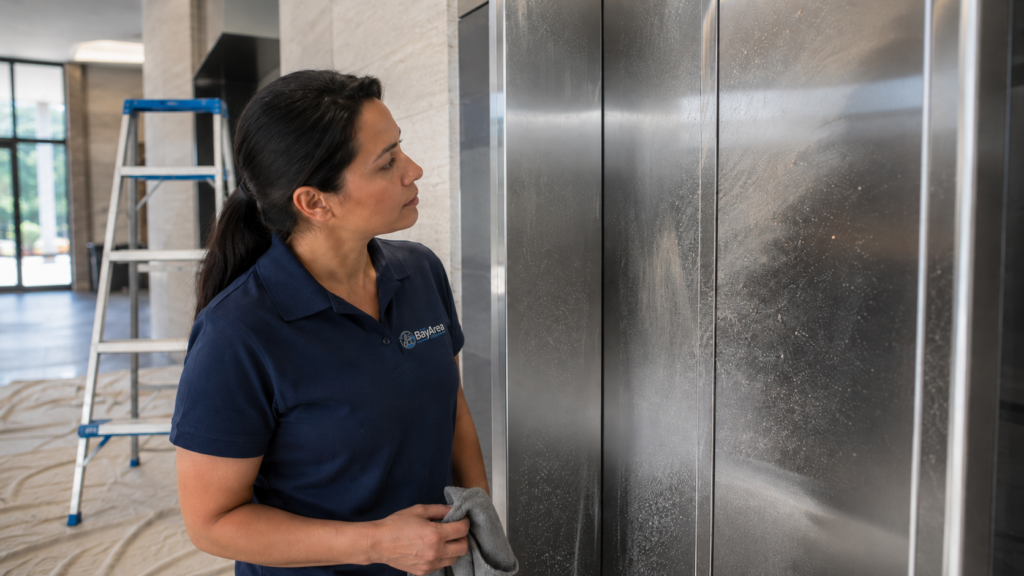
Carts and equipment do the same thing at ground level. A steel-framed cart parked against an elevator panel, a ladder leaned on a handrail, a dropped tool dragged across a kick plate: each contact transfers iron that will bloom orange within a week in a humid corridor.
Detergent and a soft cloth remove all of it. No specialty product, no acid, no crew callout. The only thing that matters is finishing with a dry surface so the passive layer can rebuild in clean air.
The prevention is a schedule, not a product. Metal surfaces near recent construction need a wipe-down before the space reopens, not after somebody complains. Knowing how to clean stainless steel rust in this case is less useful than knowing when to look for it.
Takeaway: if it comes off on the cloth, you never had a rust problem. You had a housekeeping gap after someone else’s work.
Case 2: How to Clean Stainless Steel Rust That Will Not Wipe Off
When detergent fails, the iron is no longer sitting on the surface. It has worked into the microscopic texture of the finish, usually because it sat there long enough to bond or because someone scrubbed it in.
Knowing how to clean stainless steel rust spots at this stage is a matter of chemistry and direction, and both are easy to get wrong.
The chemistry is oxalic or phosphoric acid, sold as a stainless steel cleaner. Both dissolve iron oxide without attacking chromium. What must never be substituted is anything chlorinated. A bathroom cleaner containing sodium hypochlorite will lift the stain and start a worse problem underneath it, and muriatic acid does the same thing faster.
The direction is the grain. Every finished stainless surface has visible directional lines from manufacturing. Applying, wiping, and rinsing along those lines works with the finish. Crossing them opens the surface, traps residue in fresh scratches, and turns a cleaning job into a refinishing quote.
The sequence is short. Apply the product, let it dwell for the labeled time without drying, work it along the grain with even pressure, rinse with clean water until nothing is left, and dry the surface completely.
Two of those five get skipped constantly, and they are the two that decide the result: rinsing and drying.
Anything that needs more than moderate pressure has stopped being a cleaning problem. Pushing harder abrades the finish rather than lifting the deposit.
Catching Case 2 while it is still small is a matter of who is looking and how often. A recurring janitorial services route that includes a monthly metal check finds these spots while a cloth still handles most of them.
Takeaway: right acid, right direction, complete rinse, dry finish. Skip any one and the spot returns within the month.
Case 3: Your Fingernail Catches Texture
This is the one worth catching early, because it does not reverse.
Pitting means chloride ions have punched through the passive layer at specific points and are corroding the steel underneath. The film cannot re-form over an open pit, so the damage continues quietly whether anyone cleans it or not.
Chlorides come from three places in a commercial building, and the first one is self-inflicted. Bleach-based restroom products are the leading cause of pitted stainless in facilities, and they are standard issue on most carts. Every application leaves chloride residue working on partitions, grab bars, dispensers, and fixture housings long after the crew has left the floor.
The second is de-icing and road salt, tracked in on shoes to kick plates, door frames, and entry handrails.
The third is geographic, and Bay Area properties carry it whether they like it or not. Marine air is airborne chloride, deposited continuously on exterior metal that nobody touches.
Coastal exposure has its own name and its own progression. It begins as tea staining, a brown surface discoloration that is cosmetic rather than structural, and it turns into pitting if nothing changes. Bayfront and coastal buildings need a plain-water rinse and dry cycle on exterior stainless that inland properties never think about. On replacement, they should specify a higher grade rather than match whatever failed.
Once pitting exists, how to clean stainless steel rust stops being the right question. The options are mechanical restoration and repassivation by a specialist, or replacement. Restoration typically runs several times the cost of a cleaning visit, and on badly pitted hardware the quote often lands close to replacement anyway.
Because restrooms combine the wettest conditions with the harshest products, they usually produce the first pitting in a building. A restroom cleaning specification that names which products may touch metal prevents more of this than any treatment reverses.
It is also a compliance matter. OSHA’s sanitation standard, 29 CFR 1910.141, requires washing facilities to be kept in a sanitary condition. It also requires that receptacles for waste food be made of smooth, corrosion resistant, easily cleanable, or disposable materials.
Takeaway: texture you can feel is damage, not dirt. Stop cleaning it and start protecting whatever is not pitted yet.
The Products Behind Most Commercial Rust
Almost every case above traces back to something on a cart rather than something in the environment. Four items cause the majority of it.
| What is on the cart | What it does to stainless | Use instead |
| Bleach or hypochlorite cleaner | Chloride pitting, permanent | Neutral or stainless-specific cleaner |
| Steel wool or carbon steel brush | Embeds iron, causes new staining | Nylon pad rated for stainless |
| Abrasive scouring powder | Cross-grain scratching, traps soil | Soft cloth with the grain |
| Muriatic or hydrochloric acid | Aggressive chloride attack | Oxalic or phosphoric stainless cleaner |
The pattern is worth naming. Three of those four were brought in to remove rust and they create it instead, which is why buildings that scrub hardest often have the worst metal. How to clean stainless steel rust safely starts with removing those three from the building.
Break rooms deserve their own line. How to clean stainless steel appliances there is mostly about timing rather than product: wipe spills the same day, use a neutral cleaner, and dry the surface instead of letting droplets evaporate, since whatever was dissolved in them concentrates as they go. The same logic covers sinks. How to clean stainless steel sink basins without creating problems comes down to rinsing at the end of the day and never leaving steel wool or a carbon steel pot sitting in the basin overnight.
Restrooms carry the same double standard between metal and every other surface in the room, which is why the fixtures and the grout tend to fail on the same schedule.
You may also like: How to Clean Grout on Commercial Tile Floors
Where food is handled the standard is higher than appearance. The FDA Food Code, adopted in some form by most states, specifies that food-contact surfaces be durable, corrosion-resistant, and resistant to pitting. A pitted prep counter or break room sink is a code exposure, not a cosmetic complaint, and it is the strongest argument for keeping chlorinated products out of that room entirely.
Takeaway: audit the cart before auditing the crew. The wrong bottle undoes correct technique every time.
Writing a Metal Spec Your Crew Will Actually Follow
Knowing how to clean stainless steel rust is worth little if the decision resets every time somebody restocks supplies. The fix is a written specification, and it needs to be short enough that people read it.
Four lines cover it. Name the approved cleaner for metal surfaces. Name the banned list, with bleach and steel wool at the top.
Then two rules of technique. All work follows the grain, and surfaces get dried rather than left to air dry.
Then attach it to the closet, not to a binder. A specification filed somewhere central is a specification nobody consults at seven in the evening with a cart in the hallway.
Two additions make it hold. Add a monthly metal walk to the route so somebody is looking before spots become cases. And photograph any new discoloration with a date, since a dated photo tells a restoration crew how fast corrosion is moving and settles the question of whether a product change actually worked.
An office cleaning program that carries this spec in writing prevents more damage than any treatment removes, because it takes the decision away from whoever happened to stock the cart that week.
Buildings with on-site coverage during the day have a real advantage here, since same-day attention keeps most findings in Case 1 where a cloth still solves them.
Takeaway: the spec is the deliverable. Everything else is a one-time result.
Frequently Asked Questions
Is stainless steel rust a sign the metal is failing?
Usually not. Most orange discoloration in commercial buildings is iron from another source sitting on the surface, so how to clean stainless steel rust in that case means removing a deposit, not repairing metal. It wipes off with detergent leaving healthy steel underneath. The alloy is only failing when chlorides have created pits you can feel, which is a different condition with a different fix.
What if stainless steel rust spots will not come off with a cloth?
Then the iron has bonded into the surface texture, and how to clean stainless steel rust spots at that point requires an oxalic or phosphoric acid cleaner made for stainless rather than more pressure. Apply it, let it dwell, work along the grain, rinse completely, and dry. If dark points remain afterward, you have moved from deposits to pitting.
Why do stainless steel appliances streak after cleaning?
Streaking is almost always residue rather than technique. Cleaner left on the surface dries into a film, and hard water adds mineral spotting on top of it. How to clean stainless steel appliances without streaks comes down to rinsing thoroughly and drying with a clean cloth rather than letting the surface air dry.
Can a stainless steel sink rust on its own?
Not by itself, but it is one of the most common places rust appears. Salt, citrus, and cleaning chemicals concentrate as water evaporates in the basin, and a carbon steel pot or a pad left overnight transfers iron directly. How to clean stainless steel sink basins safely is mostly a matter of rinsing them out at the end of the day and drying them.
Conclusion
Three findings, three jobs. A cloth handles the first, an acid cleaner and the right direction handle the second, and the third is a conversation with a specialist about restoration or replacement. Ninety seconds with a white cloth tells you which one you are in. How to clean stainless steel rust is decided by that test, not by the product aisle, and knowing the difference saves more than any purchase made without it.
Call 707-656-9339 or request a free walkthrough, and we will test your metal surfaces, tell you which case each one is in, and write the product spec your crew can work from.