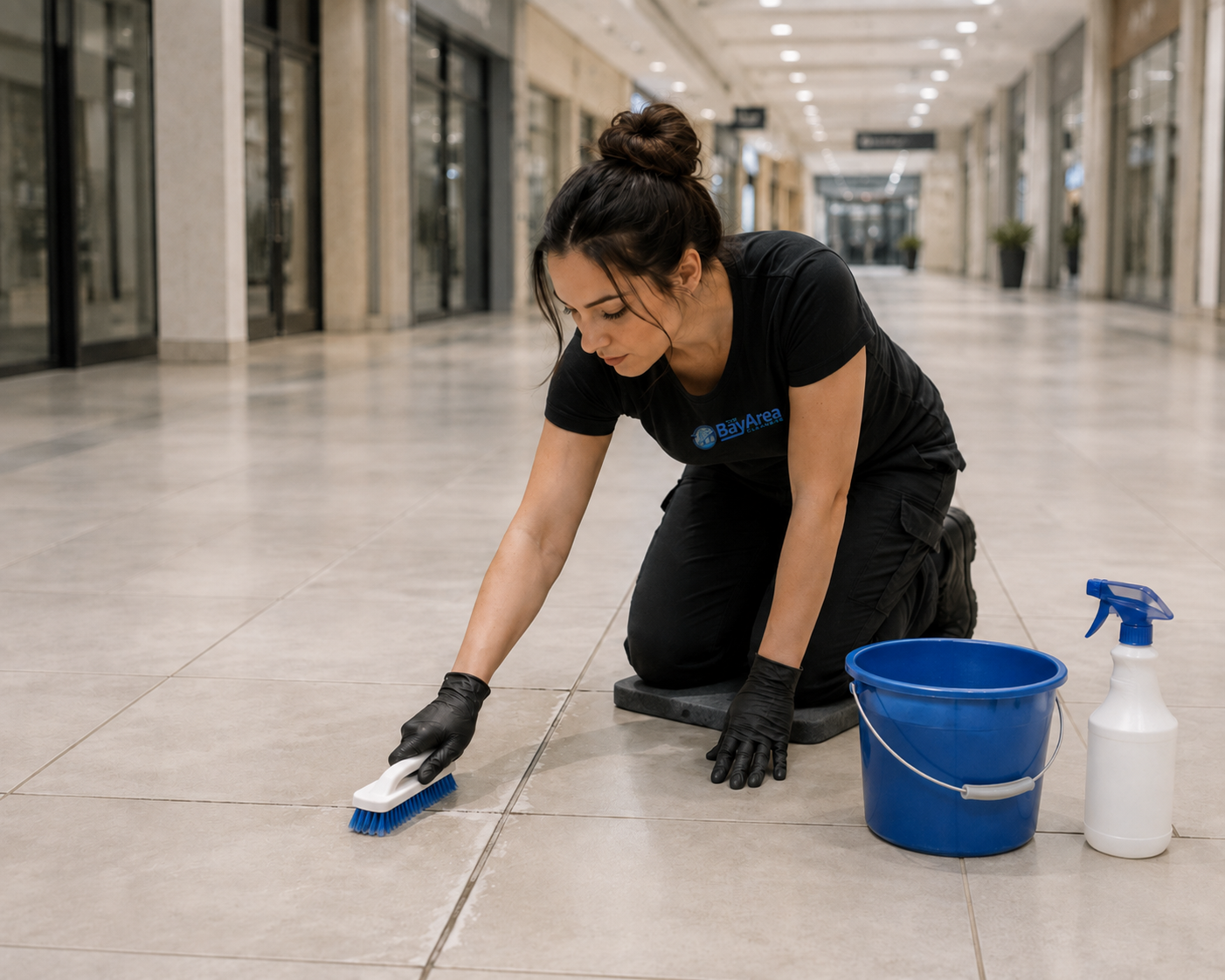
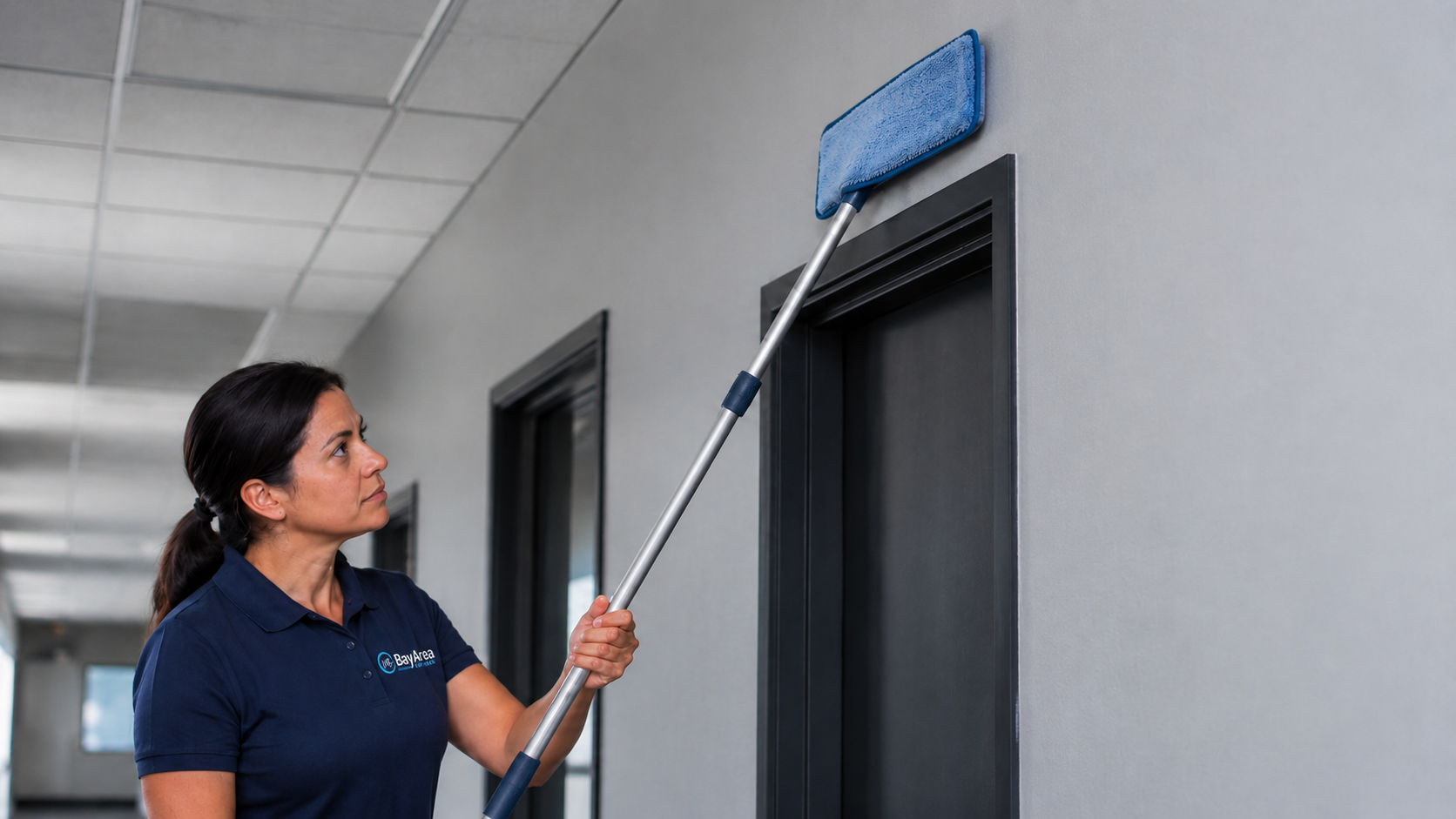
Two corridors in the same building, cleaned by the same crew, on the same night, with the same product. One comes out looking new. The other comes out with pale streaks where the cloth passed.
Nothing went wrong with the technique. The finishes were different, and only one of them was ever going to survive that treatment.
The quick version of how to clean walls in a commercial building: identify the paint sheen first, because it decides everything that follows. Semi-gloss and satin take real cleaning. Eggshell tolerates a damp cloth and mild detergent. Flat paint has almost no protective film, so it lifts pigment when you scrub it and often needs touch-up instead. Test any method in a hidden corner before it reaches a lobby wall.
Most guidance on the subject assumes one wall, one product, one result. Commercial buildings do not work that way. A single floor can carry three finishes across corridors, offices, and stairwells, and each one answers to a different method.
How to Clean Walls Starts With Finding the Sheen
Paint sheen is the amount of resin in the coating. More resin means a harder film that resists water and scrubbing. Less resin means a softer, open surface. It absorbs whatever touches it, including the cleaner.
You can identify it in ten seconds without any documentation. Stand at one end of the wall and look along its surface toward a light source. A visible sheen that reflects the light means satin or semi-gloss. A surface that stays uniformly matte from every angle is flat or eggshell.
If that is inconclusive, put a drop of water on a hidden section and wait a minute. On satin or semi-gloss it beads. On flat it darkens the spot and soaks in, which is exactly what a cleaning solution will do a moment later.
Do this test in each area rather than once per building. Corridors, stairwells, and restrooms are usually specified in higher sheens because the designer expected contact. Private offices and conference rooms are usually flat, because flat hides drywall imperfections and photographs better.
One more thing worth planning before anyone starts. Wall cleaning runs downward, and everything that runs off lands on the floor. Cover the carpet or mop behind yourself, because dirty runoff dries into the pile faster than anyone expects.
You may also like: How to Clean Carpet: Methods, Costs and When to Call a Pro
Planning any wall job therefore starts with two questions, not one. What is the finish, and what is directly below it.
Takeaway: sheen, not soil, sets the ceiling on what any method can accomplish. Test it before ordering product.
What Each Finish Can Take
Four finishes cover almost every commercial interior. How to clean walls in each of them varies more than most facility teams assume.
| Finish | Where it usually is | What it tolerates | Method |
| Semi-gloss | Trim, doors, restrooms, kitchens | Repeated scrubbing, degreasers | Cloth or sponge with detergent |
| Satin | Corridors, stairwells, high-traffic areas | Regular washing, spot treatment | Damp cloth, mild detergent |
| Eggshell | Offices, conference rooms | Light damp wiping only | Barely damp microfiber, no pressure |
| Flat | Ceilings, private offices, upper walls | Dusting, careful spot work | Dry method first, touch-up if needed |
The question of how to clean walls without removing paint therefore has a different answer in every room, and the room usually tells you which answer. Tolerance and location match because whoever specified the paint anticipated the traffic. When they do not match, and a corridor turns out to be flat, the problem stays until the next repaint.
That mismatch is more common than it should be, especially in buildings where a single contractor painted everything one sheen to save money. A wall care line in an office cleaning specification should record the sheen by area, so nobody has to rediscover it with a cloth in a visible corridor.
Takeaway: match the method to the finish, not to the mark. The finish is the constraint that does not move.
The Four Marks You Will Actually Find
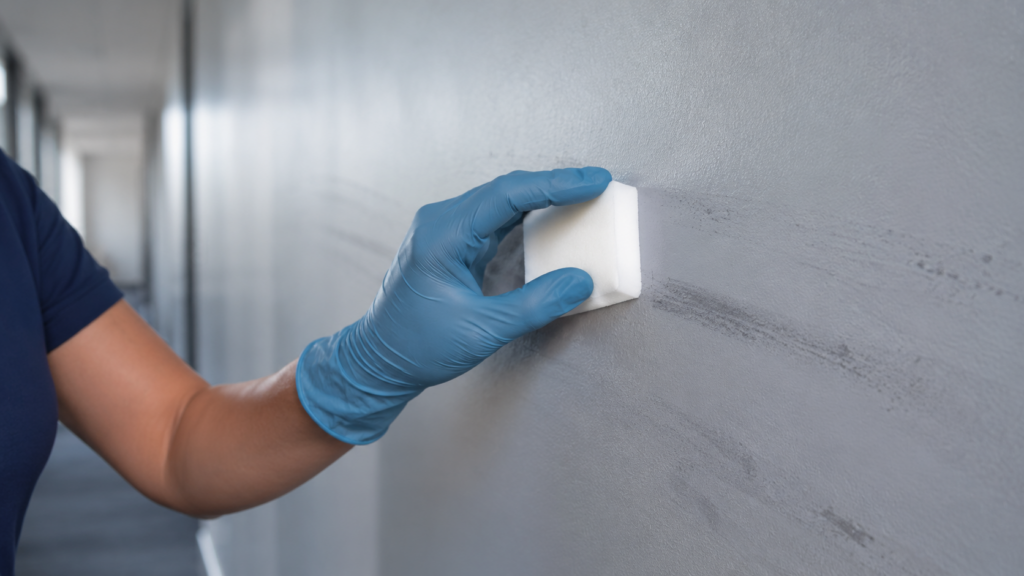
Commercial walls collect four things, and they need four different responses. Treating how to clean walls as a single task is what produces inconsistent results.
Scuffs come from carts, chair backs, luggage, and shoulders. They are usually rubber or shoe sole material sitting on the paint rather than damage to it. That is why a dry melamine sponge lifts many of them with no liquid at all. Use it with almost no pressure, since melamine is a fine abrasive and will polish a matte surface into a shiny patch.
Hand oils build up around door frames, light switches, and stairwell rails at a consistent height. They need a surfactant, not abrasion. A drop of dish detergent in warm water on a wrung microfiber handles most of it, working in overlapping passes rather than circles.
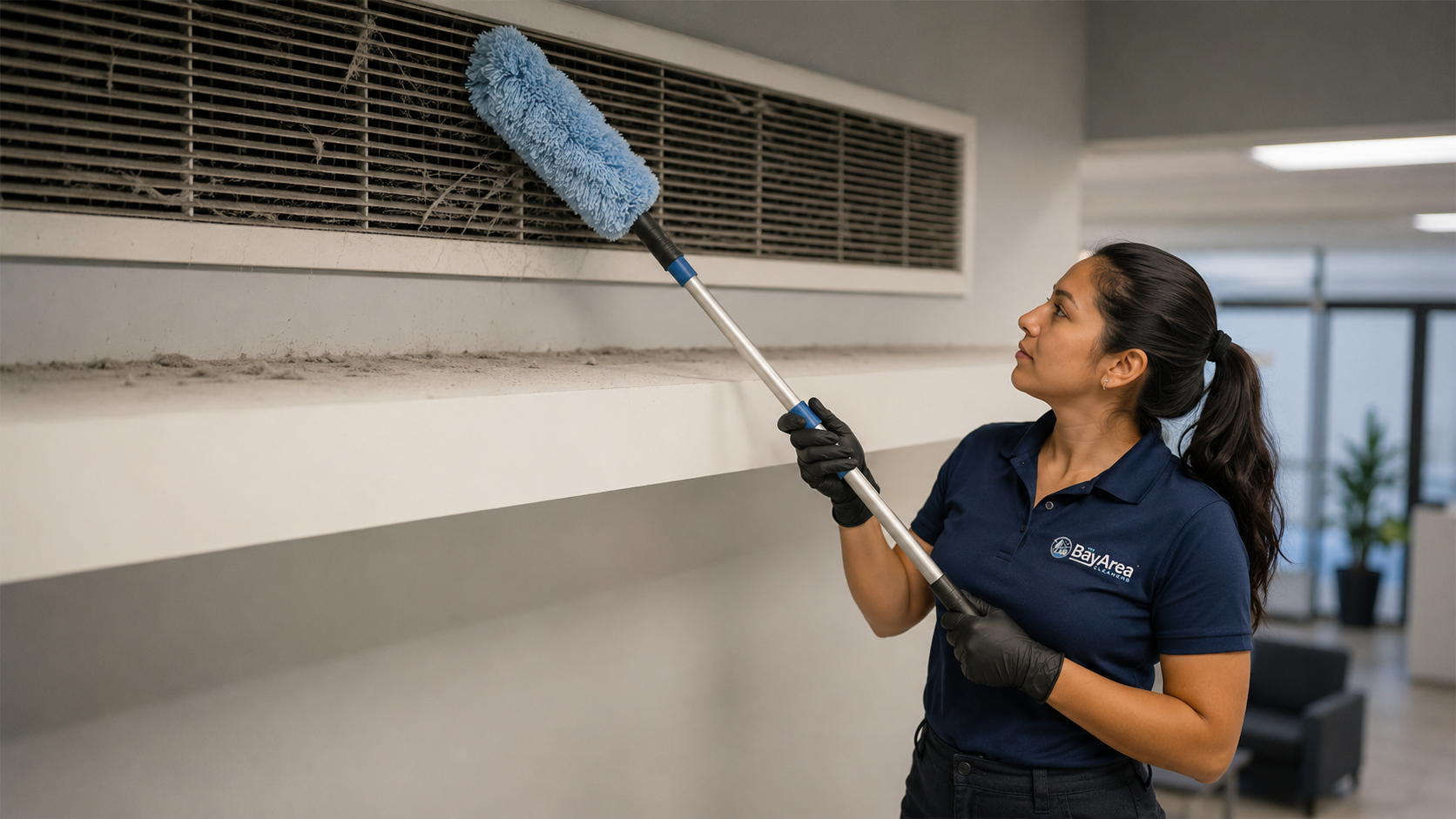
Dust film builds on upper walls and above door frames where nobody looks. It is dry soil, and it comes off dry. Attacking it with a wet cloth first turns it into streaked mud that then has to be cleaned twice.
Tape and adhesive residue from signage, decorations, and temporary notices is the one that damages paint most often, because the instinct is to pick at it. An adhesive remover applied to the cloth rather than to the wall, given a minute to soften, lifts more and tears less.
You may also like: Day Porter Services
Speed matters on all four. A scuff caught the same day usually wipes off, while the same scuff left for a month has been walked past, brushed against, and ground in. Buildings with on-site daytime coverage keep most of these in the easy category simply by getting to them first.
Frequency does the rest. A recurring janitorial services route that includes a monthly high-dusting pass and a quarterly touch-zone wipe prevents the annual project that everyone dreads. That is how a building avoids ever scheduling a wall-cleaning project.
Takeaway: four marks, four methods. Dust comes off dry, oils need surfactant, scuffs need almost no pressure, adhesive needs patience.
Cleaning Flat Paint Without Taking It Off
Flat paint deserves its own treatment because it behaves unlike everything else in the building. It has the least resin of any common finish, so its surface is essentially exposed pigment. Water and pressure both remove it.
Search advice on how to clean walls flat paint has covered is written almost entirely for houses, where a scuff on a bedroom wall can wait for the next repaint. A corridor cannot wait, and that changes the calculation.
Start by lowering expectations about what cleaning means here. The goal is removing what sits on top without disturbing what is underneath, and on flat paint that margin is thin.
Work dry first, always. A microfiber duster or a dry sponge removes the majority of what is on a flat wall, and it removes it with zero risk.
If liquid becomes necessary, the mop must be wrung until it feels barely damp, and the motion must be a single light pass rather than a scrub. Repeated passes over the same spot burnish the surface, leaving a shiny patch that reads worse from across the room than the original mark did.
The honest answer on stubborn marks in flat paint is that touch-up beats cleaning. A pint of matching paint and a small roller fixes a scuff permanently in less time than three careful attempts to wash it, and without the halo that washing leaves behind. Buildings that keep labeled touch-up paint by area save themselves most of this problem.
That is also why how to clean walls without removing paint is, in flat-painted areas, partly a question about whether to clean them at all.
Takeaway: on flat paint, dry methods and touch-up paint outperform washing. Wet cleaning is the last option, not the first.
Washing Walls Before a Repaint
This is a different job with a different goal, and how to clean walls before painting has almost nothing in common with cleaning them to look good. Cleaning for appearance stops when the wall looks right. Cleaning for adhesion stops when the surface will actually hold new coating, and that standard is stricter.
Paint fails on contamination it cannot bond through. Hand oils around switches, kitchen grease near break rooms, and residue from earlier cleaning products all cause peeling months later. It shows up in exactly the spots nobody prepped. Understanding how to clean walls before painting means treating those zones as the priority rather than washing everything evenly.
So how to clean walls before painting comes down to three moves. Degreaser on the contact zones, a clean water rinse to remove the degreaser itself, and full drying before any coating goes on. That last step gets rushed constantly, and trapped moisture causes its own adhesion failure.
Here the work crosses into regulated territory, and it catches building managers off guard. If the building was constructed before 1978, the paint may contain lead, and disturbing it is governed by federal rule. EPA’s Renovation, Repair and Painting Rule applies to housing, apartments and child-occupied facilities such as schools and child care centers built before 1978, and it requires that anyone paid to perform work disturbing paint in those buildings be certified.
The threshold matters for planning. The rule’s requirements are triggered when a project disturbs more than six square feet of interior painted surface in a room, with minor repair and maintenance below that level treated differently. Routine wall washing is not a renovation. Sanding, scraping, or scrubbing hard enough to remove coating in a pre-1978 school or apartment building is another matter entirely, and the difference is worth confirming before the crew arrives rather than after.
The 1978 date is not arbitrary, and knowing where it comes from helps when someone questions it. The Consumer Product Safety Commission banned lead-containing paint for consumer use in products manufactured after February 27, 1978, under 16 CFR Part 1303. Anything coated before that window may carry it, which is why building age decides the procedure rather than how the paint looks.
Takeaway: prep cleaning targets contamination, not appearance. In pre-1978 buildings, confirm whether the work is regulated before it starts.
When Repainting Costs Less Than Washing
At some point the question stops being how to clean walls and becomes whether to. There is a crossover point that facility budgets rarely calculate, and it favors paint sooner than people expect.
Washing a corridor properly is labor. Masking the floor, working at two heights, rinsing, and drying takes a crew a good part of a shift. Then it has to be repeated. Repainting that same corridor is a one-time cost that resets the surface completely and buys years instead of months.
The arithmetic tips toward paint in three situations. When the finish is flat and the area is high-traffic, washing will never look right and the cycle repeats indefinitely. When the wall already carries visible burnish marks or halos from previous cleaning, more cleaning deepens them. And when the same corridor has been washed three or more times in a year, the accumulated labor has usually passed what a repaint would have cost.
None of that argues against cleaning. It argues for knowing which walls are candidates for maintenance and which have already become candidates for coating. A deep cleaning assessment that walks the building and sorts walls into those two categories gives a budget something concrete to work with.
Construction and renovation reset the clock in both directions. Drywall dust settles into every wall surface in range and needs removal before it gets pressed in by the first cleaning, and freshly painted surfaces need their full cure time before anyone puts a damp cloth on them.
You may also like: Post Construction Cleaning Checklist
Either way, this belongs in the budget cycle rather than in the middle of a shift when somebody notices a corridor looks tired.
Takeaway: three washes a year on the same corridor usually means the wall needed paint, not cleaning.
Frequently Asked Questions
What is the safest way to clean walls in an office without leaving marks?
How to clean walls without leaving marks comes down to sequence. Work dry first with a microfiber duster, then use a barely damp cloth with a drop of mild detergent only where dry methods fail. Move in overlapping straight passes rather than circles, and never concentrate pressure on one spot. Marks left behind are usually burnish from repeated rubbing, not remaining soil.
Can flat paint be washed at all?
Lightly, and with low expectations. Dry dusting is the primary method on flat paint, and liquid is a limited last resort applied with almost no pressure. For anything stubborn on flat paint, touch-up with matching paint gives a better result than repeated washing.
How do you clean walls before painting so the new coat holds?
Target contamination rather than appearance. Degrease the contact zones around switches, door frames, and break room walls, rinse the degreaser off with clean water, and let the surface dry completely before coating. Knowing how to clean walls before painting is mostly about removing what new paint cannot bond through.
Which cleaner cleans walls without removing paint?
A few drops of mild dish detergent in warm water handles most commercial wall soil without attacking the coating. Avoid abrasive powders, undiluted degreasers, and anything solvent-based on interior latex. How to clean walls without removing paint comes down to the mildest product that works, tested in a hidden area first.
Conclusion
Every wall in a building is already telling you how it wants to be cleaned, through its sheen. Read that first and the method follows: semi-gloss and satin take real washing, eggshell takes a damp cloth, and flat takes a duster and a pot of touch-up paint. Knowing how to clean walls at commercial scale is mostly the discipline of checking the finish before opening a bottle, and knowing which walls have already earned a repaint instead.
Call 707-656-9339 or request a free walkthrough, and we will map your building’s finishes by area and tell you which walls to wash, which to touch up, and which to put on the paint schedule.