A visitor steps off the elevator on a Tuesday morning and looks down. The traffic lane from the door to reception is two shades darker than the rest of the floor. There is a coffee ring near the break room that has been there since spring. The vacuum runs every night, so why does the place read as tired the moment someone walks in?
The quick version of how to clean carpet in a commercial building: vacuum high-traffic lanes daily and full areas at least twice a week. Blot spills the moment they happen, never rub. Schedule low-moisture interim service on a monthly or quarterly cycle. Book hot water extraction one to four times a year based on traffic, and make sure everything dries within 24 to 48 hours.
Most of the damage in commercial carpet is invisible until it is permanent. Dry soil works into the base of the fibers, where it cuts them like sandpaper every time someone walks past. By the time a traffic lane looks gray, the fiber tips are already abraded. This guide covers how to clean carpet at commercial scale: the methods, what each one costs, and the point where in-house effort stops paying for itself.
Why Commercial Carpet Wears Out From the Bottom Up
Visible dirt is the smallest part of the problem. Around eighty percent of the soil in commercial carpet is dry particulate: grit, sand, and dust tracked in from outside. It settles below the surface of the pile, out of sight and out of reach of a quick once-over.
That grit is abrasive. Every footstep grinds it against the fiber, dulling the surface and locking in the gray, matted look that no amount of surface work fixes. Understanding how to clean carpet at this level, below what the eye sees, is what separates real fiber protection from appearance-only upkeep. This is why a lobby can be vacuumed nightly and still look dirty. The vacuum is only lifting what sits on top.
Walk-off matting is the cheapest defense. A mat long enough for several full strides at every entrance traps most of that grit before it reaches the pile. Clean the mats on their own schedule, or they become the thing they were meant to prevent.
Takeaway: soil you cannot see does more damage than the stains you can. Protect the entrances first, and everything downstream gets easier.
The Four Methods Compared: What Each One Does and Costs
There is no single method that handles everything. Every facility that wants to know how to clean carpet the right way ends up layering these four approaches, not picking just one. Each layer does a job the others cannot, and knowing what each one costs is how a facility budget stays honest.
| Method | Typical cost | Best for | Who does it |
| Vacuuming (daily/weekly) | Included in janitorial contract | Dry soil removal, appearance upkeep | In-house or contracted crew |
| Spot treatment | Minimal, supplies only | Fresh spills, small stains | Whoever gets there first |
| Low-moisture encapsulation | $0.08–$0.15 per sq ft | Interim maintenance, fast dry times | Professional crew |
| Hot water extraction | $0.20–$0.40 per sq ft | Deep restorative service, embedded soil | Professional crew |
Three notes on that table. First, the numbers are typical commercial ranges, and a real quote depends on square footage, furniture moving, and access hours. Second, most vendors carry a job minimum, so smaller spaces often get better rates by bundling work. Third, when a vendor offers steam cleaning for carpet, they almost always mean hot water extraction. True steam is rarely used on commercial fiber, so ask which process the quote actually covers.
Encapsulation applies a polymer that crystallizes around soil so the next vacuum pass removes it, drying in about an hour, which makes it the choice for spaces that cannot go offline. It maintains appearance between extractions, but does not replace them. A carpet extraction program usually pairs the two on one schedule so the interim work and the restorative work are not booked against each other.
Takeaway: vacuuming preserves, encapsulation maintains, extraction restores. Budget for all three layers, not just the cheapest one.
Daily and Weekly Carpet Care by Facility Type
How to clean carpet day to day changes by building type, not by square footage. Daily habits will not replace an extraction, but they decide how far apart those extractions can sit. A recurring janitorial plan can build those rhythms in from the start, instead of applying one routine to every room in the building.
Carpet also rarely lives alone. Most buildings pair it with hard surfaces, and the hardwood side runs on the same traffic-based logic on a different clock, so the two schedules can share the same overnight windows.
You may also like: How to Clean Hardwood Floors Without Ruining the Finish
Offices and Coworking Spaces
Vacuum traffic lanes daily and open areas twice a week. The bigger win is speed on spills, and knowing how to spot clean carpet fast matters more here than any deep-clean schedule. Coffee is the office stain, and it sets fast on nylon fiber. Blotting a fresh carpet coffee stain works in under two minutes. Give it an hour and the odds flip. Day porter coverage means someone reaches a spill in minutes instead of the next night, and a blotted spill is a non-event.
Schools and Classrooms
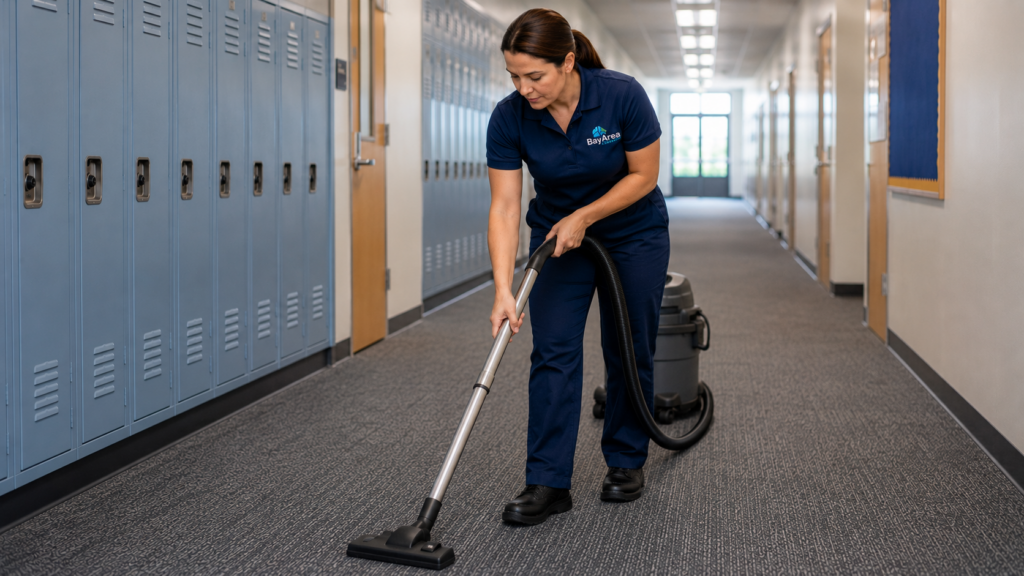
Volume is the challenge: hundreds of feet crossing the same corridors every hour. Vacuum daily without exception, and schedule extraction during breaks, since that is usually the only way to deep clean a school corridor without displacing a full day of classes. The EPA sets the benchmark in Table 1 of its Mold Remediation in Schools and Commercial Buildings Guide: carpet and backing should dry within 24 to 48 hours. Past that window, the guide points to full mold remediation rather than routine cleanup, which is a different budget and a different conversation with your occupants.
Retail Stores and Showrooms
Appearance drives the schedule here. Traffic lanes telegraph neglect faster than any other surface a customer sees. Daily vacuuming plus a monthly low-moisture interim keeps the sales floor consistent, with full extraction reserved for overnight windows.
Churches and Community Halls
Traffic arrives in spikes: one packed service, then quiet days. Vacuum after the peak, not on a fixed weekday. Time extraction right after the busiest season, when the building can sit empty long enough to dry fully.
Takeaway: the schedule follows the traffic pattern, not the calendar.
You may also like: Day Porter Services
How to Clean Carpet Step by Step
Here is how to clean carpet in a commercial building, in the order that protects the fiber.
- Vacuum slowly, with a machine that has a working beater bar and room left in the bag or bin. A fast pass lifts surface litter only. Slow passes pull grit up from the base of the pile, which is where the damage happens. Bag level matters more than brand: suction drops sharply once a bag passes two-thirds full.
- Blot spills immediately, working from the outside of the spot toward the center. Rubbing spreads the liquid and frays the fiber. Press a clean white cloth down, lift, repeat with a fresh section until nothing transfers.
- Treat what remains with the mildest option first. This is the same mildest-first rule that applies any time staff spot clean carpet between scheduled services. Plain cold water handles more than people expect. If a spotter is needed, test it somewhere hidden, and never pour product directly onto the pile.
- For coffee, act in the first minutes. Knowing how to clean carpet coffee stains comes down to sequence: blot the bulk, flush lightly with cold water, blot again, and keep a weight on a dry cloth over the spot while it wicks. Heat is the enemy, since it sets the tannins for good.
- Keep wet areas closed and marked until fully dry. OSHA’s walking-working surfaces standard, 29 CFR 1910.22, requires that the floor of each workroom stay clean and, to the extent feasible, dry, and that hazardous conditions be corrected before an employee uses the surface again. Damp fiber is a slip risk on the way in and out of the area.
- Dry everything within 24 to 48 hours. That window is the EPA guideline cited above, and it is the line between a cleaning task and a mold problem. Air movers and dehumidifiers are cheap insurance against crossing it.
Takeaway: most fiber damage happens in steps one and two, done wrong or done late. Get those right daily and the deep work stays occasional.
What Deep Cleaning Involves and When It Pays Off
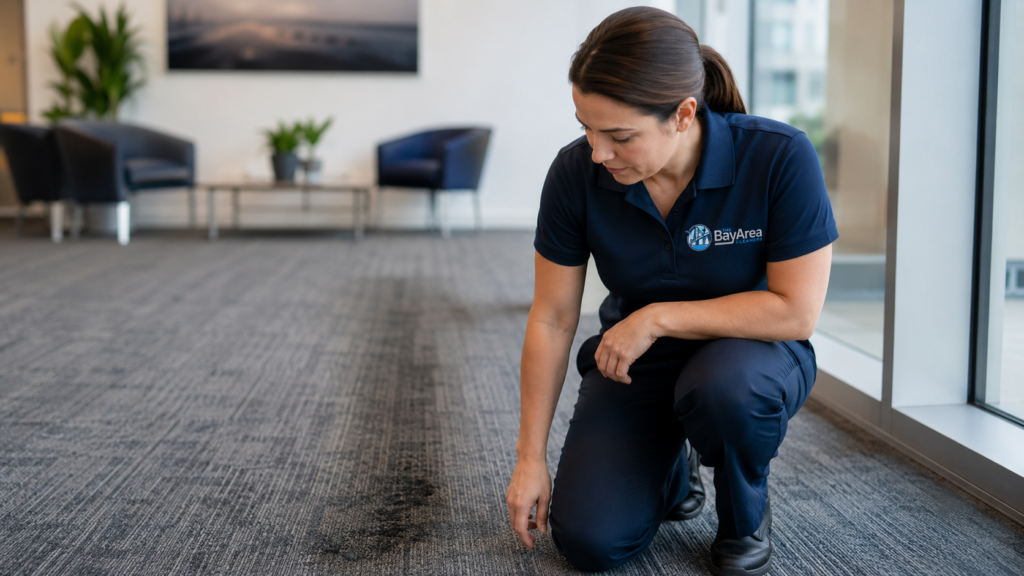
Everything above covers how to clean carpet on a daily and weekly cycle. That work keeps appearance level, but it does not reach the embedded soil that builds in the base of the pile. That is the job of restorative service, and there is a right time to order it. Most facility teams only think about it once a lane already looks gray, and by then the job costs more than it would have a season earlier.
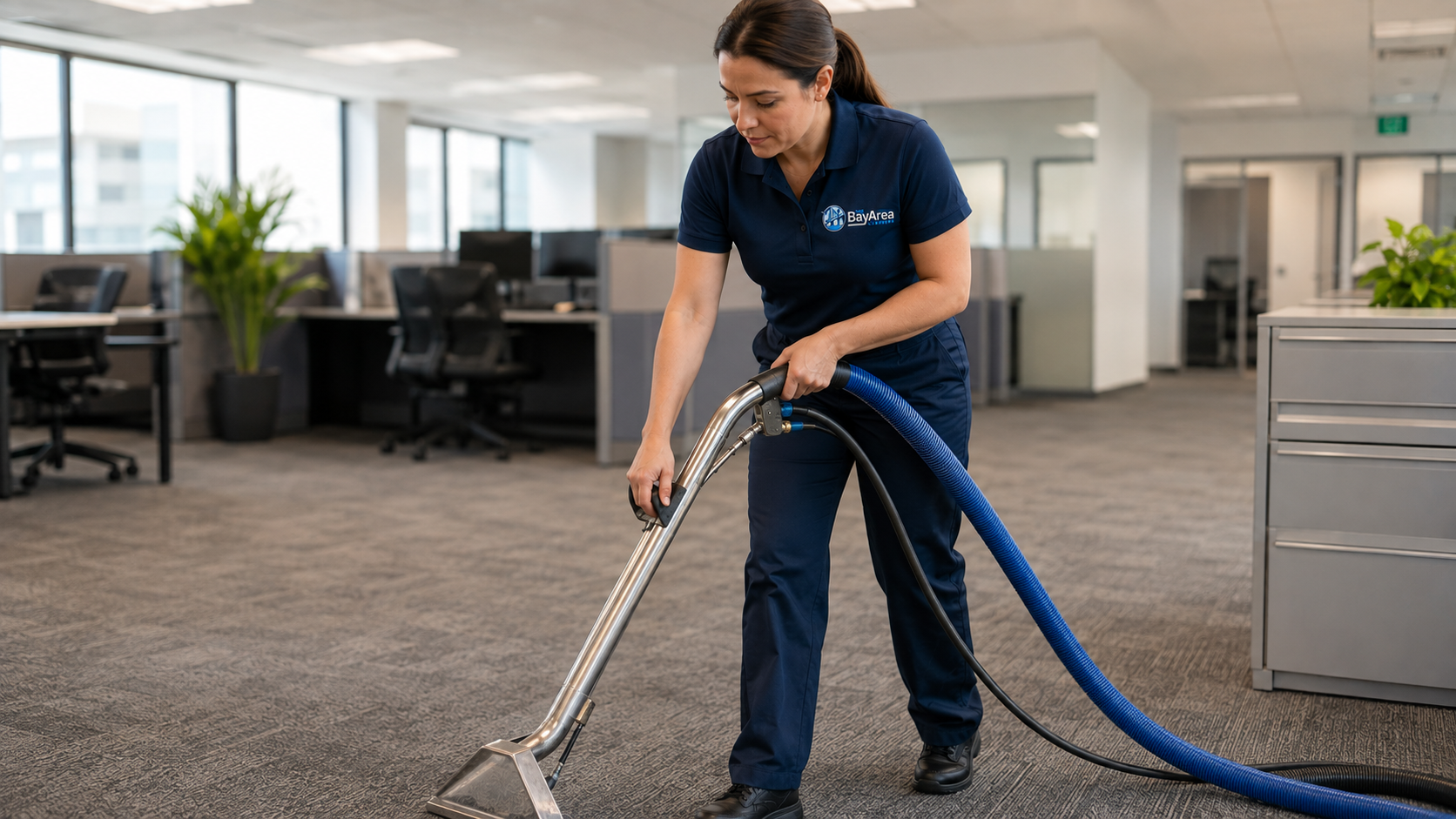
A commercial carpet cleaning service earns its place when traffic lanes stay gray after a slow, thorough vacuum, or when the space has a lingering odor that surface work does not shift. Both are signs the soil load has moved below the reach of daily tools. A professional deep clean pairs pre-treatment with hot water extraction and controlled drying, and it resets the fiber instead of masking it.
Timing matters as much as method. After any renovation, fine construction dust settles deep into the pile and grinds there for months if left alone. Extraction has to wait until the dusty trades are finished, or the fiber simply catches the next round of debris.
You may also like: Post Construction Cleaning Checklist
There is a decision point most teams recognize on sight: if staff spend hours on rental machines and lanes gray back within weeks, the math has already answered the question. A commercial carpet cleaning service on a fixed schedule costs less per year than repeated one-off rescues, and it runs around the building’s hours instead of against them.
As a planning baseline: a quiet office suite usually needs one extraction a year with quarterly interim service, while a busy lobby, school corridor, or sales floor needs two to four, with interim work holding the line in between.
Takeaway: order restorative service on evidence, not on a date. Gray lanes after a proper vacuum are the evidence.
Low-Chemical and Green Options That Hold Up
Facility managers responsible for schools, medical suites, or daycare-adjacent space ask for low-tox programs more every year, and the honest news is good: the category has matured past the point of being a compromise. Low-moisture encapsulation uses less water and less chemistry by design. Extraction can run with Green Seal or Safer Choice certified products, and cold-water rinse cycles cut both energy and residue.
The one thing to verify is residue. Facility managers asking how to clean carpet without harsh chemicals are really asking a residue question, not a product question. A cleaner that leaves sticky residue attracts soil faster, which erases the benefit within weeks. Ask any commercial carpet cleaning service how they rinse, and ask what stays in the fiber when they leave. Two certifications worth requesting by name are Green Seal GS-37 and EPA Safer Choice, since both test the formula itself rather than the marketing around it.
If a spill needs attention between services, the same logic applies at hand scale. To spot clean carpet without harsh products, cold water, a white cloth, and patience outperform most sprays in the first ten minutes of a fresh spill.
Takeaway: green programs work when the chemistry rinses clean. Residue, not the label, is what to interrogate.
Frequently Asked Questions
How do you clean carpet in a commercial building?
How to clean carpet at commercial scale is a question of layers, not of picking one method. Daily vacuuming handles dry soil, immediate blotting handles spills, low-moisture interim service holds appearance between visits, and hot water extraction resets the fiber when soil has worked below the surface. Match each layer to your traffic pattern rather than to a fixed date, and the cost stays predictable instead of arriving as an emergency.
What does a commercial carpet cleaning service actually do?
A commercial carpet cleaning service pre-treats the traffic lanes, runs hot water extraction with a controlled rinse, and force-dries with air movers so the space reopens inside the 48-hour window. Most book the work for a weekend or overnight, so furniture can move and the fiber can dry without foot traffic.
When should you spot clean carpet instead of extracting?
Spot clean carpet for fresh, local spills: minutes-old coffee, a tracked-in mark, a small stain with a known cause. Extraction is for the whole area, when lanes stay gray after vacuuming or odors persist. One is first aid. The other is treatment.
How do you get coffee stains out of office carpet?
For a carpet coffee stain, blot the bulk immediately, flush lightly with cold water, and blot again until nothing transfers to the cloth. Leave a dry cloth weighted over the spot to wick what remains. Skip heat and skip rubbing, since both set the stain permanently.
Conclusion
Every carpeted square foot in a building is either being maintained or being ground down. There is no neutral. Knowing how to clean carpet at the right layer, at the right time, is what keeps the ground-down version from becoming the budget line nobody wanted. The methods above hold up across offices, schools, retail floors, and halls, and they scale from a blotting cloth to a full extraction program.
Call 707-656-9339 or request a free assessment, and we will map an extraction and interim schedule to your building’s real traffic instead of a generic calendar.