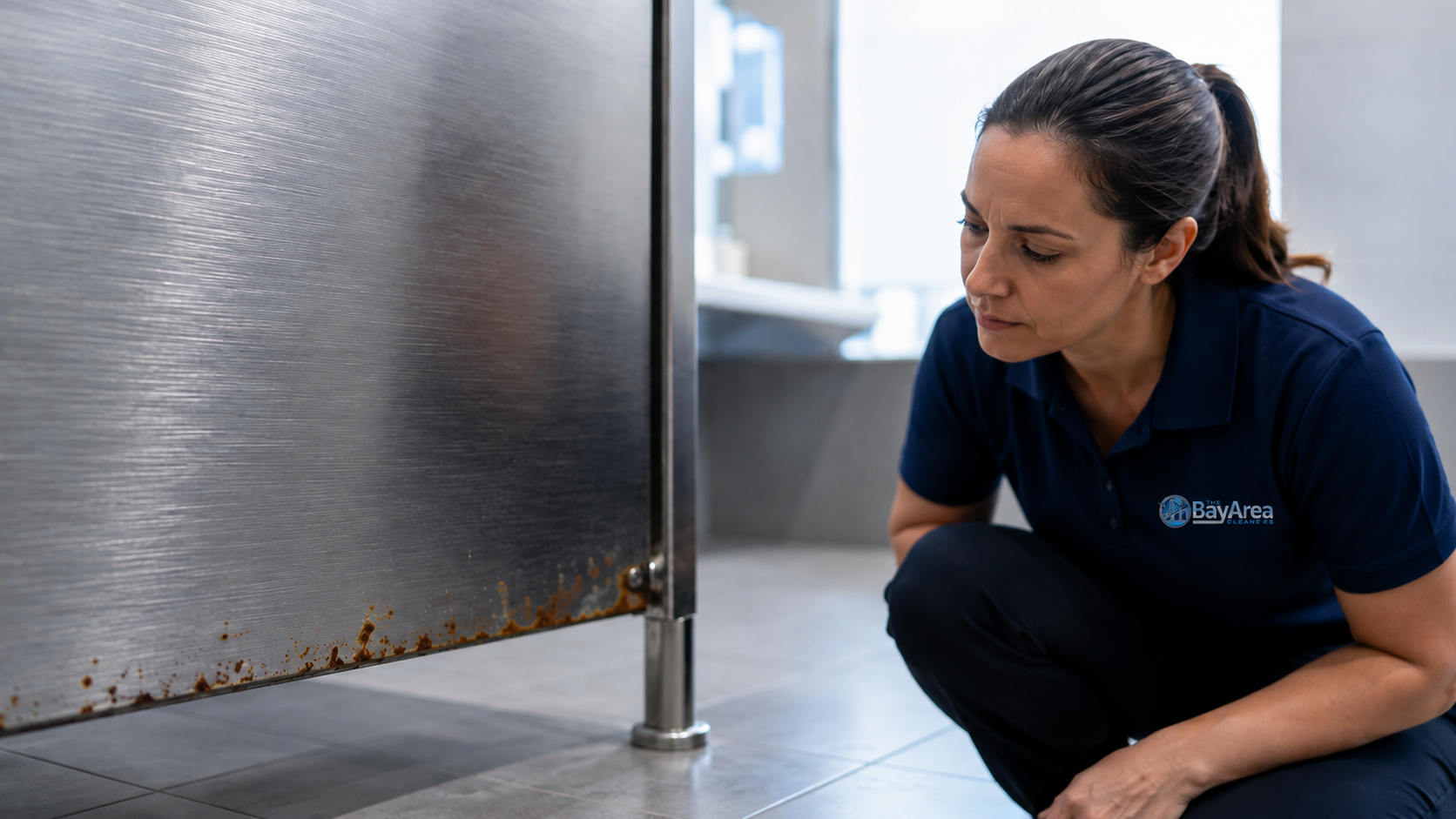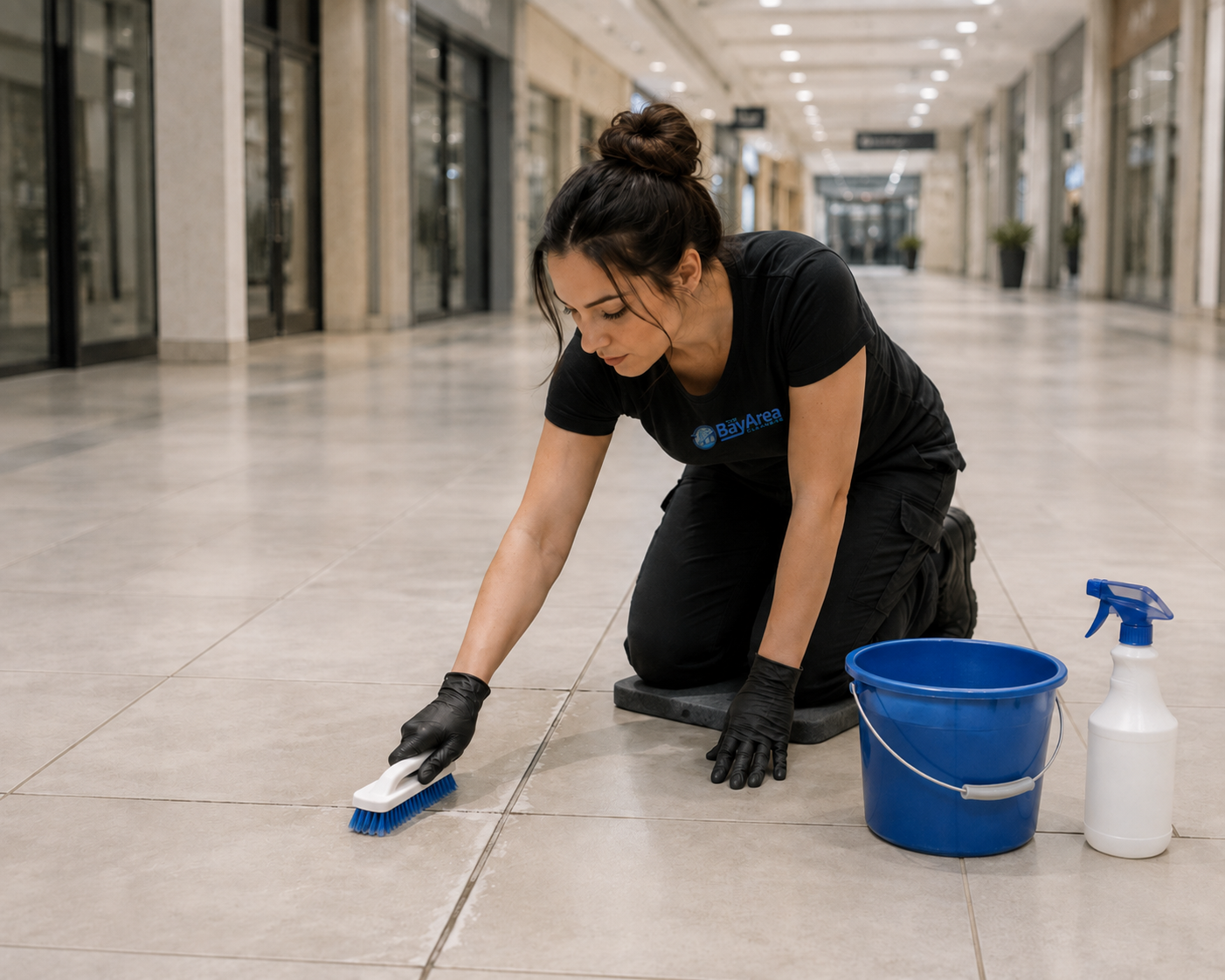
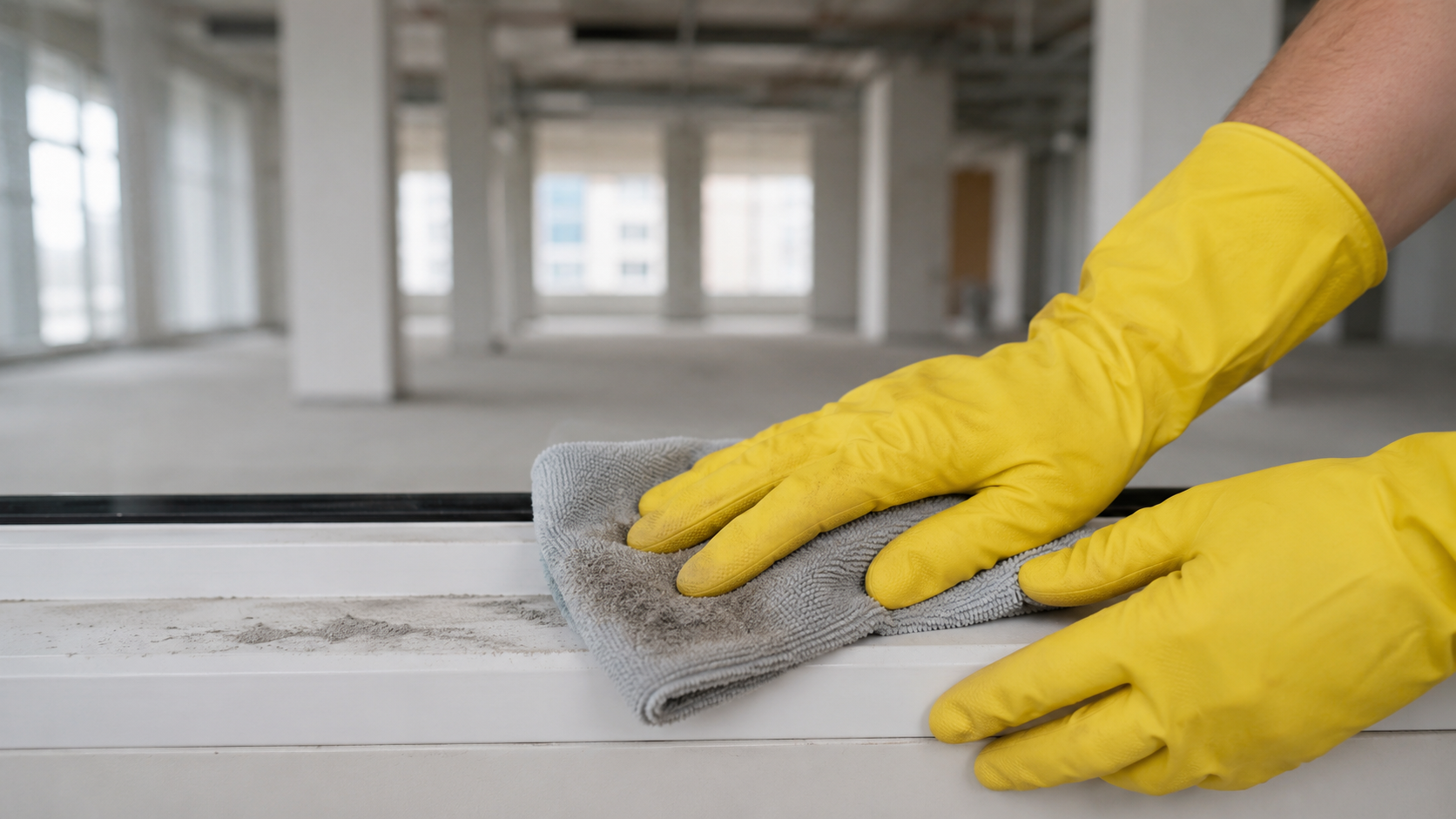
The drywall is up, the paint is dry, and the punch list is almost closed out. Then someone opens the blinds and the afternoon light catches a fine layer of dust on every horizontal surface in the building. That is the moment that catches contractors and property managers off guard: the space is not done until it is cleaned the way a build actually requires.
Post construction cleaning is a specialized, one-time service that clears construction dust, debris, and residue before a space opens for business. It is a different job from routine office cleaning, with its own equipment and sequence. Professional cleanup after a build runs in three phases (rough clean, light clean, and final clean), each timed to the construction schedule rather than squeezed into a single visit. Skipping a phase, or running the final clean too soon after the trades finish, is a common reason a finished space still looks unfinished on move-in day.
With more than two decades cleaning commercial spaces across the Bay Area, we know exactly where a standard sweep and mop falls short. This guide covers the service, the phases, and the schedule.
Why Isn’t Post-Build Cleanup the Same as Regular Janitorial Work?
Janitorial services keep a finished space running: trash, restrooms, floors, and day-to-day upkeep. A post construction cleaning company handles a different scope: removing what a build leaves behind before that day-to-day routine can even start.
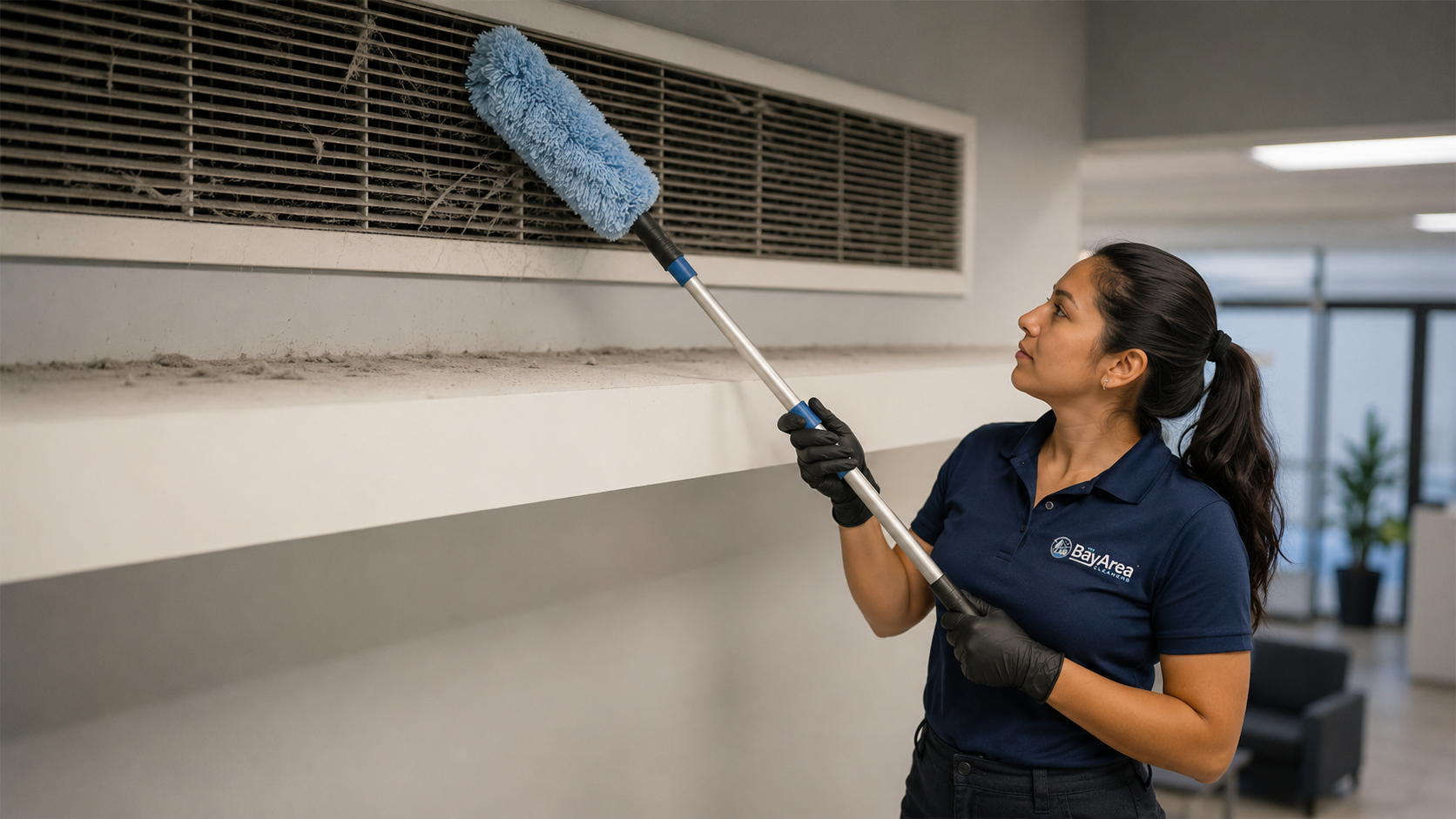
Construction generates two kinds of mess that ordinary cleaning tools are not built for. The first is bulk debris: wood scraps, drywall offcuts, packaging, tape, and protective film. The second, and the one that causes more callbacks, is fine dust from cutting, sanding, and drilling drywall, concrete, and wood. That dust settles into vents, light fixtures, window tracks, and HVAC returns, where a regular vacuum tends to redistribute it. Getting it out for good takes HEPA-filtered vacuums and a top-down wipe-down sequence. A broom will not do it.
Hiring general labor for the job tends to backfire. Providers of professional construction cleaning services train crews for exactly this work: which surfaces to clean first, how to keep foot traffic from re-contaminating finished rooms, and how to stage the job so the cleanest areas are sealed off last.
One boundary worth clarifying in the estimate is debris disposal. Hauling away construction waste is normally the general contractor’s responsibility, while the cleaning crew removes the residual layer: tape, film, packaging, and dust. When nobody defines that line in writing, the final clean can stall over a pile neither party priced; sorting it out costs one sentence in the scope.
Related Article: East Bay Office Cleaners: Enhancing Workplace Efficiency
What Are the 3 Phases of Post-Construction Cleaning?
Professional construction cleanup is built around three distinct stages, each with a different goal and timing. The table below summarizes how they fit into a typical project schedule.
| Phase | When it happens | Main goal |
| Rough clean | After heavy construction, before finish trades | Clear bulk debris and the worst of the dust |
| Light clean | Once most construction and finish work is done | First detailed cleaning of every surface |
| Final clean | Days later, after every trade has left | Detail pass, polish, and room-by-room audit |
Here’s what each phase actually involves once work starts on site:
1. Rough Clean
The rough clean happens after heavy construction wraps, before finish trades like paint, flooring, and fixtures move in. The goal is to clear bulk debris and sweep or vacuum the worst of the dust so later trades have a safe, workable space. This phase is physical labor more than detail work, and it is usually the first thing a general contractor or construction cleaning company tackles on site.
2. Light Clean
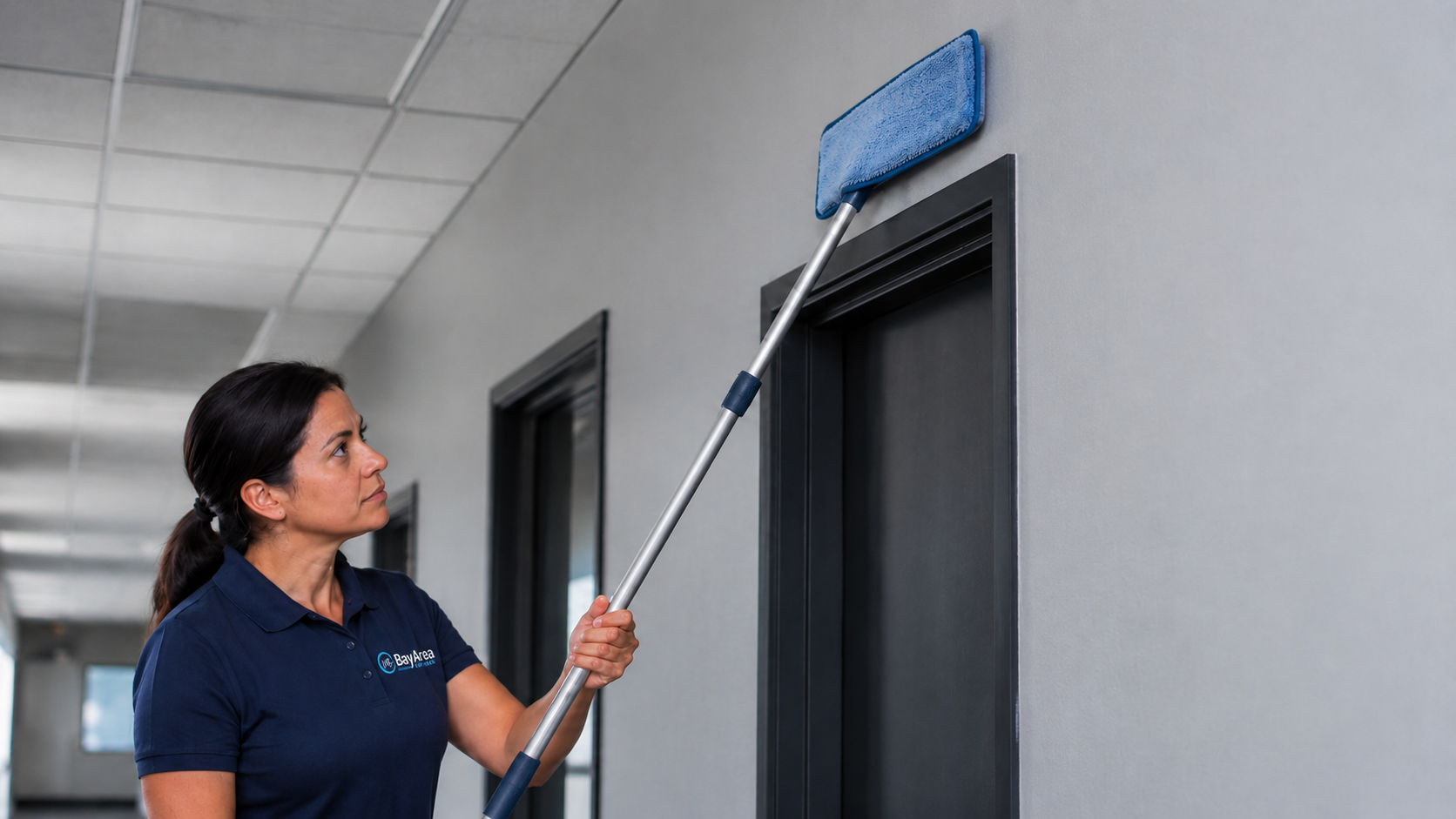
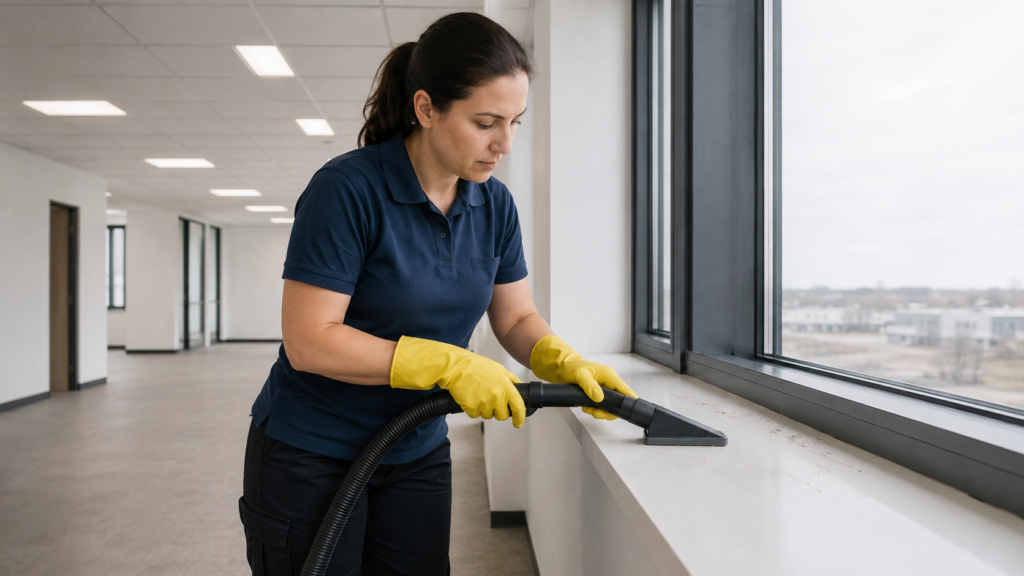
The light clean starts once most of the construction and finish work is done. This is where the detail work begins: vacuuming floors, wiping down walls, baseboards, cabinets, and light fixtures, and cleaning glass and hardware for the first time. It is the phase most people picture as a deep clean, though the industry calls it light relative to what comes next.
3. Final Clean
The final clean happens days after the light clean, once every trade has left and every surface is in its permanent state: paint dry, flooring down, fixtures mounted. This is the detail pass: polishing glass and hardware, buffing floors, wiping every surface again to catch dust that resettled after the light clean, and a room-by-room audit before the walkthrough. This phase determines whether a space actually looks move-in ready.
What Do OSHA and Air Quality Guidelines Mean for Construction Dust?
Construction dust is not just cosmetic. OSHA’s Respirable Crystalline Silica Standard for Construction (29 CFR 1926.1153) regulates dust exposure from cutting, grinding, or drilling materials like concrete, brick, and drywall. It calls for control methods such as wet cutting or HEPA-filtered vacuums instead of dry sweeping wherever a safe alternative exists.
One rule is narrower than many contractors assume. The EPA’s Renovation, Repair and Painting Rule requires lead-safe work practices (containment, HEPA-filtered equipment, and a documented cleaning verification step), but its scope covers pre-1978 housing and child-occupied facilities such as schools and daycare centers. A standard commercial office renovation normally falls outside it; a school renovation does not. Confirm with your contractor which side of that line your project sits on.
Beyond compliance, air quality affects how a finished space feels to the people who occupy it. The EPA identifies dust and particulates from construction and renovation as indoor air quality concerns in office buildings, so thorough dust removal matters well after the visible debris is gone. Dust control is a documented safety and air quality issue, not a cosmetic one.
What’s on a Basic Post-Construction Cleaning Checklist?
Scope varies by project. Still, a thorough final clean from a professional provider of post construction cleaning services typically covers:
- Removal of all remaining debris, tape, protective film, and packaging
- HEPA vacuuming of floors, carpets, and upholstery
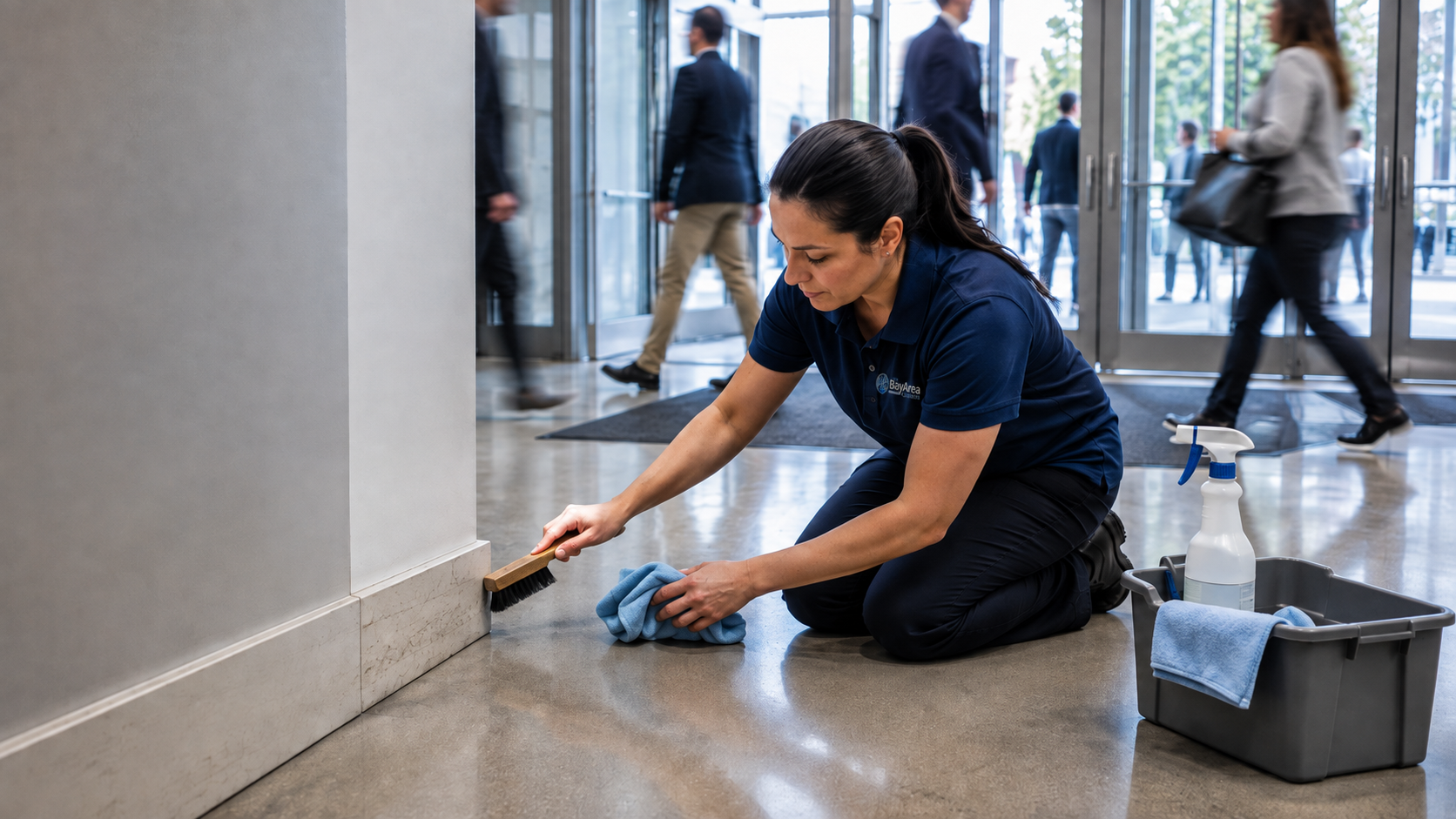
- Dusting and wiping of walls, baseboards, trim, and ledges
- Detailed cleaning of light fixtures, vents, and ceiling fans
- Interior window and glass cleaning, including tracks and sills
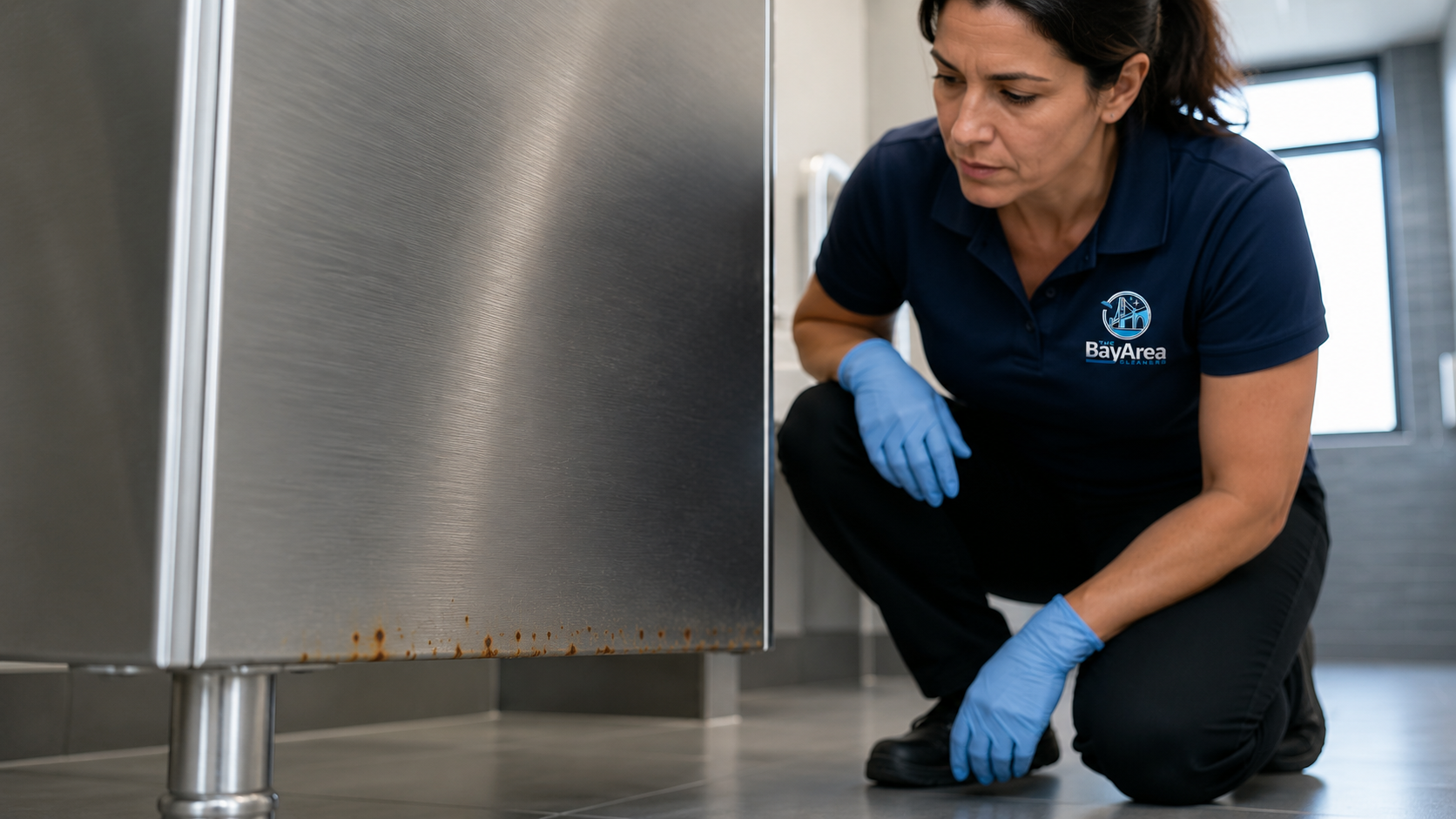
- Cabinet, countertop, and fixture wipe-down in kitchens, breakrooms, and restrooms
- Floor care appropriate to the surface: mopping, buffing, or a first professional pass before regular floor care begins
- A room-by-room final inspection ahead of the walkthrough or occupancy
If a quote you receive does not specify which of these items are included, ask. The gap between a broom-swept handover and a true final clean is where many contractor and property manager disputes start. Verify completion the same way the crew worked: room by room, checklist in hand. Run a finger along a window sill, open a cabinet, and look up at the vents; those spots reveal a rushed job fast. If a quote you’re comparing skips any of this, ask directly, or call 707-656-9339 and The Bay Area Cleaners will walk you through what a full post-build clean actually includes.
How Do You Prepare the Site Before the Cleaning Crew Arrives?
A final clean goes faster and finishes better when the site is actually ready for it. Before the crew arrives, confirm four things with the general contractor. First, that every trade has finished, including touch-up painters. Second, that water and power are on, since cleaning equipment and floor care both depend on them. Third, that HVAC filters are scheduled for replacement after the cleanup, so the system does not blow dust back into the space. Fourth, that the crew has a staging area, access instructions, and a single point of contact for questions.
None of this requires extra budget, just one coordination call between a crew that cleans and a crew that waits.
When Should You Schedule the Final Clean?
Timing matters as much as the checklist itself. As a general guideline, plan the final clean for at least 24-48 hours after the last trade finishes on site. This gives airborne dust time to settle where it can be captured instead of landing on a spot that was just wiped down. Schedule the final clean close to the walkthrough or move-in date rather than weeks ahead of it, since dust from any remaining touch-up work will undo the detail cleaning.

Coordinate the date directly with the general contractor’s closeout schedule rather than the original project calendar. Construction end dates slide, and a final clean booked against the wrong project date either happens too early or blocks the punch-list crew. The cleanest handovers happen when the GC, the property manager, and the cleaning crew agree on the sequence in one conversation.
If you are searching for post construction cleaning near me with a deadline already on the calendar, share that date up front. A reliable provider will tell you honestly whether the timeline works and flag it early if the construction schedule is likely to push your window.
What Common Mistakes Delay a Handover?
The same avoidable mistakes show up project after project. Four cost days:
- Booking a single cleaning visit instead of phases, so the crew fights every layer of dust at once
- Running the final clean while painters or flooring installers still have touch-up work left
- Leaving HVAC systems running unfiltered during cleanup, which redistributes fine dust into cleaned rooms
- Treating the walkthrough date as movable for cleaning but fixed for everything else
None of these requires experience to avoid, just a schedule conversation that treats the cleaning crew as one more trade. An experienced provider raises these points unprompted.
From the Final Clean to Ongoing Janitorial Service
Post-build cleanup is a one-time job that gets a space ready for occupancy, and a natural lead-in to regular janitorial services or window cleaning once the space is in daily use. The same crew that handles the final clean can transition straight into a recurring schedule, so there is no gap between handover and maintenance.
For property managers, that continuity has a practical benefit: the crew that detailed the building during the final clean already knows its finishes, its problem corners, and its traffic patterns before the first tenant walks in.
Why Do Contractors Work With The Bay Area Cleaners?
We have spent more than 20 years cleaning offices, schools, churches, retail spaces, and active construction sites across the whole Bay Area, from Vallejo to San Mateo. Contractors, property managers, and district managers work with us because we show up on the schedule the project needs, bring the right equipment for construction dust, and do not treat a post-build cleanup like a routine office clean. If your walkthrough date is coming up, we will tell you honestly whether the timeline works before we book it.
Frequently Asked Questions
What is included in post construction cleaning?
A full clean after construction covers debris removal, HEPA vacuuming, wall and fixture wiping, window and glass cleaning, cabinet and countertop detailing, and floor care, finished with a room-by-room inspection before handover.
How is it different from janitorial services?
Janitorial services maintain a space that is already in use: trash, restrooms, and routine floor care. Post-build cleanup is a one-time, specialized job that removes construction debris and fine dust before the space is occupied for the first time.
When should the final clean be scheduled?
Plan the final clean 24-48 hours after the last trade leaves the site, and as close to the walkthrough or move-in date as the schedule allows, so touch-up work does not undo the detail pass.
Do OSHA regulations apply to construction dust cleanup?
OSHA’s silica standard (29 CFR 1926.1153) governs dust exposure during construction activities like cutting and drilling. If a renovation involves pre-1978 housing or a child-occupied facility such as a school, the EPA’s RRP Rule may also apply to the cleanup.
A finished build deserves a real finish. Request a free estimate or call 707-656-9339 and we will schedule the final clean around your walkthrough date. We have handled post-build cleanup across the Bay Area for more than 20 years.