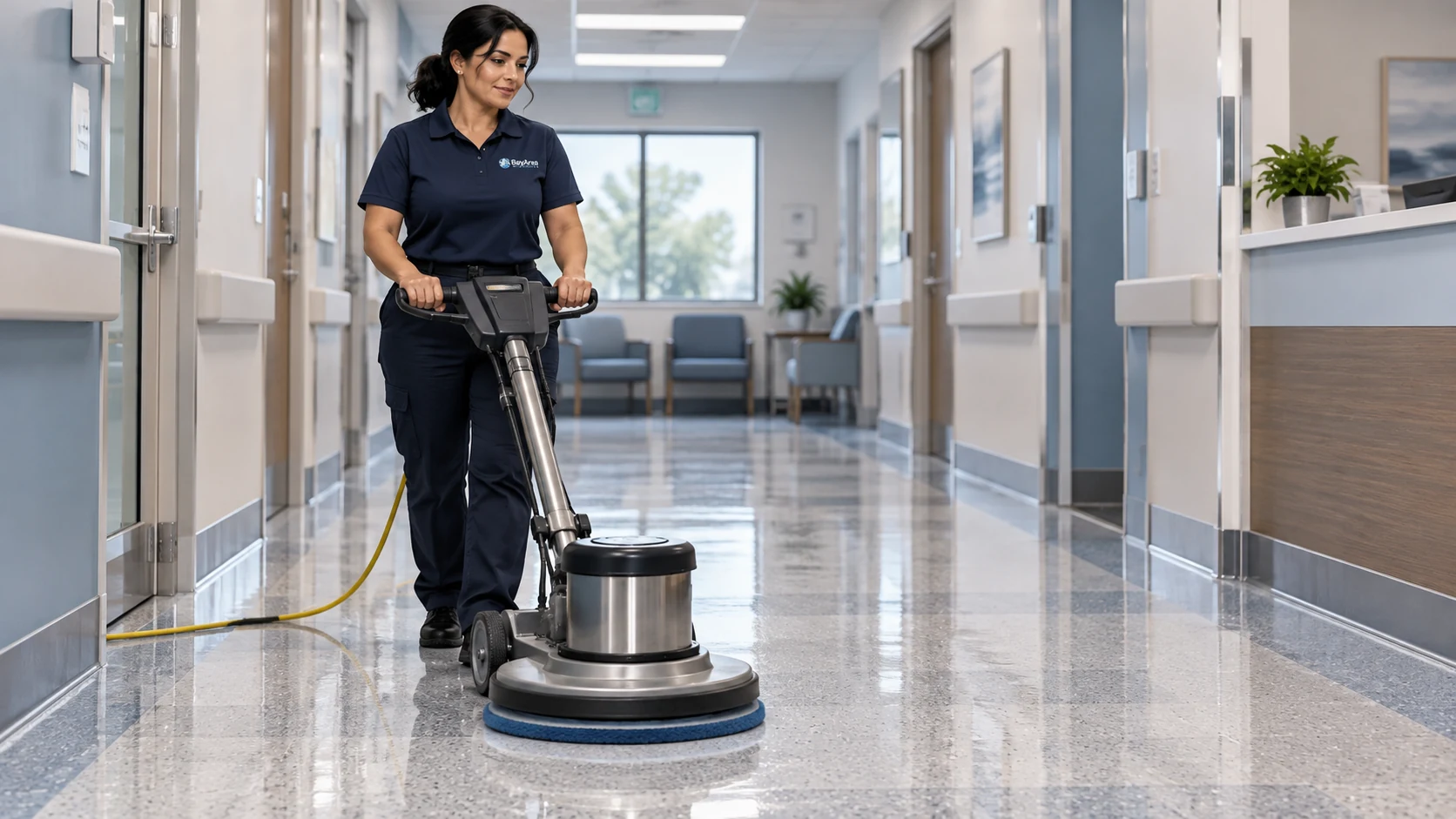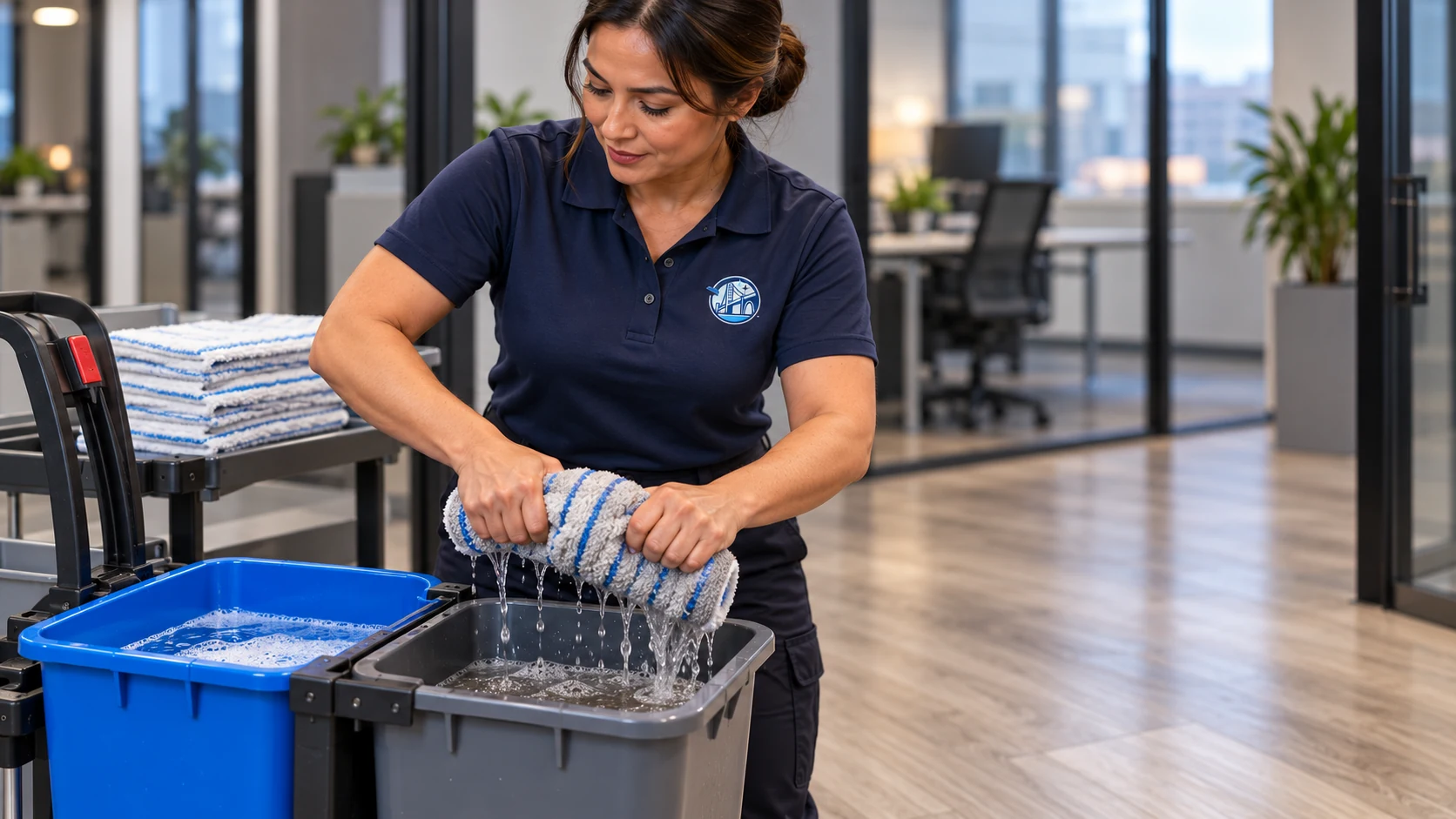

A pallet wrapper drops plastic beside a travel lane, forklifts track dust across concrete, and a spill reaches a picking aisle before the response is clear. In a busy facility, warehouse cleaning must control those conditions without blocking traffic, leaving wet-floor hazards, or moving debris from one zone to another. A useful program matches tasks to traffic, soil, floor type, operating hours, restrooms, waste points, overhead dust, and response duties.
The quick version: Warehouse cleaning works best when the facility is divided into practical zones with defined tasks, triggers, methods, access windows, and inspection points. Routine work should be separated from periodic machine cleaning and elevated-access tasks. Staff should know who responds to spills or debris, when a zone can return to service, and how completed work will be checked.
What Problems Should a Warehouse Cleaning Service Solve First?

Start with the conditions that affect movement, inventory areas, and daily operations. A site walk during normal activity gives a clearer picture than a generic task list written without seeing the building in use.
Federal OSHA requires workplaces, passageways, storerooms, service rooms, and walking-working surfaces to be kept clean, orderly, and sanitary. Workroom floors must be clean and, to the extent feasible, dry, and walking-working surfaces must be kept free of hazards such as leaks and spills. OSHA 29 CFR 1910.22 provides that baseline. California rules add that permanent floors should be reasonably free of oil, grease, or water, and that roadways, walkways, and storage areas in yards should be free of obstructions and debris. Cal/OSHA Section 3273 covers those California workplace conditions.
During the site review, map visible soil together with operating risk. Focus on conditions that can interrupt movement, spread debris into cleaner areas, or return soon after routine work:
- Loose stretch wrap, labels, pallet fragments, and packaging beside travel lanes or dock edges.
- Dust that returns after floor work, especially near exposed structure, fans, vents, or busy forklift routes.
- Oil, grease, water, or product spills that need a defined response and a protected cleanup area.
- Restrooms, break areas, and touch points that need a different service cycle from storage and picking areas.
- Corners, rack bases, guardrails, dock plates, and wall edges that floor machines cannot reach.
- High surfaces that can release settled dust back onto lower areas after routine cleaning.
Define the recurring program by zone, operating window, and site condition. The scope may include scheduled trash and recycling removal, restroom care, floor maintenance, common areas, supply restocking, and written inspection points. Confirm each task against traffic patterns, floor materials, access limits, and facility priorities during the walkthrough.
Finish the walkthrough with a simple problem map. Mark traffic lanes, docks, restrooms, high-dust areas, spill points, machine-access limits, and locations that cannot be blocked during operating hours. For each marked area, note when it is accessible, what can be handled during active operations, and what needs a lower-traffic window. That turns the walkthrough into a working schedule instead of a static map.
Takeaway: Build the scope from observed traffic, soil, access limits, and ownership. Every recurring condition should have a trigger, response method, and responsible role.
How Should a Warehouse Cleaning Service Set Frequency and Scope?
Set frequency by use, soil generation, and operating constraints instead of applying one schedule across the building. A loading lane, restroom, upper rack area, and low-traffic storage corner rarely need the same work at the same interval.
Separate routine tasks from periodic work. Routine service handles current debris, spots, waste, restroom needs, and removable floor soil without taking a zone out of service for long. Periodic work covers machine scrubbing, detailed edges, overhead dust, deeper restroom work, and tasks that need added setup or access.
Use the table to decide what should trigger work in each zone.
| Zone or condition | Main issue | Useful trigger | Operating constraint |
| Picking and travel lanes | Loose debris, tracked soil, marks | Visible buildup or planned shift schedule | Keep routes open or isolate one section at a time |
| Docks and receiving | Packaging debris, soil, spills | After heavy receiving activity or any spill | Coordinate around trailers, forklifts, and dock movement |
| Restrooms and break areas | Waste, touch points, floor soil | Occupancy level and visible condition | Service around employee use and restocking needs |
| Upper ledges and exposed structure | Settled dust | Inspection shows accumulation or lower areas re-soil quickly | May need special access and off-hour work |
Write the scope so a supervisor can inspect it without guessing. Replace vague lines such as “clean warehouse floor” with a defined zone, task, method, trigger, access window, and completion check.
Daytime traffic can change conditions faster than an after-hours crew can address them. Separate areas that need live response for spills, loose packaging, waste, or restroom issues from work that can wait for a controlled lower-traffic window. For live-response zones, define who receives the report, how the area is protected, and when operations can resume. That keeps the schedule from depending on ad hoc decisions during a busy shift.
You may also like: Day Porter Services: What They Are and When Your Building Needs One?
Keep cleaning duties separate from maintenance, safety, and operations responsibilities. A clear handoff prevents leaks, damaged surfaces, blocked aisles, or other non-cleaning conditions from remaining unresolved.
Takeaway: Assign every task to a zone, trigger, access window, and completion check. Frequency should reflect actual use and soil generation rather than a single calendar.
What Should Industrial Warehouse Cleaning Services Cover Step by Step?
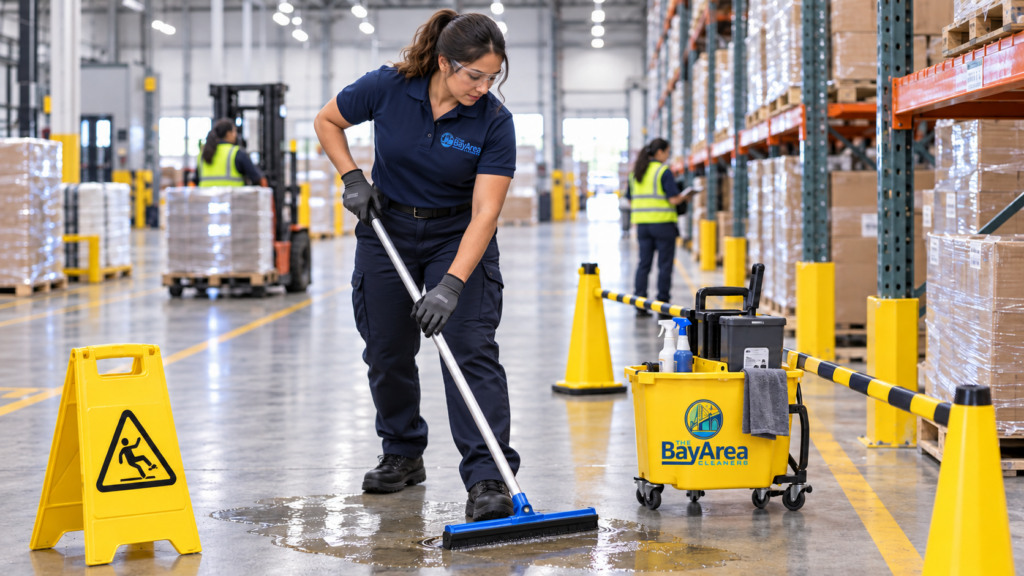
Industrial warehouse cleaning services need an ordered sequence that limits re-soiling and matches equipment to the floor and debris type. The plan must leave room for site rules, inventory restrictions, and traffic control before machine work begins.
Kärcher notes that forklift and worker traffic can lift dust, coarse debris can interfere with machines, and floor condition plus soil type should influence equipment choice. Its warehouse guidance covers vacuum sweeping, spot cleaning, and scrubber-drier work. This is manufacturer guidance rather than a legal standard, so site rules and equipment instructions still govern the actual job.
Use this sequence as a practical planning model:
- Inspect the zone before work starts. Note active traffic, loose packaging, spills, damaged flooring, sensitive inventory, cords, blocked access, and conditions that should be reported rather than handled by the cleaning crew.
- Remove coarse debris first. Pick up pallet fragments, stretch wrap, labels, and larger pieces that could clog equipment or spread through the aisle.
- Control dry dust with a method suited to the space. Vacuum collection or filtered sweeping can reduce redistribution where fine dust is a recurring problem.
- Treat spots and residues according to the surface and cleaning product label. Test unfamiliar chemistry or methods on an appropriate area before wider use.
- Scrub floors when the surface and soil call for wet machine work. Control the active area until the floor is ready for normal foot or vehicle traffic.
- Detail edges, rack bases, corners, guards, and fixed obstacles that the main machine cannot reach.
- Inspect the finished zone before reopening it. Check for debris, wet areas, streaks, residue, missed edges, and maintenance issues uncovered during cleaning.
Scope overhead zones separately from routine aisle work. Beams, pipes, vents, light housings, and upper ledges can drop settled dust onto lower surfaces after floor work is complete. Access equipment, stored inventory, and operating clearance can change when and how that work should be scheduled. The scope should identify the surfaces included, the access method, the operating window, and conditions that require the work to be postponed or reassigned.
You may also like: High Dusting: Why Your Clean Floors Do Not Stay Clean
Choose chemistry based on the floor or coating, the soil being removed, nearby stored materials, and the product label. Manufacturer guidance can help compare methods, but the final choice still has to follow flooring instructions, chemical-label directions, and site restrictions.
Takeaway: Work in a controlled sequence from inspection through debris removal, dust control, spot treatment, machine cleaning, detail work, and final inspection.
How Should Floor Type and Warehouse Conditions Change the Method?
Change the method when the floor, soil, aisle geometry, or traffic pattern changes. Industrial warehouse cleaning services should not treat sealed concrete, coated floors, textured surfaces, and small support rooms as though one brush, pad, chemical, or machine fits every area.
Commercial warehouse floors may need sweeping, scrubbing, degreasing, or a combination of methods. Evaluate concrete, coated, and textured surfaces before selecting equipment or chemistry. A method that works in one aisle may damage or underperform in another, so surface compatibility and product instructions should guide the choice. Before approving a method, record the floor type, finish or coating, visible damage, recurring residue, drainage constraints, and areas where a machine cannot turn safely. Those details narrow the suitable options. Use the table to compare how floor and operating conditions change the method.
| Condition | Main cleaning approach | What to inspect first | Key limit |
| Sealed or smooth concrete | Dry soil removal followed by suitable machine scrubbing when needed | Coating condition, cracks, residues, traction | Avoid methods or chemicals that damage the sealer |
| Textured or porous floor | Brush or tool choice that reaches surface texture | Soil embedded in low points and joints | Aggressive methods can damage weak surfaces |
| Coated or finished floor | Product-compatible cleaning and controlled agitation | Finish type, wear, previous treatments | Strong chemistry can strip or dull the coating |
| Narrow aisles or dense rack layout | Smaller equipment and more edge/detail work | Turning space, rack bases, traffic access | Large machines may leave gaps or restrict operations |
Kärcher identifies floor covering and dirt type as key equipment-selection factors and distinguishes roller systems for coarser or textured conditions from disc systems for smoother floors. Treat that as method guidance, then follow the equipment and flooring manufacturer’s instructions for the actual surface.
Forklift marks are not the same as loose dust. Tire transfer, oil, adhesive, and tracked soil may respond differently to the same process. Identify the residue first, then confirm surface compatibility and label directions before treating a large area.
Plan water use around traffic. OSHA requires workroom floors to be kept clean and, to the extent feasible, dry. Where wet processes are used, OSHA addresses drainage and dry standing places. In an active warehouse, controlled access may be needed until a cleaned surface is ready for normal traffic.
Takeaway: Let floor material, soil type, machine access, and traffic set the method. Confirm compatibility before scaling up, and reopen the area only when it is ready for use.
How Do You Build a Warehouse Cleaning Checklist Teams Can Use?
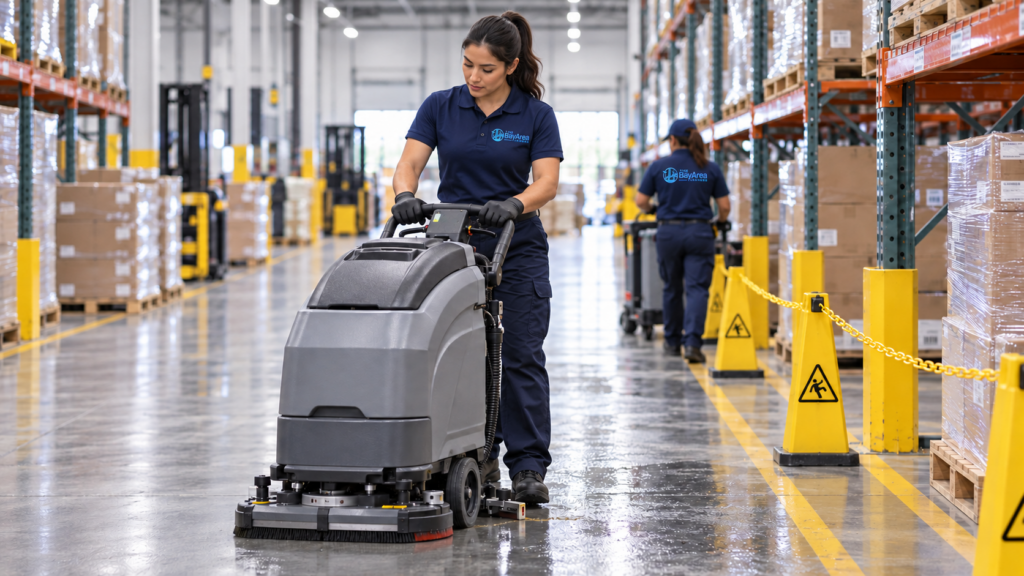
A warehouse cleaning checklist should make inspections consistent across shifts, crews, and zones. Record what was checked, what was completed, what could not be finished, and which unresolved condition needs a different team to act.
Organize the inspection record by location rather than by a long generic chore list. Managers can then spot missed work faster and compare the written scope with conditions in the building.
Use a warehouse cleaning checklist with clear inspection points:
- Travel lanes are clear of loose debris, packaging, and cleaning residue before reopening.
- Dock and receiving areas have no unaddressed spill, loose wrap, pallet fragments, or assigned-zone waste.
- Rack bases, corners, guardrails, wall edges, and fixed obstacles have been checked for missed soil.
- Restrooms and break areas match the assigned scope for waste, floors, fixtures, and contracted restocking.
- Scheduled overhead or high-dust areas are completed and recorded separately from routine floor work.
- Wet-cleaned sections are ready for normal use before barriers or controls are removed.
- Leaks, damage, blocked access, and other non-cleaning conditions are reported to the responsible facility contact.
Keep the record simple. Capture initials, time, zone, exception notes, and photos when site policy allows. Use an exception field when access, inventory, equipment, or active operations prevent a planned task. The goal is traceability. A manager should see what changed, what was missed, and what needs follow-up without extra narrative.
Give warehouse restrooms their own inspection line instead of burying them inside the floor checklist. Check whether assigned tasks were completed, contracted supplies were restocked, the floor was left ready for use, and conditions outside the cleaning scope were reported.
You may also like: Commercial Restroom Cleaning: The One Room That Grades the Whole Building
Do not turn the checklist into a safety program, maintenance log, or incident report. It can flag a leak, damaged surface, or blocked path, but the responsible department still needs its own correction process. Clear boundaries keep the record useful and prevent cleaners from inheriting work outside their scope.
Takeaway: Build the checklist around zones, completion checks, exceptions, and ownership. A useful record shows what was completed and what still needs action.
When Should You Hire a Warehouse Cleaning Service Instead of Using In-House Staff?
Use outside cleaning support when recurring machine work, multiple zones, off-hour coverage, elevated-access tasks, or documented inspections exceed what operations staff can reliably absorb. Small spot tasks can remain in-house when staff have the tools, training, time, and site authorization. The key question is whether cleaning can be completed predictably without pulling operations staff away from shipping, receiving, picking, or inventory duties.
Base the decision on work type and disruption, not building size alone. A smaller high-traffic site with tight operating windows may need more outside support than a larger, quieter facility.
Use these warehouse-specific boundaries before assigning work:
- Keep routine pickup and small spot work in-house only when staff can handle it without leaving operating duties uncovered.
- Assign machine floor work to a dedicated cleaning team when equipment setup, drying time, or surface compatibility needs a controlled service window.
- Separate elevated dust work from routine aisle work when access equipment, clearance, or overhead inventory changes the risk profile.
- Use outside support when the facility needs documented completion across several zones or shifts instead of informal cleanup by whoever is available.
- Separate daytime response from scheduled deep or machine work so urgent conditions do not interrupt tasks that need controlled access.
A warehouse proposal should separate routine cleaning, floor care, daytime response, and periodic projects instead of treating the building as one zone. For each category, list the areas, tasks, service windows, completion checks, and response owner. That structure makes the proposal easier to compare with actual operating needs.
You may also like: How to Choose a Janitorial Service for Your Business: 7 Questions to Ask First
Frequently Asked Questions
What does warehouse cleaning include in a commercial facility?
Warehouse cleaning can include floors, debris, dust, waste points, restrooms, support spaces, high-touch areas, and selected overhead surfaces. The exact scope should reflect how the building operates. Separate routine tasks from periodic machine work and elevated-access tasks, then define zones, triggers, access limits, inspection points, and ownership for unresolved conditions.
What should I expect from a warehouse cleaning service?
A warehouse cleaning service should begin with a site walk and a written scope. Compare providers by how clearly they define zones, tasks, service windows, floor methods, spill response, inspections, exceptions, and communication. The proposal should make it easy to see what is included, what is excluded, and who handles conditions outside the cleaning scope.
When do industrial warehouse cleaning services make sense?
Industrial warehouse cleaning services make sense when large floor areas, recurring heavy soil, equipment traffic, hard-to-reach zones, or off-hour work call for specialized machines and planning. The correct method still depends on the site. Floor coatings, stored materials, operating rules, and traffic patterns can change how the same task should be completed.
What should be included in a warehouse cleaning checklist?
A warehouse cleaning checklist should identify the zone, assigned task, completion check, exception, and follow-up owner. Use it to record missed access, leaks, damage, unfinished work, and areas that are ready to reopen. Keep safety incidents and maintenance corrections in their own systems so the cleaning record stays clear and usable.
How can cleaning be scheduled without disrupting warehouse operations?
Map peak traffic, dock activity, shift changes, forklift routes, and areas that cannot close. Schedule machine work and elevated-access tasks for lower-traffic windows, then isolate smaller sections when a full closure is impractical. Keep live spill and debris response separate from periodic work so urgent cleanup does not derail the planned service sequence.
Conclusion
Warehouse cleaning works best when the scope reflects traffic, soil, floor type, access, operating hours, and inspection points. Start with a walkthrough that maps routine tasks, periodic work, response duties, and surface-specific floor care. Confirm responsibilities, completion checks, access limits, timing, equipment needs, and zones that require separate planning before service begins. Call 707-656-9339 to discuss the facility and build a plan around its operating conditions. The result should be a scope that teams can follow, managers can inspect, and operations can schedule with less disruption.