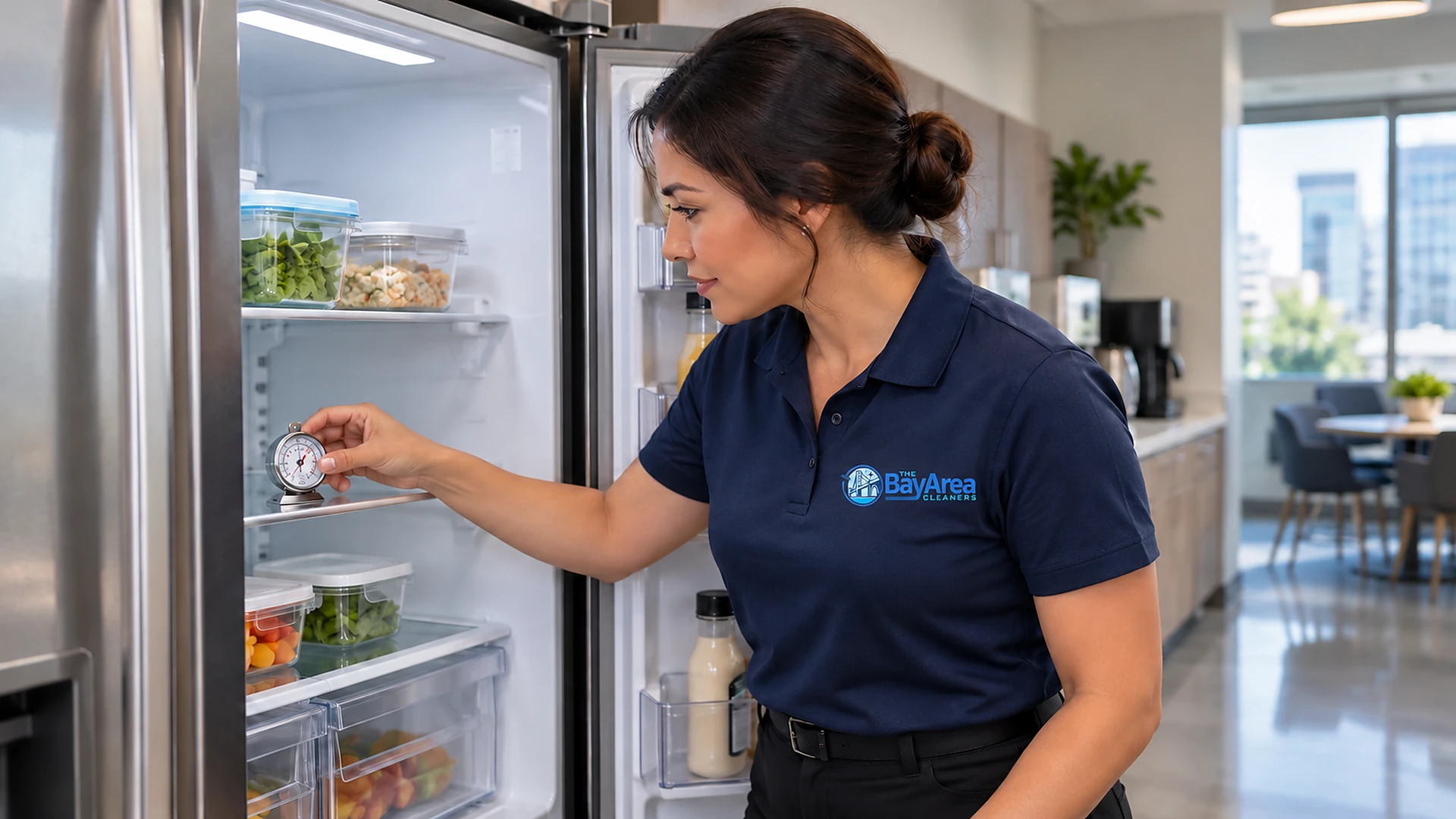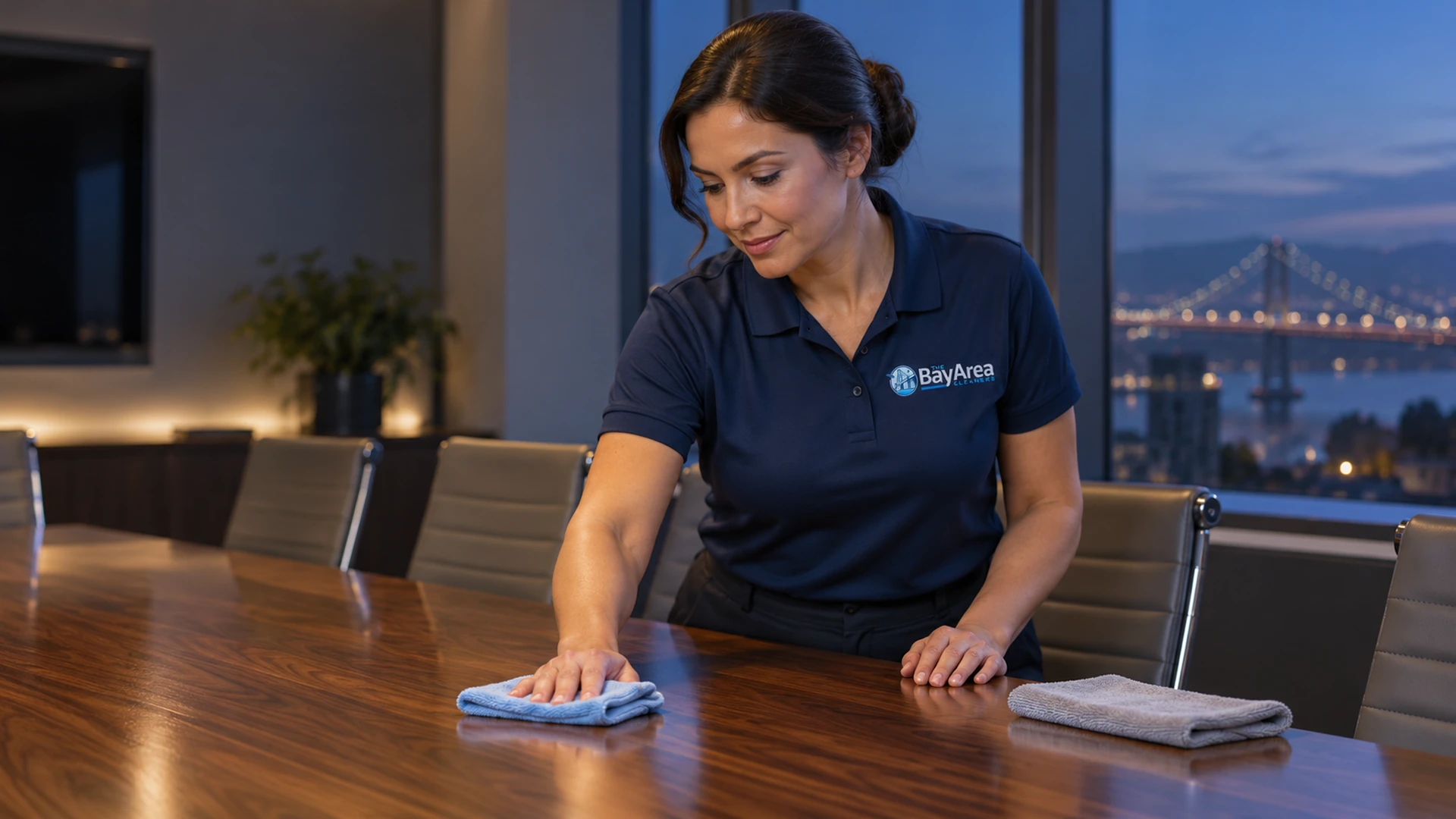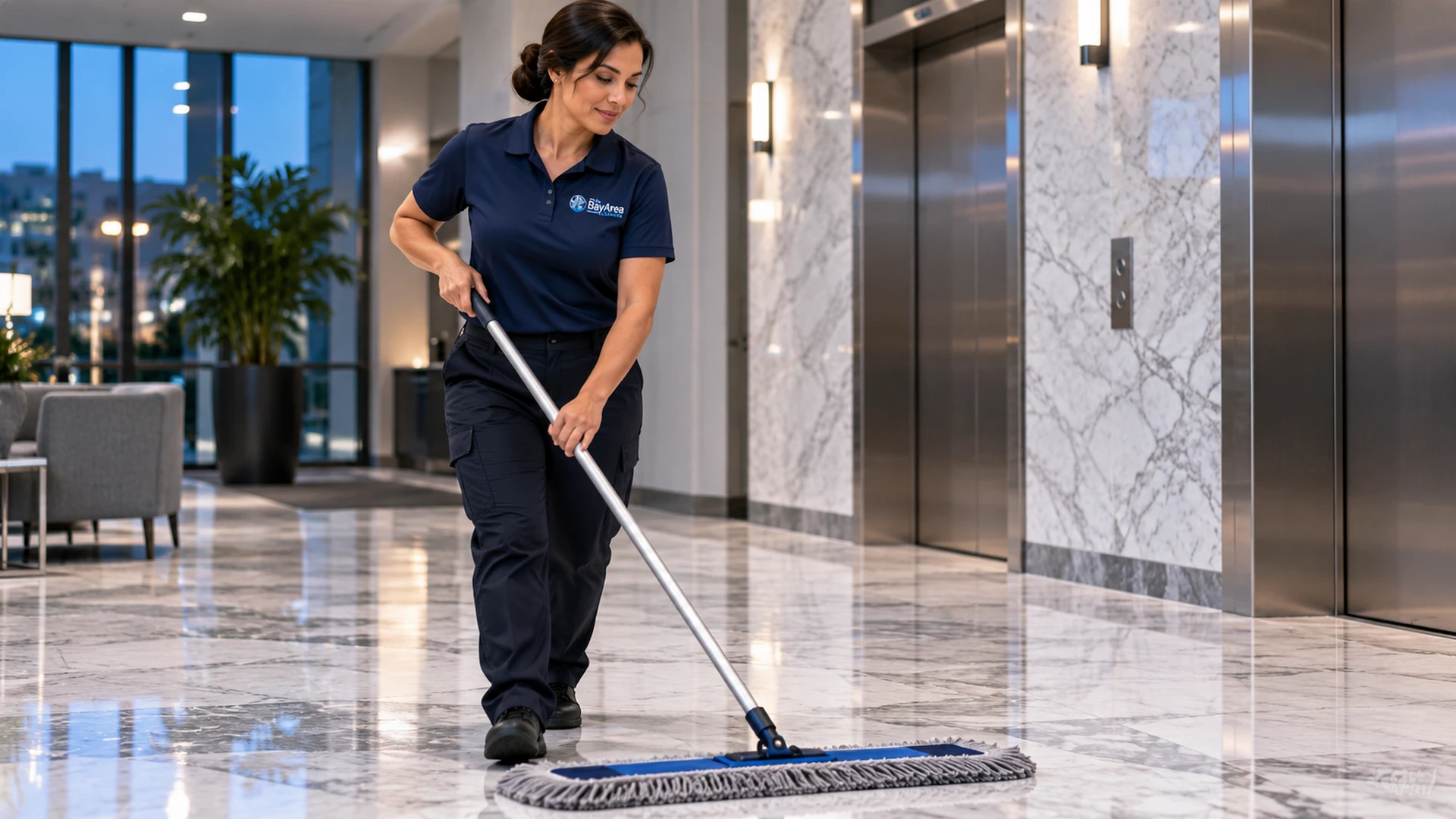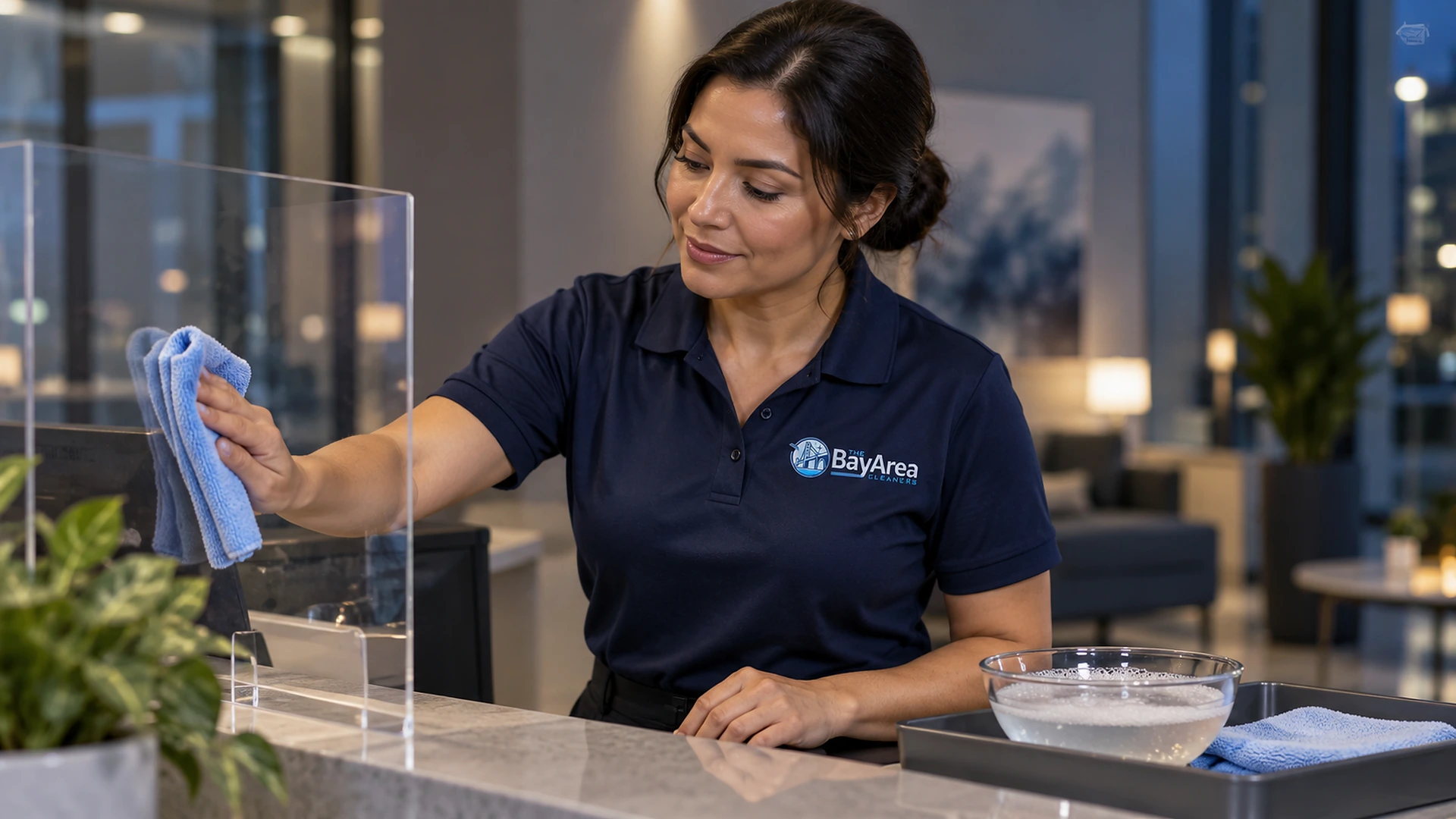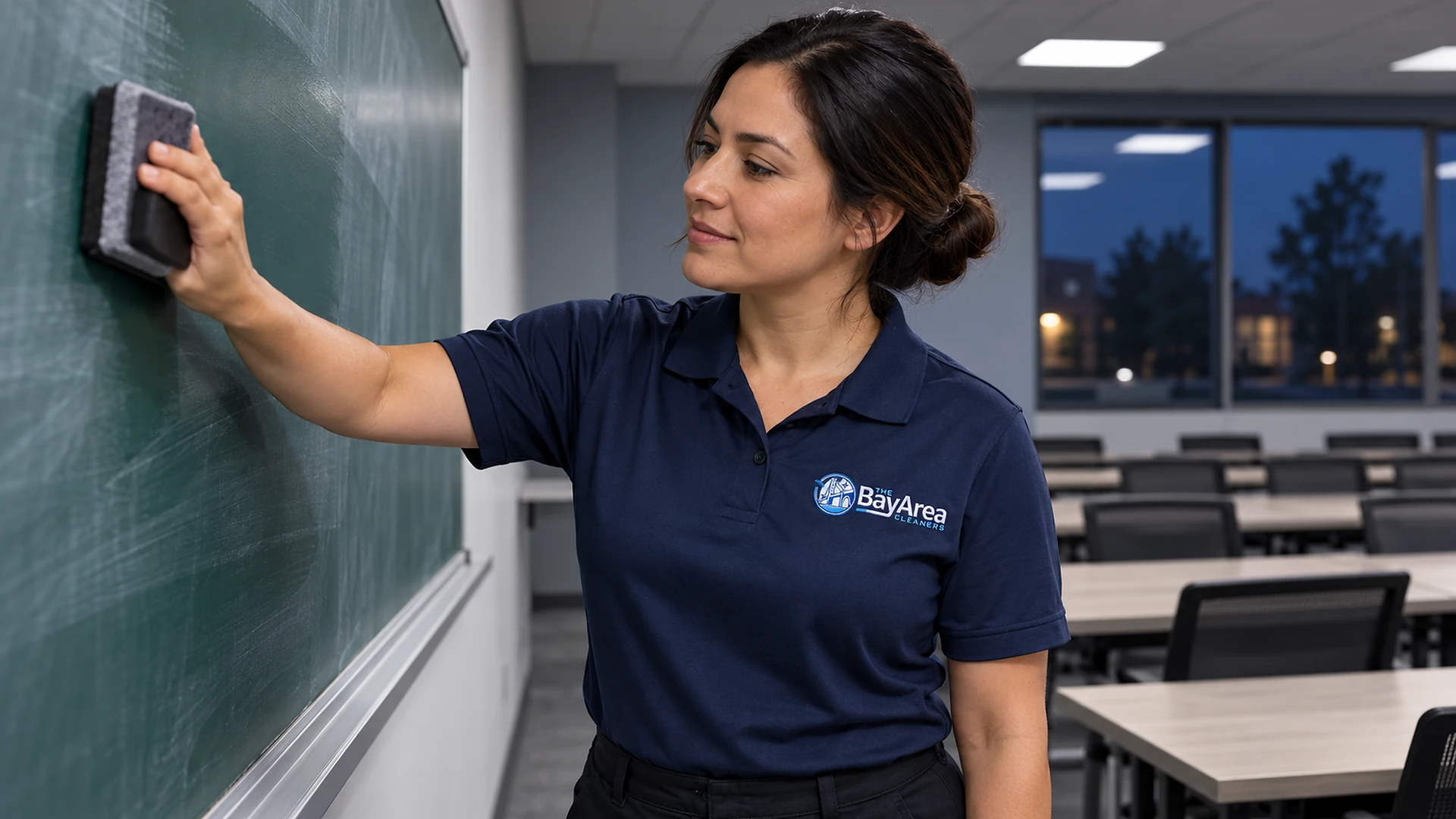

Consider a hypothetical Bay Area office with grit along the entry mat, fingerprints on a meeting room door, and a restroom with an empty soap dispenser. These conditions are visible, but they do not reveal whether the cleaning contract, the building systems, or daily employee habits caused the problem. Recognizing the importance of office cleaning starts with separating conditions a cleaner can correct from issues a facility manager must investigate. This guide explains practical results, evidence limits, surface care, and the questions that help managers choose the next action.
The quick version: The importance of office cleaning lies in removing everyday soil, maintaining usable shared areas, and making the results of contracted work visible. Routine cleaning can address dust, debris, fingerprints, and many touched surfaces. It cannot repair failed ventilation, water intrusion, damaged flooring, or every health concern. Compare the observed problem with the service scope, follow surface and product instructions, and send building defects to the person responsible for maintenance.
Which Visible Conditions Show the Importance of Office Cleaning?
The importance of office cleaning becomes practical when you define the conditions people can see and the actions that correct them. An office manager can assess entryways, workstations, meeting rooms, and restrooms without claiming that appearance alone proves an absence of germs or airborne pollutants. Start with observable issues before choosing a more intensive service.
Consider a hypothetical professional office with a lobby, several meeting rooms, and shared desks. People enter through a busy doorway during wet weather, leave food packaging in the kitchen, and touch the same meeting room controls throughout the day. The cleaning plan should recognize those activities rather than treating every square foot as equally used. It should also distinguish ordinary occupant tidying from tasks purchased from the cleaning provider.
Diagnose the issue before assigning the task
A short walk after an agreed cleaning visit can show whether the work matched the written scope. Record the location, condition, and access restrictions without making assumptions about why the condition appeared. These questions are useful starting points for the walkthrough:
- Check whether tracked-in debris accumulates near the entrance, elevator, or corridor junctions.
- Identify frequently used counters, door handles, shared tables, and touchscreens with visible residue.
- Look for waste bins that overflow before the next scheduled pickup or cleaning visit.
- Note restrooms where fixtures, floors, or dispensers need attention under the agreed service.
- Record surfaces blocked by papers, equipment, or stored items that cleaners may not be authorized to move.
The Bay Area Cleaners lists workstations, meeting rooms, kitchens, restrooms, reception areas, and floors among its office cleaning service areas. That list describes available service categories. It does not mean every site receives identical tasks, frequencies, or access permissions. Use the signed scope and the building walkthrough to translate the service categories into site instructions.
Separate observations from assumptions
For the importance of office cleaning to have an operational meaning, describe each concern with a room, surface, observation, and access note. Send the record to the assigned office contact for review. Record the inspection time so later use does not obscure what cleaners actually completed.
Takeaway: Start with a specific visible condition, identify who controls the area, and compare the problem against the agreed scope before requesting extra work.
Which Commercial Cleaning Benefits Are Supported by Evidence?
Commercial cleaning benefits are strongest when they describe results a facility manager can observe. Routine work can remove soil and maintain an orderly appearance, but claims about fewer sick days or guaranteed employee output require evidence beyond a clean-looking room. Distinguish the action, the likely benefit, and what that action cannot establish.
The CDC guidance on cleaning and disinfecting facilities addresses community buildings, including offices. It recommends regularly cleaning frequently touched surfaces and cleaning other surfaces when visibly dirty. The CDC notes that routine cleaning is sufficient in many situations, with added disinfection appropriate under certain circumstances, including areas where people have obviously been ill. These recommendations are not a substitute for specialized protocols in healthcare or other regulated settings.
Compare supported results with unsupported promises
The following table answers a question: what can a building manager reasonably expect from cleaning, and what needs separate evidence or work? It describes general operating limits rather than outcomes guaranteed by TBAC. The importance of office cleaning rests on observable outcomes, not on promises about business performance.
| Cleaning activity | Observable result to review | Claim or condition needing another check |
| Remove entryway soil | Walkway has no visible tracked-in debris after service | Floor finish damage needs specialist review |
| Clean shared counters | Food residue and obvious marks are removed | All infection risk is eliminated |
| Clean restroom fixtures | Visible residue and waste are addressed | Future employee illness is prevented |
| Vacuum suitable carpets | Loose debris and surface soil are reduced | All indoor air concerns are resolved |
| Wipe meeting tables | Accessible surfaces are ready for scheduled use | Staff performance will increase |
The CDC distinguishes routine cleaning, which removes dirt and reduces germs, from disinfection, which uses appropriate products to kill remaining harmful germs. Managers should review conditions and product labels before requesting disinfection.
Use the result to decide what to do next
When a problem reappears, check its timing. A spill after a cleaning visit is not proof of incomplete work. Residue found immediately after successive visits deserves a review of scope, access, and method.
Takeaway: Describe benefits through specific surfaces and visible results, and treat health, financial, and productivity claims as separate questions requiring their own evidence.
How Should Office Cleaning and Maintenance Work Together?
Office cleaning and maintenance work together when routine soil removal is separated from material care and repairs. A cleaning visit can address dirt on an appropriate surface, but it cannot restore torn carpet, reseal a damaged floor, or correct a persistent leak. Managers should first identify the material and its condition, then assign the right type of work.
Put surface condition ahead of cleaning intensity
Choose the least intrusive appropriate action for the observed condition, using product and surface care instructions where available. More aggressive cleaning is not automatically better. Before authorizing additional work, managers can follow this sequence:
- Record the location, material, and visible condition without assigning a cause based on appearance alone.
- Check which routine task and frequency the current cleaning agreement includes for that area.
- Ask whether the surface is accessible and whether any equipment or confidential property prevents ordinary cleaning.
- Confirm the surface manufacturer’s care restrictions before selecting a product, machine, or specialized method.
- Decide whether the issue needs routine correction, a separately approved cleaning project, or a building repair.
- Inspect the finished area and document any remaining defect that belongs to another work order.
The Bay Area Cleaners publishes commercial floor care that covers carpet care, hard floors, tile and grout, and some refinishing activities. Those are distinct categories from general vacuuming or mopping. Availability is evidence of a service offering, not proof that any particular treatment fits a client’s flooring. The importance of office cleaning includes surface care decisions that do not conceal material damage. The facility and the provider must check the surface and agree on the applicable method.
Avoid damage from the wrong method
Office cleaning and maintenance decisions depend on a surface’s finish and prior treatment. Visible residue can reflect an incompatible product rather than poor effort. Request approval before using a different method on an uncertain material.
You may also like: Commercial Cleaning Checklist: Sample, Score and Recheck Every Week.
The weekly inspection guide addresses consistent observation and follow-up. This article focuses instead on why routine care matters and how to separate it from specialized maintenance. Together, both guides help facilities teams record service results without duplicating an inspection template.
Takeaway: Identify the material, confirm its care limits, and separate routine cleaning from specialized treatment or repair before approving a new task.
Where Does Cleaning End and Building Maintenance Begin?
Routine cleaning ends where a problem calls for building systems work, a structural repair, or a specialist assessment. Dusting an accessible surface is not the same as servicing ventilation equipment. A facilities team should route complaints according to their likely source, not according to which vendor last entered the room.
The EPA office building guide to indoor air quality explains that conditions inside offices depend on pollutant sources, ventilation, filtration, moisture, and building operations. Cleaning can address some dirt and sources on accessible surfaces. It does not provide a stand-alone test of air quality or substitute for maintenance of heating, ventilation, and air conditioning equipment. The importance of office cleaning has limits when ventilation or moisture problems remain unresolved.
Match the complaint to the responsible work
The next table answers which team should assess common conditions first. These are suggested routes for an ordinary commercial office, not a substitute for lease terms, technical evaluation, or an agreed service contract.
| Observed condition | Routine cleaning role | Manager or specialist follow-up |
| Visible dust on an accessible shelf | Remove dust using suitable method | Review source if rapid buildup continues |
| Persistent damp patch near a wall | Report and avoid disturbing suspect material | Investigate moisture and building condition |
| Stale air or uneven room temperature | Report complaint; clean assigned surfaces | Ask facilities team to inspect HVAC operation |
| Worn carpet seam or loose flooring | Report defect and avoid unsafe treatment | Arrange floor or building repair assessment |
| Strong odor near a drain | Clean assigned accessible fixtures | Investigate plumbing if odor persists |
Explain the importance of office cleaning without overstating air quality
The importance of office cleaning can include removing visible dust and waste that would otherwise remain on surfaces. The EPA guide identifies housekeeping among several indoor pollutant considerations, yet it places ventilation and source control alongside cleaning. Do not present vacuuming a carpet as proof that the air distribution system is working correctly. A claim about indoor air quality requires information beyond a visual cleaning inspection.
Managers should distinguish three questions: Is the surface clean under the agreement? Is the material damaged or wet? Is a building system causing the condition to recur? Each question can call for a different vendor, timetable, and inspection. Combining them in one complaint often produces unclear accountability and repeated visits with little progress.
Takeaway: Send surface soil to the assigned cleaner, route leaks and damaged materials to maintenance, and refer ventilation concerns to qualified building personnel.
What Do Visitor Areas and Shared Rooms Reveal About Cleaning?
Visitor areas and shared rooms reveal how the cleaning program responds to different patterns of use. A lobby may need attention after wet-weather traffic, and a meeting room may change condition between bookings. Evaluate spaces against their agreed cleaning window before judging a provider’s work. The importance of office cleaning is clearest when managers inspect after the agreed service window.
Use room function to set practical expectations
The office manager can group rooms by use rather than applying a single rule to every space. Start with a short list of locations that deserve different handling:
- Reception and entryways need a clear standard for visible soil, accessible glass, and tracked-in debris.
- Meeting rooms need a reset rule for occupant materials and an agreed cleaning step for exposed tables.
- Shared kitchens need responsibilities for personal food, dishes, waste, and professionally cleaned surfaces.
- Restrooms need agreed fixture cleaning, waste removal, and supply reporting or restocking responsibilities.
- Low-use rooms need access instructions so cleaners do not disturb stored equipment or private records.
Not every room needs the same cleaning frequency. The CDC asks managers to consider touch frequency and visible soil. Additional work after an event should be arranged rather than presumed part of routine service.
Interpret appearance in its proper context
Commercial cleaning benefits in reception areas include clearer presentation standards: accessible counters cleaned and waste handled as contracted. These observations do not establish customer confidence, sales, or other financial outcomes.
For shared rooms, office cleaning best practices include asking staff to secure personal items and sensitive papers before a visit. Cleaners should work only on permitted surfaces.
You may also like: Tips for Keeping Your Commercial Office Space Clean and Tidy.
That companion article addresses daily tidiness. This guide instead examines routine service outcomes and their limits.
Takeaway: Review each room at the right time, distinguish occupant reset duties from purchased work, and document recurring problems before changing service frequency.
Which Office Cleaning Best Practices Help Managers Evaluate Results?
Office cleaning best practices are useful when they turn broad expectations into a consistent review of agreed work. A manager should inspect conditions soon after the relevant service, describe problems in plain language, and agree on a correction route with the provider. Avoid inventing a universal cleaning score or applying a threshold from an unrelated building.
Make the importance of office cleaning measurable
The importance of office cleaning should appear in inspection notes, agreed task completion, and timely responses to justified concerns. You can create a concise record using the room, surface, observation, visit date, and assigned follow-up contact. Keep similar conditions worded consistently so different reviewers can compare findings without guessing what words such as spotless mean. Avoid scores without agreed definitions.
A short process can prevent avoidable arguments about responsibility. Managers can use these actions as an internal guide, adjusting them to their actual agreement:
- Inspect a selected area after the scheduled service and before substantial new use when feasible.
- Record observable conditions, avoiding guesses about staff effort or the cause of a stain.
- Check the scope, access notes, and approved cleaning method before assigning a missed task.
- Send cleaning deficiencies to the service contact and building defects to the facilities contact.
- Revisit recurring problems with the provider and revise the written scope if needs have changed.
The site’s recurring janitorial services page describes written scopes, scheduled visits, and quality inspections. Managers should review those published service categories with the provider rather than assuming all inspection arrangements apply to every contract. An agreed review procedure can make performance discussions more useful because both sides know which conditions are being examined. The importance of office cleaning grows clearer when observations are recorded consistently and reviewed fairly.
Decide when professional help is appropriate
Office cleaning and maintenance should reflect the building’s needs. Staff can clear personal items, professional cleaners can handle contracted common areas, and building specialists should investigate persistent moisture or HVAC faults.
Takeaway: Inspect against the agreed scope, record conditions instead of assumptions, and use repeated findings to decide between a cleaning adjustment and specialist assessment.
Frequently Asked Questions
Why Is the Importance of Office Cleaning Clearer in Busy Workplaces?
The importance of office cleaning often becomes easier to see where surfaces receive frequent use and soil builds up between visits. Managers can review entrances, shared counters, restrooms, and meeting rooms after scheduled work. The correct frequency depends on occupancy, surface type, and agreed service rather than a universal rule for every office.
Which commercial cleaning benefits can managers verify?
Commercial cleaning benefits that managers can verify include visible soil removal, cleaned accessible surfaces, handled waste, and restrooms serviced according to the contract. These results can be inspected and documented. A cleaning visit alone does not prove higher productivity, fewer sick days, better sales, or the absence of indoor air quality problems in the building.
How do office cleaning and maintenance differ?
Office cleaning and maintenance overlap where surface care supports normal facility use, but they involve different responsibilities. Cleaners address agreed soil and debris on accessible materials. Building maintenance handles repairs, leaks, and equipment faults. A facility manager should document what was observed and decide which party has authority, training, and access to correct the condition.
Are office cleaning best practices the same for every business?
Office cleaning best practices should change with the building’s surfaces, use patterns, access restrictions, and cleaning agreement. Managers can use consistent reporting and inspection principles, then adapt the actual tasks to the site. Healthcare settings and other regulated facilities may have separate requirements, so a general office cleaning guide should not replace those procedures.
When should an office manager request additional cleaning?
Request additional cleaning when a documented condition falls outside the scheduled scope or needs attention before the next visit. Explain the affected area, desired result, access window, and whether a separate price approval is needed. If the issue involves a leak, damaged material, or ventilation fault, direct it to the responsible building specialist instead.
Conclusion
The importance of office cleaning is clearest when a workplace can describe what routine service changes and what remains outside its reach. Managers should define visible outcomes, check material instructions, separate cleaning from building repairs, and review recurring issues with the right contact. The Bay Area Cleaners publishes office cleaning services for commercial workplaces, including common areas, workstations, restrooms, and floors. To discuss your facility’s scope and service options, call 707-656-9339 and request a walkthrough before approving a cleaning plan.