
A restroom looks presentable at opening, but the soap dispenser is empty. In the meeting room, the table has been wiped, yet fingerprints remain on the door glass. These ordinary office problems show why office cleaning standards need observable results rather than broad promises about a spotless building. For managers of Napa County workplaces, the useful question is whether a cleaner and an inspector would agree that a task was completed. This guide explains how to set those expectations, document exceptions, and evaluate work without confusing routine office care with specialized services.
The quick version: Write a clear result for every important room and surface, then agree on who checks it, when the check occurs, and what happens after a missed task. Focus first on entrances, restrooms, shared spaces, and floors. Use cleaning methods appropriate for each surface and follow applicable product instructions. Review the scope when occupancy or the layout changes. A written agreement should identify which work is recurring and which work requires separate approval.
What Do Office Cleaning Standards Mean for Napa County Workplaces?
Office cleaning standards describe the condition a commercial workspace should have after an agreed service visit. They turn subjective language into observations that two people can evaluate with reasonable consistency. These office cleaning standards are not a single set of mandatory frequencies that applies to every office, and they do not certify that a building is free of health risks.
For example, saying that reception should look professional leaves plenty of room for disagreement. Saying that the entry mat is free of loose debris, the accessible counter has no visible residue, and the waste container has been emptied identifies work that someone can actually inspect. The business still needs to specify which tasks its provider accepted.
Before drafting office cleaning standards, walk through the property when employees and visitors normally use it. Look at traffic patterns, protected workstations, restroom occupancy, entrance dirt, shared appliances, access restrictions, and any surfaces that call for specialized care. The list below helps a facility manager record conditions that affect the scope:
- Identify rooms that visitors or employees use throughout the day, rather than treating all spaces alike.
- Record delicate finishes, electronic equipment, secured offices, and areas that cleaners cannot enter unaccompanied.
- Note who supplies liners, soap, towels, cleaning products, access badges, and storage space.
- Separate ordinary dust, waste, and tracked-in dirt from spills or incidents needing prompt attention.
- Ask the vendor to clarify excluded tasks before comparing proposals or signing an agreement.
The CDC’s facility cleaning guidance covers community settings such as offices. It recommends regular cleaning of frequently touched surfaces and cleaning other surfaces when visibly dirty. That guidance is a general reference, not a service contract or a prescribed timetable for every property.
Takeaway: Start with visible results and written responsibilities. Describe the rooms, access limitations, and response process before deciding how the provider will be evaluated.
Which Office Cleaning Duties Need Clear Quality Standards?
The office cleaning duties that need the clearest expectations are those repeated across busy areas: waste removal, reachable surfaces, restroom care, shared kitchens, and floors. A task belongs in the recurring plan only when the contract or written proposal includes it. Within office cleaning standards, even familiar services can differ by facility and service level.
Reception, desks, and meeting rooms
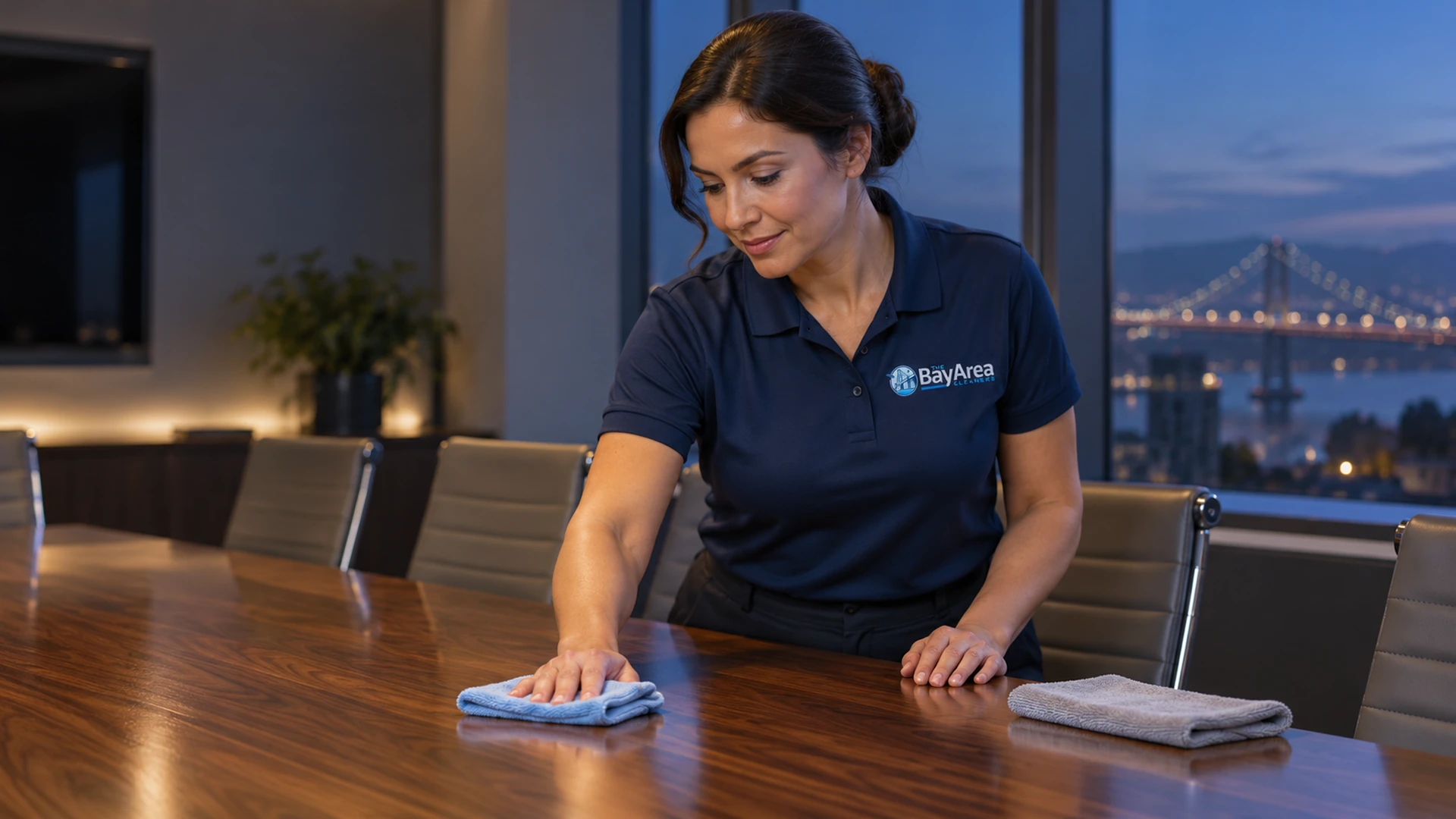
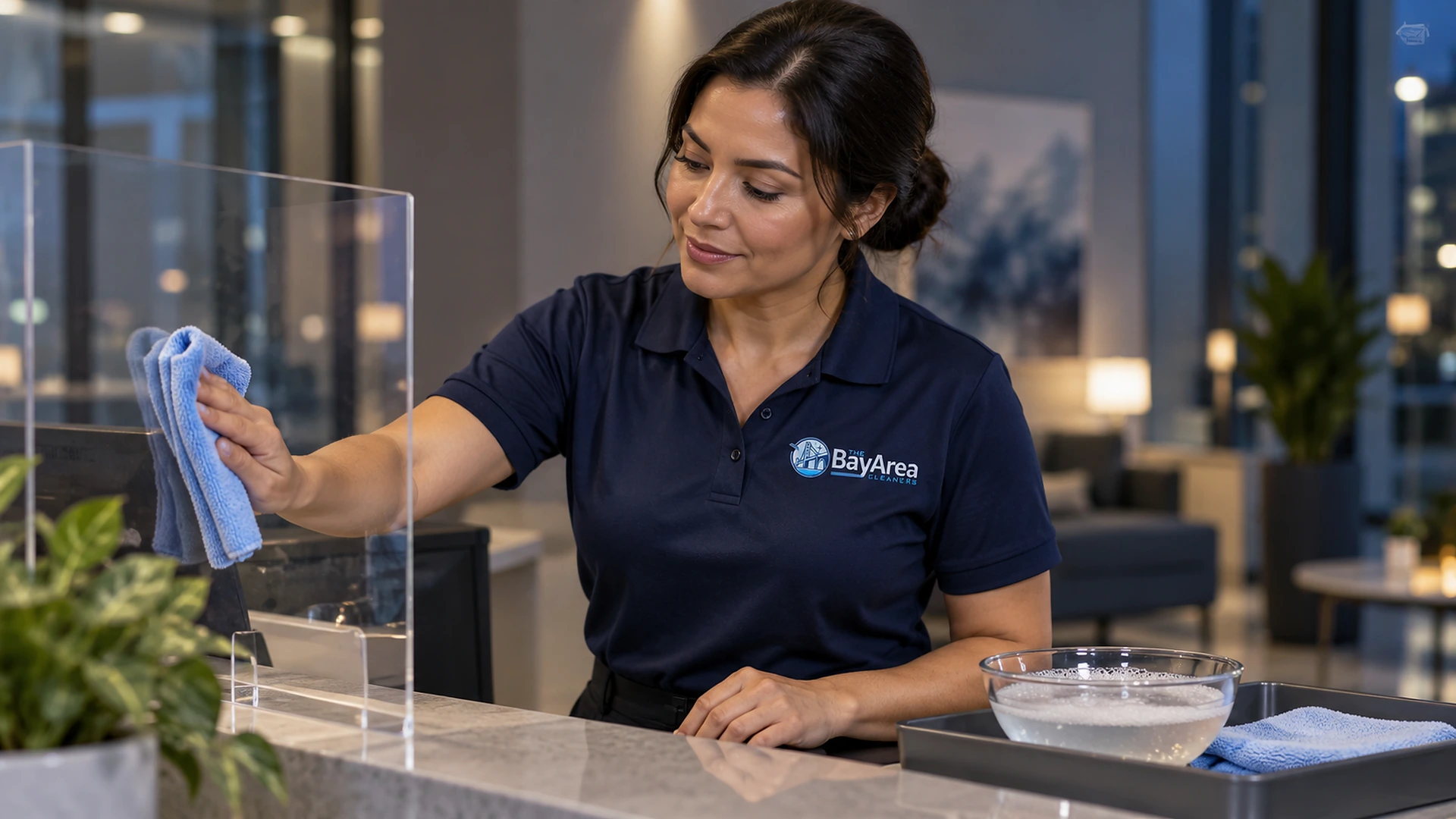
For reception, consider entry glass, counters, waiting furniture, accessible ledges, and waste bins. A desk standard should identify whether personal documents and electronics must be left untouched. Conference tables and shared touchpoints may need attention after frequent use, but wiping a surface does not authorize moving a client’s confidential materials.
Restrooms and shared break areas
Restroom conditions merit separate expectations for fixtures, floors, visible residue, odor reports, and supply dispensers. Identify which party purchases consumables and whether the cleaner is responsible for restocking them. A missing paper towel may be a supply problem rather than a cleaning error if the replacement stock was unavailable.
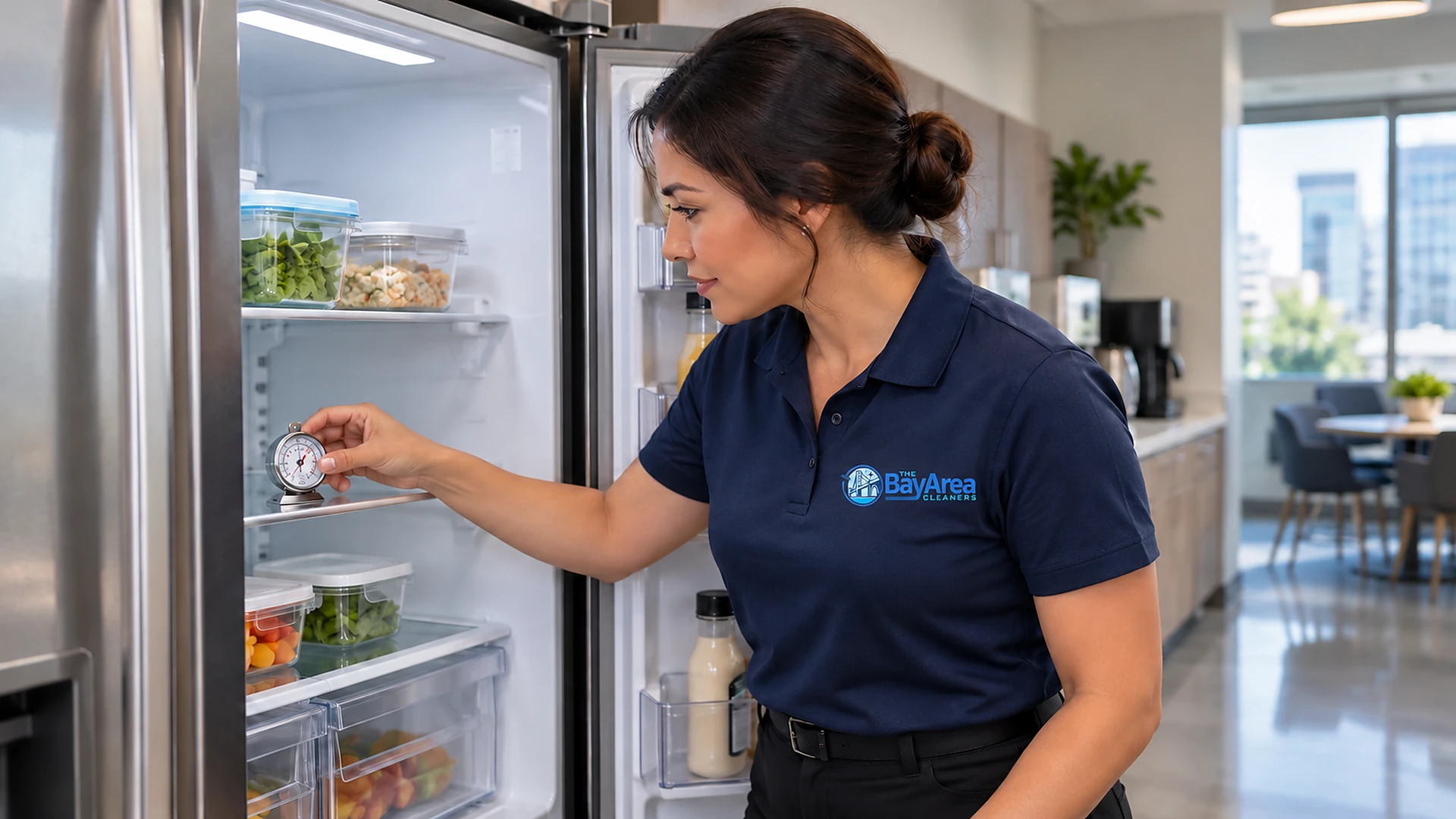
Shared kitchens require attention to tables, sinks, counters, appliance exteriors, and discarded food. Separate those surfaces from employees’ personal dishes, refrigerator contents, or interior appliance work unless the scope expressly includes them. The company’s restroom cleaning service describes relevant commercial work, but individual contract terms still control what a client receives.
For this section of office cleaning duties, define the boundary between cleaning and disinfection. According to the CDC, cleaning removes dirt and many germs, whereas disinfecting uses a product intended to kill remaining germs. Routine cleaning often suffices in ordinary community settings; additional disinfection depends on the circumstances and current guidance.
Floors and access routes
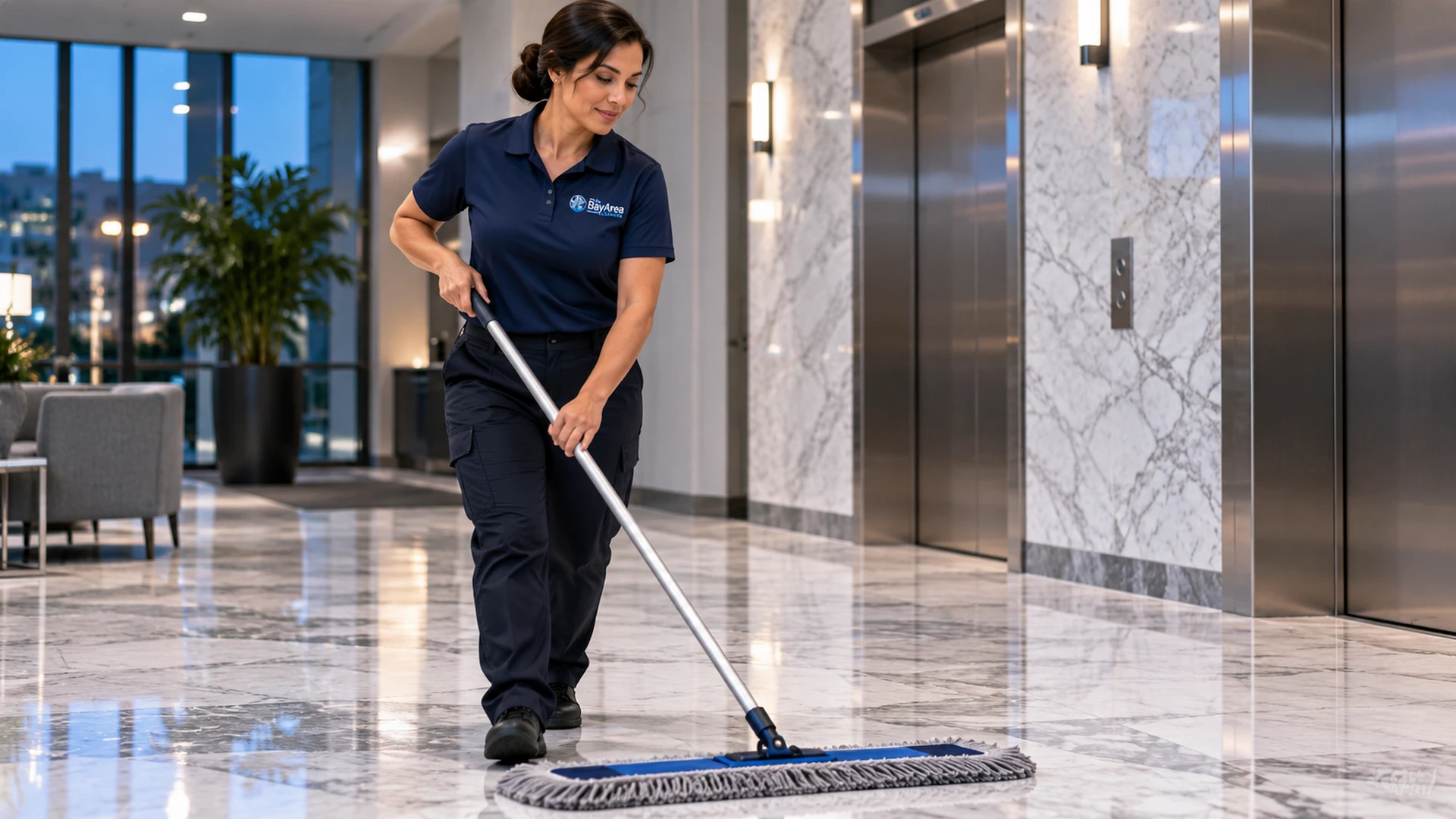
Floor standards should account for tracked-in debris, visible spills, damp areas, surface finish, and safe access. Carpet spot work, stain removal, machine scrubbing, and specialized floor treatment do not automatically mean the same thing. Discuss material compatibility and the difference between ordinary maintenance and separate restoration work.
The Bay Area Cleaners lists floor care services apart from standard office cleaning. That is a useful reminder to ask which floor tasks are covered by the recurring proposal. It is not proof that every technique is included at every site.
Takeaway: List office cleaning duties room by room. Protect personal materials, distinguish supply shortages from missed work, and define when specialist floor tasks need authorization.
How Can Managers Check Cleaning Results by Area?
Managers can review office cleaning standards by inspecting agreed outcomes at a time after service. An inspection sheet reflecting office cleaning standards should use descriptions that would produce similar judgments from different reviewers. Avoid an unqualified score such as excellent, poor, or looks fine when a more concrete observation is available.
The following table answers which visible condition to inspect and how to document a problem. These are illustrative criteria, not a universal contract or a health certification. Adjust them with the provider to match actual access, finishes, and working hours.
| Area | Observable result after service | Check and record |
| Reception | Accessible counters free of visible residue | Note surface and location of a missed spot |
| Meeting rooms | Tables clear of fresh crumbs or drink rings | Check after agreed visit, before room use |
| Restrooms | Fixtures free of visible soil; dispensers stocked if supplies available | Note affected fixture or missing product |
| Breakroom | Sink and reachable counters free of food debris | Record item and any restricted appliance access |
| Floors | Routes free of loose debris and unreported wet spots | Note material, location, and immediate risk |
A condition observed several hours after the crew leaves may reflect new activity. Choose the inspection window with that limitation in mind. If a room was in use or locked during service, record that exception rather than marking it clean or dirty without context. Never ask an inspector to enter restricted areas to complete a score.
To make reviews comparable, agree on the following sequence:
- Confirm the service date, agreed work order, and rooms actually accessible to the cleaning crew.
- Inspect representative areas at a consistent point before normal activity changes the surfaces.
- Record a specific condition, such as residue on one sink, instead of a general complaint.
- Send the observation to the designated contact with the required access and response details.
- Check the corrective work at the next agreed opportunity and close the record when verified.
A commercial office may use a separate weekly sampling plan for overall performance. The existing TBAC article Commercial Cleaning Checklist: Sample, Score and Recheck Every Week discusses that inspection approach. This Napa guide has a different purpose: helping managers define meaningful standards before scoring them.
Takeaway: Inspect against agreed, visible conditions soon after service. Document access exceptions and corrective work separately from ordinary use that occurs later in the day.
What Changes Between Routine and Periodic Cleaning?
Routine cleaning covers tasks repeated on an agreed schedule; periodic cleaning addresses work needed less often or after specific conditions arise. The distinction should be written down so a manager knows what is included and what needs a separate quote. More frequent service is not automatically better for every surface.
The next table answers how different task types should be handled. Its service categories are planning examples rather than promises about any TBAC package. A facility manager should confirm actual inclusion during a walkthrough.
| Work category | Example condition | Decision before work |
| Recurring | Routine waste removal and accessible surface wiping | Agree on areas, visits, and supply responsibilities |
| Periodic detail | Dust on reachable high ledges or scheduled interior glass | Define intervals and permissible access |
| Specialized floor work | Worn finish or embedded carpet staining | Review material and approve method separately |
| Exceptional response | Unexpected spill or an event that changes room use | Confirm reporting, authorization, and timing |
Office cleaning standards help clarify professional office cleaning proposals. A professional office cleaning company can provide recurring janitorial visits without automatically including restoration, elevated access, or incident response. TBAC publishes recurring janitorial services with daily, weekly, and customized programs; the actual client’s schedule and tasks should be confirmed in writing.
Product instructions can place real limits on service choices. The EPA explanation of pesticide labels states that registered pesticide labels, which include disinfectants regulated as pesticides, contain legally enforceable instructions. Managers should not replace those directions with an invented contact time or a one-size-fits-all application method.
For cleaning and disinfection, the CDC instructs readers to follow the product label, consider surface compatibility, and clean before disinfecting when applicable. These principles do not authorize cleaners to apply disinfectants everywhere or claim guaranteed disease prevention. Ask how product suitability and building access will be managed before approving any added treatment.
Four issues deserve explicit approval if they fall outside the established work:
- Schedule changes that require access when tenants or employees are not present.
- Equipment or methods not covered by the existing written service scope.
- Services involving elevated surfaces, delicate finishes, or unfamiliar floor materials.
- Additional work after construction, large gatherings, or an unusual spill.
Takeaway: Separate recurring, periodic, and exceptional work in writing. Obtain a clear authorization before expanding methods, access, or tasks outside the established service scope.
How Should a Janitorial Quality Control Checklist Be Used?
A janitorial quality control checklist should turn service expectations into consistent observations and a practical correction process. It does not need elaborate scoring to be useful. Its first job is to distinguish incomplete work, access problems, and conditions that appeared after the cleaning visit.
Start with agreed office cleaning standards as the checklist’s source. For each item, specify the area, visible outcome, service window, inspector, and contact for corrective action. Use the same item wording over time so a changing score is not caused by shifting definitions.
Use the following field checklist during a review:
- Confirm that the recorded rooms match the work order and identify any spaces the crew could not enter.
- Mark the condition observed and describe its exact location when the agreed result is missing.
- Distinguish a consumable shortage from a cleaning task that was not carried out.
- Report an urgent concern through the site’s established channel instead of waiting for a weekly report.
- Assign an owner and a follow-up date for each unresolved item.
- Review recurring patterns with the provider before changing the checklist or service scope.
A janitorial quality control checklist becomes more valuable under office cleaning standards when the same issue is recorded repeatedly. If several restrooms show missing supplies, examine inventory and responsibility. If one entrance repeatedly accumulates grit, review the matting, traffic pattern, and visit timing. These are hypotheses for discussion, not evidence that the cleaner has failed.
Do not alter the historical log after corrective work. Keep the original observation and a separate note that describes the follow-up result. This preserves the difference between quality on the initial visit and successful resolution afterward. It helps a manager discuss patterns with the provider using specific facts.
Office cleaning duties sometimes extend across different teams. A day porter might restock a restroom during business hours, and an evening crew might complete more detailed work. TBAC describes day porter services separately; a manager should determine which shift is responsible for each outcome before comparing inspection results.
Takeaway: Use a janitorial quality control checklist to log precise observations, responsibility, and follow-up. Keep original findings intact and revise wording only through an agreed process.
How Can Businesses Maintain Consistent Cleaning Standards?
Consistency comes from a documented scope, a stable inspection process, and communication when conditions change. Office cleaning standards cannot fix a mismatch between the work purchased and the work a facility needs. Managers using office cleaning standards should reassess both the agreement and the results when recurring concerns persist.
A monthly office cleaning standards review can cover missed tasks, access issues, restroom supplies, floor observations, and requests added since the last meeting. Look for repeated causes rather than debating one isolated photograph. Invite the vendor’s supervisor to walk the relevant area when descriptions alone cannot settle an observation.
For a business considering professional office cleaning, a walkthrough should produce a written list of areas and accepted tasks. Ask the provider to explain staffing coverage, supply responsibilities, access arrangements, communication procedures, and how any additional work will be approved. Avoid treating a marketing claim as evidence of an actual facility-specific process.
The main questions for a review meeting are practical:
- Are the recorded failures linked to a task actually included in the current agreement?
- Were rooms accessible and did the inspector check them at a comparable time?
- Do repeated issues point to supply planning, method choice, scheduling, or unclear responsibilities?
- Is a change needed to the service scope, or only to the reporting procedure?
- Who will confirm the next action and communicate the outcome to building staff?
The CDC’s recommendations concern general cleaning in community facilities and exclude specialized environments governed by other practices. Similarly, the OSHA cleaning industry standards identify worker-safety rules that may apply to cleaning operations. Neither source establishes a universal quality score for a Napa County office or verifies a specific provider’s procedures.
That boundary is especially useful in discussions about sanitizing and disinfecting. A visual inspection cannot establish chemical effectiveness. If a service calls for disinfectants, the provider should identify applicable label instructions and the relevant surface, instead of promising an unsupported numerical reduction in illness or absence.
Takeaway: Review patterns with the provider on a regular schedule. Update work orders when conditions change and keep quality claims within what inspections can actually demonstrate.
Frequently Asked Questions
What are office cleaning standards for a commercial workplace?
Office cleaning standards are written descriptions of the condition each agreed area should have after service. They can address visible debris, waste containers, fixtures, accessible surfaces, and follow-up procedures. They should identify the inspection time and exceptions, such as locked offices. They do not establish a universal cleaning frequency or prove that a facility is free of germs.
What does professional office cleaning normally cover?
Professional office cleaning often addresses accessible work areas, meeting rooms, shared kitchens, restrooms, reception, and ordinary floor maintenance. However, actual coverage depends on the written contract. A manager should ask about appliance interiors, protected workstations, consumables, elevated surfaces, and periodic floor treatments before assuming they are included. Tasks not listed should be clarified before the first visit.
Which office cleaning duties should managers inspect first?
Start with the office cleaning duties that affect heavily used shared areas, such as restrooms, entrances, waste bins, meeting tables, and walkways. Inspect them against the provider’s agreed scope soon after service, when possible. Record the exact surface and observed condition. Check whether missing supplies or locked rooms explain an apparent gap before treating it as incomplete work.
How does a janitorial quality control checklist support inspections?
A janitorial quality control checklist gives inspectors repeatable descriptions rather than impressions about whether a room looks good. Record location, observed condition, timing, exceptions, and who owns the response. Keep original findings after corrections, with follow-up documented separately. The checklist should reflect contracted duties and be revised when room layouts, access rules, or the service arrangement changes.
When should a manager request additional cleaning visits?
Consider additional visits when inspections repeatedly show that shared spaces deteriorate before the next scheduled service, or when building use changes substantially. First identify whether the issue concerns traffic, missing supplies, a narrow scope, or a missed task. Discuss the evidence with the provider and agree on any revised work, timing, and authorization in writing.
Conclusion
Useful office cleaning standards start with a written result for each important area and a fair method of checking it. For Napa County facility and office managers, that means distinguishing routine tasks from added work, recording exceptions, and reviewing repeated concerns with the cleaning provider. The Bay Area Cleaners describes office cleaning services for commercial workspaces and can discuss the scope relevant to your property. Request a walkthrough to confirm the areas, schedule, and documented expectations before service begins. Call 707-656-9339 to discuss your facility’s needs.