
In a hypothetical East Bay office, entryway dirt gets tracked across the entrance carpet each afternoon. Staff handle small spills themselves, yet the carpet needs another intensive treatment within weeks. The issue may be less about paying for a larger cleaning visit than about choosing the right routine before buildup spreads. For an East Bay office, regular office cleaning can help control avoidable work, protect surfaces, and clarify who handles daily upkeep. It does not automatically reduce the cleaning bill or guarantee a longer asset life. This guide shows where to look for a defensible cost benefit, which expenses to compare, and how to review results before changing the schedule.
The quick version: Regular office cleaning can make spending more predictable when it catches visible soil early, matches service to traffic, and reduces the need to repeat unfinished tasks. Potential savings come from fewer avoidable callbacks, better coordination, and attention to flooring and shared spaces. Results depend on the building, materials, contract, and actual records. Compare complete costs rather than the cheapest visit price, then test one improvement before claiming a financial return.
Where Can Regular Office Cleaning Reduce Repeat Work?
Regular office cleaning can reduce repeat work when routine tasks address the cause of recurring complaints rather than simply restoring appearances. The first place to look is not an advertised savings percentage. It is the maintenance log: what needed an extra visit, who requested it, and what created the problem again.
Identify callbacks before treating them as savings
Start with observable signs that a task is being redone. A carpet that receives repeated spot treatment, a breakroom counter that staff must wipe immediately after service, and bins that overflow before the next visit all call for different adjustments. Some need clearer scope; others need more frequent service in a specific area.
Use this diagnostic list during a walkthrough:
- Check whether repeat complaints involve the same room, surface, or shift.
- Record the condition at the end of service and when the issue returns.
- Separate new spills from incomplete work performed during the scheduled visit.
- Note whether furniture movement, access limits, or occupied rooms obstruct cleaning.
- Assign a contact who can approve a correction without creating duplicate requests.
A useful record names the location, date, condition, action, and outcome. Avoid assigning a cost to a complaint unless staff time or contractor charges are actually measured.
Distinguish cleaning from other maintenance
A dirty vent grille may belong on a surface-cleaning checklist, but an HVAC performance problem belongs with building maintenance. Likewise, routine cleaning cannot repair worn carpet, damaged floor finish, or an ongoing plumbing leak. A realistic budget identifies those limits before anyone promises a reduction in energy spending or repairs. The published office cleaning service describes desks, meeting rooms, shared areas, restrooms, and ordinary floor tasks, not mechanical system repairs.
Regular office cleaning is most useful as a controlled routine with clear responsibility. If the cause is a material defect or equipment failure, escalating early may avoid paying repeatedly for cosmetic touch-ups that cannot solve it.
Takeaway: Track recurring complaints by location and cause before increasing service. Separate genuine repeat cleaning from new use, access problems, and repairs outside the cleaning agreement.
How Should Office Cleaning Costs Be Compared?
Office cleaning costs should be compared for the same scope, frequency, access conditions, supplies, and reporting duties. A lower quote can omit tasks that another proposal includes. Conversely, paying for a daily task in an unused room may produce little value. Without like-for-like descriptions, price comparisons are misleading.
The ISSA workloading discussion explains why task time, frequency, space, and staffing affect a realistic cleaning plan. It supports evaluating workload, not assuming that the least expensive proposal will meet the same standard. A manager should ask bidders to describe what they will do, when they will do it, and which events require an additional authorization.
This table answers a practical question: which cost components need to appear in a fair comparison?
| Cost component | What to compare | Why it changes the decision |
| Routine labor | Rooms, tasks, visit timing, access | Different assignments produce different workloads |
| Consumables | Supplied products, liners, restroom paper | An omitted item may be billed separately |
| Periodic work | Carpet extraction, floor finish care, deep detail | Specialty visits may not be in the base scope |
| Rework and response | Reporting, correction procedure, extra calls | Repeated visits can create unplanned expense |
If one supplier includes restroom restocking and another excludes supplies, adjust the comparison before deciding. Do not assume that a subscription-style arrangement has a lower lifetime cost; the real answer depends on the office and the contract.
Measure total effort, not just invoices
Office managers often spend time arranging access, passing along complaints, and checking whether a task was completed. This coordination is relevant to an internal decision, yet it should not be converted into a fictional dollar figure. If the organization wants to quantify it, record time spent over a defined trial period and apply its own approved accounting method.
Regular office cleaning may make coordination easier when the scope is unambiguous. A recurring janitorial program is a service option to review when the office needs repeated visits and a documented task list.
When comparing office cleaning costs, collect one written scope per bidder and make deviations explicit. A quote is useful only when the office can tell what it would receive and what would trigger another charge.
Takeaway: Compare written scopes on equal terms and record excluded work. Include scheduling, consumables, coordination, and rework before interpreting a lower cleaning quote as genuine savings.
Can Commercial Floor Maintenance Protect a Facility Budget?
Commercial floor maintenance may help preserve finishes and reduce unnecessary corrective cleaning when the methods suit the actual floor. Traffic at entrances can move dirt onto carpet, vinyl, and hard surfaces. A routine that captures soil before it spreads is a plausible way to reduce repeated spot work. Any claim of replacement savings, however, needs a real maintenance history and floor-specific evidence.
Match the method to the material
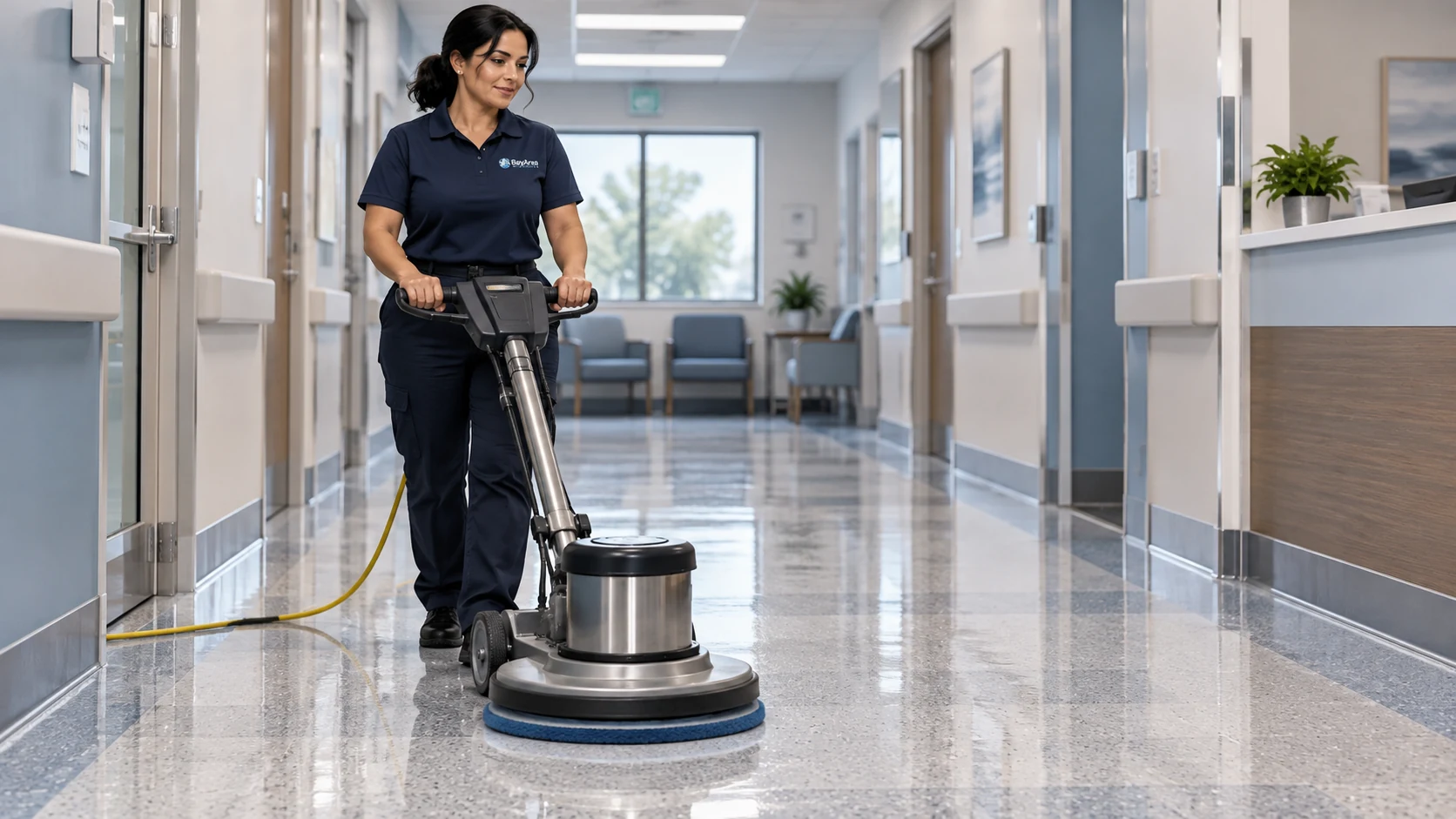
The site’s commercial floor care service describes ordinary hard-floor care, carpet treatment, and separate periodic services. Flooring manufacturers and applicable maintenance instructions should govern compatible products and equipment.
The table below answers a second decision question: which observation suggests an appropriate next step for each floor type?
| Surface or location | Observation worth recording | Potential response |
| Entrance carpet | Repeated tracked-in soil near doors | Review mats, vacuum coverage, and spot response |
| Resilient hard floor | Soil accumulation near traffic paths | Confirm compatible mopping and finish care |
| Tile and grout | Persistent soil in joints after routine passes | Evaluate targeted detail, not automatic stripping |
| Conference-room carpet | Marks appearing after events | Plan timely spot treatment and room access |
Treat this as a diagnostic framework, not as a universal maintenance calendar. Commercial floor maintenance can become unnecessarily expensive if an office orders intensive work before checking whether routine cleaning, appropriate mats, or access changes would address the actual problem.
Use a short, repeatable inspection process
For facilities with multiple tenants or departments, a consistent method is easier to evaluate than informal comments. Try the following sequence:
- Record the floor material and obtain its care guidance before selecting chemicals or equipment.
- Walk the same high-traffic locations before and after scheduled cleaning visits.
- Log recurring spots, slippery residue, finish changes, or areas needing a second pass.
- Separate cleaning observations from damage that requires maintenance or replacement.
- Review the results with the cleaning provider before authorizing periodic specialty work.
If a floor is slippery or damaged, follow the facility’s immediate safety procedure rather than waiting for a scheduled review. The ISSA article on cleaning operations costs describes workloading, equipment evaluation, and training as approaches to examining labor and operating expenses; it does not establish a universal savings amount for this building.
Regular office cleaning is one part of floor care. It should support, rather than replace, decisions about materials, entrances, and specialty maintenance.
Takeaway: Inspect flooring by material and traffic before ordering intensive treatment. Record actual repeat work and follow manufacturer guidance when deciding what routine or specialty care is warranted.
What Workplace Cleaning Schedule Avoids Paying for the Wrong Work?
A workplace cleaning schedule works best when room use drives service rather than a single frequency applied everywhere. Busy entryways and shared restrooms may need attention more often than a lightly used meeting room. The goal is not to clean as little as possible. It is to match tasks and timing to the condition that office occupants and managers actually encounter.
The CDC guidance for community facilities recommends regular cleaning of frequently touched surfaces and cleaning other surfaces when visibly dirty. Its guidance distinguishes ordinary cleaning from additional disinfection when circumstances warrant it.
Build the schedule from room-level evidence
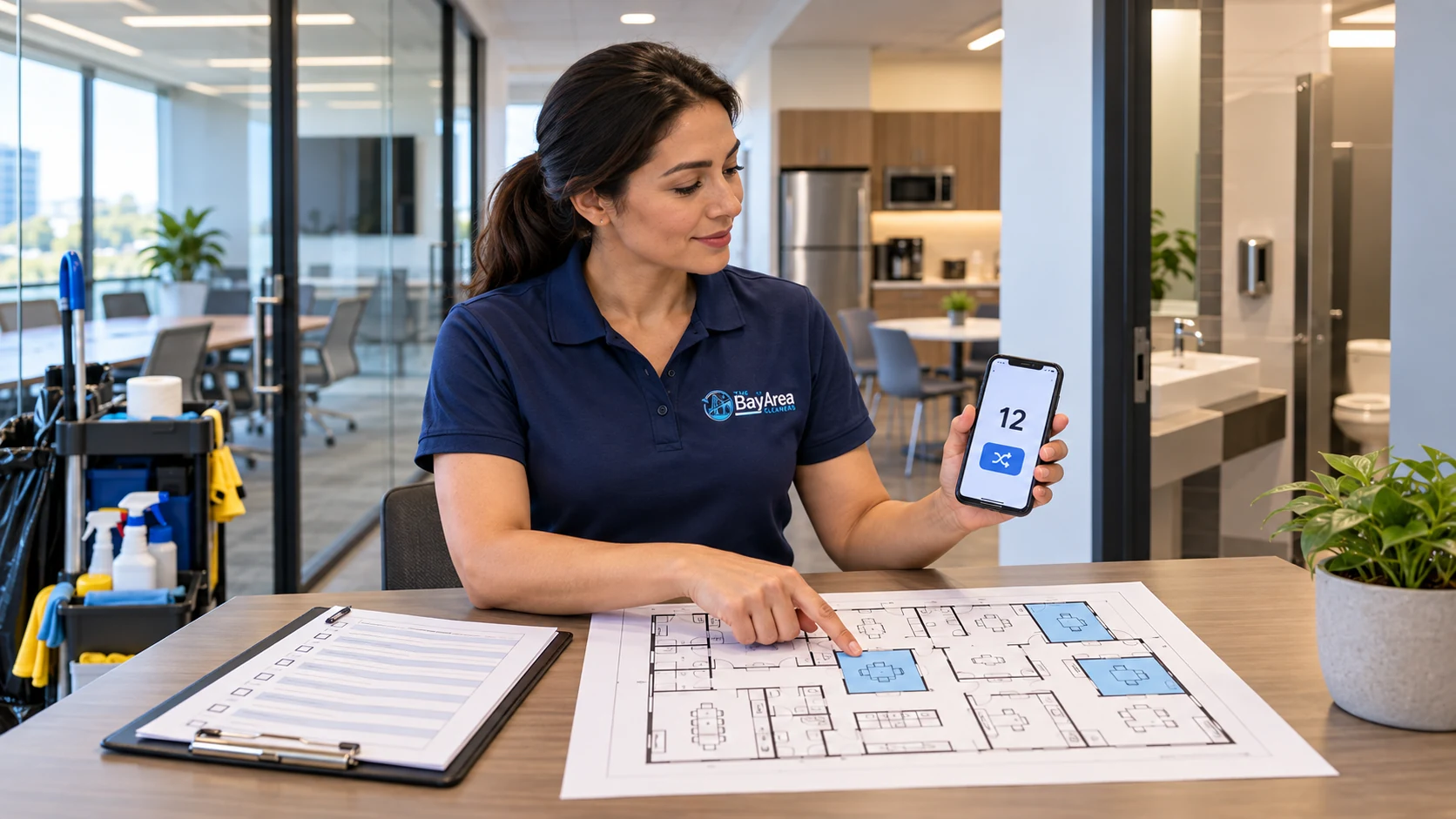
Begin with a workplace cleaning schedule that identifies rooms, tasks, intended results, and who reports exceptions. Use a short trial to see whether the selected frequency works. A room that receives a large group every afternoon may require a different reset from a quiet office with occasional appointments.
Use this checklist when reviewing service timing:
- Identify daily traffic patterns in reception, corridors, and shared restrooms.
- Flag meeting rooms that become heavily used only on certain days.
- Assign immediate responses for spills, safety hazards, and overflow outside routine visits.
- Set an inspection point after cleaning that does not interrupt employees.
- Recheck the schedule when occupancy, office layout, or operating hours change.
Some tasks belong to employees or property operations rather than the cleaning team. For example, document storage, food disposal from personal refrigerators, and confidential equipment access may require internal rules.
Regular office cleaning provides a framework for reviewing room conditions over time. If the workplace cleaning schedule repeatedly leaves a bathroom understocked, investigate use, replenishment scope, and inspection timing before purchasing extra general cleaning visits.
A provider’s published restroom cleaning service can help identify service categories such as fixtures, waste, and restocking. Confirm whether those activities are included in the proposed office agreement before budgeting for them.
Takeaway: Set cleaning frequency by room use and observed conditions. Trial targeted adjustments, record the outcome, and document tasks that belong to building staff rather than cleaners.
How Can Managers Verify Savings Without Inventing Numbers?
Savings can be evaluated only when the office has a baseline and measures changes using the same definitions. Regular office cleaning may prevent some rework, yet there is no defensible amount to claim before reviewing invoices, incidents, labor records, and the scope of each visit. Avoid attributing an equipment repair, an employee attendance change, or lower utility use to cleaning without evidence connecting the two.
For example, compare the number of verified extra cleaning calls before and after a scheduling change, then compare the actual charges for those calls. Do not use the difference as an annual forecast without considering seasonality, staffing, occupancy, and unusual events.
Seasonal conditions can change the financial picture. During wet weeks, entry mats collect more soil, and busy meeting periods increase restroom and waste demands. Compare regular office cleaning during similar occupancy periods, and keep unusual events in the log. This prevents a brief improvement from being misreported as a lasting financial gain.
Define a comparison that survives scrutiny
The following review list helps keep the analysis grounded:
- Use the same definition of a cleaning callback before and after a change.
- Record routine invoice totals and separately authorized specialty work.
- Note unusual construction, events, tenant moves, or weather-related traffic.
- Include the staff time required for complaints and access coordination when measured.
- Mark missing records instead of treating unknown costs as zero.
A manager may discover that monthly spending increases when regular office cleaning visits become more frequent. That change can still be justified by service quality or facility requirements, but it is not a documented cost saving.
Assess financial and nonfinancial outcomes separately
Track visible conditions and contract completion alongside spending. Some advantages, such as a predictable routine or fewer emergency coordination calls, may matter without translating into a measurable immediate return. Label them as operational benefits rather than dollar savings.
The ISSA Value of Clean calculator resource describes approaches to evaluating cleaning investment, including asset considerations. Its existence does not establish a universal return for any East Bay office. Use facility-specific records and disclose assumptions before making a financial case.
A single clean inspection or a quiet week cannot establish a durable cost trend.
Takeaway: Use invoices and repeat-work records to evaluate any savings claim. Keep service quality separate from financial return, and report missing data rather than presenting estimates as facts.
When Does Regular Office Cleaning Justify a Professional Plan?
Regular office cleaning justifies a professional plan when repeat tasks, access requirements, material care, or inconsistent follow-through exceed what the internal team can reliably handle. This decision should reflect actual work and responsible staffing, not an assumption that outsourcing always costs less. A small office may manage some duties internally; a busier property may benefit from recurring visits and clearer accountability.
Define the work before requesting a proposal
Prepare a brief that names the facility’s used spaces, surface materials, traffic patterns, available access hours, and reported problem areas. Separate routine work from floor restoration, emergency spill response, and other services that may require approval.
A decision checklist for the procurement discussion should include:
- A room-by-room list of work that must be completed each visit.
- A clear distinction between scheduled work and request-only tasks.
- Named responsibility for restroom consumables and supply purchasing.
- A practical route for reporting missed tasks and confirming corrections.
- A schedule review date triggered by material changes in occupancy or operations.
Ask about product compatibility and safe access before cleaners move around electronics or confidential work areas. No provider can responsibly guarantee a cost reduction without knowing what the property currently spends and which tasks are included.
The Bay Area Cleaners publishes office cleaning options and services for recurring janitorial care. Those pages are useful for reviewing possible scope, but the actual proposal should identify what this particular East Bay workplace needs.
Regular office cleaning may be the right foundation for a broader facility program. Document the first agreed standard, then change the program only after reviewing conditions and costs together.
Takeaway: Request a written plan built around tasks, access, materials, and reporting. Evaluate the provider against observed results and complete costs rather than a generic savings claim.
Frequently Asked Questions
Can regular office cleaning really save a business money?
Regular office cleaning may reduce avoidable callbacks and improve coordination when the schedule matches actual office use. Whether this saves money depends on invoices, extra visits, staff time, materials, and existing service quality. Measure those items before and after a defined change. A cleaner-looking office alone does not demonstrate financial savings or lower replacement costs.
What should managers include when tracking office cleaning costs?
Office cleaning costs should include routine invoices, consumables charged separately, specialty visits, and documented rework. If internal coordination time is relevant, record it rather than assigning an assumed cost. Compare the same tasks and period across options. Note differences in traffic and occupancy so a change in spending is not mistaken for improved efficiency.
Does commercial floor maintenance belong in routine office cleaning?
Commercial floor maintenance covers several activities, and a contract may include only basic vacuuming, sweeping, or mopping. Periodic extraction, finish restoration, and other specialized tasks can be separate. Confirm the material, methods, and written scope before budgeting. Do not assume a floor treatment is necessary on a fixed interval without inspecting its condition and care instructions.
How often should a workplace cleaning schedule be reviewed?
A workplace cleaning schedule should be reviewed when occupancy, room use, hours, or recurring complaints change. Managers can check the results during their normal inspection cycle and agree on adjustments with the provider. There is no universal visit frequency that suits every office. High-touch areas and visibly dirty surfaces deserve attention consistent with facility needs and CDC guidance.
What if a cheaper cleaning quote leaves important tasks out?
Ask the supplier to identify exclusions and price the missing tasks separately before comparing bids. A lower invoice may be appropriate for a narrower scope, but it does not represent equal value if the office still pays for periodic work or callbacks elsewhere. Use written responsibilities and clear reporting rules to make the final choice defensible.
Conclusion
Regular office cleaning can support a controlled East Bay facility budget when managers match visits to actual use, address repeat work, and distinguish routine tasks from repairs. Begin with a room-by-room review, confirm what the contract includes, and measure costs before declaring savings. The Bay Area Cleaners offers commercial office cleaning and related floor-care services in its stated Bay Area coverage. To discuss a written scope for your workplace, call 707-656-9339. Ask for a plan that shows the tasks, frequency, and conditions you can verify after service.