
A Concord office can look ready at opening and still need attention before lunch. Restroom supplies run low, visitors track debris into the lobby, and the evening cleaning crew cannot respond until its next scheduled visit. These are different operating problems. Treating them as one vague cleaning request makes it difficult to choose appropriate coverage.
The types of commercial cleaning services available to a facility serve different purposes. Recurring janitorial visits address planned tasks, day porter coverage handles conditions during operating hours, and specialized projects address work outside a routine visit. The best combination depends on traffic, surface materials, access rules, and responsibilities already assigned to employees or building staff.
Quick answer: Start by listing what becomes dirty, when it happens, and how quickly someone must respond. Then match each issue to scheduled, daytime, or project-based cleaning. The examples below are decision tools, not promises that every task comes with every provider’s agreement.
What Types of Commercial Cleaning Services Does Your Facility Need?
The useful question is not simply whether a building needs a cleaner. It is which conditions need repeated attention, which require a same-day response, and which occur only occasionally. A small Walnut Creek professional office may need reliable after-hours cleaning. A Concord location with visitors arriving all day may need another arrangement for entrances and shared restrooms.
Start with a walk through the facility during normal operations. Notice where waste gathers, which entrances get the most foot traffic, how meetings change room use, and where staff members already perform simple housekeeping.
Diagnose the need before choosing a service
- Walk the public entry route and record debris, tracked moisture, fingerprints, and overflowing receptacles at the times they become noticeable.
- Compare restroom conditions at opening, peak use, and closing to identify whether one nightly visit can handle demand.
- Note which meeting rooms change occupants frequently and whether anyone is assigned to reset them between uses.
- Record floor materials, manufacturer care instructions, access restrictions, and tasks that may require specialized equipment.
- Identify areas managed by tenants, property staff, or other vendors so the proposed cleaner does not duplicate assigned work.
A dusty desk can belong to a regular schedule. Repeated midday spills require a response arrangement. Worn floor finish might need a separate floor-care assessment instead of additional ordinary mopping.
The range of types of commercial cleaning services includes routine office care, porter work, periodic floor treatment, deep cleaning, and post-construction work. The categories describe work patterns, not automatic contract inclusions. Their boundaries belong in a written scope.
For facilities considering a broader program, office cleaning offers a relevant commercial service reference. Its published scope identifies desks, conference rooms, breakrooms, restrooms, and floors.
Takeaway: Match an observed problem to a response window and responsible team before requesting a cleaning package.
When Does Recurring Janitorial Service Make Sense?
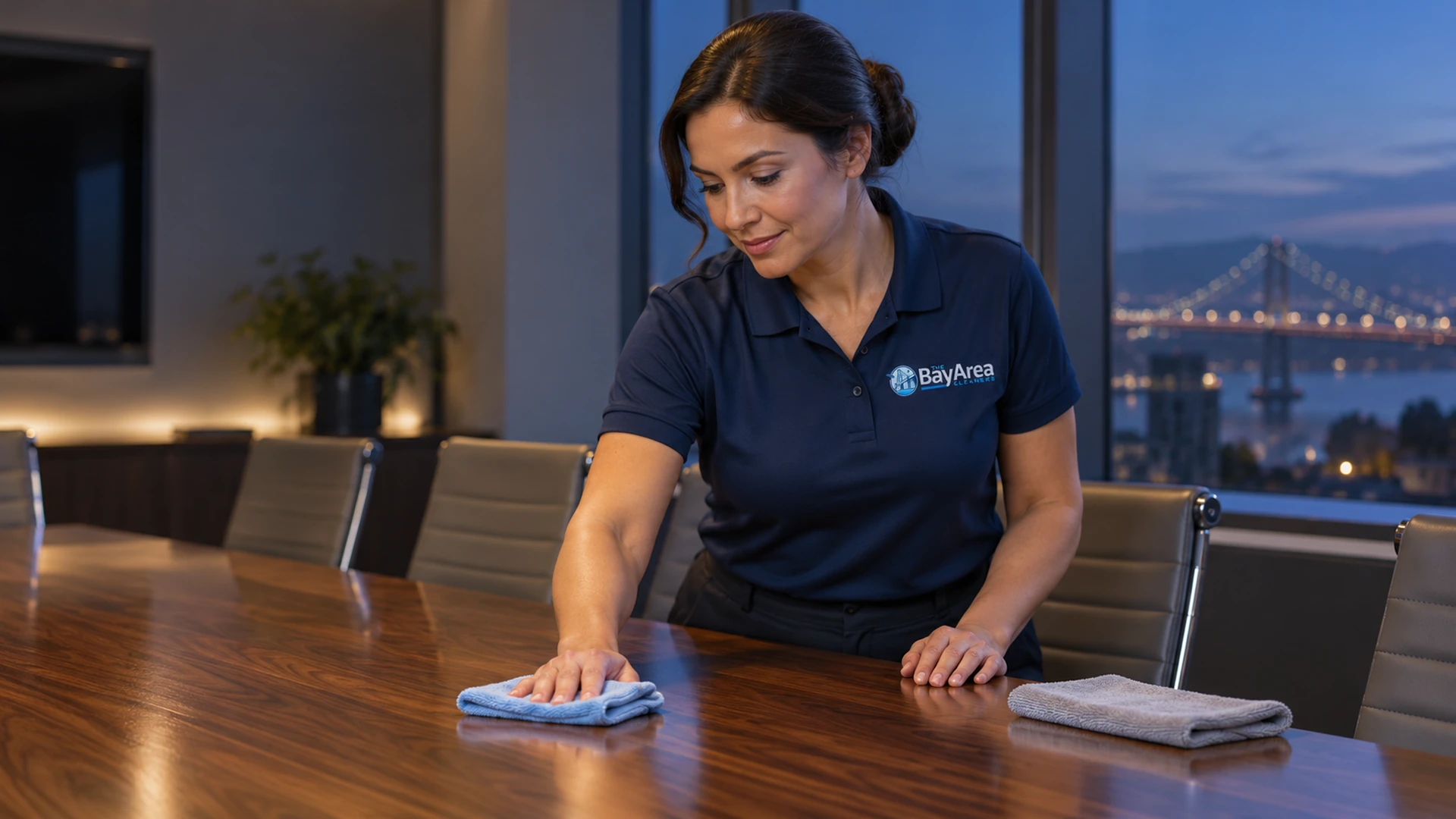
A predictable workload is a good reason to consider recurring janitorial services. Trash removal, routine restroom care, common-area wiping, and ordinary floor maintenance can often be organized into agreed visits. The facility manager can inspect completion against scoped tasks rather than expecting issues to disappear at all hours.
A recurring visit makes sense when areas need the same types of attention on a continuing basis and can wait until the assigned cleaning window. It is less suitable as the sole response for a reception lobby that becomes messy repeatedly during business hours.
Compare coverage by the problem it solves
| Service pattern | Primary operating need | What to clarify before contracting | Example decision |
| Recurring janitorial | Scheduled repeat tasks | Visit window, area list, restocking, exclusions | Restrooms and shared offices cleaned after closing |
| Day porter | Visible issues during occupancy | Coverage hours, response method, escalation | Busy entrance checked throughout the day |
| Periodic specialist | Material-specific or occasional work | Surface compatibility, preparation, access | Carpet extraction scheduled outside normal operations |
| One-time project | A defined exceptional event | Deliverables, deadline, handover criteria | Detailed cleanup before a reopening |
The table distinguishes types of commercial cleaning services by purpose, not guarantees. For example, frequent restroom restocking could be handled through scheduled porter rounds, building employees, or another assigned team. The responsibility must be explicit and reviewed whenever operating conditions change.
The Bay Area Cleaners publishes recurring janitorial services with daily, weekly, or customized schedules, plus stated services including restrooms, waste, floors, and common areas. They do not mean each activity is included without a site-specific agreement.
Written instructions should state the rooms served, frequency, permitted work hours, equipment restrictions, and the person authorized to approve changes. Specify what happens if a room is locked or occupied. A missed task caused by denied access should be recorded differently from a task omitted without explanation.
Managers comparing types of commercial cleaning services should test their recurring schedule against actual building use. If cleaning is repeatedly undone before the next visit, identify the cause before simply increasing frequency. The answer may be different coverage during active hours, better access, or a revised task assignment.
Takeaway: Use regular visits for predictable work, then document the tasks and exceptions that belong to each visit.
When Is Day Porter Coverage Better Than Scheduled Visits?
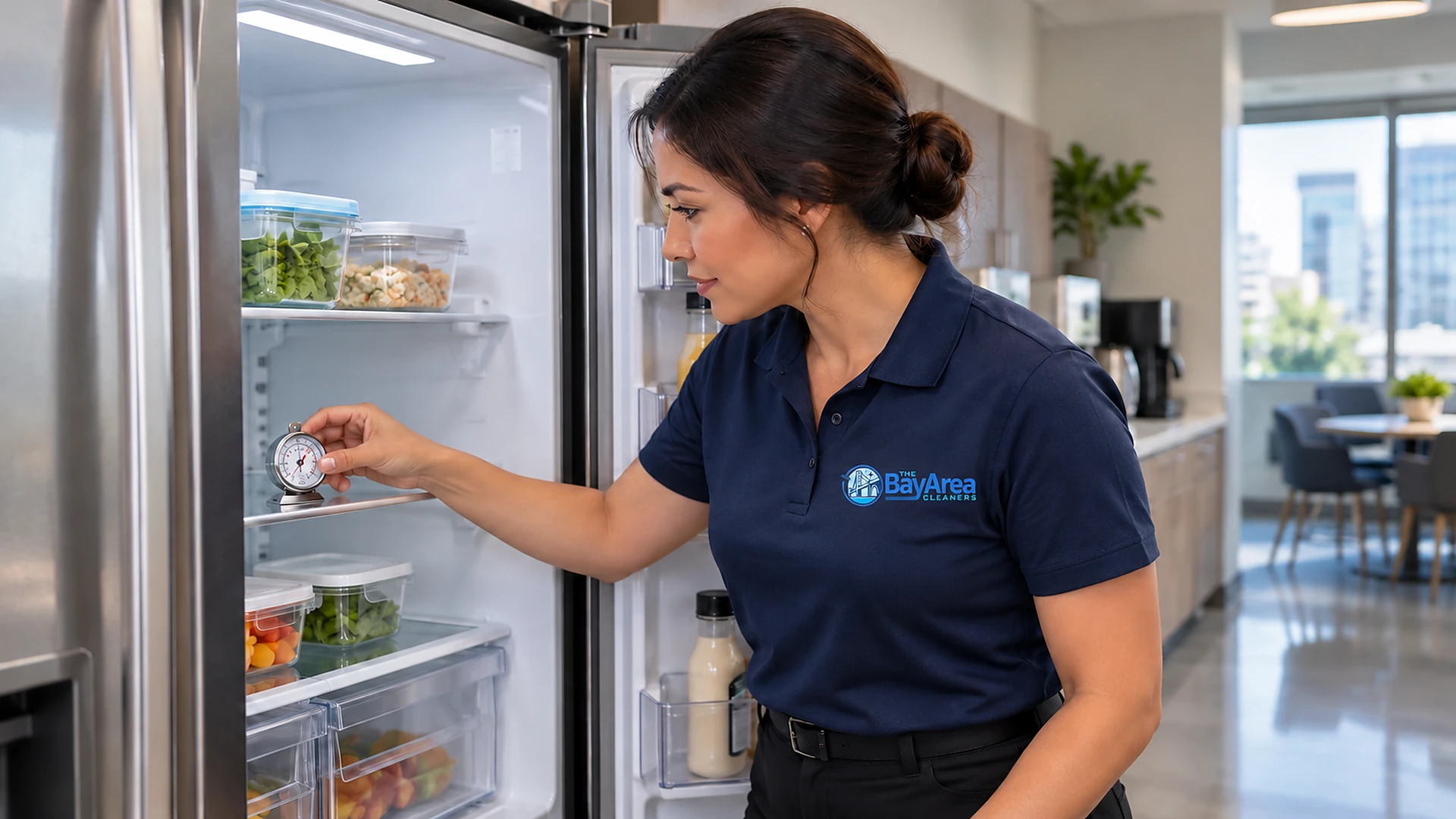
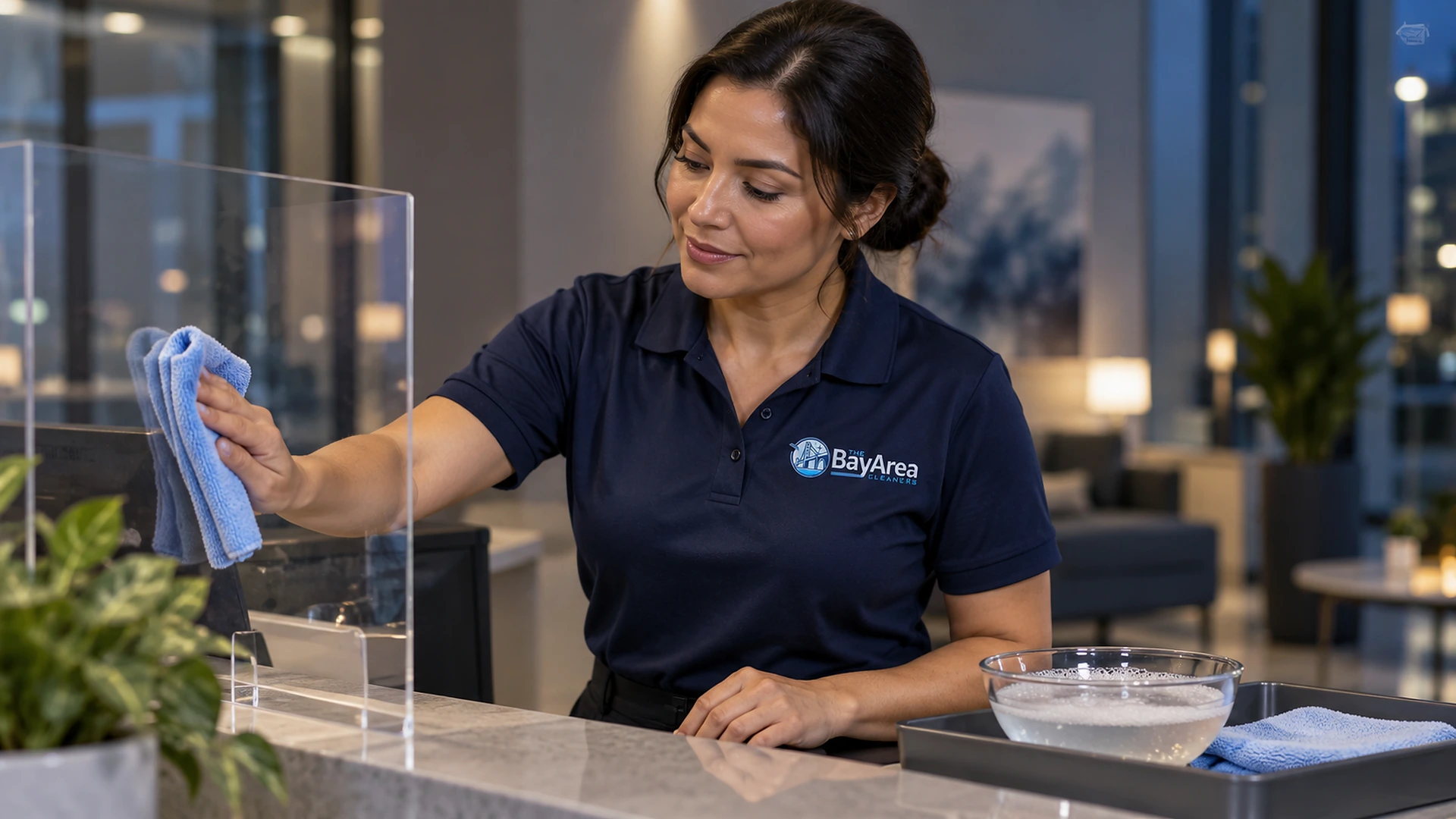
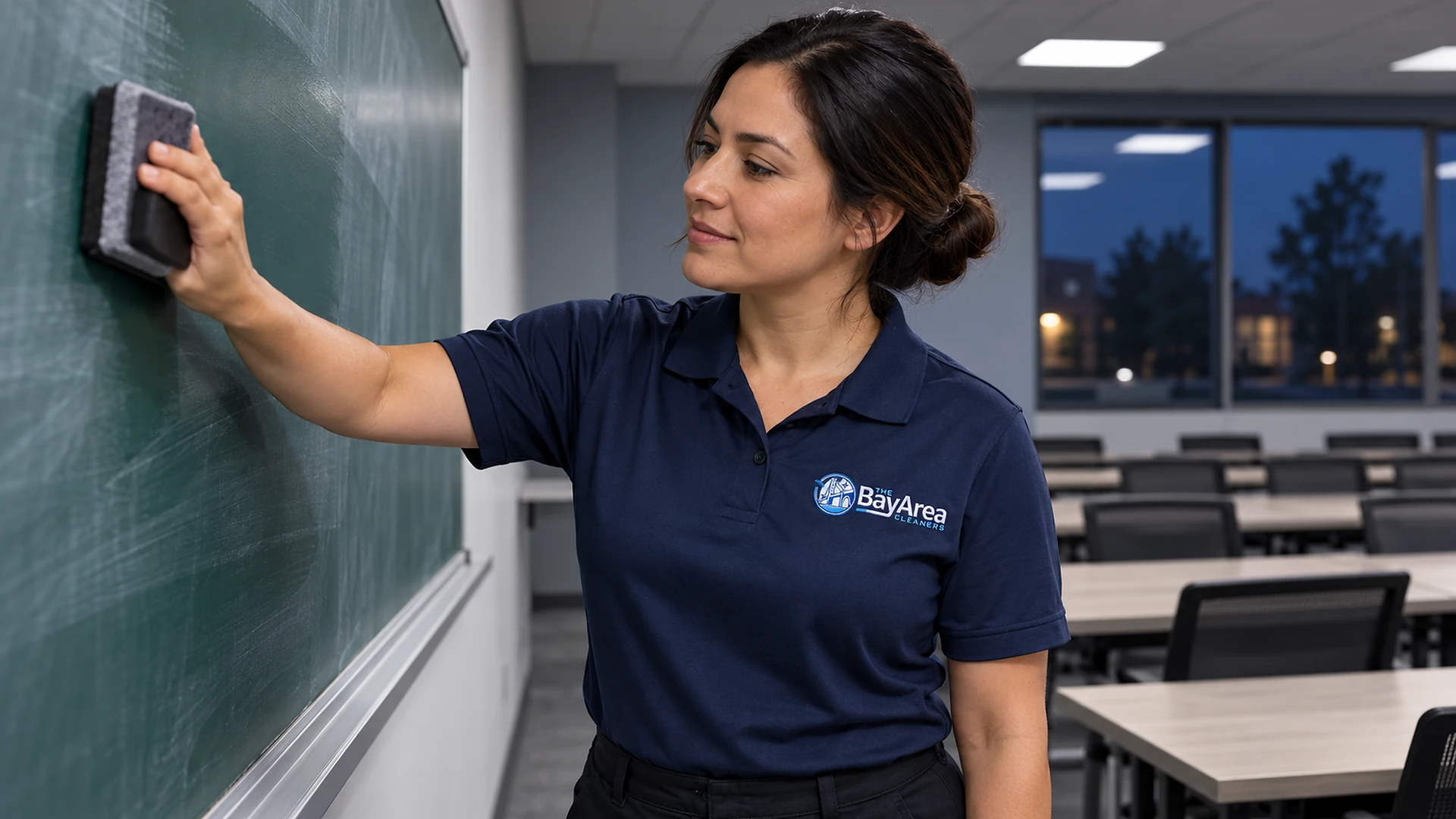
Day porter services address conditions that arise when employees and visitors occupy a building. Typical decisions concern lobby touch-ups, waste monitoring, meeting-room resets, restroom checks, and prompt reporting of spills.
A manager comparing types of commercial cleaning services may need both forms of coverage. A nightly crew may perform agreed cleaning after closing, and a porter may handle high-traffic areas during the day. The two teams need clear boundaries so the same duties are not purchased twice without a purpose.
Plan daytime coverage in practical steps
- Identify the hours when visible problems occur. Use observations from entrances, restrooms, reception, and meeting areas rather than assuming a full workday of coverage is necessary.
- Decide who receives reports. The assigned contact should know whether a spill, empty dispenser, or room-reset request goes to the porter, property staff, or another vendor.
- Define the response categories. Separate routine touch-ups from hazards, facility repairs, confidential-area issues, and work requiring specialized authorization.
- Coordinate access and communication. Tell the team which occupied rooms they can enter, where equipment may be stored, and how to record completed tasks.
- Review workload after launch. Look for repeated requests, unserved periods, and conflicts with the after-hours crew before changing the agreement.
In Contra Costa County, a hypothetical retail-facing office in Concord might schedule porter rounds around visitor peaks. A quieter administrative location in Pleasant Hill might handle small daytime issues internally and reserve professional work for the evening. These examples illustrate a choice, not TBAC customer cases.
The published day porter services page describes lobby care, restroom rounds, spill response, trash monitoring, and meeting-room resets. It describes part-time, full-time, and event-specific porter coverage. Ask for the exact coverage that applies to your building rather than inferring a guaranteed response time.
Different types of commercial cleaning services can overlap at the task level without duplicating value. A porter may remove fresh debris from an entryway, and an evening crew may perform the planned full-floor clean. Assigning both tasks explicitly prevents gaps in accountability.
Takeaway: Choose daytime coverage when a condition cannot reasonably wait for the next scheduled visit, and define its limits.
Which Projects Need One-Time or Specialized Cleaning?
Not all types of commercial cleaning services suit every surface or event. Heavy carpet soil, worn floor finish, renovation residue, and a large event can demand equipment, preparation, or staffing that differs from normal janitorial work. Treat those requests as separately evaluated projects, even when the same provider offers related services.
A commercial cleaning plan should identify project triggers without assuming a universal calendar. For example, a floor finish that shows wear may need assessment based on the material and manufacturer instructions. Increasing ordinary mopping cannot substitute for a material-specific treatment.
Match the project to the surface and timing
| Facility condition | Possible service category | Information needed first | Risk to avoid |
| Carpet retains visible soil | Periodic carpet care | Fiber type, approved method, access window | Applying an unsuitable cleaning method |
| Hard floor loses its finish | Specialized floor care | Floor material, existing coating, maintenance history | Treating every finish the same |
| Renovation leaves fine dust | Post-construction cleanup | Contractor handover, site hazards, occupied zones | Entering an uncleared active work area |
| Event leaves exceptional mess | Defined one-time cleaning | Room list, deadline, waste responsibility | Assuming extraordinary work is routine |
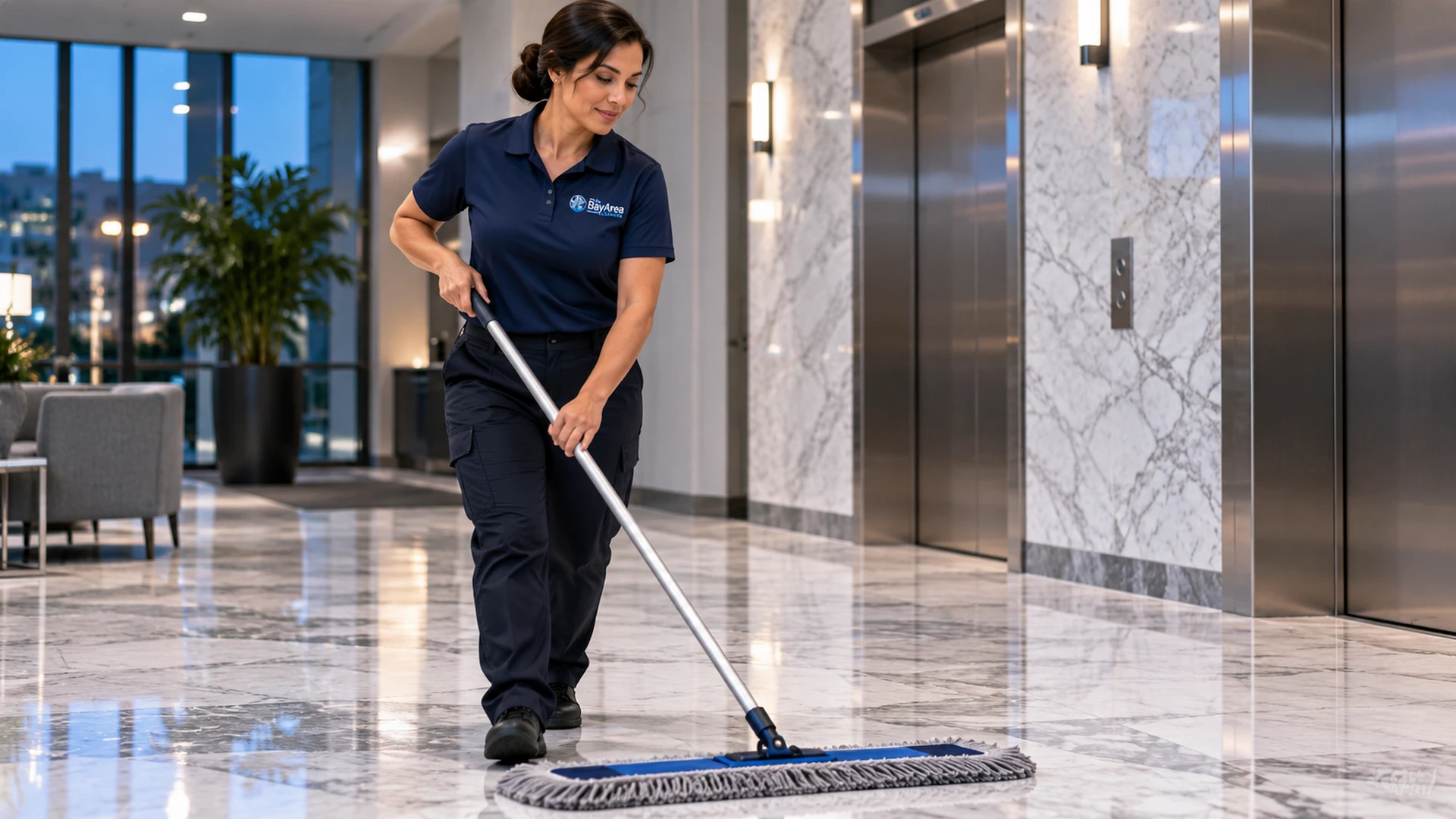
The Bay Area Cleaners describes commercial floor care, including carpet cleaning, hard-floor maintenance, and tile or grout work. It has a separate post-construction cleaning service page for staged cleaning after building work. Those pages support discussing the categories, not promising every listed technique at every site.
For these types of commercial cleaning services, check whether a project will require additional authorization, equipment access, curing or drying time, contractor coordination, or temporary closure of an area. Ask who confirms that the workspace is safe to release for cleaning. The cleaning contractor should not be assigned unrelated hazardous-waste or remediation work by implication.
Cleaning and disinfection deserve separate language. The CDC’s guidance on cleaning and disinfecting facilities explains that routine cleaning removes dirt and many germs, and disinfection may be considered under relevant conditions. The EPA’s explanation of pesticide labels establishes why product directions matter for disinfectants. A generic promise of complete germ elimination is not an appropriate service specification.
Among the types of commercial cleaning services available, special projects should have their own scope, acceptance conditions, and handover process.
Takeaway: Evaluate unusual soil, materials, and events as defined projects with clear boundaries, not automatic add-ons.
How Can Contra Costa Businesses Combine Cleaning Services?
Combining types of commercial cleaning services works only when assignments support the same goal without gaps. Start from the building’s use pattern. A professional office, a retail storefront, and an apartment building’s shared corridors can share some tasks, yet they demand different access arrangements and inspection priorities.
Compare facilities without assuming identical contracts
A professional office with meeting rooms may prioritize regular desk-area cleaning and reliable room resets. A retail-facing facility may place greater emphasis on entrances, visible floors, and daytime waste management. A multifamily property manager may focus on corridors, lobbies, elevators, and shared facilities, rather than the private homes of residents.
Consider these selection questions when assembling a commercial cleaning plan:
- Which areas receive visitors throughout the day, and who is accountable for their appearance between planned visits?
- Which ordinary tasks repeat on an agreed cycle, and what written evidence will show that they were completed?
- Which surfaces require special methods or coordination with another building contractor?
- Which staff members can authorize access, report concerns, and approve a change in cleaning coverage?
- Which tasks already belong to tenant teams, security, maintenance, or event vendors?
For a hypothetical Concord office and storefront operating in one building, managers could assign recurring janitorial services to after-hours waste removal and scheduled restroom cleaning. Day porter services might be added only for visitor-heavy periods. A separate floor assessment could determine whether periodic specialist work is justified. The example is a planning scenario, not a reported TBAC engagement.
Do not confuse the building’s location with the provider’s physical address. TBAC names Concord, Walnut Creek, and Pleasant Hill within its published Bay Area service coverage, but a service-area statement does not establish a local office in each community.
A sound comparison of types of commercial cleaning services looks at responsibility, timing, access, and expected deliverables. Price comparisons belong to actual written proposals using the same tasks and assumptions. No generic combination necessarily saves money or produces a particular business outcome.
Check whether communication, documentation, and site-specific differences can be handled clearly.
Takeaway: Combine coverage around observed facility needs and distinct responsibilities, not around the largest menu of services.
How Should Managers Build and Review a Commercial Cleaning Plan?
Managers can compare types of commercial cleaning services in a practical commercial cleaning plan. It should allow a replacement supervisor, office manager, or contractor to understand what must happen without relying on unwritten expectations. It is different from a sales brochure and does not replace a formal agreement.
Begin with the site map. Mark entrances, public areas, restrooms, shared rooms, storage points, restricted spaces, and surfaces that require special care. Record whether cleaning happens before opening, during occupancy, or after closing. Then assign one owner to each task and decide how completion will be checked.
Create a simple selection and escalation process
- Define the recurring tasks, their service window, and where staff should record a blocked or incomplete assignment.
- Describe the porter responsibilities separately, including what constitutes an ordinary request versus an issue requiring building management.
- Keep periodic floor work and exceptional projects under their own approval process, with relevant surface and access information.
- Select an inspection method that records a location, observed condition, responsible party, and follow-up decision.
- Review patterns of missed access, repeated complaints, and unnecessary overlapping assignments before requesting additional coverage.
The OSHA cleaning industry standards overview identifies occupational hazards addressed by applicable standards. Managers should distinguish worker-safety obligations and product instructions from an editorial checklist. Do not treat this article as a site-specific compliance assessment.
Across types of commercial cleaning services, a useful review examines concrete observations. Note whether agreed rooms were serviced, whether restocking responsibilities are clear, whether reported spills reached the correct contact, and whether periodic projects were coordinated before execution. Evidence should be dated and tied to the relevant location. Avoid scoring a provider on tasks that were never included.
You can use a short trial review after the initial visits, then revise the document when occupancy, operating hours, or building layout changes. The review interval should reflect the facility’s risk and service agreement, not an invented standard applying to every business.
Professional teams cannot solve an unclear assignment unless the decision rights and escalation path are equally clear.
For managers comparing types of commercial cleaning services in Contra Costa County, the next step is a practical walkthrough and written discussion of needs. Use the resulting scope to confirm who handles ordinary visits, active-hour requests, and exceptional projects.
Takeaway: Build one clear accountability map, then adjust the service mix using documented conditions rather than assumptions.
Frequently Asked Questions
What types of commercial cleaning services are best for a small office?
For a small office, start with the repeatable work that staff cannot reasonably handle between other duties. Recurring visits may cover agreed waste, restroom, shared-area, and floor tasks. Consider daytime support only if observed conditions require it. Review hours, access, exclusions, and surfaces before requesting a proposal. The appropriate mix depends on actual use.
How do recurring janitorial services differ from one-time cleaning?
Recurring janitorial services cover agreed tasks on an ongoing schedule. One-time cleaning addresses a defined event or condition with its own deliverables. A deep carpet treatment or unusually detailed cleanup may need separate approval even when regular janitorial work is already contracted. Ask the provider to identify which tasks belong to each arrangement.
Are day porter services necessary for every commercial building?
No. Day porter services are useful when visible issues develop during occupancy and cannot wait for the next planned visit. A quieter office may use employee reporting and scheduled cleaning instead. Evaluate traffic patterns, restroom demand, room turnover, and available management coverage before choosing hours or staffing. Availability and scope should be agreed in writing.
What belongs in a commercial cleaning plan?
A commercial cleaning plan should name the areas, duties, schedule, access rules, responsibility assignments, and inspection process. It should separate ordinary visits from daytime touch-ups and additional projects. Document who approves changes and how issues are reported. The plan supports operational coordination, but the signed agreement determines the provider’s actual contracted obligations.
Can routine cleaning replace specialized floor maintenance?
No. Ordinary vacuuming and mopping address routine soil, but some floor materials need periodic treatment based on their condition and care instructions. Carpet extraction, finish maintenance, and tile restoration can involve different methods and access requirements. Ask for a surface assessment before assuming either more frequent cleaning or a particular specialist procedure will solve the issue.
Conclusion
Choosing among types of commercial cleaning services starts with the conditions inside your building, not a fixed package. Recurring work helps with repeatable tasks. Daytime coverage addresses issues during use. Specialized projects need separate specifications. A clear written plan coordinates them without promising identical results across different facilities.
For offices and commercial facilities in Contra Costa County, compare the tasks, response windows, exclusions, and reporting arrangements before selecting a service mix. Request clarification wherever the proposed scope leaves responsibilities open.
The Bay Area Cleaners publishes commercial service options for the wider Bay Area, including communities in Contra Costa County. To discuss a site-specific proposal, contact the team at 707-656-9339 and describe the building’s operating hours, traffic, surfaces, and existing cleaning coverage. Ask which services are available for that location and which require separate approval.