An office tower empties at 7 p.m. A warehouse shuts down between shifts. An apartment building never does. People carry boxes through the lobby at midnight, drop laundry lint on a folding table at 6 a.m., and leave a pizza box beside a full chute on Sunday night.
That is the difference nobody prices correctly. An apartment building cleaning service is not an office program with the desks removed. The soil comes from residents living their lives, and it arrives on their schedule rather than yours.
So the useful question is not which rooms to clean. It is which resident behaviors generate the mess, when they happen, and what each one leaves behind. Five of them account for most of the workload in a multifamily building, and each one needs a different answer from an apartment building cleaning service.
Move Day Undoes a Month of Common-Area Work
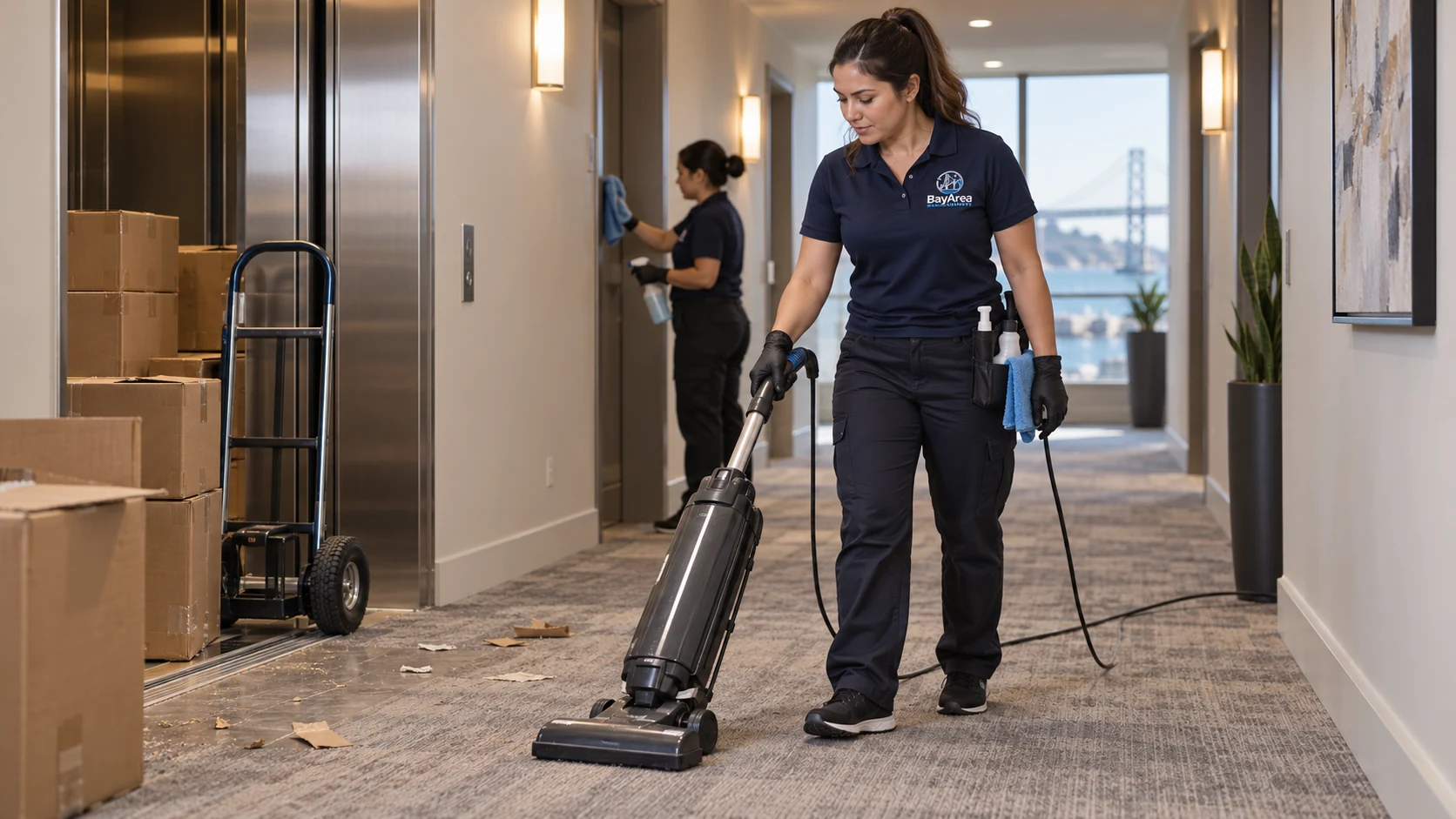
One resident moving out can generate more common-area soil than the previous three weeks combined. Corrugated dust, tape residue, dolly wheel marks, scratched elevator pads, and a hallway carpet holding whatever came off the bottom of a mattress.
An apartment building cleaning service built on a flat monthly schedule absorbs that hit invisibly. The crew arrives on its normal night, finds twice the work, and either runs over or leaves part of it. Neither outcome shows up in a report.
| What move day leaves | Where it lands | What it needs |
| Corrugated dust and tape residue | Elevator cab floor, hallway carpet, lobby entry | Vacuum pass plus spot treatment, not a dry sweep |
| Dolly and hand-truck marks | Corridor walls, elevator door jambs, baseboards | Wall spot cleaning, which most nightly routines skip |
| Propped-door grit | Lobby mats, entry tile, first ten feet of corridor | Mat lift and under-mat cleaning on the same day |
| Abandoned packing material | Trash room, chute room, loading area | A scheduled haul-out rather than a bin cram |
| Scuffed elevator pads | Cab walls behind the pads | Pad removal and cab detail once the move ends |
The fix is not more visits everywhere. It is a trigger. Leasing already knows the move calendar weeks ahead, so the cleaning schedule should read from it. A building with four move-outs in one week needs a different level of attention than the same building in a quiet February.
Ask whichever apartment building cleaning service you use whether it can add a triggered visit without a change order. The answer separates a vendor running a route from one running your building.
Elevator protection is the piece most buildings handle informally. Pads go up when someone remembers, come down when someone else needs the cab, and nobody owns the cleaning of the cab walls underneath them. Put pad installation, removal and post-move cab detailing on one list with one name against it. A scratched stainless panel costs more than a year of the cleaning that would have prevented it.
Loading and service entrances take the same hit and get even less attention. That doorway sees every mattress, every appliance and every dolly in the building, and it is usually the entrance no prospective resident tours. Left out of the apartment building cleaning service entirely, it becomes the source of the grit that reaches the lobby.
You may also like: Turnover Cleaning for Apartments: What It Covers, What It Costs in Vacancy Days
Keep the two budgets apart. Turnover work happens inside a vacant unit. Move-day work happens in the corridor outside it, and it belongs to the common-area program.
The Trash Room Sets Your Complaint Rate
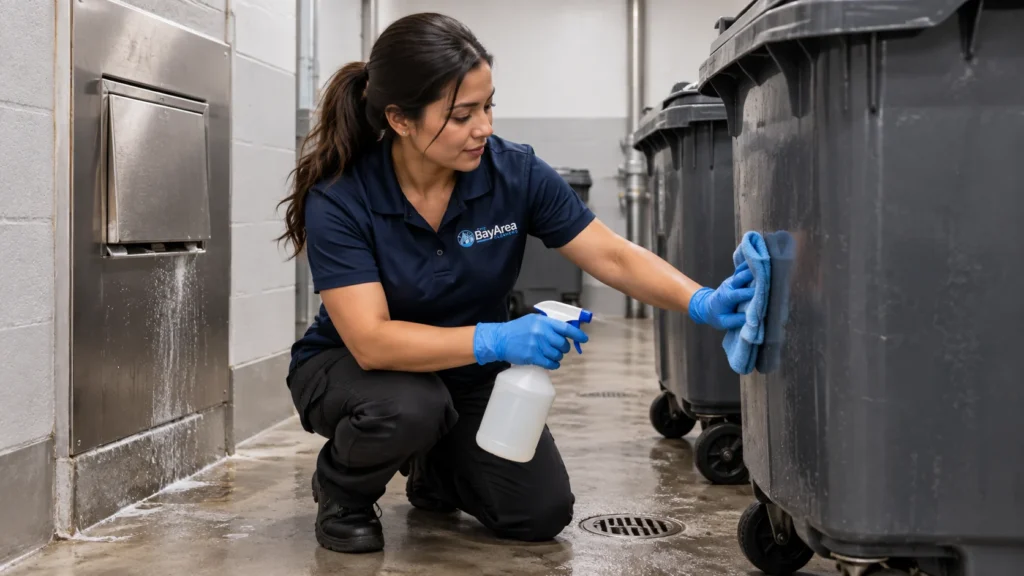
More resident complaints trace back to the trash room than to any other shared space, and almost none of them are about the room looking dirty. They are about odor in the corridor, a chute that jams, or an overflowing bin that makes the whole floor smell by Sunday evening.
The room fails for physical reasons that a wipe-down does not touch:
- Chute discharge splatter. Bags burst on landing. What hits the chute walls and the room ceiling stays there until someone degreases it.
- Bin exteriors and casters. Liquid pools under the bins and tracks into the corridor on wheels every time the bins move.
- The floor drain. Dry traps let sewer gas into the room, which residents read as a cleaning failure.
- Door hardware and sweeps. A door that does not seal exports the odor to the hallway on every use.
None of those are nightly tasks. They belong in the periodic tier of an apartment building cleaning service, as scheduled degreasing plus a maintenance coordination point. An apartment building cleaning service that only relines bins is treating the symptom, and the complaint volume stays where it was.
The practical move is to pair the cleaning schedule with a pickup schedule. A bin serviced twice a week in a building generating three weeks of volume cannot be cleaned into acceptability.
Recycling and organics make this harder rather than easier. Three streams in a room sized for one means bins sit in the corridor, and corridor bins leak onto corridor floors. Buildings that added streams without adding room square footage should expect the apartment building cleaning service to spend real time on the overflow, and should say so in the arrangement rather than discovering it in month three.
Summer changes the math again. Odor that is manageable in January becomes a daily complaint in August, and the frequency that worked all spring stops working in a week. Build the seasonal step-up in ahead of time. Reacting to the first heat wave means reacting after the complaints have already arrived.
Laundry Rooms Carry a Risk Nobody Budgets For
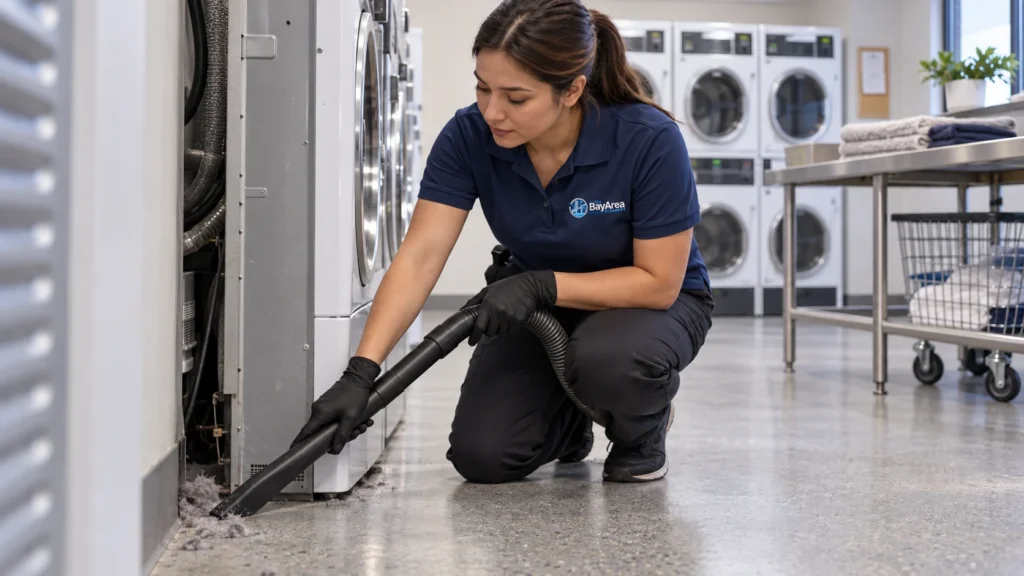
Shared laundry rooms get the thinnest line in most apartment building cleaning service agreements. Wipe the machine tops, sweep the floor, move on. The lint is the part that matters, and it is not a housekeeping detail.
The U.S. Fire Administration reports an estimated 2,900 clothes dryer fires in residential buildings each year, causing an estimated 5 deaths, 100 injuries and $35 million in property loss. Failure to clean was the leading factor contributing to ignition at 34 percent, and 83 percent of these fires started in laundry areas.
That reframes what the room needs. Lint removal from traps, machine backs, floor voids and the space behind the units is a recurring line item with a safety reason attached. Vent and duct servicing itself sits with maintenance or a specialty contractor rather than with an apartment building cleaning service, so name which party owns which part before either assumes the other has it.
The rest of the room follows normal traffic logic. Folding surfaces and machine controls get touched by every resident who uses the space, detergent spills dry into a film on the floor, and the door glass shows every hand that pushed it open.
You may also like: How to Clean Laminate Floors Without Warping the Seams
Laundry and corridor floors in multifamily buildings are often laminate or LVT, and both punish a wet mop. Water at the seams is what warps them, not foot traffic.
Package Volume Changed What a Mailroom Needs
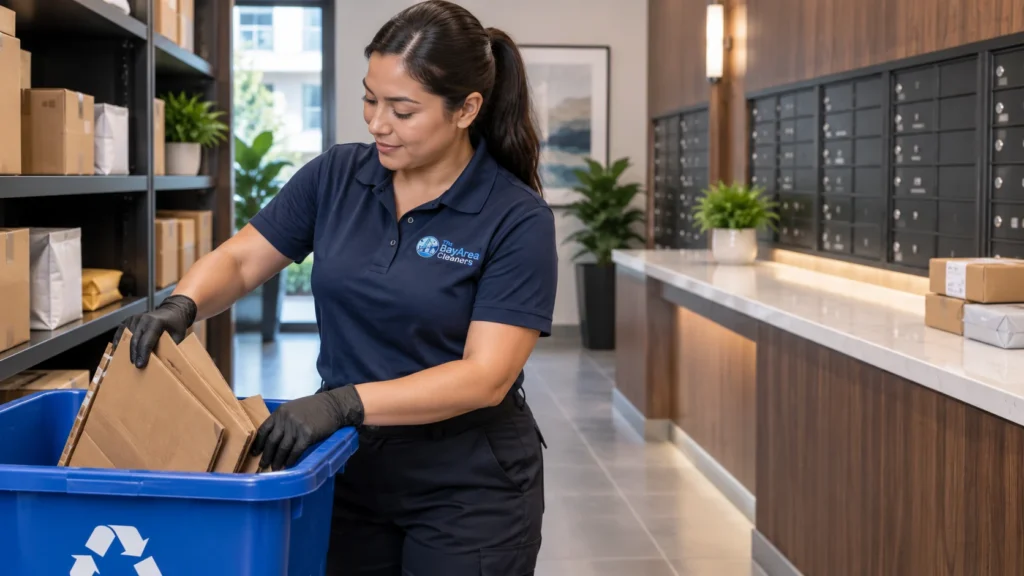
A mailroom designed in 2010 was built for envelopes. It now handles daily parcel volume that spills onto the floor, blocks the counter and turns a small room into a staging area.
That shift changes the cleaning problem in three ways:
- The floor is rarely clear. A crew cannot mop around fifty boxes, so the room gets a partial clean most visits and a full one almost never.
- Cardboard sheds constantly. Corrugated dust settles on counters, shelving and the mail bank itself, which reads as neglect even right after a visit.
- Abandoned packaging accumulates. Residents open boxes at the mail bank and leave the shell behind.
An apartment building cleaning service can only solve part of that. Add a recycling receptacle inside the room and a rule about how long parcels sit, and the cleaning task becomes possible again. Without it, you are paying a crew to clean a room they cannot reach the floor of.
A day porter model fits this room better than a night crew does, since the work that helps most is a midday pass that clears surfaces during the hours the room is in use.
You may also like: Day Porter Services: What They Are and When Your Building Needs One?
Amenity Spaces Run on Their Own Clock
Amenity rooms are where a common-area arrangement most often comes up short, since they were frequently added to the building after the cleaning agreement was written.
They do not behave like corridors. A fitness room is a sweat environment with equipment a general crew may not be trained to touch. A clubhouse sits empty for days and then hosts forty people on a Saturday night. A rooftop deck is an outdoor space that weather resets between visits.
- Fitness room. Equipment contact points, mirrors, mats and floor. Disinfection of grips and benches is the part residents watch for, and the part a generic apartment building cleaning service line item rarely names. Confirm which surfaces the crew is permitted to treat, since some equipment finishes are damaged by common disinfectants.
- Clubhouse and community room. Event-driven rather than scheduled. The kitchenette, the trash left behind and the floor after a party are a same-night job, not a next-Tuesday job.
- Rooftop and pool deck. Outdoor furniture, glass railings and deck surfaces, all reset by weather. Pool water itself is a licensed trade and sits outside the cleaning agreement.
- Pet relief and wash stations. Odor control and drainage, on the shortest cycle of anything in the building.
- Package lockers and bike rooms. Low frequency, but they hold grit and cardboard that migrates back into the corridor.
Decide up front whether amenities belong inside the base apartment common area cleaning program or sit on their own line. Both models work. What fails is leaving them unnamed, which is how a fitness room ends up cleaned once a week by whoever happens to be on site.
Event coverage deserves its own answer. A clubhouse booked on a Saturday needs a Sunday morning response, and most recurring schedules do not have one. Ask whether your apartment building cleaning service can cover a same-weekend call, and at what rate, before the first resident event rather than after.
Resident Damage or Building Wear: Who Pays for the Cleanup
The gray-area conversation in multifamily is not staff versus vendor. It is whether a given mess is ordinary wear the building absorbs or resident-caused damage that gets charged back.
| Situation | Usually building wear | Usually chargeable |
| Corridor carpet traffic lanes | Yes | No |
| Pet accident in a hallway | No | Yes, to the unit |
| Elevator pad scuffing during a move | No | Often, via the move deposit |
| Grease film in a chute room | Yes | No |
| Paint or construction debris from a resident project | No | Yes |
| Seasonal mud and grit at entrances | Yes | No |
Write that distinction down before the first incident, since the argument always happens under time pressure. The cleanup itself should never wait on the billing question, so let the apartment building cleaning service respond and settle the charge afterward.
Managers of HUD-assisted housing work inside a related framework already. The NSPIRE inspection standards group laundry rooms, corridors and stairs under the building’s inside common areas, separate from individual units, which is the same line the chargeback question turns on.
One annual review is enough. A new amenity room, a remodeled chute room, or a change between property management cleaning services quietly shifts who owns what, and the list goes stale without anyone noticing.
Setting Frequency From Resident Behavior Rather Than Floor Area
Square footage is a poor predictor in multifamily. A 200-square-foot mailroom with 180 units behind it needs more attention than 2,000 square feet of corridor on a floor with twelve doors. Contact volume is what sets the schedule.
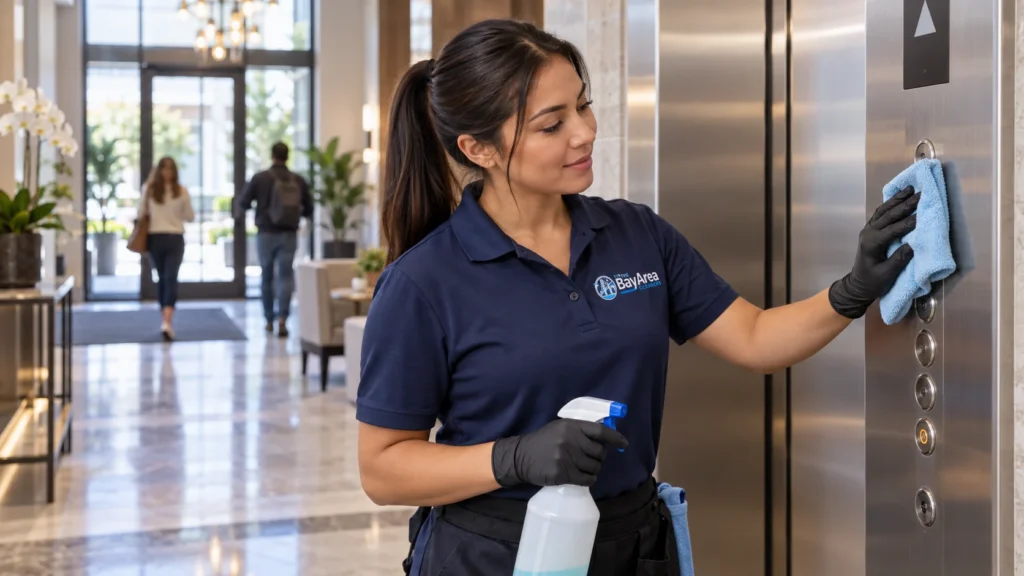
CDC guidance on shared facilities points the same direction. Clean high-touch surfaces such as door handles, stair rails and elevator buttons on a regular basis, and clean them more often when a space sees heavy use.
Three inputs set the apartment building cleaning service frequency for each shared space:
- How many residents pass through it daily. Entry doors and elevators are touched by everyone. A rooftop deck is not.
- Whether the soil is deposited or tracked. Deposited soil (lint, cardboard, trash) accumulates on its own clock. Tracked soil follows weather and traffic.
- Whether an event spikes it. Move days, holiday deliveries, a leasing push, storm weeks.
A property management cleaning service running several buildings should set these three per address rather than portfolio-wide, since two identical floor plans rarely carry the same resident density. The comparison between property management cleaning services gets easier once each proposal is answering the same three questions about your specific building.
A property management cleaning service quoting several addresses at once should still produce one schedule per building. Write the resulting schedule per space rather than per building. One line reading common areas as needed gives you nothing to hold anyone to, and nothing to compare when a second apartment building cleaning service quotes the same property.
Then leave it alone for a quarter before adjusting. Occupancy, season and turnover all move, and a schedule rewritten every month never produces enough history to show whether a space is improving or sliding.
Hallways, lobbies and elevators have their own detailed treatment worth reading separately rather than repeating here.
You may also like: Commercial Window Cleaning for Hallways & Common Areas in Multi-Tenant Buildings
Frequently Asked Questions
What does an apartment building cleaning service typically include?
Shared spaces only: lobby and entrances, corridors, elevators and stairwells, mailroom, laundry room and trash room. The useful framing is recurring attention on high-contact surfaces plus scheduled work on the rooms where soil accumulates on its own, such as the trash and laundry rooms. What sits inside an occupied or vacant unit is a different arrangement with a different price.
How is apartment building cleaning different from cleaning a single unit?
An occupied unit gets cleaned by whoever lives there. A vacant one gets cleaned between residents. Common areas need attention continuously, no matter who is moving in or out, and the soil arrives from hundreds of people rather than one household. That is why the two are quoted separately, and why one flat combined rate makes both harder to evaluate.
Does move-in season need a different schedule?
Yes, and it is the single adjustment that pays off fastest in a multifamily building. A week with several move-outs concentrates weeks of corridor and elevator wear into a few days. Build a triggered visit into the arrangement, tied to the leasing calendar, instead of asking the regular crew to absorb it inside its normal hours.
What should property managers compare across property management cleaning services for multiple buildings?
Consistency per address first. Ask whether the same property management cleaning service holds the same standard at the property that gets the least attention, not the flagship one. Then compare how each handles a spike week, insurance carried per site, and who answers when something is missed. A provider that performs well at one building and cannot repeat it across a portfolio creates work rather than removing it.
Who cleans an apartment amenity room, the cleaning crew or on-site staff?
It depends on how the agreement was written, and in a surprising number of buildings it was never written at all. Fitness rooms, clubhouses and rooftop decks were often added after the original arrangement, so they sit outside it by default. Name each amenity space and assign it, including who covers a weekend event. Leaving it to whoever is on site produces uneven results and a recurring source of resident complaints.
Conclusion
An apartment building cleaning service works when it is built around what residents actually do, rather than around a room list. That holds whether you run one property or compare property management cleaning services across a portfolio. Move days concentrate the damage. The trash room generates the complaints. The laundry room carries a risk with a fire statistic attached. The mailroom has a volume problem that cleaning alone cannot solve.
Set frequency from contact and events instead of floor area, decide the chargeback line before an incident forces it, and review the arrangement once a year. Then check what your own building’s occupancy, amenity mix and turnover rate call for, since those set the load that any apartment building cleaning service has to carry.