
You wipe down the shower, turn around, and the dark speckling is back along the grout and the corner of the caulk. In a damp bathroom that rarely dries out, that fuzzy black line returns fast.
Here is the part most people get wrong. They grab a dry brush, scrub hard, and send mold spores flying around the room. Knowing how to clean shower mold the right way is less about force and more about method: dampen the surface first, match the cleaner to the surface, wipe gently, and dry everything when you finish. With more than two decades cleaning bathrooms across the Bay Area, we have watched which habits clear the mold and which ones just move it around.
The quick version: open a window and run the fan, put on gloves and eye protection, dampen the mold with a cleaner (soap and water handles most surfaces), let it sit, then wipe gently with the surface still wet so the spores stay on the cloth instead of going airborne. Rinse, dry every surface, and fix whatever keeps it wet. The EPA is direct that controlling moisture is what controls mold, so cleaning is only half the job.
Why mold keeps growing in your shower
Mold needs three things: moisture, something to feed on, and time. A shower gives it all three — warm water, lingering steam, soap scum and skin cells on the tile, and a room that often has no window or weak airflow.
Grout, caulk, and silicone sit at the top of the trouble list. They are slightly porous and hold water in their tiny gaps long after you leave. That damp film is what mold settles into first, which is why the black line shows up along seams and corners before anywhere else.
Damp coastal months make it worse. A bathroom that stays humid for hours after each shower gives mold a steady foothold, and mild weather that never fully dries a room does the rest.
Takeaway: if your shower stays wet for hours after use, you are fighting the conditions that feed mold, not just a stain.
What to check before you start
A quick look tells you whether this is a surface job or something bigger.
- How much there is. The EPA notes that for a moldy patch under about 10 square feet — roughly a 3-by-3-foot area — you can handle it yourself in most cases. Past that, or after heavy water damage, bring in a pro.
- The surface. Tile and glass are non-porous and clean up well. Grout, caulk, and natural stone are porous and need more care. Caulk that is stained through may need replacing instead of scrubbing.
- A musty smell with no visible mold. That can point to mold growing out of sight, behind tile or under the pan. The EPA suggests considering a professional when a space smells moldy but you cannot find the source.
- Spots that keep returning. Mold that comes back in the same place usually means a leak or condensation is feeding it from behind.
Takeaway: the size and surface decide your method, and a musty smell with no source is your cue to look deeper.
How to clean shower mold without spreading spores
This part protects both your bathroom and your lungs. Dry mold flakes into the air the moment you disturb it, so the whole method keeps the surface wet and the spores contained. It is the same method behind how to clean mold without spreading spores anywhere else in the room.
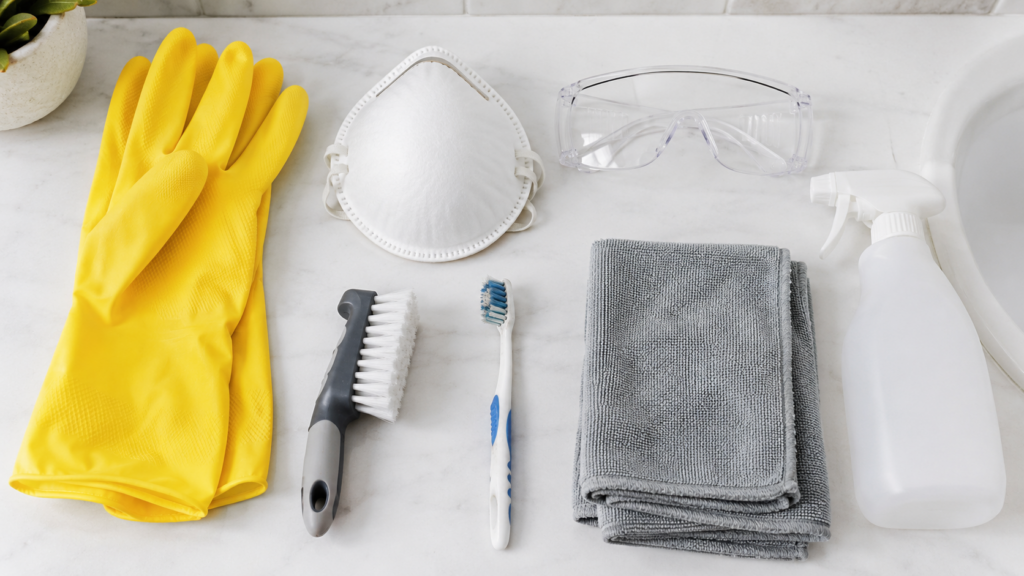
Gather first: rubber gloves, eye protection, a spray bottle, your cleaner, a soft brush or old toothbrush, microfiber cloths or paper towels, and a trash bag.
1. Open up and clear the area
Open the window and run the exhaust fan. A small fan moving air toward the window helps if the bathroom is closed in. Take towels, mats, and toiletries out so they do not catch spores, and keep children and pets out until you finish and everything is dry.
2. Put on your gear
Wear gloves and goggles before you touch anything. To limit what you breathe in, the EPA notes you may want to wear an N-95 respirator too. For plain soap and water, ordinary household rubber gloves are fine.
3. Dampen, don’t dry-brush
Spray the moldy area until it is damp, not dripping. Wetting the spores keeps them stuck to the surface instead of puffing into the air. Never sand, scrape, or dry-brush mold — that single habit is what scatters it across the room.
4. Let it sit
Give the cleaner a few minutes to work. Most mold cleaners need contact time to break the mold down, so hold off on scrubbing right away.
5. Wipe gently, surface still wet
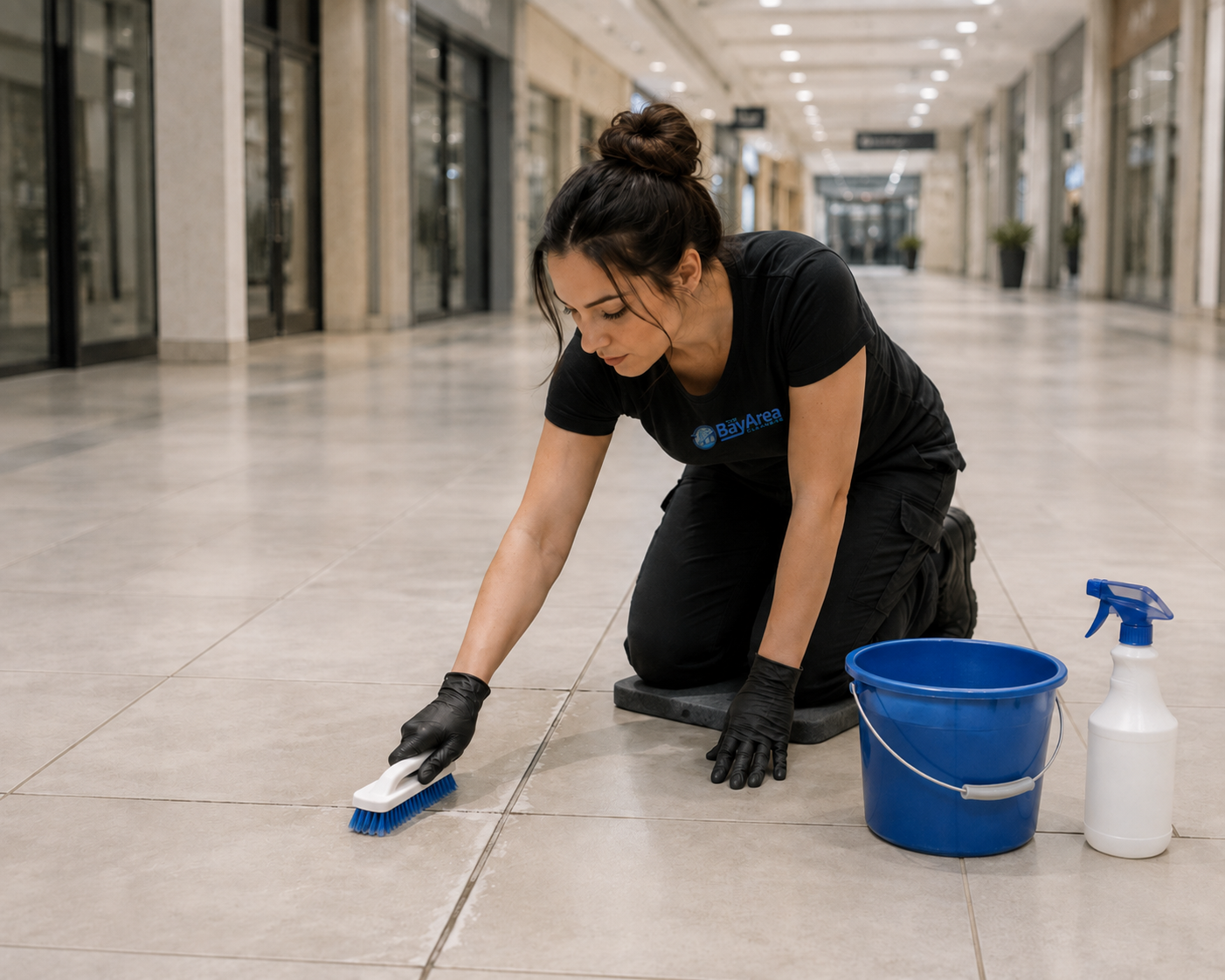
Work a soft brush over grout lines and seams, then wipe with a damp cloth. Keep the surface wet the whole time, and fold the cloth to a clean side often as you go.
6. Rinse and dry all the way
Rinse with clean water, then dry every surface with a fresh cloth or a squeegee. Drop used wipes into the trash bag rather than shaking them out in the room, and seal it before you toss it. Drying is the step people skip, and it decides whether the mold returns.
Takeaway: wet surface, gentle motion, full dry. That sequence removes mold instead of redistributing it.
How to clean mold from tile, glass, grout, and caulk

The best way to clean mold in shower surfaces depends on what you are cleaning. Soap and water with thorough drying is the workhorse the EPA points to for hard surfaces. Match the rest to the material.
| Surface | What works | Watch out for |
| Ceramic or porcelain tile | Soap and water, soft brush, dry after | Hard scrubbing pads can scratch the glaze |
| Glass doors | Mild cleaner, then squeegee dry | Mineral spots are not mold; check coatings before using acids |
| Grout | Dwell time, soft brush; peroxide on stains (spot-test first) | Acidic cleaners and wire brushes wear grout down |
| Caulk and silicone | Surface clean first; replace if stained through | Mold in the gaps rarely wipes out for good |
| Natural stone (marble, travertine) | pH-neutral stone cleaner only | Vinegar, peroxide, and bleach can stain or dull it |
Tile and glass are the easy wins. A non-porous surface holds mold on top, so a mild cleaner and a soft brush lift it off. On glass doors, wipe, rinse, and squeegee dry so water spots and new mold both have nothing to grab. Working out how to clean mold in shower corners takes the same care as the open tile.
Grout is porous and stains easily, so how to clean mold from shower grout comes down to dwell time, not force. Some people use 3% hydrogen peroxide on stained grout — let it sit, then brush softly. It can lighten colored grout and some finishes, so test a hidden spot first and follow the surface maker’s guidance.
Caulk and silicone are where surface cleaning hits its limit. Mold can grow into the gaps of porous material, which the EPA notes can make it hard or impossible to remove fully. When a wipe only fades a blackened bead, the fix is to cut out the old caulk and reseal.
Takeaway: match the cleaner to the surface, and accept that some caulk is past cleaning and ready to replace.
Cleaning products you should never mix
This is the safety line that matters most. Some product combinations create poisonous gas.
- Never mix bleach with ammonia or other cleaners. The CDC warns this produces a poisonous gas. Many glass and multi-surface sprays contain ammonia, and acids like vinegar are just as risky to combine with bleach.
- Use one product at a time. Rinse the surface between products, and never blend cleaners in one bottle hoping for a stronger result.
On bleach itself: it is not the universal answer many people assume. The EPA does not recommend routine bleach use for mold cleanup, and the aim is to remove the mold and fix the moisture, not just lighten it — dead mold can still trigger reactions, so it has to come off the surface. For most shower surfaces, soap and water with full drying does the job. If you do reach for bleach, the CDC advises a dilute solution, good airflow, and following the label, kept well away from any other cleaner.
Takeaway: one product, good airflow, label instructions. Mixing to “boost” cleaning power is how people end up in the ER.
Methods that can damage your shower
Good intentions wreck a lot of surfaces. Skip these.
- Acidic cleaners on stone and grout. Vinegar and acid-based removers can etch marble or travertine and wear grout over time. Use a pH-neutral cleaner on stone, and check the surface maker’s guidance before you spray.
- Wire brushes and rough pads. They scratch tile glaze and glass and chew up grout lines, leaving more pores for mold to settle into.
- Painting or caulking over mold. Covering mold does not kill it. The EPA says to clean and dry a moldy surface before painting, since paint over mold tends to peel and the mold keeps growing underneath.
- Ignoring the instructions. Stone, glass coatings, and some acrylic surrounds have their own rules. Follow the surface maker’s guidance next to the product label.
Takeaway: gentler tools and the right pH protect the surfaces you are trying to save.
How to dry and prevent shower mold
Drying is prevention you do every day. The EPA’s own bathroom tip is plain: in a space that stays damp, more ventilation and more frequent cleaning will usually keep mold from coming back, or at least hold it down.
- Squeegee the glass and tile after every shower. It takes under a minute and clears most of the water mold needs.
- Run the exhaust fan during the shower and for 20 to 30 minutes after, or open a window. The CDC recommends bathroom fans that vent to the outside and keeping indoor humidity under 50 percent.
- Hang towels and mats to dry outside the enclosure, and leave the shower door or curtain open between uses so air moves through.
- Fix leaks fast, reseal worn grout, and replace tired caulk before the black lines settle in. Renting? Report leaks and moisture problems to your landlord or building manager right away.
You may also like: How to Clean a Mattress & Remove Every Stain
Takeaway: target the moisture. Mold cannot grow on a surface that dries out, and the squeegee is the cheapest tool you own.
When cleaning isn’t enough: signs to call a pro
Some jobs need more than a sponge and a Saturday. Reach out to a qualified mold or moisture professional when:
- The mold covers more than about 10 square feet, or there has been heavy water damage — the EPA’s cue to move past DIY.
- It keeps returning in the same spot, which points to a hidden leak you cannot see.
- You smell mold but cannot find it, which can mean growth behind walls, under the pan, or in the subfloor.
- The damage involved sewage or other contaminated water, or your HVAC system may be affected — both call for a specialist, per the EPA.
- Someone at home has asthma, a weakened immune system, or chronic lung issues. The CDC notes these groups can react more strongly, so the EPA advises checking with a health professional before starting cleanup.
Routine surface cleaning and professional mold remediation are two different jobs. Wiping mold off tile is housekeeping. Finding and fixing the moisture source, and removing mold that has spread into building materials, is remediation work for a specialist. Mold that keeps coming back almost always means there is a water problem to solve, not just a stain to scrub.
Takeaway: size, smell, recurrence, contaminated water, and health are your signals to bring in help.
Cleaning shower mold comes down to a simple loop: catch it early, clean it gently without spreading spores, dry the shower every day, and fix whatever keeps it wet. Do that, and the black line along your grout stops being a weekly fight.
At The Bay Area Cleaners, we have kept bathrooms and homes across the Bay Area clean for more than two decades. Our bathroom cleaning keeps showers fresh and tackles surface mold and mildew between deep cleans — and when a moisture problem needs a remediation specialist, we will tell you straight. Call 707-656-9339 or request a free estimate, and take the bathroom off your list.
Frequently Asked Questions
What is the best thing to clean shower mold?
No single product wins on every surface. Soap and water with thorough drying handles tile and glass. Some people use hydrogen peroxide on stained grout. Match the cleaner to the surface, then dry everything fully.
Does vinegar or bleach work better on shower mold?
Both have limits. The EPA does not recommend routine bleach use, and the aim is to remove mold, not just lighten it. Vinegar can damage grout and stone. For most showers, soap and water with full drying is safer.
How do you clean mold without spreading spores?
Dampen the mold so it stays wet, never dry-brush it, and wipe gently with the surface still wet so spores cling to the cloth. Open a window, wear gloves and an N-95, and bag used wipes instead of rinsing them.
Is shower mold dangerous?
Any mold can irritate the eyes, skin, nose, and lungs, and the CDC notes people with asthma, allergies, or a weakened immune system may react more strongly. You do not need to identify the type — remove it and fix the moisture.
Why does mold keep coming back in my shower?
Returning mold means moisture stays behind after cleaning, often from a leak, weak ventilation, or failing caulk. The EPA is clear that if you do not fix the water problem, the mold most likely comes back.
Can I just paint or re-caulk over shower mold?
No. Covering mold lets it keep growing underneath, and the EPA says to clean and dry the surface before painting. If the caulk is stained through, cut it out and apply a fresh bead.