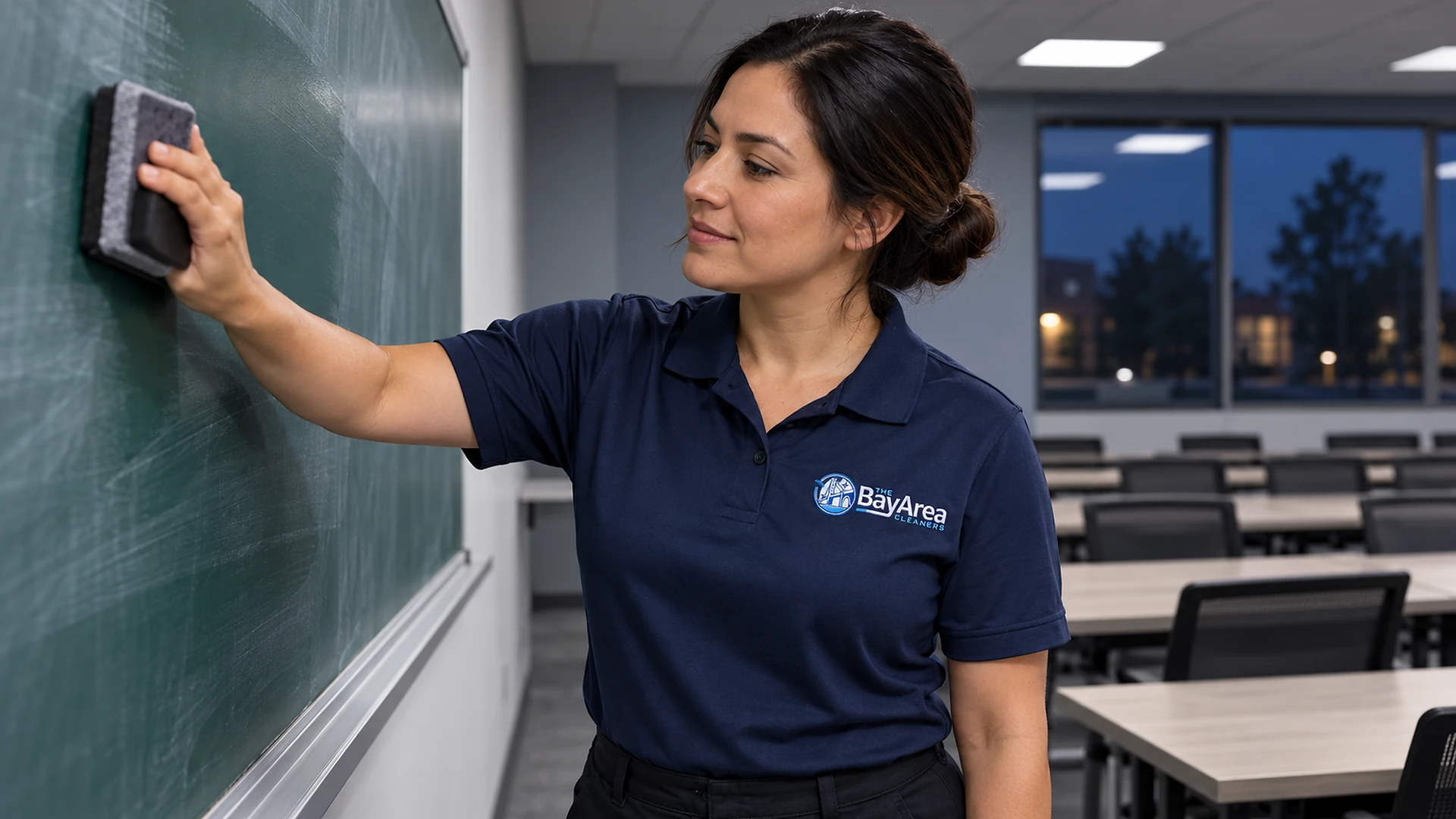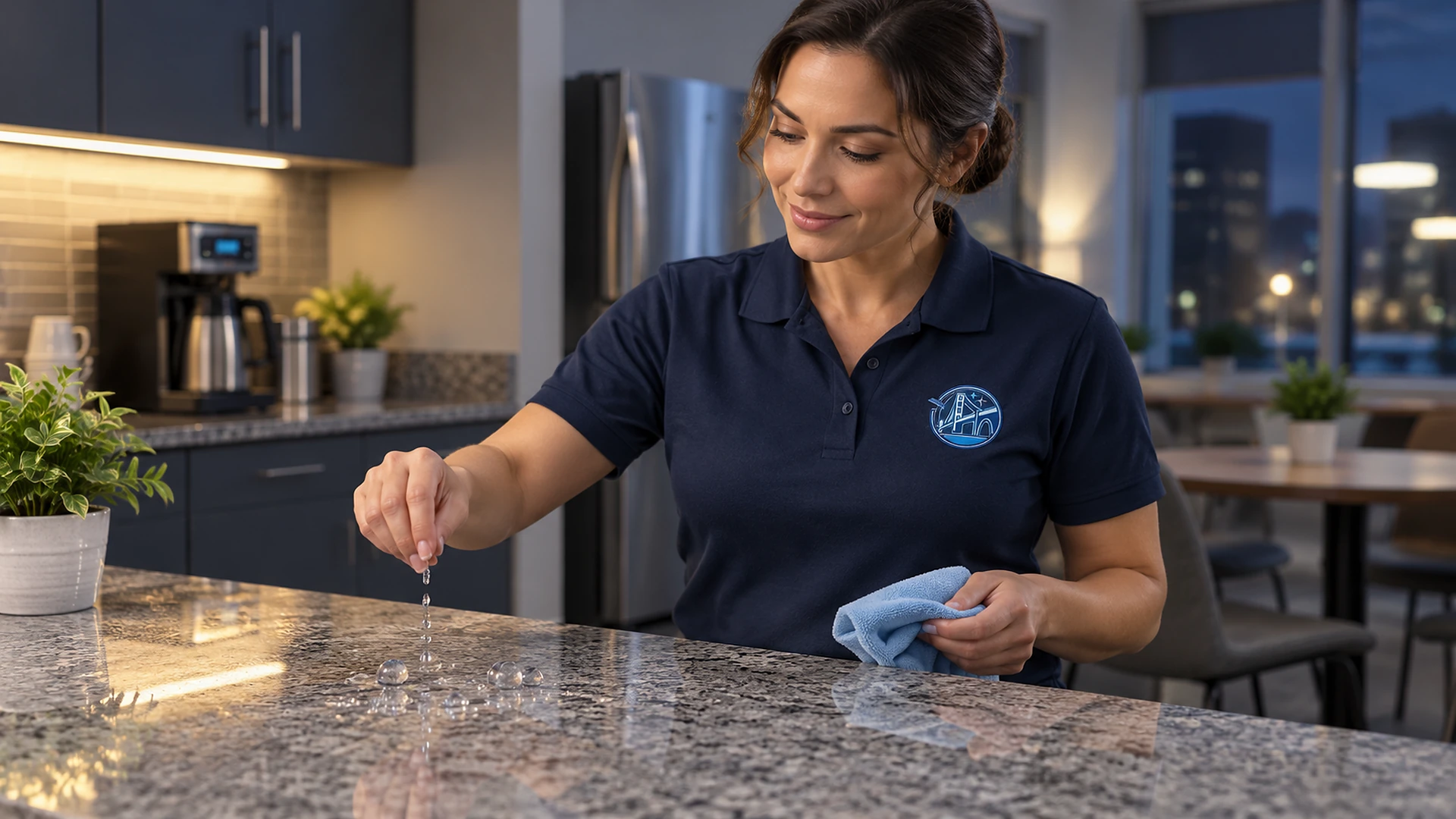

An office manager arrives before the first meeting and notices fingerprints on the conference table, overflowing bins near the printers, and dust on shared desks. None of these problems proves that employees are performing worse. Each one can interrupt a normal workday, however, when staff must clear a space, find supplies, or report an overlooked task. The link between a clean office and productivity is best treated as an operational question rather than a promise of higher output. This guide explains which conditions deserve attention, how to set an office cleaning routine, and what managers can measure without making unsupported claims.
The quick version: A clean office provides usable work areas, reliable shared facilities, and fewer avoidable housekeeping interruptions. Cleaning can help people concentrate by removing visible distractions and keeping frequently used areas ready for work. It cannot fix workload, noise, ventilation, poor management, or every source of illness. The best approach is to identify recurring problems, set task-specific cleaning expectations, and inspect results. For Bay Area workplaces, start with desks, meeting rooms, breakrooms, restrooms, entrances, and circulation routes.
Why Does a Clean Office Matter for Focus?
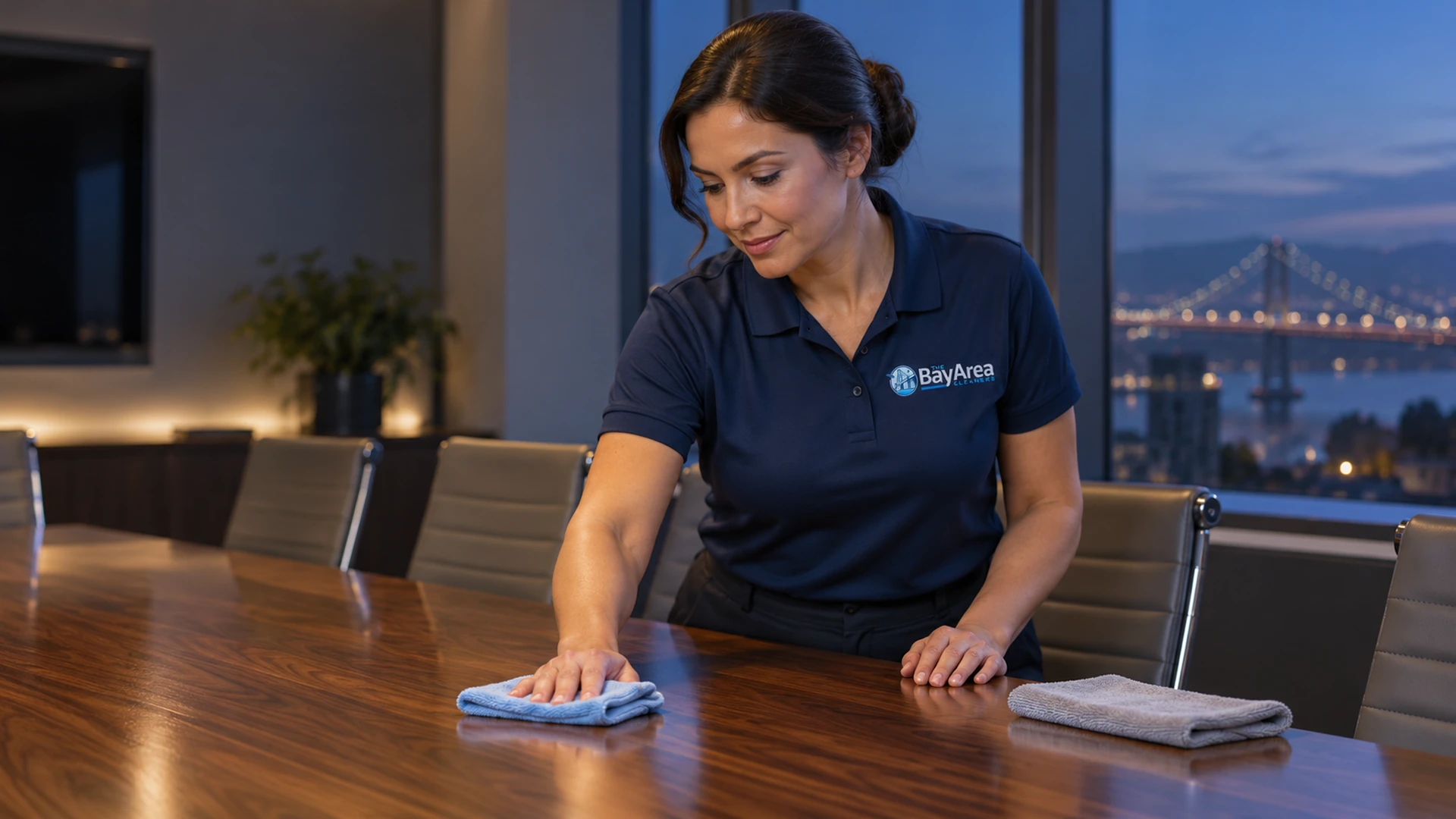
A clean office matters for focus when it makes routine work easier to start and continue. An available conference table, clean workspace, or orderly shared area removes small barriers that otherwise demand attention. That is a practical mechanism, not proof of a universal productivity gain.
Consider a hypothetical team preparing a morning presentation. Before discussing the agenda, someone has to wipe a sticky table, move yesterday’s cups, and locate a working waste bin. Each task may be minor, yet the meeting begins with work unrelated to the presentation. A reliable cleaning schedule reduces the chance of the same avoidable interruption happening repeatedly.
Look for friction, not a perfect appearance
The useful question is whether the office is ready for its intended daily activity and purpose. A polished lobby may look impressive without addressing the workstation, restroom, or breakroom complaints that people report during the day. Workplace cleanliness should support normal operations before it becomes a purely visual standard.
Signs that the environment is creating avoidable work include:
- Employees clear abandoned items from conference tables before meetings can begin.
- Shared counters remain sticky or visibly soiled after the expected cleaning visit.
- Bins fill before the next collection, leaving packaging on floors or work surfaces.
- Dust returns quickly to desks near doors, vents, or frequently traveled corridors.
- Restroom supplies run out even when the room appears recently cleaned.
Keep the limits clear
A clean workspace may feel easier to use, yet concentration depends on many factors outside janitorial work. Noise, lighting, temperature, task design, interruptions, and employee choice can affect attention. Cleaning is one manageable input within the wider office environment.
Takeaway: Identify the housekeeping problems that interrupt actual work. Prioritize repeat issues in shared spaces, and evaluate cleaning through usability rather than assumed productivity percentages.
Which Office Conditions Interrupt Work Most Often?
The most disruptive cleaning problems tend to occur where multiple people share surfaces, equipment, or access routes. Managers can rank these issues by frequency, visibility, and the amount of follow-up they create rather than treating every room as equally urgent.
A clean office environment does not mean that every surface needs identical treatment. Restrooms need hygiene checks and replenishment. Meeting rooms need a reset between uses. Private offices may need careful dusting that does not disturb papers or devices. A single checklist applied without these distinctions can miss the work that matters.
The table answers a practical question: which recurring condition should the manager address first?
| Observed condition | Possible work interruption | Practical response |
| Sticky shared table | Staff clean before using the room | Specify tabletop and touchpoint cleaning |
| Full waste bins | Staff handle waste or report overflow | Match collection to actual usage |
| Dust on work surfaces | Occupants wipe before beginning tasks | Check dusting scope and recurring sources |
| Missing restroom supplies | Visitors or staff report shortages | Add supply checks and named responsibility |
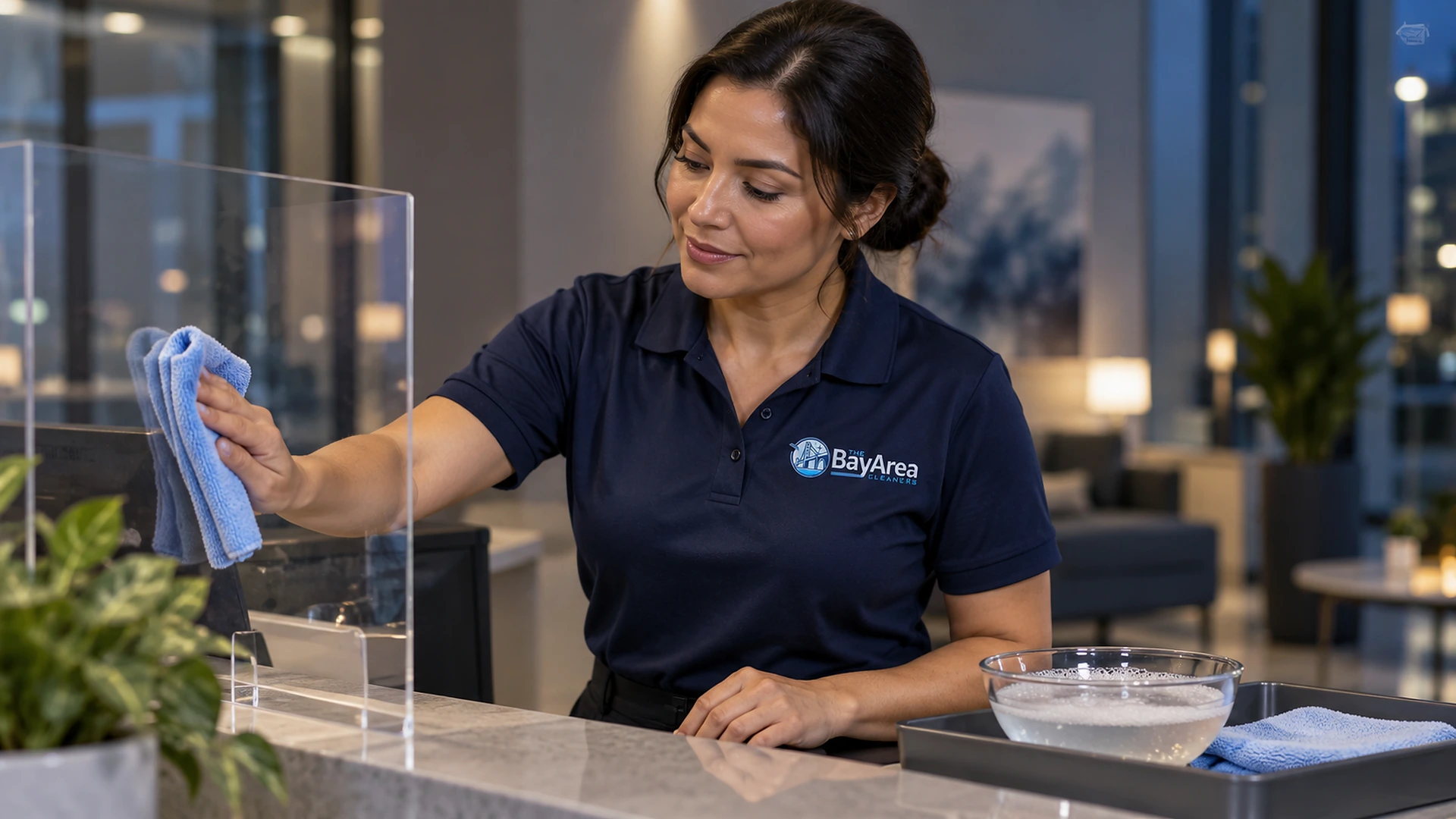
| Dirty entrance glass or floor | Reception staff arrange repeat work | Review entry-zone frequency and weather exposure |
This table is a prioritization tool, not a scientific ranking of distractions or productivity losses. A small meeting room used continuously may require more attention than a large room used twice a week. Observe actual traffic before increasing every task on the contract.
Separate cleaning problems from building problems
Visible dust does not always originate from poor wiping. Entry mats, outdoor conditions, ceiling ledges, filters, or nearby construction can contribute. The U.S. Environmental Protection Agency explains that office indoor air quality depends on pollutant sources, ventilation, moisture, and building operation, not a cleaning visit alone. See the EPA office indoor air quality guide.
When dust returns unusually quickly, inspect the source instead of ordering another identical wipe-down. For overhead accumulation and its relation to lower surfaces, see our related article, High Dusting: Why Your Clean Floors Do Not Stay Clean.
Takeaway: Classify each complaint as a missed task, a scheduling issue, or a possible building condition. Change the relevant process before adding cleaning everywhere.
How Should a Bay Area Office Set Cleaning Priorities?
Start with the spaces people share most and the tasks that make those spaces usable. A workable office cleaning checklist should specify the surface, task, timing decision, and method for confirming completion. The schedule must reflect actual occupancy patterns and the requirements of the site.
The CDC recommends regular cleaning of frequently touched surfaces and cleaning other surfaces when visibly dirty in ordinary community facilities. It distinguishes routine cleaning from sanitizing and disinfecting. Additional disinfection may be appropriate where someone has been ill or where conditions call for it. These are general public-health recommendations, not a fixed schedule for every office. Review the CDC facility cleaning guidance.
Build a repeatable sequence
The following sequence helps a facilities manager establish expectations without inventing a universal frequency:
- Walk through the office during a normal operating period and identify its busiest spaces.
- List shared surfaces, floors, bins, restrooms, kitchens, and entrances that need attention.
- Assign the cleaning task and expected condition for each item, using clear language.
- Decide when work can occur without interrupting meetings, food preparation, or sensitive operations.
- Agree on who supplies consumables and who reports shortages or access restrictions.
- Inspect the same points after service and revise tasks that repeatedly fail.
For example, “clean the meeting room” leaves room for misunderstanding. “Remove visible debris from the table, wipe compatible shared surfaces, empty designated bins, and leave the room ready for its next use” gives the manager something observable. Electronics and sensitive materials need separate handling instructions.
An office cleaning checklist is useful when it describes what good completion looks like. It is less useful when it lists dozens of tasks with no responsible person, no permitted access, and no method for reporting exceptions.
Avoid treating every touchpoint as a disinfection project
Routine cleaning is often sufficient in typical office settings. The CDC states that surfaces should be cleaned before disinfecting, since dirt can interfere with product action. Select disinfectants suitable for the task, and follow product labels, including surface compatibility and required contact time. Do not assume that a strong smell proves effective cleaning.
Office managers should coordinate with their cleaning provider on access to desks, privacy-sensitive areas, and equipment ownership. Cleaning workers should not reorganize confidential papers or operate unfamiliar electronics to meet an appearance standard. A clean office is still a working office with boundaries.
You may also like: Commercial Restroom Cleaning: The One Room That Grades the Whole Building.
Restrooms deserve a dedicated scope, especially when supply shortages create repeated calls to the front desk. Use separate checks for visible soil, fixture condition, replenishment, and reporting of plumbing faults. A cleaner cannot solve a leaking sink through repeated wiping.
Takeaway: Write observable tasks, assign responsibility, and inspect the result. Adjust cleaning frequency to traffic and facility needs instead of copying a generic daily schedule.
What Changes Across Desks, Meeting Rooms, and Shared Areas?
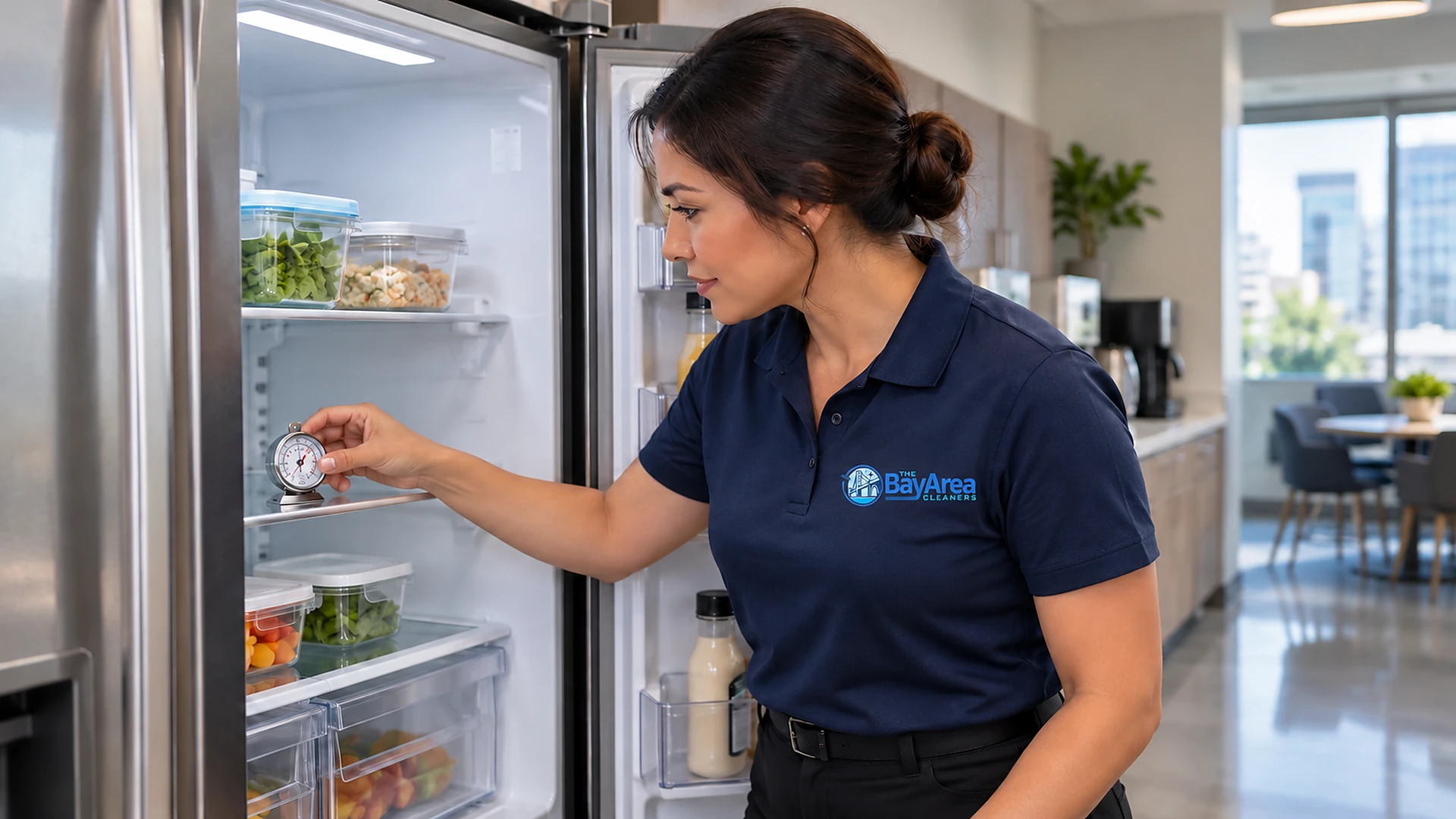
The right cleaning approach changes with each area’s use and the materials present. A clean workspace in a private office depends on dust control, sensible access, and respect for documents. A shared kitchen needs waste removal, compatible counter cleaning, and clear responsibility for personal food.
Office managers should treat room purpose as the starting point for scope design. The table compares the issues most likely to affect readiness in four common commercial spaces.
| Office area | Readiness goal | Boundary or special consideration |
| Workstations | Accessible, visibly clean work surface | Protect personal items and devices |
| Meeting rooms | Table and shared touchpoints ready for the next booking | Coordinate around meeting schedules |
| Breakrooms | Counters, sinks, bins, and shared areas usable | Define employee versus cleaner responsibilities |
| Reception and corridors | Clear circulation and presentable entry | Account for foot traffic and outdoor soil |
| Restrooms | Clean fixtures and available consumables | Flag plumbing or inventory problems separately |
Materials, equipment, and personal boundaries
For devices such as screens, tablets, and keyboards, the CDC advises following manufacturers’ cleaning instructions. Ask the site manager which items the cleaning team may touch and which items require explicit permission. For carpets and upholstery, follow fabric and product guidance rather than treating soft materials like counters. Moisture-sensitive surfaces deserve particular care.
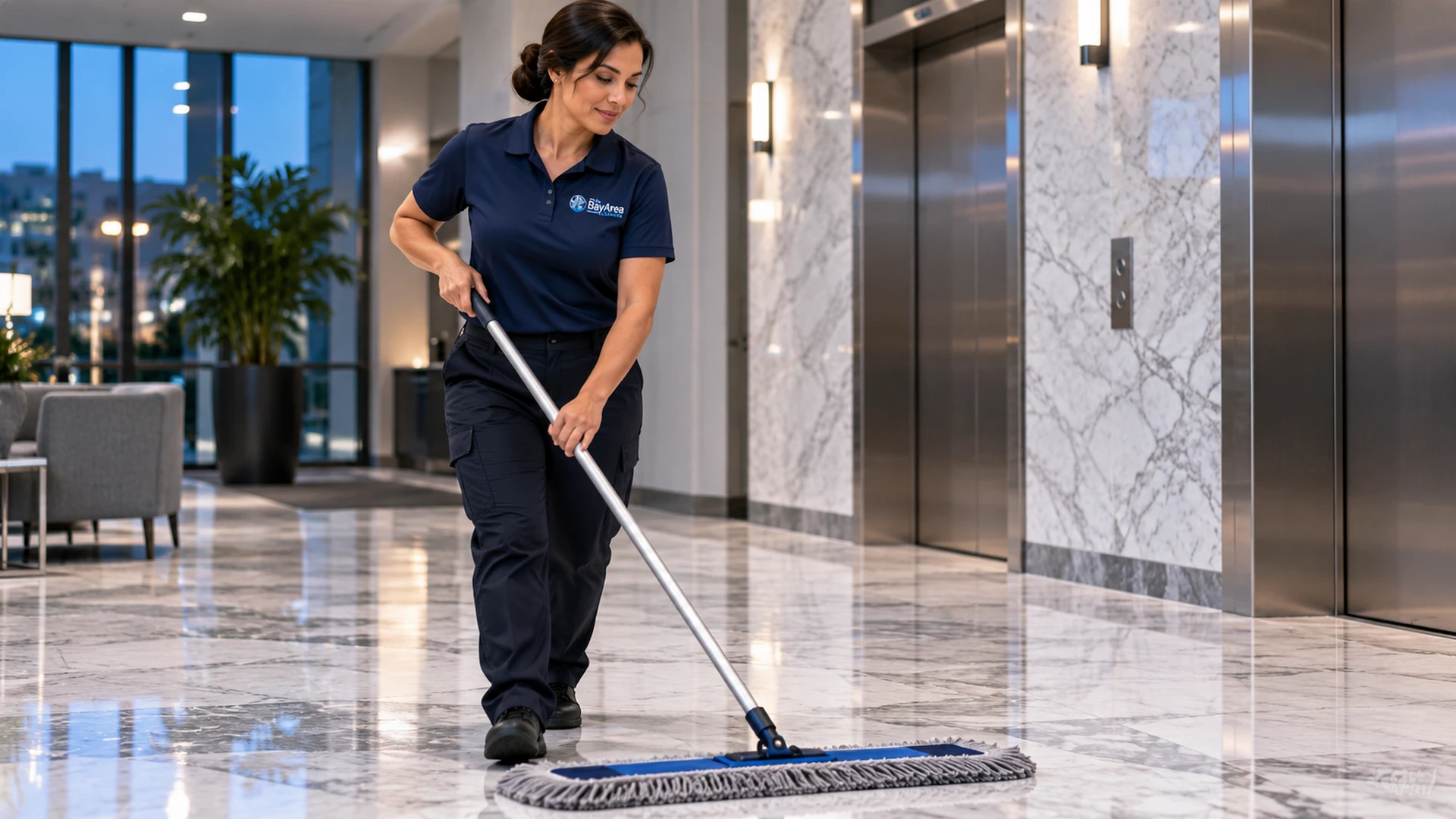
Floors are a distinct operational system. Entry routes may collect outdoor grit, and corridors receive continuous traffic. Regular surface care can support a more predictable appearance, but specialized floor maintenance should be scoped separately. The Bay Area Cleaners lists a dedicated Floor Care service, which is a better destination for visitors evaluating that work.
Evaluating a workplace and hiring a cleaning provider are different decisions. Use the room-by-room checks in this guide to identify problems. Then use a written service proposal to confirm which surfaces, tasks, and schedules a provider will handle. Keep those decisions clear.
Match the plan to an occupied workplace
A small professional office with scheduled client visits may need reception and meeting rooms prepared before appointments. A multi-floor workplace might need named zones and a reporting channel so individual issues do not disappear between teams. Those are planning examples, not claims that every building needs an identical staffing arrangement.
Takeaway: Match cleaning tasks to room use, material limitations, and access rules. Put specialized floor work and sensitive equipment handling into clearly defined scopes.
How Can Managers Tell Whether the Cleaning Plan Works?
Managers can assess workplace cleanliness by checking whether planned tasks are completed and whether the same problems keep returning. A practical inspection process provides better evidence than a general impression that the building looks nice. Regular checks make workplace cleanliness easier to manage consistently.
Start with a few locations that represent how the workplace operates. Check a meeting room after its normal cleaning window, a restroom during its busiest period, and an entryway after high traffic. If a failure occurs, record the condition and review the documented scope before concluding that someone neglected a task.
Use a short, evidence-based inspection
An office cleaning checklist should focus on these observable conditions:
- Confirm that shared tables and counters have no visible residue or abandoned waste.
- Verify that scheduled bins are emptied and liners are replaced where required.
- Check restroom fixtures and consumables against the agreed service responsibilities.
- Note recurring dust at the same surfaces and investigate possible sources.
- Check floors for visible debris and report damage or spills requiring another response.
- Record access restrictions that prevented a task from being completed.
Mark each observation completed, correction needed, or outside scope. These categories can help the manager have a specific conversation with the provider without turning the inspection into an arbitrary numerical productivity score. A missed task can be corrected. A task absent from the contract may require a scope change.
Track interruptions, not invented financial returns
If your goal is workplace focus, observe the number and nature of cleaning-related service requests before and after changes. Examples include reports of overflowing bins, rooms not ready for booked meetings, or a lack of restroom supplies. That measures operational friction, not individual performance.
Do not attribute changes in revenue, attendance, or concentration scores solely to cleaning without a credible evaluation design. Many other conditions may change at the same time. An honest account of a clean office’s benefits is more valuable than an impressive but unsupported percentage.
Takeaway: Inspect agreed tasks and log recurring service interruptions. Report clear observations, distinguish scope gaps from missed work, and avoid unsupported claims about productivity gains.
When Does Professional Office Cleaning Make Sense?
Professional office cleaning is worth evaluating when shared spaces repeatedly fall below the standard staff need to use them. The decision depends on facility size, occupied hours, internal capacity, and whether a provider can document a scope suited to the workplace.
Questions to ask before requesting a proposal
Use this list to define what the business actually wants to purchase:
- Which rooms and surfaces are included, and which tasks are excluded?
- How will the provider coordinate with occupied meeting rooms and sensitive workstations?
- Who supplies soap, paper products, liners, and other consumables?
- How are spills, restroom problems, missed tasks, and access restrictions reported?
- What inspection standard and correction process will the manager use?
- Which additional services require a separate estimate or service agreement?
Compare proposals by task clarity instead of headline claims. If an offer says it will “increase productivity,” ask what service deliverable supports that claim and how success would be checked. A credible plan can promise defined work, appropriate products, and an agreed schedule without promising a measured increase in output.
The Bay Area Cleaners publishes an Office Cleaning service for commercial workplaces and explains its coverage of workstations, meeting areas, breakrooms, reception areas, floors, and restrooms. Its separate Recurring Janitorial Services page is relevant when the operational question concerns an ongoing facility program. The exact service scope should be confirmed during the estimate.
What an office manager can prepare
Before requesting a quote, assemble a simple overview: approximate office layout, areas with heavy usage, preferred access windows, sensitive zones, and the recurring complaints that prompted the review. Identify whether staff handle personal desk items and food storage. Share your expectations in writing so the provider can distinguish routine work from specialized services.
Takeaway: Seek professional help when recurring cleaning needs exceed internal capacity. Request a specific scope, clear access rules, and a method for confirming completed work.
Frequently Asked Questions
Does a clean office automatically improve employee productivity?
No. A clean office can remove visible housekeeping obstacles and help keep shared rooms ready for use, but it cannot guarantee that employees finish more work. Productivity depends on workload, tools, management, environmental conditions, and many individual factors. Evaluate cleaning by service readiness and fewer cleaning-related interruptions rather than an assumed percentage gain.
How does workplace cleanliness affect daily office routines?
Workplace cleanliness matters when desks, meeting tables, restrooms, and shared counters are available in the condition people expect. Employees may otherwise need to clean, request supplies, or relocate a task before starting. A manager can document those recurring interruptions and refine the cleaning scope without treating every minor visual issue as a business emergency.
What makes a clean workspace easier to maintain?
A clean workspace stays usable when responsibilities are clear. Staff can manage personal items and confidential papers, and cleaners can handle the agreed common surfaces, waste collection, and appropriate dusting. Assign someone to report supply shortages and building defects. Review high-traffic areas regularly, then adjust tasks when actual use changes rather than applying one schedule forever.
What should an office cleaning checklist include?
An office cleaning checklist should name each area, the work expected, and how completion will be confirmed. Typical categories include shared tables, accessible workstations, waste bins, breakroom counters, restroom fixtures, entrances, and floors. Add access restrictions, product considerations, and supply ownership. The checklist should reflect the facility’s contract rather than imply every site requires the same frequency.
When should an office use disinfectants instead of routine cleaning?
Routine cleaning is enough for many ordinary facility surfaces. According to the CDC, additional disinfection may be appropriate when people have been ill or when local health guidance identifies a need. Surfaces should be cleaned first, and disinfectant labels must be followed. Offices with special regulatory obligations need procedures appropriate to their specific operations and setting.
Conclusion
A clean office supports day-to-day work when rooms are ready, shared surfaces are usable, and routine housekeeping stops interrupting schedules. It should not be presented as a guaranteed way to raise measured productivity. Use the observations, room-by-room priorities, and inspection approach in this guide to identify the tasks that matter to your team. If your Bay Area workplace needs a documented cleaning program, review The Bay Area Cleaners’ Office Cleaning service and ask for a scope based on the way your facility operates. Call 707-656-9339 to discuss the space and its cleaning priorities.