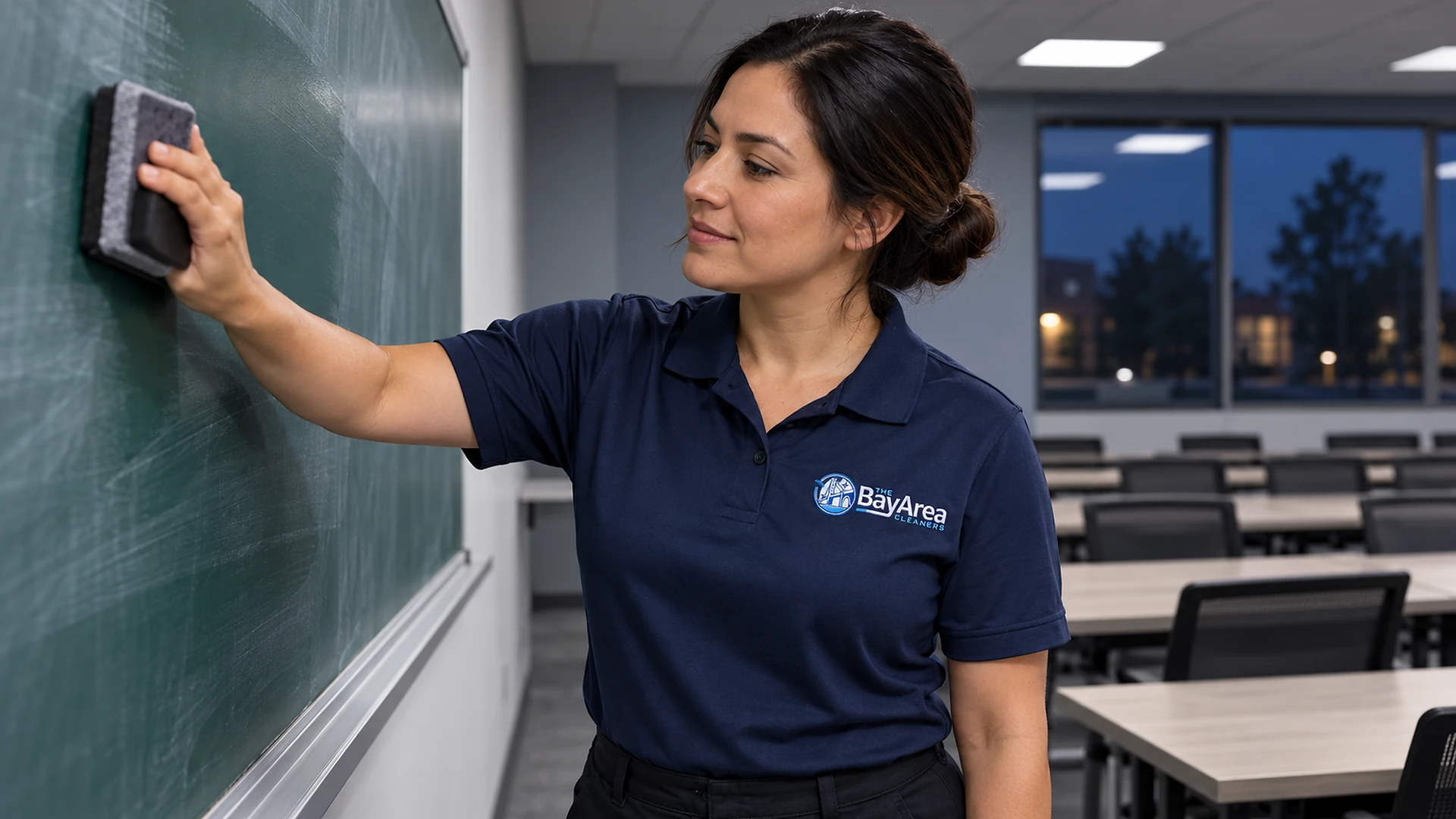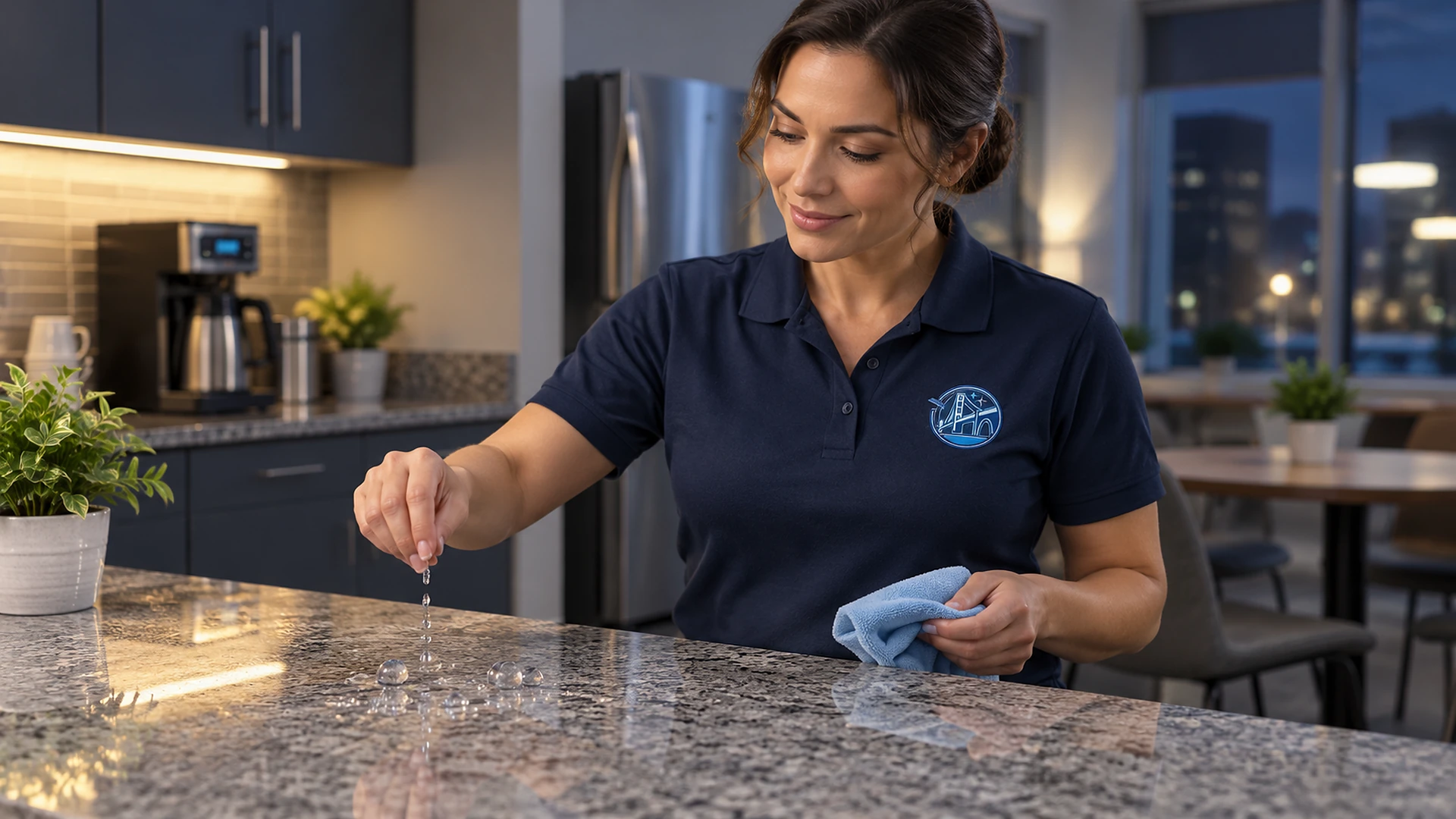

A desk may look clean at the start of the workday even when a nearby handle or breakroom counter sees repeated contact. In a busy San Francisco office, those patterns change as people move between shared rooms. A healthy office environment depends on repeatable surface care, available supplies, and responsibility for common areas. This guide shows office managers how to prioritize cleaning, choose review intervals, and document results.
The quick version: Regular office cleaning removes soil and lowers the amount of germs left on surfaces. CDC guidance for community facilities, including offices, recommends regular attention to high-touch areas and cleaning other surfaces when visibly dirty. A healthy office environment needs a site-specific task list, surface-appropriate methods, a workable schedule, and documented follow-up. Additional disinfection depends on the circumstances and applicable product instructions. Cleaning cannot replace ventilation, building repairs, or employee health measures.
How Does Regular Cleaning Support a Healthy Office Environment?
A healthy office environment needs cleaning priorities based on actual room use. Start with shared touchpoints, restroom readiness, and visible soil, then assign each task to the right person. Walk through the space when employees and visitors are present. A spotless entrance after an overnight visit tells you less than the condition of a heavily used breakroom at midafternoon.
Look for repeatable signs that the existing office routine is missing a task, a time window, or a responsible person. Record the location and observed condition rather than assigning blame before checking the service agreement:
- Door handles, light switches, and shared tables collect visible residue between scheduled visits.
- Restrooms run low on soap, towels, or other necessary supplies before staff can restock them.
- Breakroom counters remain marked after meals, even when floors are freshly cleaned.
- Dust returns quickly to desks near vents, shelving, or frequently opened entrances.
- Employees repeatedly report the same location, but no one owns the follow-up.
The CDC guidance for cleaning facilities distinguishes regular cleaning from additional disinfection. It advises routine attention to high-touch points, with cleaning of other surfaces when visibly dirty. This creates a practical starting point for workplace hygiene without implying that every desk requires the same treatment as a restroom fixture.
A healthy office environment does not mean a germ-free workplace. A cleaning service can address agreed surfaces and debris, but it cannot control building ventilation, individual hygiene, maintenance failures, or every route of infection. Keep those responsibilities distinct in the facility plan so cleaning performance can be assessed through observable work.
Takeaway: Walk the office during real use, record recurring trouble spots, and write cleaning responsibilities around traffic and surface contact instead of relying on a generic daily promise.
Which Office Surfaces Matter Most to Workplace Hygiene?
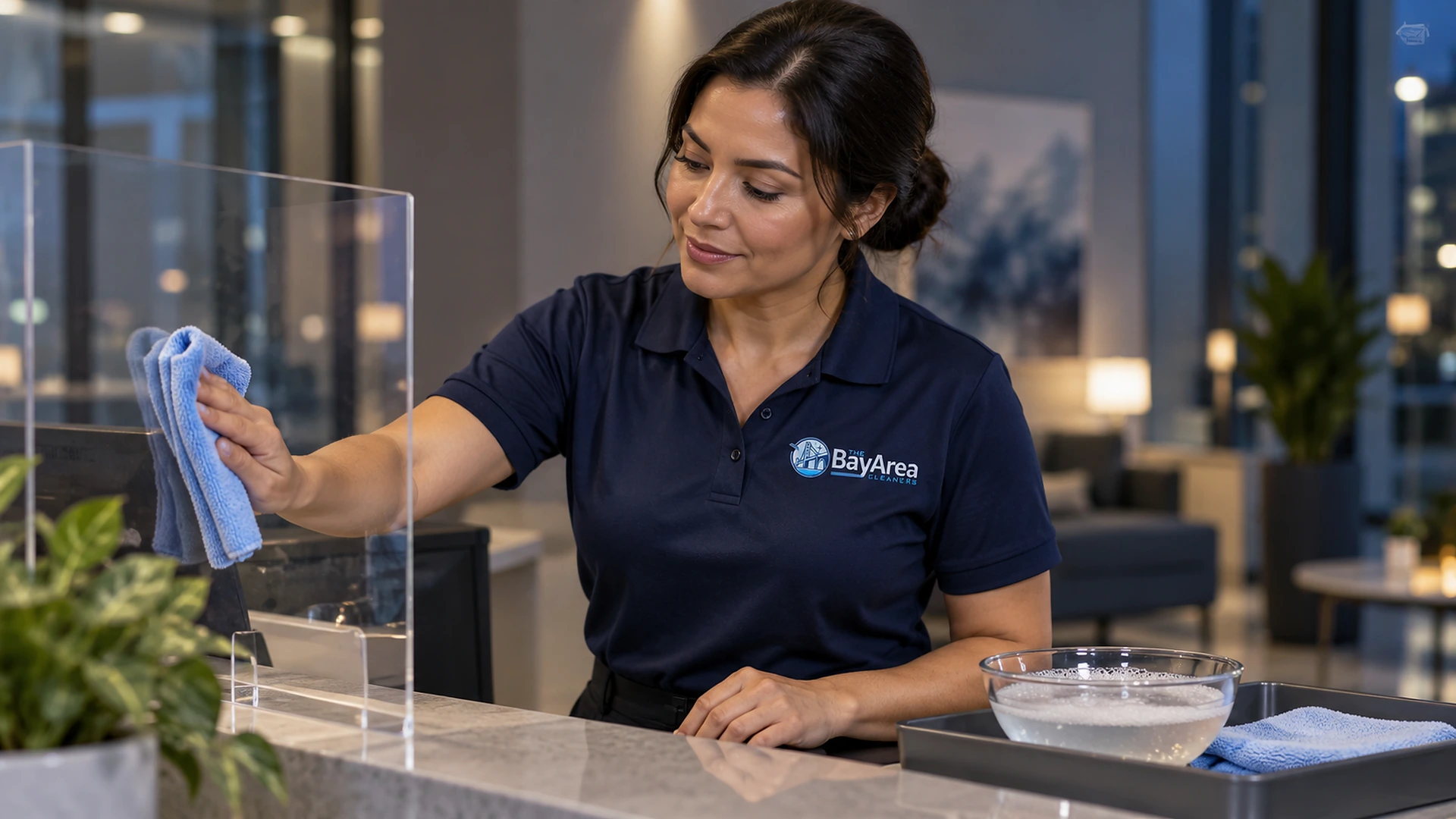
Shared touchpoints are the first places to review for workplace hygiene. Door handles, meeting-room controls, reception counters, breakroom fixtures, and restroom hardware receive frequent contact. CDC guidance recommends regular cleaning of high-touch surfaces and cleaning other surfaces when visibly dirty. The exact work still depends on material compatibility and how the space is used.
The table below compares areas by the type of use an office manager can observe. It is a planning aid, not a fixed schedule for every facility.
| Office area | Common touchpoints | Cleaning priority | Practical limitation |
| Reception | Door hardware, counters, sign-in stations | Review during visitor peaks | Protect visitor information and electronics |
| Meeting rooms | Tables, chair arms, shared controls | Check after periods of shared use | Follow device maker instructions |
| Breakrooms | Counters, tables, sink fixtures | Reassess around meal periods | Food-contact instructions may differ |
| Restrooms | Handles, faucets, dispensers | Monitor condition and supply levels | Plumbing issues need maintenance |
| Individual desks | Desk surfaces and approved accessories | Agree on personal versus crew responsibilities | Respect papers and personal equipment |
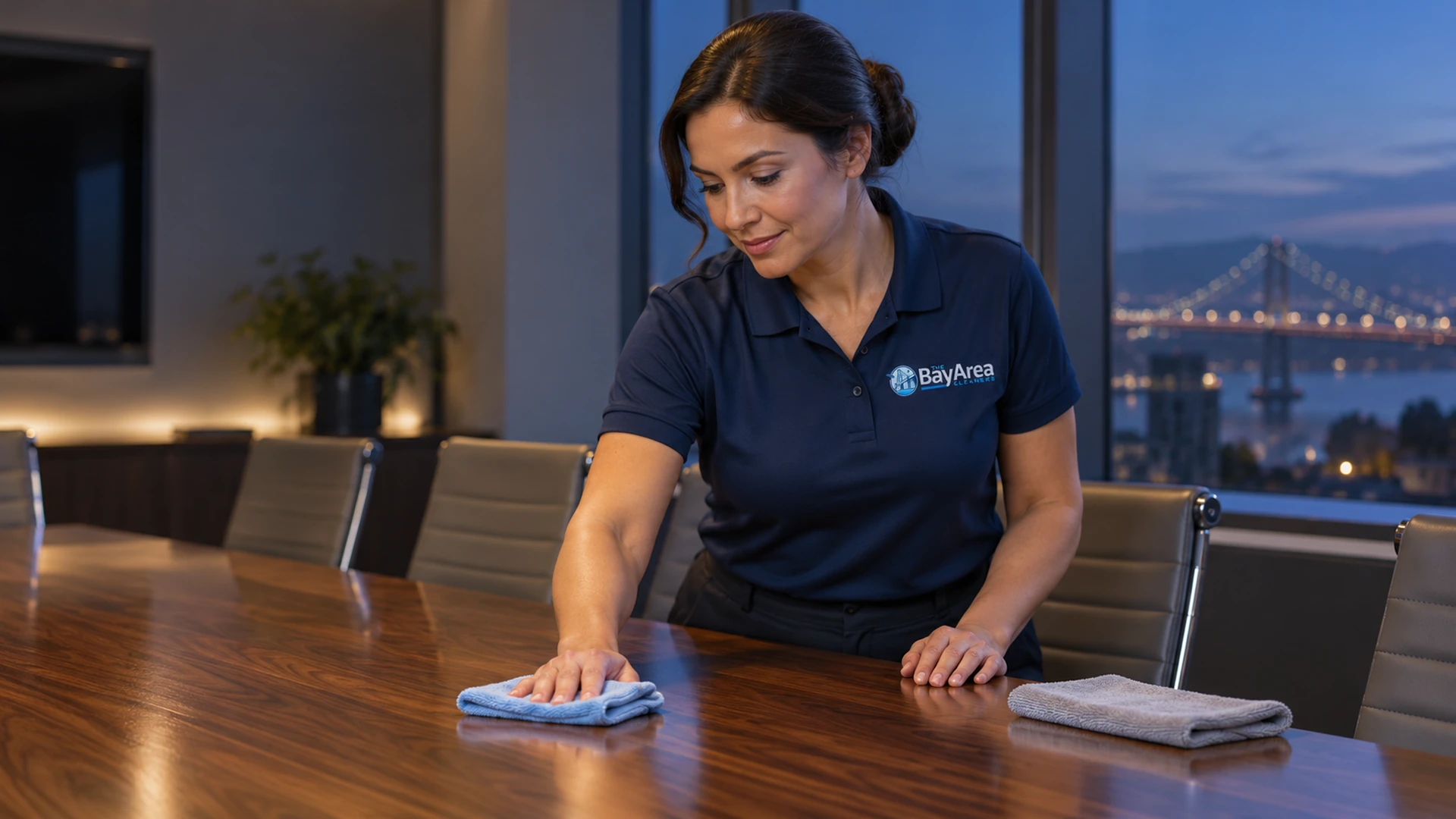
A healthy office environment needs safe handling of sensitive equipment. Cleaning a meeting-room table does not authorize spraying a nearby laptop, display, or keyboard. Check the device manufacturer’s instructions, identify who can move equipment, and flag items that must remain untouched. Record restrictions in the room checklist before a crew starts.
A healthy office environment benefits from keeping cleaning and disinfection separate in the written plan. The US Environmental Protection Agency (EPA) explains that cleaning removes dirt and organic matter, sanitizing reduces certain germs, and disinfecting targets specified organisms under product-label conditions. The words should not be interchangeable in contracts or inspection notes.
Routine office cleaning is the baseline. CDC guidance calls for disinfection where people have obviously been ill and may add steps during an outbreak. If disinfection is needed, use an EPA-registered product suited to the surface and target germ. Follow the label, including wet contact time. A generic wipe or quick pass is not proof of disinfection.
Takeaway: Prioritize shared touchpoints, define cleaning separately from disinfection, and document equipment restrictions before asking any crew to treat sensitive surfaces or occupied work areas.
How Should an Office Cleaning Checklist Be Built?
A healthy office environment starts with an office cleaning checklist that names the room, task, responsible person, and expected result. A vague instruction to “clean the office” is difficult to audit. Confirm room access, surface restrictions, and usage windows before assigning the task.
- Map the occupied spaces. Mark receptions, meeting rooms, workstations, breakrooms, restrooms, corridors, and restricted areas. Identify where visitors and employees share touchpoints.
- Note special surface restrictions. Record electronics, delicate finishes, locked cabinets, and spaces where cleaners need escort access or advance approval.
- Define the work by area. Separate floor care, waste removal, surface cleaning, and supply checks so the scope is visible to both sides.
- Assign responsibility. Specify what employees handle at their own desks, what facility staff monitor, and what the contracted provider covers.
- Set a review trigger. Agree on observable reasons to reconsider the schedule, such as supply shortages, repeated residue, or changed room usage.
- Document inspection and correction. Use short notes with location, date, condition, and the person responsible for resolving an issue.
A completed visit and a satisfactory result are different observations. An entry floor might be cleaned overnight and collect new soil by the morning rush. Before marking the service as missed, compare the documented task with the time the concern appeared. If the same condition recurs, revise the office cleaning checklist or the inspection timing.
The Bay Area Cleaners lists workstations, conference rooms, breakrooms, reception areas, restrooms, and floors within its office cleaning service scope. Use that published list to prepare questions for a site walkthrough, then confirm your own rooms, approved surfaces, visit times, and exclusions in writing.
Keep the office cleaning checklist available to the people who use it: the office manager, cleaning supervisor, and staff member reporting an issue. A note such as “breakroom sink, water marks after afternoon use” is easier to act on than “kitchen not clean.” Specific room names and task descriptions reduce disagreement during follow-up.
A healthy office environment requires clear ownership when a repeated problem appears. If a counter stays marked, check whether the cleaner can access it, whether personal items block it, and whether its service time matches room use. The solution may be a task clarification or a different check time rather than simply more visits.
Takeaway: Build the checklist around rooms, named tasks, access restrictions, responsible parties, and observable review triggers. Revise it when real office use exposes recurring gaps.
How Does Office Cleaning Frequency Change by Room?
For a healthy office environment, office cleaning frequency should reflect occupancy, shared use, observed residue, and contractual scope. Reception counters and meeting tables may need different attention from private offices. CDC guidance recommends regular cleaning of high-touch surfaces but no universal daily visit count for commercial offices. Check room conditions and update the schedule when traffic changes.
This comparison helps a San Francisco office manager decide which usage changes could justify a schedule review, without claiming a fixed visit count prevents illness.
| Space | Usage signal | Scheduling decision | Reason to reassess |
| Shared meeting room | Frequent bookings and changing groups | Review cleaning between heavy-use periods | Touchpoints or tables remain marked |
| Reception | Regular visitor arrivals | Coordinate checks with traffic peaks | Counters and entry hardware soil quickly |
| Restroom | Heavy fixture use and supply consumption | Pair cleaning with supply inspections | Repeated shortages or odors |
| Breakroom | Concentrated meal and coffee activity | Schedule attention around busiest periods | Residue or waste accumulates mid-shift |
| Low-use office | Infrequent occupancy | Match cleaning to actual use and condition | Occupancy or room purpose changes |
For an office cleaning frequency review, record time and location. “Counter shows food residue after lunch on three observed days” identifies a repeatable pattern. Check whether the task is assigned, whether access is available, and whether the current visit occurs before or after the busiest period. Change one operational factor and review the next observations.
Separate routine room checks from special responses. When a person has been visibly ill in a facility, the CDC guidance recommends considering disinfection in affected areas. That decision depends on the actual circumstances, surface type, and applicable guidance. It should not be converted into a blanket promise that every object is disinfected during each visit.
Office hygiene is affected by supplies, too. A well-cleaned restroom with an empty soap dispenser still creates a practical problem for occupants. The restroom cleaning service describes fixture care and restocking as part of its published scope. Building managers should verify the relevant contract because the service page alone does not define every client’s arrangement.
Revisit office cleaning frequency when staffing, desk sharing, meeting-room bookings, or operating hours change. Consider whether a shift in traffic creates a new peak between scheduled visits. Compare observations before and after any change instead of assuming a more frequent contract automatically creates better results.
Takeaway: Set cleaning intervals from room use and observed conditions, distinguish routine visits from special responses, and reassess schedules whenever occupancy or surface condition changes.
How Can Managers Check Cleaning Quality Without Guesswork?
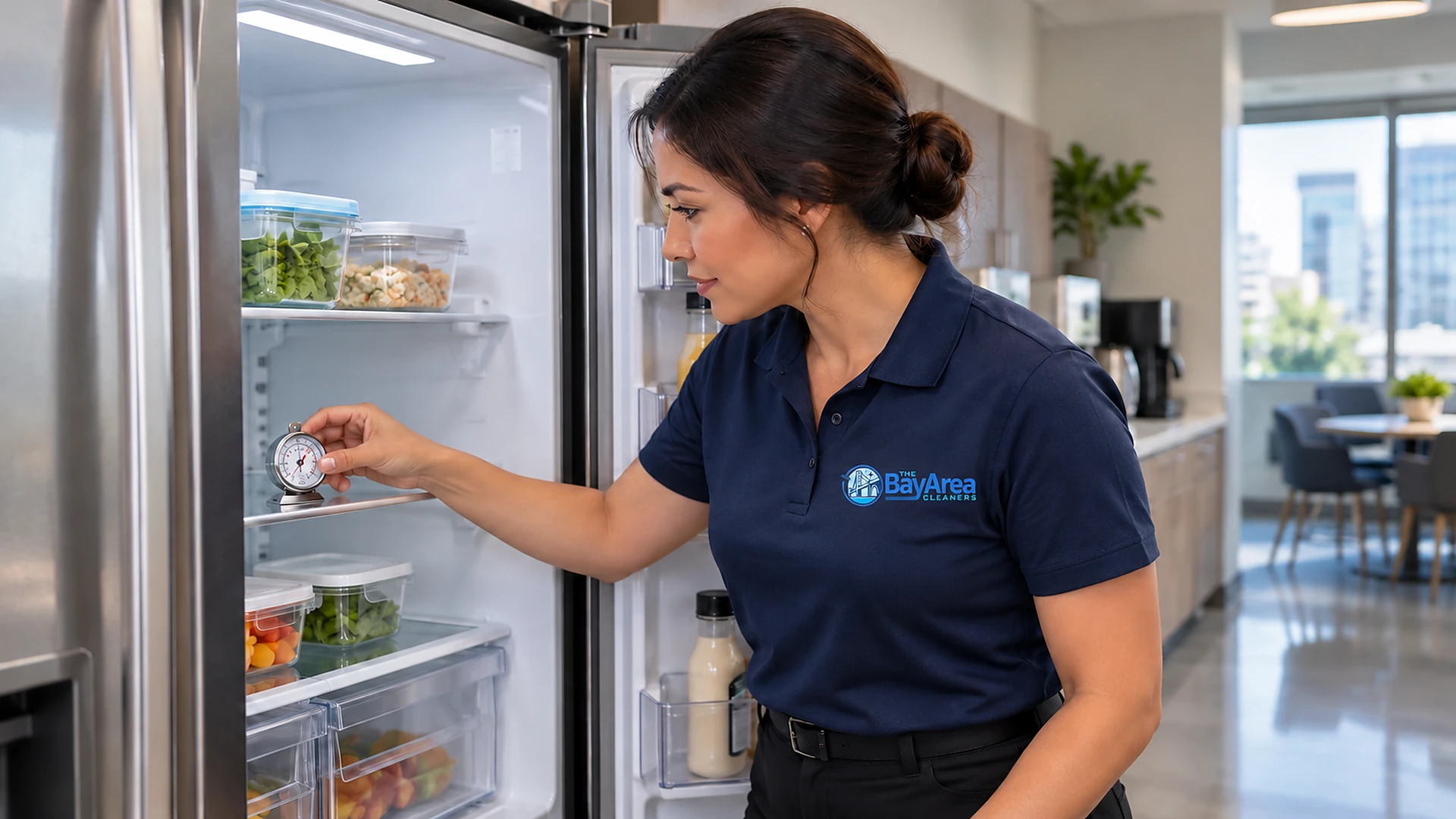
A healthy office environment needs a practical quality check, not an unsupported promise about employee health. Inspect visible soil, stocked facilities, completed tasks, and responses to reported problems. A visually clean room cannot prove that every germ is absent. Limit inspections to conditions that the service agreement and available evidence can support.
- Look at touchpoints and tables in good light for visible residue, dust, or missed debris.
- Confirm bins are serviced and restroom supplies match the agreed responsibility.
- Check floors for new spills, tracked soil, or recurring marks without assuming every mark came from a missed visit.
- Record access barriers, damaged surfaces, or maintenance requests as separate issues.
- Track repeated complaints by room and condition, then confirm whether the proposed correction worked.
Good inspection notes describe conditions rather than opinions. “Conference room B, residue on door handle after the agreed service window” gives the cleaner a location and a checkable issue. “Poor cleaning” does not. Photos can document a surface problem when permitted, but should exclude employee records, client details, or other private material.
For tasks described as disinfection, verify that the scope identifies the relevant product and surfaces. EPA-registered disinfectants have label directions and contact times, so application cannot be judged by visible shine alone. Ask how the vendor documents completion and handles materials that cannot tolerate that product. Refer technical safety questions to the product label and qualified personnel.
Surface cleaning has clear limits. Persistent moisture near a window, recurring condensation at a vent, or damaged flooring may need a building-maintenance response. These problems can make an area appear dirty again without proving that the cleaner skipped a task. Route them to the property contact instead of repeatedly applying more cleaning product.
You may also like: High Dusting: Why Your Clean Floors Do Not Stay Clean.
Track repeated issues over several visits instead of judging one isolated walkthrough. Compare the notes for the same room, check whether the agreed correction occurred, and record whether the concern returned. This creates a practical feedback loop that supports a healthy office environment without claiming to measure infection risk.
Takeaway: Inspect observable conditions, log location-specific problems, and route repairs outside the cleaning contract. Judge results through documented follow-up, not unverified health claims.
When Should an Office Manager Request Professional Help?
Professional office cleaning is worth considering when shared areas need regular coverage, accountability, or handling procedures that existing staff cannot reasonably provide. Separate the routine employees manage at their desks from the contracted work in common areas. Before requesting bids, write down the rooms, access limitations, tasks, and service windows that a prospective provider would need to address.
A facility manager can request a walkthrough when one of these conditions appears:
- The same shared areas fall below the agreed standard despite documented corrections.
- Staff must repeatedly interrupt primary duties to manage routine common-area cleaning.
- Restricted rooms, delicate finishes, or shared equipment need an agreed handling procedure.
- Changing occupancy has made the existing cleaning plan too inconsistent for normal operations.
- Restrooms and high-traffic common areas need a coordinated scope across multiple shifts.
For a healthy office environment, start a provider discussion with a site walkthrough and documented priorities. Identify areas used outside normal hours, equipment that cannot be moved, restocking ownership, and the contact who receives issue reports. Ask how a scope change will be approved and recorded. Avoid promises about guaranteed productivity or disease prevention.
For recurring coverage, compare a proposed schedule with the provider’s recurring janitorial services and verify the exact scope for your building. Confirm access, waste removal, supply responsibilities, reporting, and any additional disinfection tasks before approving the arrangement.
Keep workplace hygiene requests measurable. “Wipe agreed shared tables and high-touch points after the busiest meeting period” describes work that can be inspected. “Make the office healthy” does not. A healthy office environment depends on cleaning together with ventilation, maintenance, and employee practices that a janitorial contract cannot fully control.
If a manager is concerned about air quality, cleaning may help manage settled dust and visible debris, but it is not a replacement for a ventilation assessment. The EPA’s indoor air quality guidance describes source control, ventilation, and filtration as separate approaches. Office managers should involve the appropriate building professionals when the underlying problem is not surface soil.
Takeaway: Request a site-specific scope when routine problems persist or responsibilities become unclear. Confirm tasks, access, reporting, and exclusions before treating a proposal as an operational solution. Agree on a clear escalation path beforehand.
Frequently Asked Questions
What makes a healthy office environment in a San Francisco workplace?
A healthy office environment is supported by maintained shared spaces, suitable cleaning routines, available hygiene supplies, and clear responsibilities. Cleaning lowers soil and germs on surfaces but cannot guarantee that employees remain well. Managers should prioritize high-touch areas, inspect breakrooms and restrooms, and coordinate ventilation, building repairs, and employee health measures outside the cleaning scope.
How does workplace hygiene differ from professional disinfection?
Workplace hygiene includes everyday cleaning, access to handwashing supplies, and reporting problems in shared spaces. Disinfection is a different task that uses an appropriate registered product under its label directions. The CDC recommends regular cleaning for community facilities, with disinfection when specific circumstances warrant it. Ask vendors to distinguish those responsibilities in the written scope.
What should an office cleaning checklist include?
An office cleaning checklist should identify each room, assigned task, responsible party, and expected condition. Include shared surfaces, breakrooms, restrooms, floors, waste, supply checks, and equipment restrictions. Separate building repairs from cleaning tasks. Keep a record of repeat problems and update the checklist whenever access, occupancy, or usage changes. These details make follow-up more objective.
How do we choose an office cleaning frequency?
Office cleaning frequency should follow usage, touch patterns, restroom supplies, and visible soil. No single interval suits every commercial office. Review reception, breakrooms, meeting rooms, and restrooms during actual operating hours. Record the time and location of recurring issues, then adjust the relevant task or visit window. Check observations afterward to see whether the change worked.
Can regular office cleaning stop employees from getting sick?
Regular office cleaning reduces soil and helps lower germs on surfaces, but it cannot prevent every illness. Infection can involve routes and conditions outside the cleaning plan. Follow CDC guidance for routine surface care and circumstances that warrant disinfection. Maintain handwashing supplies and appropriate building policies. Do not treat lower absenteeism as a result guaranteed by cleaning alone.
Conclusion
A healthy office environment starts with a cleaning plan matched to the actual rooms people routinely use, not an unverifiable promise about health or productivity. For San Francisco office managers, that means reviewing shared surfaces, monitoring supplies, choosing realistic schedules, and documenting repeated concerns. Routine cleaning offers practical support for workplace conditions, but health outcomes and building systems require separate attention. If your current scope misses shared areas or recurring problems, compare it with The Bay Area Cleaners’ office cleaning service and request a walkthrough at 707-656-9339. Ask for written responsibilities and inspection points before approving any schedule change.