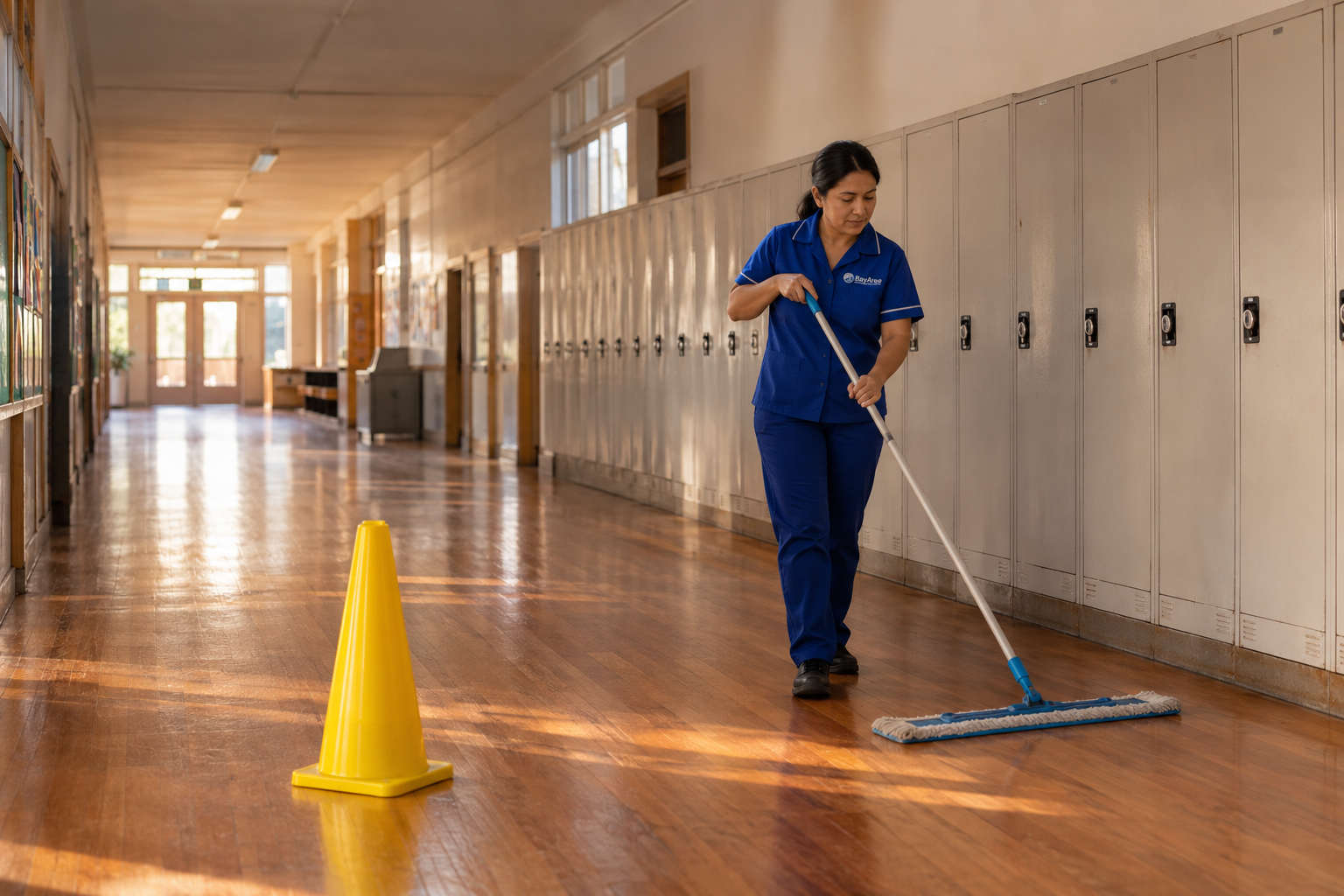
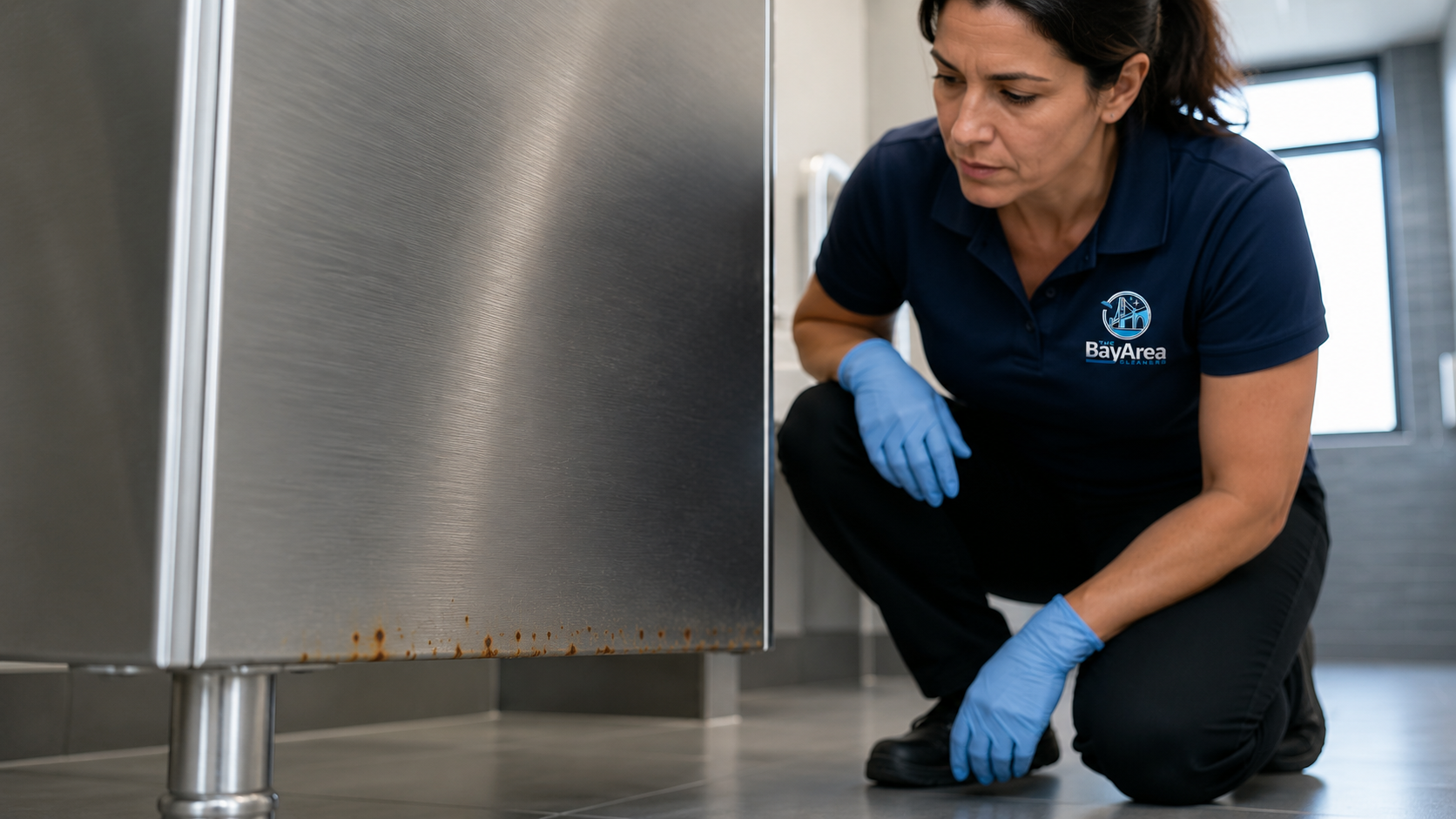
A cleaning crew mops two lobbies the same night. Same bucket, same product, same technique. One floor comes out looking new. The other has raised seams near the entrance by the following week. Two full planks swell at the edges. The facility manager ends up on the phone with a flooring contractor instead of a janitorial service.
Nothing went wrong with the effort. The problem is that laminate does not behave like the other hard floors a crew already knows how to handle. Knowing how to mop laminate floors correctly is not the same skill as mopping hardwood or tile, even though it looks identical from across the room. Get the method wrong and the damage is permanent, not cosmetic.
The quick version of how to clean laminate floors in a commercial building: sweep or dust mop first, then damp mop, never wet mop, with a pH-neutral cleaner. Skip the steam mop entirely, since heat and pressurized moisture are exactly what push water into the seams. Wipe spills up within a few minutes and you will rarely have a problem. Let water sit and you are looking at plank replacement, not a cleaning fix.
Check the Core Before You Grab a Mop
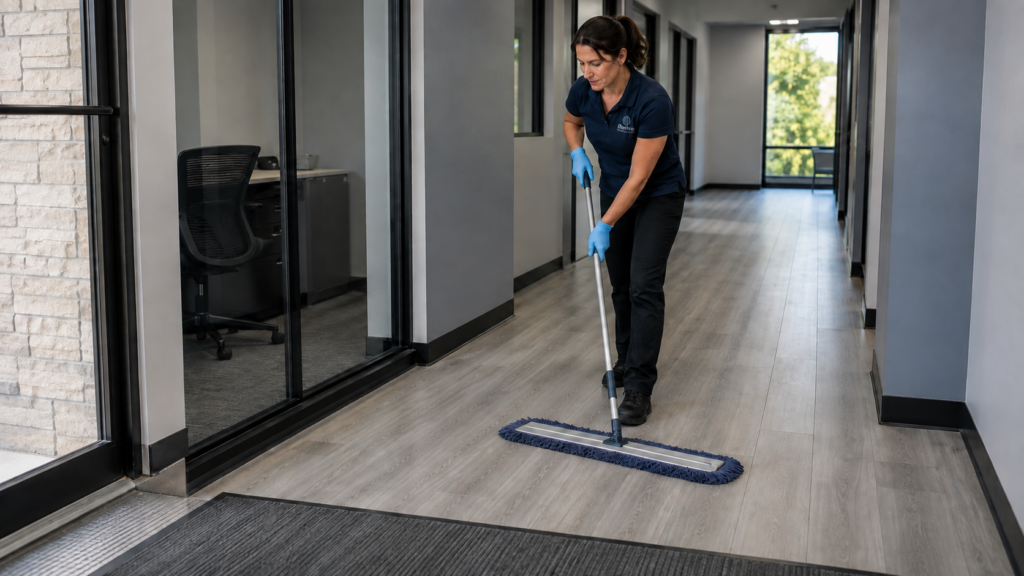
Facility crews often treat every hard floor the same way, and laminate is where that habit gets expensive. Under the printed wood-look layer sits a core made of compressed wood fibers. It is close to the fiberboard used in some furniture. That core is what makes laminate look and feel solid. It is also the reason how to clean laminate floors differs so much from caring for hardwood, ceramic tile, or vinyl plank.
Tile and sealed concrete do not absorb water at all. Vinyl plank uses a PVC-based core that holds its shape even when wet. Laminate’s fiberboard core does the opposite. It soaks up moisture, especially at the seams and edges where planks click together, and it can swell within hours. Once that happens, the damage does not reverse when the floor dries. The plank stays raised, the seam stays open, and the only real fix is to replace it.
None of this means laminate is a poor choice for a commercial building. It holds up well under normal foot traffic and costs less to install than solid hardwood. The trade-off is simply that the crew cleaning it needs to know where the risk actually sits, which is at the joints, not across the whole surface. Learning how to mop laminate floors correctly from day one prevents most of what shows up in the diagnostic table just ahead.
A floor care program that treats laminate as its own material, not a stand-in for hardwood, is what keeps that swelling from ever starting.
You may also like: How to Clean Hardwood Floors Without Ruining the Finish
Takeaway: Laminate fails at the seams first, not the surface, so the single biggest change a crew can make is controlling how much water ever touches the floor.
Match the Fix to What You See
Use the table below as a first diagnostic. Match what is on the floor to the likely cause, then act on it before the problem spreads to the next plank.
| If you see this… | It usually means… | What to do |
| Raised or peaked seams | Water reached the core through a joint | Stop cleaning that area, dry it, plan for plank replacement |
| Cloudy or hazy surface | Product residue or wax buildup on the wear layer | Switch to a pH-neutral cleaner and avoid oil soaps |
| Sticky feel after mopping | Excess cleaner left behind, not picked back up | Use less solution and finish with a dry microfiber pass |
| Fine surface scratches | Grit ground in during a dry pass | Dust mop or vacuum before every damp mopping pass |
Most of the diagnosis in that table traces back to one habit: how much water touched the floor and for how long. Grit is the other repeat offender. Sand and small debris act like sandpaper under foot traffic and under the wheels of office chairs and carts, so a daily dust mop or a vacuum with a hard-floor attachment, run along entrances and high-traffic aisles, prevents most of row four before it starts.
For the damp mopping that follows, less water beats more every time. A microfiber flat mop, wrung out until it feels barely damp rather than wet, picks up dirt mechanically instead of relying on a flood of cleaning solution. This one habit is most of how to clean laminate floors right there, before any product ever gets chosen. Federal facilities guidance backs the same habit for any commercial building. GSA’s indoor environmental quality guidance calls for a written healthy cleaning plan. That plan should name non-toxic, low-VOC products. It should also check whether custodial staff actually follow it, not just whether a plan exists on paper.
A recurring janitorial services schedule that includes a weekly walk-off mat check and a standing damp-mop routine is what keeps most laminate floors out of the first row of that table entirely.
Knowing how to mop laminate floors correctly on a fixed schedule matters more than any single product on the shelf. A crew that mops the same way every time, at the same frequency, produces fewer surprises than one relying on a single deep clean to undo months of the wrong habit.
You may also like: How to Clean Carpet: Methods, Costs and When to Call a Pro
Takeaway: The mop matters less than the moisture. Keep the head nearly dry, and let entrance mats and a standing schedule do the rest.
How to Clean Laminate Floors Without Soaking the Seams
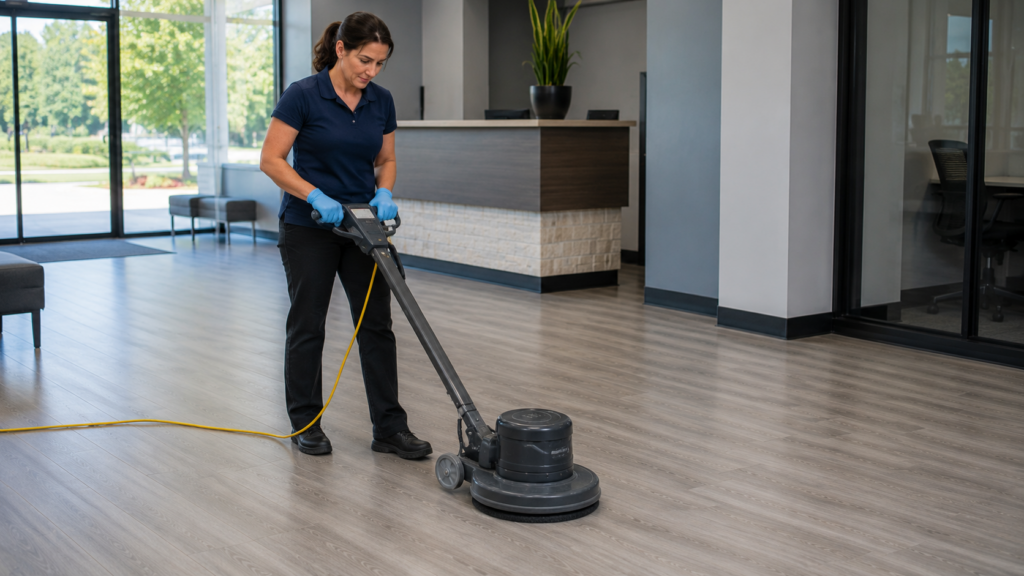
Here is how to clean laminate floors for a routine pass, in order:
- Remove loose debris first with a dust mop, a soft-bristle broom, or a vacuum set to a hard-floor setting. Skip any vacuum with a beater bar, which can scratch the wear layer.
- Choose a pH-neutral cleaner labeled for laminate. Skip vinegar-based solutions, ammonia, oil soaps, and anything marketed as a mop-and-shine product, since all four leave a residue that dulls the finish over time.
- Dilute the cleaner according to the label and apply it to a microfiber mop, not directly to the floor. Spraying or pouring cleaner onto laminate is one of the fastest ways to push moisture into the seams.
- Mop in the direction of the planks, working in small sections, and go over any damp-looking area with a dry microfiber cloth before moving on.
- Let the floor air dry fully before returning furniture, rolling chairs back into place, or reopening the area to foot traffic.
- Spot-treat spills the moment they happen instead of waiting for the next scheduled cleaning. A spill wiped up in under a minute rarely causes any damage at all.
This is also where how to clean laminate floors commercially starts to look different from a checklist written for one household. A reception lobby sees dozens of shoes an hour. A break room collects coffee spills. A classroom floor picks up dropped crayons and glue. The steps stay the same across all three. What changes is frequency, and how fast your team gets to a spill before it sits.
Under heavy foot traffic, the best way to clean laminate floors is not a different method. It is the same six steps, run more often, with spills caught sooner.
EPA’s Safer Choice program is a fast way to skip the guesswork on product selection. Every cleaner with the Safer Choice label has had each ingredient checked for effects on human health. The program lists floor cleaners as one of its certified categories. Handing your cleaning vendor a Safer Choice product list ends the argument over which bottle is safe for laminate. If your in-house team cannot keep up that level of consistency, a deep cleaning provider that already runs a documented product list gets you the same result, with no retraining every time someone new joins the crew.
Takeaway: The method for how to clean laminate floors does not change by room. What changes is how fast your team responds when something spills.
When Daily Mopping Isn’t Enough
Routine damp mopping handles daily grime. High-traffic commercial laminate still needs something more thorough now and then, especially in lobbies, cafeterias, and hallways that see hundreds of trips a day.
For a deeper clean, the best way to clean laminate floors is with a low-moisture floor machine built for hard surfaces, not a wet extraction unit built for carpet. These machines use a damp pad and controlled suction to lift ground-in soil without leaving standing liquid behind. Schedule this kind of deep clean around traffic, not a fixed calendar date. A busy lobby might need it monthly. A quiet back office might go a full season between deep cleans. Log each deep clean with a date and the crew who ran it, since that log becomes useful fast if a warranty question ever comes up.
Getting how to clean laminate floors properly down to a habit, not a one-time fix, is what actually protects the warranty. A crew that treats every deep clean the same way, logged and scheduled, rarely ends up back at row one of the diagnostic table.
Never use a steam mop or steam cleaner on laminate, even for an occasional deep clean. Steam combines heat and pressurized moisture, and that combination pushes water straight into the seams, right where laminate is most vulnerable. Nearly every laminate manufacturer excludes steam damage from its warranty, and the result looks the same as a slow, quiet leak: swollen edges, lifted planks, a cloudy finish. Once it happens, replacement is the only fix. This single rule, no steam, ever, is the one part of how to clean laminate floors that facility managers most often learn the hard way.
Buffing and polishing products made for wood floors deserve the same caution on laminate. Wax and oil-based polishes sit on top of the wear layer instead of soaking in the way they would on solid wood, and that film traps grit, dulls the shine, and eventually needs professional stripping to remove.
You may also like: How to Clean Walls: The Paint Finish Decides Everything
Takeaway: When laminate needs more than a damp mop, reach for low-moisture equipment, never steam, and schedule the work around actual traffic instead of the calendar.
Frequently Asked Questions
Can you steam clean laminate floors?
No. Steam mops force pressurized moisture into the seams between planks, exactly where laminate is most open to water damage. Most manufacturers rule out steam damage in their warranties, so one steam cleaning session can cost you the floor and the coverage that would have paid to fix it.
What should you never use on laminate floors?
Skip vinegar, ammonia-based cleaners, oil soaps, and wax or polish products. Vinegar and ammonia sit outside the safe pH range for the wear layer and dull it over time. Oil soaps and wax leave a film that traps dirt, and none of this shows up right away, which is why these products stay in a cleaning closet long after they should be gone. How to clean laminate floors properly starts with knowing what to leave on the shelf.
How often should commercial laminate floors be cleaned?
Dust mop or vacuum daily in busy areas like lobbies and hallways, and damp mop weekly or sooner if soil is visible. Deep cleaning frequency should follow foot traffic rather than a fixed schedule. A busy entrance might need a low-moisture deep clean every month, while a quiet office corridor can often go longer between passes. Getting how to clean laminate floors right on a steady schedule matters more than any single deep clean.
Why does my laminate floor look cloudy after cleaning?
Cloudiness almost always means residue, either from a cleaner that was not fully picked back up or from an oil-based product that built up a film over several cleanings. Switch to a pH-neutral, no-rinse laminate cleaner and go over the area with a dry microfiber pass. Most cloudiness traces back to how to mop laminate floors with too much product and not enough follow-up drying.
Conclusion
Laminate rewards a specific kind of discipline. It is not as fragile as people assume once they hear wood-look, and it is not indestructible either. The floor holds up to years of commercial traffic as long as water never gets a real chance to sit in the seams. Train your crew to dust mop before they wet mop, keep the mop head nearly dry, skip the steam cleaner entirely, and treat every spill like it matters, because it does. How to clean laminate floors properly comes down to those few habits, repeated on schedule. Get those habits right and how to clean laminate floors stops being a mystery and becomes one of the easiest parts of a facility’s cleaning program. Get them wrong, and you are paying a flooring contractor instead of a janitorial service, the same way that lobby crew did.
Call 707-656-9339 or request a free walkthrough, and we will map which floors need daily care, which need a deep clean this month, and which ones are close to a seam you have not seen yet.