
 By
By You spend about a third of your life on your mattress, yet it’s probably the most neglected surface in your home. Your sheets get washed every week, but the mattress underneath quietly collects sweat, dead skin, dust, and stains you never see.
Here’s what’s actually living down there: a typical mattress can hold anywhere from 100,000 to 10 million dust mites, microscopic pests that feed on the skin cells you shed every night. If you wake up congested, sneezing, or itchy, your bed may be the reason.
Knowing how to clean a mattress the right way protects your sleep and your health. This guide walks you through every step, from a quick refresh to deep stain removal, using products you already have at home.
Why a Clean Mattress Matters More Than You Think
Your mattress is a warm, humid environment, exactly what dust mites love. According to the American Lung Association, roughly four out of five homes in the United States have dust mite allergens in at least one bed.
These pests are harmless on their own, but their droppings and decaying bodies trigger reactions. An estimated 20 million Americans live with a dust mite allergy, and the symptoms read like a permanent cold: watery eyes, runny nose, sneezing, and worsened asthma.
The buildup isn’t only about mites. The average person sheds millions of skin cells a day, and a good share of those land in your bed. Add nightly sweat and body oils, and your mattress slowly becomes a feeding ground for bacteria and odor.
That’s why learning how to clean your mattress properly pays off: a stuffy, dust-heavy bed chips away at your sleep quality. A clean sleeping surface isn’t about appearances. It’s about breathing easier and resting better night after night.
Takeaway: If anyone in your home has allergies or asthma, cleaning your mattress is one of the cheapest health upgrades you can make.
The Core Method: What You’ll Need
The good news is that you don’t need special equipment to clean a mattress. Most of what works is already in your kitchen or laundry room. As a company that uses eco-friendly products, we lean on simple, low-toxicity supplies over harsh chemical sprays.
Gather these before you start:
- Baking soda (a full box)
- A vacuum with an upholstery attachment
- Mild dish soap
- Hydrogen peroxide (for tough stains)
- Clean white cloths or rags
- A spray bottle
- Cold water
One rule before you begin: the mattress must be completely dry. Baking soda clumps on any damp spot, so handle fresh spills and wet stains first, then move to the full surface.
Takeaway: Skip the store-bought sprays. Baking soda, dish soap, and hydrogen peroxide handle almost every mattress cleaning job.
How to Clean a Mattress Step by Step
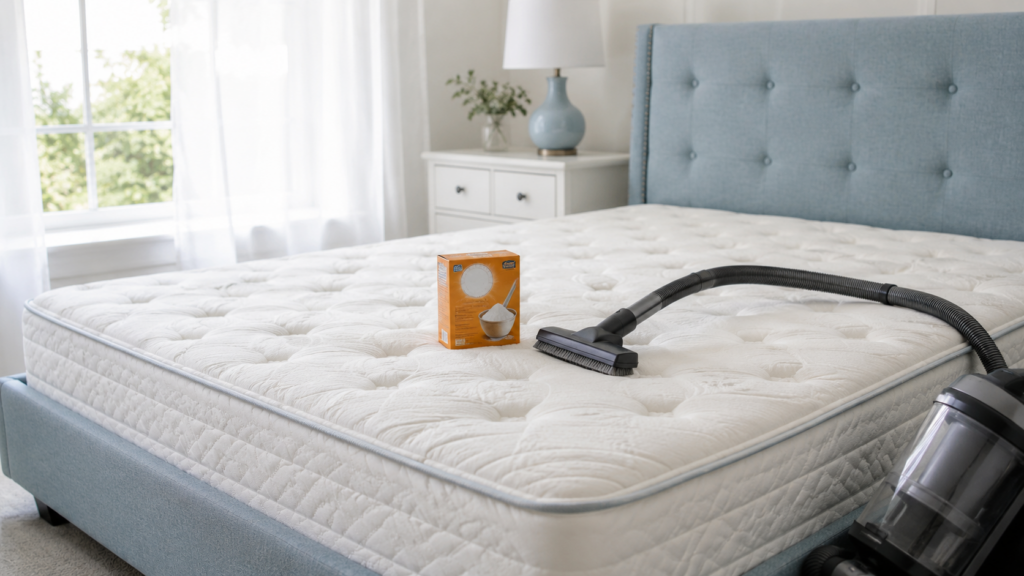
This is the full process to deep clean a mattress. Set aside a morning, since the baking soda needs hours to do its work. Below is exactly how to clean a mattress from top to bottom.
1. Strip and Wash All Bedding
Pull off every sheet, pillowcase, and mattress protector. Wash them in hot water. Health experts recommend washing bedding at 130°F or hotter to kill dust mites, so check your machine’s hot setting.
2. Vacuum the Entire Surface
Run the upholstery attachment over the whole mattress. Press into the seams and crevices where dust and debris hide. Vacuum the sides and the bottom too, since both collect allergens.
3. Spot-Treat Stains
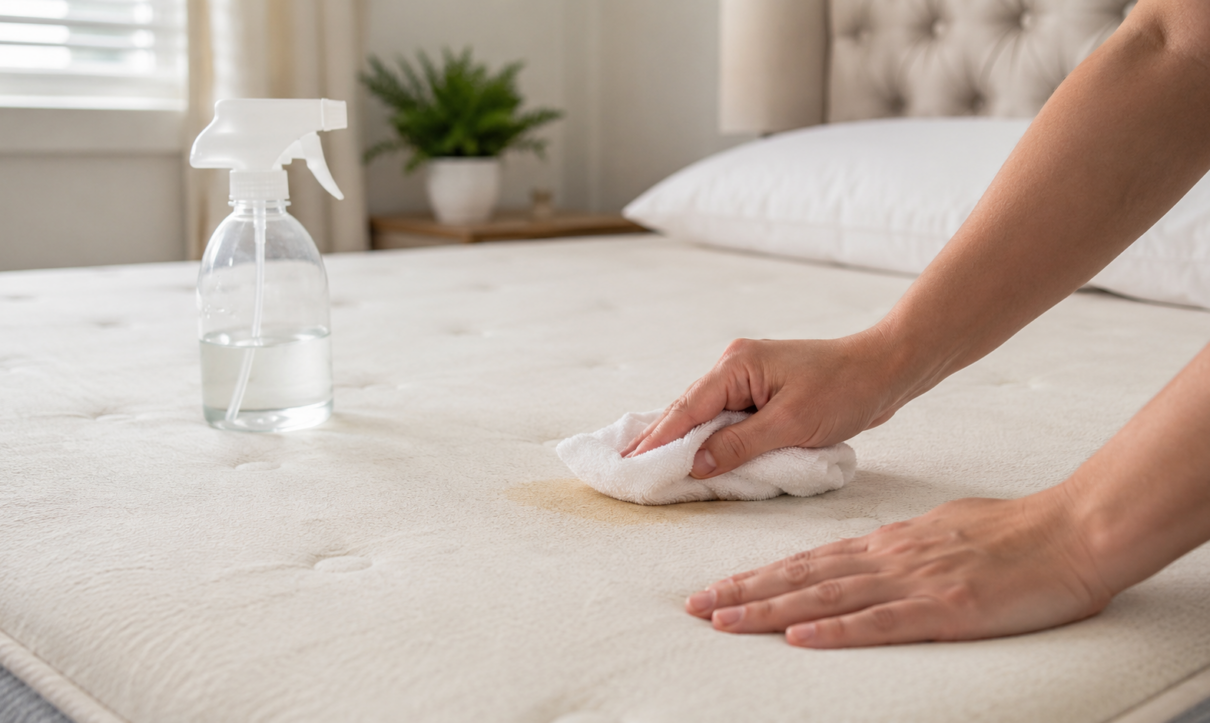
Here’s how to clean mattress stains: mix a teaspoon of mild dish soap with cold water, dip a cloth, then blot the stain from the outside in. For sweat, blood, or urine, a mix of hydrogen peroxide and a little dish soap works better. Never soak the spot. Damp, not wet, is the goal.
4. Deodorize With Baking Soda
Sprinkle a thin, even layer of baking soda across the entire mattress. Learning to clean mattress with baking soda is the heart of the job: it pulls out moisture, absorbs odors, and lifts buried grime.
5. Let It Sit
Leave the baking soda on for at least one hour. For stubborn odors, the Sleep Foundation’s mattress cleaning guide suggests letting it sit far longer, since 8 hours or more gives the best results. Starting in the morning lets it work all day.
6. Vacuum Again
Go back over the surface and remove every trace of baking soda. Take your time here. Leftover powder feels gritty once you put the sheets back.
7. Protect the Mattress
Once the surface is clean and dry, fit a waterproof mattress protector before re-sheeting. It blocks future spills, sweat, and allergens, which means less cleaning down the road.
You may also like: The Ultimate Sprint Cleaning Checklist for Your House
Takeaway: Strip, vacuum, spot-treat, deodorize, and protect. Follow that order and any mattress comes out fresh.
Stain-by-Stain Treatment Guide
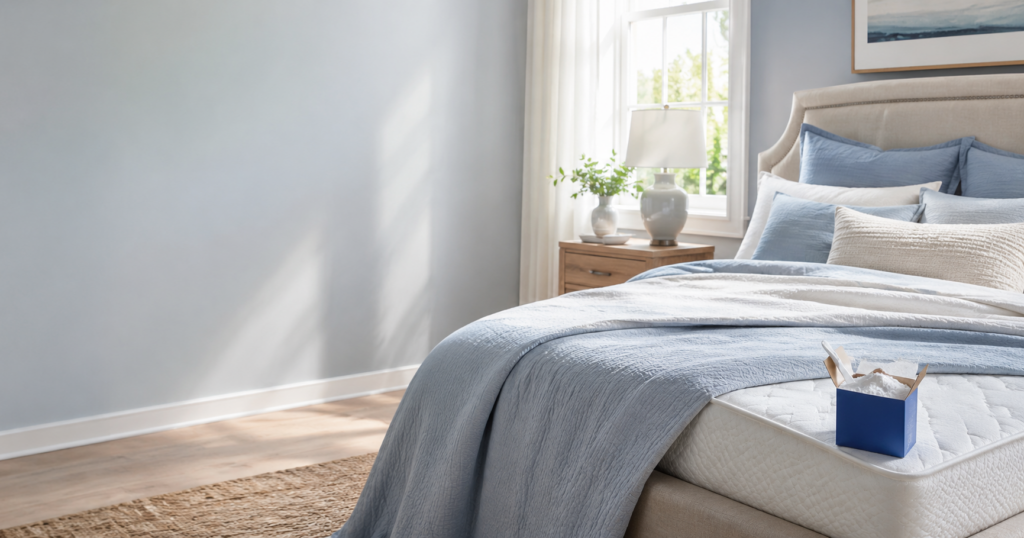
Not every stain responds to the same fix. Match the method to the mess:
| Stain type | What to use | Key tip |
| Sweat / yellowing | Hydrogen peroxide + dish soap | Blot, don’t soak; works best while fresh |
| Blood | Cold water + hydrogen peroxide | Never use hot water, it sets the stain |
| Urine | Enzyme cleaner or peroxide mix | Treat fast, then deodorize with baking soda |
| Food / drink | Dish soap + cold water | Blot from the edges inward |
The golden rule across all of them: blot, never scrub, and keep liquid to a minimum.
Takeaway: Protein stains (blood, sweat, urine) need cold water and peroxide. Hot water locks them in for good.
Mistakes That Ruin a Mattress
Plenty of online tips do more harm than good. Here are the ones to avoid.
Soaking the mattress. Foam and padding trap water, and a wet mattress grows mold from the inside. This matters most for memory foam, which absorbs moisture like a sponge. Keep liquids minimal and dry everything fully.
Using bleach. Bleach is too harsh for mattress fabric and can irritate your skin all night. Hydrogen peroxide is the safer option for tough stains.
Scrubbing stains. Rubbing pushes the stain deeper and spreads it wider. Blotting lifts it out instead. This single habit makes the biggest difference when you clean mattress surfaces with set-in marks.
Re-sheeting before it’s dry. Putting sheets on a damp mattress traps moisture and invites mildew. Wait until the surface is bone dry, which can take a few hours or a full day depending on your home’s humidity.
Takeaway: Less moisture, gentler products, and blotting instead of scrubbing protect your mattress while you clean it.
Pro Tips Most Guides Skip
A few extra habits keep your mattress cleaner between deep cleans.
Know your mattress type. Spring mattresses have open space for airflow and tolerate a bit more moisture. Memory foam is dense and absorbent, so use even less water and give it longer to dry.
Control the humidity. Dust mites and mold both thrive in damp air. The American Lung Association’s guidance on dust mites notes that keeping indoor humidity low makes the whole room less hospitable to them. A dehumidifier or AC helps in damp Bay Area months.
Clean on a sunny day. Open the windows while the baking soda sits. Fresh air and sunlight help dry the surface and cut odors naturally.
Know how often to do it. The Sleep Foundation recommends a deep clean roughly every six months, plus vacuuming every month or two if you have allergies. Mark it on a calendar so it doesn’t slip.
Know when to call a pro. Old set-in stains, lingering smells, or a mattress that’s seen years of use may need professional extraction equipment that pulls out what home methods can’t reach.
Takeaway: Treat stains by type, watch your humidity, clean twice a year, and bring in help for jobs beyond a vacuum and baking soda.
A clean mattress comes down to one habit: a quick vacuum and baking soda refresh every few months, plus fast action on spills before they set.
At The Bay Area Cleaners, we’ve helped Bay Area homes sleep cleaner for over 20 years. If your mattress needs more than a DIY refresh, or you want a deeper whole-home clean, contact us and get a free estimate with no obligation. Call 707-656-9339 today.
Frequently Asked Questions
How do you clean a mattress with baking soda?
Sprinkle a thin, even layer of baking soda over the whole mattress and let it sit for at least one hour, or longer for strong odors. The baking soda absorbs moisture and smells. Then vacuum it all up with an upholstery attachment.
How often should you clean your mattress?
Deep clean your mattress about every six months. If you have allergies, asthma, or pets, vacuum the surface every one to two months. Washing your sheets weekly in hot water keeps the mattress cleaner between deep cleans and reduces dust mites.
Can you clean a mattress without baking soda?
Yes. Vacuum the surface thoroughly, then spot-treat stains with a mix of mild dish soap and cold water. For tough stains, use hydrogen peroxide. Baking soda mainly handles odors and moisture, so you can skip it if your mattress only needs a light refresh.
How do you get stains out of a mattress?
Blot the stain from the outside in with a cloth dipped in dish soap and cold water. For sweat, blood, or urine, use hydrogen peroxide mixed with a little dish soap. Never scrub or soak the mattress, since both spread the stain and trap moisture.
Does cleaning a mattress get rid of dust mites?
Vacuuming and washing bedding in hot water reduce dust mites significantly, but they won’t remove every one. A waterproof, allergen-blocking mattress protector is the most effective long-term defense, since it stops mites from settling into the surface.
Is it worth getting a mattress professionally cleaned?
For set-in stains, persistent odors, or older mattresses, yes. Professional cleaning uses high-powered extraction and sanitizing equipment that removes buildup home methods can’t reach. It’s especially worthwhile for allergy sufferers who want the deepest possible clean.